Results by title
13 books match the query 'Water supply'
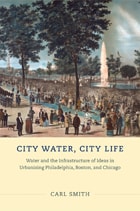
City Water, City Life
Water and the Infrastructure of Ideas in Urbanizing Philadelphia, Boston, and ChicagoCarl Smith
University of Chicago Press, 2013
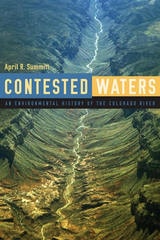
Contested Waters
An Environmental History of the Colorado RiverApril R. Summitt
University Press of Colorado, 2013
-From the conclusion
The Colorado River is a vital resource to urban and agricultural communities across the Southwest, providing water to 30 million people. Contested Waters tells the river's story-a story of conquest, control, division, and depletion.
Beginning in prehistory and continuing into the present day, Contested Waters focuses on three important and often overlooked aspects of the river's use: the role of western water law in its over-allocation, the complexity of power relationships surrounding the river, and the concept of sustainable use and how it has been either ignored or applied in recent times. It is organized in two parts, the first addresses the chronological history of the river and long-term issues, while the second examines in more detail four specific topics: metropolitan perceptions, American Indian water rights, US-Mexico relations over the river, and water marketing issues. Creating a complete picture of the evolution of this crucial yet over-utilized resource, this comprehensive summary will fascinate anyone interested in the Colorado River or the environmental history of the Southwest.
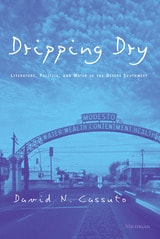
Dripping Dry
Literature, Politics and Water in the Desert SouthwestDavid N. Cassuto
University of Michigan Press, 2001
The four works selected (Animal Dreams, The Monkey Wrench Gang, The Grapes of Wrath, and The Ford) present a composite portrait of reclamation, which the author argues is one of the most important cultural and ecological phenomena in the nation's history. The tensions and contradictions presented by the novels underscore the compelling need for an ecocritique of the relationship between literature and politics. David N. Cassuto deciphers the myths of reclamation and restoration and presents a third alternative--sustainability--in their stead. The challenge is a large one, because of the size and complexity of the region and because nature continues to evolve and create itself, a process involving language, ideology, and the land.
The book is designed to be an interdisciplinary contribution both to the emerging field of literature and the environment, as well as to environmental studies. It will be welcomed by scholars as well as general readers interested in new approaches to literature and environmental issues, and by those interested in the geography and literature of the western United States.
David N. Cassuto, formerly of the English Department of the University of Missouri-Rolla, is a practicing attorney in San Francisco, specializing in environmental issues.
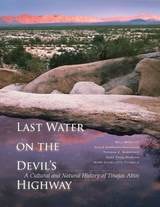
Last Water on the Devil's Highway
A Cultural and Natural History of Tinajas AltasBill Broyles, Gayle Harrison Hartmann, Thomas E. Sheridan, Gary Paul Nabhan, and Mary Charlotte Thurtle
University of Arizona Press, 2013
Now an expert cast of authors describes, narrates, and explains the human and natural history of this special place in a thorough and readable account. Addressing the latest archaeological and historical findings, they reveal why Tinajas Altas was so important and how it related to other waterholes in the arid borderlands. Readers can feel like pioneers, following in the footsteps of early Native Americans, Spanish priests and soldiers, gold seekers and borderland explorers, tourists, and scholars.
Combining authoritative writing with a rich array of more than 180 illustrations and maps as well as detailed appendixes providing up-to-date information on the wildlife and plants that live in the area, Last Water on the Devil’s Highway allows readers to uncover the secrets of this fascinating place, revealing why it still attracts intrepid tourists and campers today.
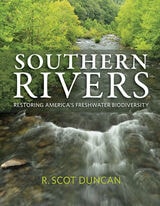
Southern Rivers
Restoring America's Freshwater BiodiversityR. Scot Duncan
University of Alabama Press, 2024
Explores the Southeast’s imperiled river systems and solutions for preserving them in the face of habitat loss, climate change, and extinction
Southern Rivers, by award-winning nature writer and biologist R. Scot Duncan, is a thoroughly crafted exploration of the perilous state of the Southeast’s rivers and the urgent need to safeguard their vitality. The region’s rivers are the epicenter of North American freshwater biodiversity and are the top global hotspot for important aquatic animals including mussels, turtles, snails, crayfish, and fish, many of which have made important contributions to southern life and culture.
Centuries of commercial development have impaired the region’s river systems, sacrificing biodiversity and compromising the rivers’ ability to provide resources essential to human life: drinking water, waste disposal, irrigation, navigation, recreation, power production, and more. Now, increased heat and drought caused by climate change are lowering water levels. As such threats increase, it may seem necessary to choose between nature conservation and human needs, but Duncan persuasively demonstrates that this is a false choice. Conservation enhances human life.
In the same engaging voice of an expert friend that won over thousands of readers of his earlier book, Southern Wonder: Alabama’s Surprising Biodiversity, Duncan explains the task of managing southeastern rivers and how river water quality affects the daily lives of the millions who hold these historic waterways dear. He shows how managing rivers wisely can meet the needs of biodiversity and humanity both. With Americans increasingly anxious about the onset of climate change and the accelerating extinction crisis, Southern Rivers illuminates actionable solutions.
Speaking for the River
Confronting Pollution on the Willamette, 1920s-1970sJames V. Hillegas-Elting
Oregon State University Press, 2018
Willamette River cleanup efforts between 1926 and 1975 centered on a struggle between abatement advocates and the two primary polluters in the watershed, the City of Portland and the pulp and paper industry. Beginning in 1926, clean streams advocates created ad hoc groups of public health experts, sanitary engineers, conservationists, sportsmen, and others to pressure Portland officials and industry representatives to cease polluting the river. By the late 1960s, these grassroots initiatives found political footholds at the state level. As governor between 1967 and 1975, Tom McCall took the issue of environmental protection personally, providing the charisma and leadership that was needed to finally make substantive progress toward cleaning the Willamette.
Speaking for the River is the first book to describe the historical roots of Willamette River pollution, providing important context for understanding the political, fiscal, and technological antecedents to the present-day conundrum. Hillegas-Elting’s contribution to the academic literature on environmental and urban history in Oregon will be welcomed by policy makers, environmentalists, and concerned citizens alike.
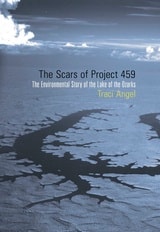
The Scars of Project 459
The Environmental Story of the Lake of the OzarksTraci Angel
University of Arkansas Press, 2014
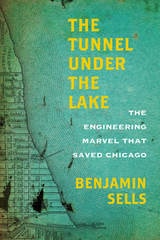
The Tunnel under the Lake
The Engineering Marvel That Saved ChicagoBenjamin Sells
Northwestern University Press, 2017
Despite Chicago's location beside the world’s largest source of fresh water, its low elevation at the end of Lake Michigan provided no natural method of carrying away waste. As a result, within a few years of its founding, Chicago began to choke on its own sewage collecting near the shore. The befouled environment, giving rise to outbreaks of sickness and cholera, became so acute that even the ravages and costs of the U.S. Civil War did not distract city leaders from taking action.
Chesbrough's solution was an unprecedented tunnel five feet in diameter lined with brick and dug sixty feet beneath Lake Michigan. Construction began from the shore as well as the tunnel’s terminus in the lake. With workers laboring in shifts and with clay carted away by donkeys, the lake and shore teams met under the lake three years later, just inches out of alignment. When it opened in March 1867, observers, city planners, and grateful citizens hailed the tunnel as the "wonder of America and of the world."
Benjamin Sells narrates in vivid detail the exceptional skill and imagination it took to save this storied city from itself. A wealth of fascinating appendixes round out Sells’s account, which will delight those interested in Chicago history, water resources, and the history of technology and engineering.
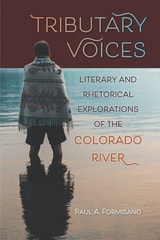
Tributary Voices
Literary and Rhetorical Exploration of the Colorado RiverPaul A. Formisano
University of Nevada Press, 2022
Through literary, rhetorical, and historical analysis of some of the Colorado River’s lesser-known stakeholders, Tributary Voices considers a more comprehensive approach to river management on the eve of the one-hundredth anniversary of the signing of the Colorado River Compact, which governs the allocation of water rights to the seven states in the region. Ranging from the early twentieth century to the present, Tributary Voices examines nature writing, women’s narratives, critiques of dam development, the Latina/o communities’ appeals for river restoration, American Indian authors’ and tribal nations’ claims of water sovereignty, and teachings about environmental stewardship and provident living. This innovative study models an interdisciplinary approach to water governance and reinvigorates our imagination in achieving a more sustainable water ethic.
Water Management in the Yellow River Basin of China
By Charles Greer
University of Texas Press, 1979
Throughout history the Yellow River, or Huang Ho, has repeatedly broken through its levees to rampage over the densely populated North China Plain. In spite of its importance as the major river of China, little has been written on the Yellow River and its management. Charles Greer fills this gap with his comprehensive and thoroughly researched book.
This work deals with the technological problems faced by the Chinese in taming the destructive river and also focuses on cultural attitudes that have governed the Chinese response to nature. For example, water control was not highly regarded by the Taoists, who preferred to let nature take its course; but the Buddhists sought to harness the river against devastating floods and also to benefit their crops.
Greer traces water use and management in the Yellow River Basin through Chinese history and discusses early Western interest in the flood problem and Soviet assistance in Yellow River development. He analyzes traditional methods of control as well as newer strategies and their implications.
The author of this book is one of a small number of social scientists able to master the original Chinese-language historical materials necessary to this undertaking. He has also examined Chinese water management methods first-hand as part of a delegation of water management specialists in 1976.
In addition to geographers and conservationists, China scholars will find this book valuable because of the axial role the control of the Yellow River plays in the fundamental economic health of the People’s Republic of China. Water management engineers will find much useful comparative material.
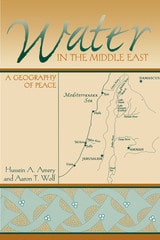
Water in the Middle East
A Geography of PeaceEdited by Hussein A. Amery and Aaron Wolf
University of Texas Press, 2000
Finding "streams in the desert" has never been more urgent for the peoples of the Middle East. Rapid population growth and a rising standard of living are driving water demand inexorably upward, while the natural supply has not increased since Biblical times. Ensuring a fair and adequate distribution of water in the region is vitally important for building a lasting peace among the nations of the Middle East.
Addressing water needs from a geographical perspective, the contributors to this book analyze and assess the impact of scarce water resources in the Jordan River basin countries and territories (Israel, Jordan, Lebanon, Palestine, and Syria) as these long-time antagonists work toward peace. After geographical and historical overviews, the authors envision the future-what the water issues may be when Israel and Syria begin negotiating, the "hydro-security" needs of each nation, and the difficulties of planning for uncertainty. Without proposing any one ideal scheme, they discuss the possibilities for cooperative sharing of water resources, while honestly acknowledging the political constraints that may limit such projects. The final essay speaks to the needs of the one party so rarely represented at the negotiating table—the Jordan River itself.
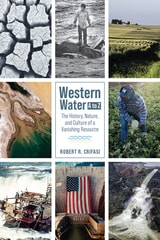
Western Water A to Z
The History, Nature, and Culture of a Vanishing Resourceby Robert R. Crifasi
University Press of Colorado, 2022
Organized as a collection of terms, the book addresses the most salient water issues and provides helpful background information regarding their origins and implications. Photographs serve a vital role in the cultural dialogue on water and stand as an equal partner to the text. Each subject is covered in about one page and is accompanied by one or two striking images from famous photographers like Margaret Bourke-White, Carleton E. Watkins, Arthur Rothstein, William Henry Jackson, and Dorothea Lang as well as Crifasi’s own work. Water often finds itself at the center of our cultural discourse in art, cinema, and literature, which play essential roles in shaping our understanding and experience of Western water. Crifasi also engages personalities that are nearly synonymous with Western water—John Wesley Powell, Elwood Mead, and Floyd Dominy, among others—to show how their lives intertwined with and often influenced the course of water development across the region.
Travelers, adventurers, students, and anyone interested in water will find Western Water A to Z a handy and entertaining reference guide.
Where Rivers Meet the Sea
The Political Ecology of WaterStephanie Kane
Temple University Press, 2012
Where fresh water appears to be abundant and generally accessible, chronic pollution may be relatively ignored as a public issue. Yet there are those whose lives, livelihoods, and traditions are touched directly by the destructive albeit essential relationship between humans and water.
In her passionate and persuasively argued Where Rivers Meet the Sea, Stephanie Kane compares two cities and nations—Salvador, Brazil and Buenos Aires, Argentina—as she tells the stories of those who organize in the streets, petition the courts, and challenge their governments to implement and enforce existing laws designed to protect springs, lakes, harbors, and rivers.
Illuminating the complex and distinctive cultural forces in the South Atlantic that shape conflicts and collaborations pertaining to particular waterfront settings, Kane shows the dilemmas, inventiveness, and persistence that provide the foundation for environmental and social justice movements writ large.