Results by title
37 books match the query 'Welfare state'

A Prelude to the Welfare State
The Origins of Workers' CompensationPrice V. Fishback and Shawn Everett Kantor
University of Chicago Press, 2000
In this highly original and persuasive work, Price V. Fishback and Shawn Everett Kantor challenge widespread historical perceptions, arguing that, rather than being an early progressive victory, workers' compensation succeeded because all relevant parties—labor and management, insurance companies, lawyers, and legislators—benefited from the legislation. Thorough, rigorous, and convincing, A Prelude to the Welfare State: The Origins of Workers' Compensation is a major reappraisal of the causes and consequences of a movement that ultimately transformed the nature of social insurance and the American workplace.

A Social Laboratory for Modern France
The Musée Social and the Rise of the Welfare StateJanet R. Horne
Duke University Press, 2001
Horne explains how Musée founders believed—and convinced others to believe—that the Third Republic would carry out the social mission of the French Revolution and create a new social contract for modern France, one based on the rights of citizenship and that assumed collective responsibility for the victims of social change. Challenging the persistent notion of the Third Republic as the stagnant backwater of European social reform, Horne instead depicts the intellectually sophisticated and progressive political culture of a generation that laid the groundwork for the rise of a hybrid welfare system, characterized by a partnership between private agencies and government. With a focus on the cultural origins of turn-of-the-century thought—including religion, republicanism, liberalism, solidarism, and early sociology—A Social Laboratory for Modern France demonstrates how French reformers grappled with social problems that are still of the utmost relevance today and how they initiated a process that gave the welfare state the task of achieving social cohesion within an industrializing republic.

Balance of Power
Central Banks and the Fate of DemocraciesÉric Monnet
University of Chicago Press, 2024
Two decades of financial crises have dramatically expanded central banks’ powers. In 2008, and then again in 2020, unelected banking officials found themselves suddenly responsible for the public welfare—not just because it was necessary but based on an idea that their independence from political systems would insulate them from the whims of populism. Now, as international crises continue and the scope of monetary interventions grows in response, these bankers have become increasingly powerful.
In Balance of Power, economist and historian Éric Monnet charts the rise of central banks as the nominally independent—but unavoidably political—superpowers of modern societies. This trajectory, Monnet argues, is neither inevitable nor unstoppable. By embracing the political natures of today’s central banks, we can construct systems of accountability for how they interact with states and societies. Monnet shows that this effort will do more than guard against unjust power; it will put the banks to work for greater, more democratic ends.
With existential challenges looming and the work of the Federal Reserve and European Central Bank more important than ever, Balance of Power offers a trenchant case for what this century’s central banks can—and must—become.

Basic Income
The Material Conditions of FreedomDaniel Raventos
Pluto Press, 2007

Citizens and Paupers
Relief, Rights, and Race, from the Freedmen's Bureau to WorkfareChad Alan Goldberg
University of Chicago Press, 2008
Citizens and Paupers explores this contentious history by analyzing and comparing three major programs: the Freedmen’s Bureau, the Works Progress Administration, and the present-day system of workfare that arose in the 1990s. Each of these overhauls of the welfare state created new groups of clients, new policies for aiding them, and new disputes over citizenship—conflicts that were entangled in racial politics and of urgent concern for social activists.
This combustible mix of racial tension and social reform continues to influence how we think about welfare, and Citizens and Paupers is an invaluable analysis of the roots of the debate.

Critical Theories of the State
Marxist, Neomarxist, PostmarxistClyde W. Barrow
University of Wisconsin Press, 1993
Critical Theories of the State is a clear and accessible survey of radical perspectives on the modern state. By focusing on Marxist theory and its variations, particularly as applied to advanced industrial societies and contemporary welfare states, Clyde W. Barrow provides a more extensive and thorough treatment than is available in any other work.
Barrow divides the methodological assumptions and key hypotheses of Marxist, Neo-Marxist, and Post-Marxist theories into five distinct approaches: instrumentalist, structuralist, derivationist, systems-analytic, and organizational realist. He categorizes the many theorists discussed in the book, including such thinkers as Elmer Altvater, G. William Domhoff, Fred Block, Claus Offe, and Theda Skocpol according to their concepts of the state’s relationship to capital and their methodological approach to the state. Based on this survey, Barrow elaborates a compelling typology of radical state theories that identifies with remarkable clarity crucial points of overlap and divergence among the various theories.
Scholars conducting research within the rubric of state theory, political development, and policy history will find Critical Theories of the State an immensely valuable review of the literature. Moreover, Barrow’s work will make an excellent textbook for undergraduate and graduate courses in political science and sociology, and can also be used by those teaching theory courses in international relations, history, and political economy.

Democracy and the Left
Social Policy and Inequality in Latin AmericaEvelyne Huber and John D. Stephens
University of Chicago Press, 2012
Although inequality in Latin America ranks among the worst in the world, it has notably declined over the last decade, offset by improvements in health care and education, enhanced programs for social assistance, and increases in the minimum wage.
Development and Crisis of the Welfare State
Parties and Policies in Global MarketsEvelyne Huber and John D. Stephens
University of Chicago Press, 2001
Building on their previous research, Huber and Stephens show how high wages and generous welfare states are still possible in an age of globalization and trade competition.

Eugenics and the Welfare State
Norway, Sweden, Denmark, and FinlandGunnar Broberg
Michigan State University Press, 2005
In 1997 Eugenics and the Welfare State caused an uproar with international repercussions. This edition contains a new introduction by Broberg and Roll-Hansen, addressing events that occurred following the original publication. The four essays in this book stand as a chilling indictment of mass sterilization practices, not only in Scandinavia but in other European countries and the United States--eugenics practices that remained largely hidden from the public view until recently. Eugenics and the Welfare State also provides an in-depth, critical examination of the history, politics, science, and economics that led to mass sterilization programs in Norway, Sweden, Denmark, and Finland; programs put in place for the "betterment of society" and based largely on the "junk science" of eugenics that was popular before the rise of Nazism in Germany. When the results of Broberg's and Roll-Hansen's book were widely publicized in August 1997, the London Observer reported, "Yesterday Margot Wallstrom, the Swedish Minister for Social Policy, issued a belated reaction to the revelations. She said: 'What went on is barbaric and a national disgrace.' She pledged to create a law ensuring that involuntary sterilisation would never again be used in Sweden, and promised compensation to victims." Ultimately, the Swedish government not only apologized to the many thousands who had been sterilized without their knowledge or against their will, but also put in place a program for the payment of reparations to these unfortunate victims.
Meaningless Citizenship
Iraqi Refugees and the Welfare StateSally Wesley Bonet
University of Minnesota Press, 2022
A searing critique of the “freedom” that America offers to the victims of its imperialist machinations of war and occupation
Meaningless Citizenship traces the costs of America’s long-term military involvement around the world by following the forced displacement of Iraqi families, unveiling how Iraqis are doubly displaced: first by the machinery of American imperialism in their native countries and then through a more pernicious war occurring on U.S. soil—the dismantling of the welfare state.
Revealing the everyday struggles and barriers that texture the lives of Iraqi families recently resettled to the United States, Sally Wesley Bonet draws from four years of deep involvement in the refugee community of Philadelphia. An education scholar, Bonet’s analysis moves beyond the prevalent tendency to collapse schooling into education. Focusing beyond the public school to other critical institutions, such as public assistance, resettlement programs, and healthcare, she shows how encounters with institutions of the state are an inherently educative process for both refugee youths and adults, teaching about the types of citizenship they are expected to enact and embody while simultaneously shaping them into laboring subjects in service of capitalism.
An intimate, in-depth ethnography, Meaningless Citizenship exposes how the veneer of American values—freedom, democracy, human rights—exported to countries like Iraq, disintegrates to uncover what is really beneath: a nation-state that prioritizes the needs of capitalism above the survival and wellbeing of its citizens.
New Deal Modernism
American Literature and the Invention of the Welfare StateMichael Szalay
Duke University Press, 2000
Szalay situates his study within a liberal culture bent on security, a culture galvanized by its imagined need for private and public insurance.
Taking up prominent exponents of social and economic security—such as Franklin Delano Roosevelt, John Maynard Keynes, and John Dewey—Szalay demonstrates how the New Deal’s revision of free-market culture required rethinking the political function of aesthetics. Focusing in particular on the modernist fascination with the relation between form and audience, Szalay offers innovative accounts of Busby Berkeley, Jack London, James M. Cain, Robert Frost, Ayn Rand, Betty Smith, and Gertrude Stein, as well as extended analyses of the works of Ernest Hemingway, John Steinbeck, and Richard Wright.

Not for Patching
A Strategic Welfare ReviewFrank Field and Andrew Forsey
Haus Publishing, 2017

Poverty and Society
The Growth of the American Welfare State in International ComparisonLevine, Daniel
Rutgers University Press, 1988

Probable Justice
Risk, Insurance, and the Welfare StateRachel Z. Friedman
University of Chicago Press, 2020
Probable Justice traces a history of social insurance from the eighteenth century to today, from the earliest ideas of social accountability through the advanced welfare state of collective responsibility and risk. At the heart of Rachel Z. Friedman’s investigation is a study of how probability theory allows social insurance systems to flexibly measure risk and distribute coverage. The political genius of social insurance, Friedman shows, is that it allows for various accommodations of needs, risks, financing, and political aims—and thereby promotes security and fairness for citizens of liberal democracies.

Recasting Welfare Capitalism
Economic Adjustment in Contemporary France and GermanyMark I. Vail
Temple University Press, 2009
Vail finds that these respective evolutions involve interrelated changes in social and economic policies and are characterized by political relationships that are continuously renegotiated—often in unpredictable ways. In the process, he presents a compelling reconceptualization of change in both the welfare state and the broader political economy during an age of globalization.
Reforming the Welfare State
Recovery and Beyond in SwedenEdited by Richard B. Freeman, Birgitta Swedenborg, and Robert H. Topel
University of Chicago Press, 2010
Reinventing the Welfare State
Digital Platforms and Public PoliciesUrsula Huws
Pluto Press, 2020
The Covid-19 pandemic has tragically exposed how today’s welfare state cannot properly protect its citizens. Despite the valiant efforts of public sector workers, from under-resourced hospitals to a shortage of housing and affordable social care, the pandemic has tragically shown how decades of neglect has caused hundreds to die. In this bold new book, leading policy analyst Ursula Huws shows how we can create a welfare state that is fair, affordable, and offers security for all.
Huws focuses on some of the key issues of our time – the gig economy, universal, free healthcare, and social care, to criticize the current state of welfare provision. Drawing on a lifetime of research on these topics, she clearly explains why we need to radically rethink how it could change. With positivity and rigor, she proposes new and original policy ideas, including critical discussions of Universal Basic Income and new legislation for universal workers' rights.
She also outlines a 'digital welfare state' for the 21st century. This would involve a repurposing of online platform technologies under public control to modernize and expand public services, and improve accessibility.
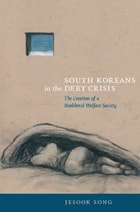
South Koreans in the Debt Crisis
The Creation of a Neoliberal Welfare SocietyJesook Song
Duke University Press, 2009
Drawing on her experience during the crisis as an employee in a public works program in Seoul, Song provides an ethnographic assessment of the efforts of the state and civilians to regulate social insecurity, instability, and inequality through assistance programs. She focuses specifically on efforts to help two populations deemed worthy of state subsidies: the “IMF homeless,” people temporarily homeless but considered employable, and the “new intellectuals,” young adults who had become professionally redundant during the crisis but had the high-tech skills necessary to lead a transformed post-crisis South Korea.

State of Empowerment
Low-Income Families and the New Welfare StateCarolyn Barnes
University of Michigan Press, 2020
On weekday afternoons, dismissal bells signal not just the end of the school day but also the beginning of another important activity: the federally funded after-school programs that offer tutoring, homework help, and basic supervision to millions of American children. Nearly one in four low-income families enroll a child in an after-school program. Beyond sharpening students’ math and reading skills, these programs also have a profound impact on parents. In a surprising turn—especially given the long history of social policies that leave recipients feeling policed, distrusted, and alienated—government-funded after-school programs have quietly become powerful forces for political and civic engagement by shifting power away from bureaucrats and putting it back into the hands of parents. In State of Empowerment Carolyn Barnes uses ethnographic accounts of three organizations to reveal how interacting with government-funded after-school programs can enhance the civic and political lives of low-income citizens.

The Bill of Rights in the Modern State
Edited by Geoffrey R. Stone, Richard A. Epstein, and Cass R. Sunstein
University of Chicago Press, 1992
The contributors to this volume are among the most prominent constitutional scholars in the country. Most of the essays are grouped in pairs, each of which offers conflicting positions on current constitutional controversies, including property rights, freedom of religion, freedom of speech, levels of generality in constitutional interpreation, and unemumerated rights.
The contributors are: Bruce Ackerman, Mary E. Becker, Ronald Dworkin, Frank H. Easterbrook, Richard A. Epstein, Charles Fried, Mary Ann Glendon, Philip B. Kurland, Frank J. Michaelman, Michael W. McConnell, Richard A. Posner, Kathleen M. Sullivan, John Paul Stevens, David A. Strauss, and Cass R. Sunstein.
"A thoughtful and well coordinated set of exchanges between leading modern constitutional theorists about the most significant issues related to the Bill of Rights and the Welfare State. These issues are debated through penetrating essays by opposing theorists who get to the heart of these issues and provide significant answers to their debate opponents' points."—Thomas R. Van Dervort, Southeastern Political Review

The Birth of Solidarity
The History of the French Welfare StateFrançois Ewald
Duke University Press, 2020

The Foucault Effect
Studies in GovernmentalityEdited by Graham Burchell, Colin Gordon, and Peter Miller
University of Chicago Press, 1991
Foucault's thoughts on political discourse and governmentality are supplemented by the essays of internationally renowned scholars. United by the common influence of Foucault's approach, they explore the many modern manifestations of government: the reason of state, police, liberalism, security, social economy, insurance, solidarity, welfare, risk management, and more. The central theme is that the object and the activity of government are not instinctive and natural things, but things that have been invented and learned.
The Foucault Effect analyzes the thought behind practices of government and argues that criticism represents a true force for change in attitudes and actions, and that extending the limits of some practices allows the invention of others. This unique and extraordinarily useful collection of articles and primary materials will open the way for a whole new set of discussions of the work of Michel Foucault as well as the status of liberalism, social policy, and insurance.

The Government-Citizen Disconnect
Suzanne Mettler
Russell Sage Foundation, 2018
Drawing from original survey data which probed Americans’ experiences of 21 federal social policies -- such as food stamps, Social Security, Medicaid, and the home mortgage interest deduction -- Mettler shows that 96 percent of adults have received benefits from at least one of them, and that the average person has utilized five. Overall usage rates transcend social, economic, and political divisions, and most Americans report positive experiences of their policy experiences. However, the fact that they have benefited from these policies has little positive effect on people’s attitudes toward government. Mettler finds that shared identities and group affiliations, as well as ideological forces, are more powerful and consistent influences. In particular, those who oppose welfare tend to extrapolate their unfavorable views of it to government in general. Deep antipathy toward the government has emerged as the result of a conservative movement that has waged a war on social welfare policies for over forty years, even as economic inequality and benefit use have increased.
Mettler finds that voting patterns exacerbate the government-citizen disconnect, as those holding positive views of federal programs and supporting expanded benefits have lower rates of political participation than those holding more hostile views of the government. As a result, the loudest political voice belongs to those who have benefited from policies but who give government little credit for their economic well-being, seeing their success more as a matter of their own deservingness. This contributes to the election of politicians who advocate cutting federal social programs. According to Mettler, the government-citizen disconnect frays the bonds of representative government and democracy.
The Government-Citizen Disconnect illuminates a paradox that increasingly shapes American politics. Mettler's examination of hostility toward government at a time when most Americans will at some point rely on the social benefits it provides helps us better understand the roots of today's fractious political climate.

The Great Debate
Nietzsche, Culture, and the Scandinavian Welfare SocietyGeorg Brandes and Harald Høffding
University of Wisconsin Press, 2024
Marking the moment at which the uniquely Nordic concept of social democratic welfare was first contested in the public sphere, this debate provides insights into not only Nietzschean philosophy and its immediate reception but also the foundational concept of modern Scandinavian social, cultural, and political organization. This volume presents, for the first time in any language other than Danish, the debate in its entirety: three essays by Brandes and three by Høffding. A critical introduction by editor and translator William Banks explores the exchange in its context and convincingly argues that the principles contested by the two Danish luminaries still very much resonate in Western society today.
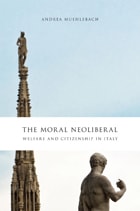
The Moral Neoliberal
Welfare and Citizenship in ItalyAndrea Muehlebach
University of Chicago Press, 2012

The Origins of the Welfare State
Women, Work, and the French RevolutionLisa DiCaprio
University of Illinois Press, 2005
Women workers and the revolutionary origins of the modern welfare state
In May 1790, the French National Assembly created spinning workshops (ateliers de filature) for thousands of unemployed women in Paris. These ateliers disclose new aspects of the process which transformed Old Regime charity into revolutionary welfare initiatives characterized by secularization, centralization, and entitlements based on citizenship. This study is the first to examine women and the welfare state in its formative period at a time when modern concepts of human rights were elaborated.
In The Origins of the Welfare State, Lisa DiCaprio reveals how the women working in the ateliers, municipal welfare officials, and the national government vied to define the meaning of revolutionary welfare throughout the Revolution. Presenting demands for improved wages and working conditions to a wide array of revolutionary officials, the women workers exercised their rights as "passive citizens" capaciously and shaped the meanings of work, welfare, and citizenship. Looking backward to the Old Regime and forward to the nineteenth century, this study explores the interventionist spirit that characterized liberalism in the eighteenth century and serves as a bridge to the history of entitlements in the nineteenth and twentieth centuries.

The Politics of the Welfare State in Turkey
How Social Movements and Elite Competition Created a Welfare StateErdem Yörük
University of Michigan Press, 2022
The Repoliticization of the Welfare State
Ian P. McManus
University of Michigan Press, 2022
The Repoliticization of the Welfare State grapples with the evolving nature of political conflict over social spending after the Great Recession. While the severity of the economic crisis encouraged strong social spending responses to protect millions of individuals, governments have faced growing pressure to reduce budgets and make deep cuts to the welfare state. Whereas conservative parties have embraced fiscal discipline and welfare state cuts, left-wing parties have turned away from austerity in favor of higher social spending. These political differences represent a return of traditional left-right beliefs over social spending and economic governance.
This book is one of the first to systematically compare welfare state politics before and after the Great Recession, arguing that a new and lasting post-crisis dynamic has emerged where political parties once again matter for social spending. At the heart of this repoliticization are intense ideological debates over market regulation, social inequality, redistribution, and the role of the state. The book analyzes social spending dynamics for 28 countries before and after the crisis. It also includes in-depth country case studies representing five distinct welfare state types: Germany, the United Kingdom, Sweden, Spain, and the Czech Republic.
The Rise and Fall of the Welfare State
Asbjorn Wahl
Pluto Press, 2012
In an age of government imposed austerity, and after 30 years of neo-liberal restructuring, the future of the welfare state looks increasingly uncertain. Asbjørn Wahl offers an accessible analysis of the situation across Europe, identifies the most important challenges and presents practical proposals for combating the assault on welfare.
Wahl argues that the welfare state should be seen as the result of a class compromise forged in the 20th century, which means that it cannot easily be exported internationally. He considers the enormous shifts in power relations and the profound internal changes to the welfare state which have occurred during the neo-liberal era, pointing to the paradigm shift that the welfare state is going through. This is illustrated by the shift from welfare to workfare and increased top-down control.
As well as being a fascinating study in its own right that will appeal to students of economics and politics, The Rise and Fall of the Welfare State also points to an alternative way forward for the trade union movement based on concrete examples of struggles and alliance-building.

The Sympathetic State
Disaster Relief and the Origins of the American Welfare StateMichele Landis Dauber
University of Chicago Press, 2012

The Welfare State and Beyond
Success and Problems in ScandinaviaGunnar Heckscher
University of Minnesota Press, 1984
The Welfare State and Beyond was first published in 1984. Minnesota Archive Editions uses digital technology to make long-unavailable books once again accessible, and are published unaltered from the original University of Minnesota Press editions.
The welfare state emerged in a number of industrialized countries after the First World War as a middle ground between capitalism and socialism. The aim of architects of the welfare state was to abolish the injustices and hardships that accompanied capitalism and to do so without wholesale social or economic revolution. Establishment of the welfare state created something close to euphoria among many observers; it was, it seemed, the answer to many, if not all, troubling social questions. But it eventually became obvious that this type of society was not immune to problems.
In The Welfare State and Beyond Gunnar Heckscher examines four Nordic countries—Denmark, Finland, Norway, and Sweden—not to either criticize or defend the welfare state but to shed some light on a number of questions: Has the welfare state achieved what it attempted? Are the results generally held to be satisfactory? What important problems remain unsolved and what types of solutions have been proposed? Although Heckscher has been associated with the Conservative party in Sweden, his objective, clear-eyed analysis cites both the accomplishments of the welfare state and the troubling problems that still await resolution.
The Welfare State in Transition
Reforming the Swedish ModelEdited by Richard B. Freeman, Robert H. Topel, and Birgitta Swedenborg
University of Chicago Press, 1997
This volume presents ten essays that examine Sweden's economic problems from a U.S. perspective. Exploring such diverse topics as income equalization and efficiency, welfare and tax policy, wage determination and unemployment, and international competitiveness and growth, they consider how Sweden's welfare state succeeded in eliminating poverty and became a role model for other countries. They then reflect on Sweden's past economic problems, such as the increase in government spending and the fall in industrial productivity, warning of problems to come. Finally they review the consequences of the collapse of Sweden's economy in the early 1990s, exploring the implications of its efforts to reform its welfare state and reestablish a healthy economy.
This volume will be of interest to policymakers and analysts, social scientists, and economists interested in welfare states.

Trust beyond Borders
Immigration, the Welfare State, and Identity in Modern SocietiesMarkus M.L. Crepaz
University of Michigan Press, 2010
Will immigration undermine the welfare state? Trust beyond Borders draws on public opinion data and case studies of Germany, Sweden, and the United States to document the influence of immigration and diversity on trust, reciprocity, and public support for welfare programs. Markus M. L. Crepaz demonstrates that we are, at least in some cases, capable of trusting beyond borders: of expressing faith in our fellow humans and extending help without regard for political classifications.
In Europe, the welfare state developed under conditions of relative homogeneity that fostered high levels of trust among citizens, while in America anxiety about immigration and diversity predated the emergence of a social safety net. Looking at our new era of global migration, Crepaz traces the renewed debate about "us" versus "them" on both sides of the Atlantic and asks how it will affect the public commitment to social welfare. Drawing on the literatures on immigration, identity, social trust, and the welfare state, Trust beyond Borders presents a novel analysis of immigration's challenge to the welfare state and a persuasive exploration of the policies that may yet preserve it.
"Crepaz contributes much to our knowledge about the link between immigration and social welfare, certainly one of the central issues in current national and international politics."
---Stuart Soroka, Associate Professor of Political Science and William Dawson Scholar, McGill University
"Finally! A book that challenges the growing view that ethnic diversity is the enemy of social solidarity. It addresses an issue of intense debate in Western nations; it takes dead aim at the theoretical issues at the center of the controversy; it deploys an impressive array of empirical evidence; and its conclusions represent a powerful corrective to the current drift of opinion. Trust beyond Borders will rank among the very best books in the field."
---Keith Banting, Queen's Research Chair in Public Policy, Queen's University
"Do mass immigration and ethnic diversity threaten popular support for the welfare state? Trust beyond Borders answers no. Marshaling an impressive array of comparative opinion data, Crepaz shows that countries with high levels of social trust and universal welfare state arrangements can avoid the development of the welfare chauvinism that typically accompanies diversity."
---Gary Freeman, Professor and Department Chair, Department of Government, University of Texas at Austin
Markus M. L. Crepaz is Professor in the Department of International Affairs at the University of Georgia and Associate Director of the Center for the Study of Global Issues (GLOBIS).

Urban Planning in the Nordic World
Ellen Braae
University of Wisconsin Press, 2022
Urban planning is a keystone in the materialization of the Nordic welfare states. That is not to say that there is one particular city form or planning practice that is synonymous with the emerging welfare city, as welfare per se is far from normative. On the contrary, welfare is a highly ambiguous and contested notion that has changed over the postwar decades, which is also reflected in the development of the welfare city.
However, welfare in urban planning has mainly been associated with ideas of “the good life” and egalitarianism. In a Nordic context, the state has taken the lead in providing the social engineering “hardware” for advancing this universal aim. Social demographic welfare is economically based on full employment, and in this regard housing and caregiving support are key components. Yet education, infrastructure, and leisure facilities are also basic features in the distribution of universal welfare services for citizens’ entire lives. The results, ideally, are green and spacious welfare cities.
This book outlines the origins, development, challenges, and lived realities of the changing welfare city, focusing primarily on Denmark. Strategies have changed over the decades as models of development have shifted and as the needs of society and a warming planet have come into focus. The current welfare city can be described as an urban landscape characterized by, on the one hand, a division of functions and, on the other, mutual competition. The role of the state has been minimized, turning municipalities into the new major agents in attracting taxpayers and providing goods—both by means of urban planning.
Why Welfare States Persist
The Importance of Public Opinion in DemocraciesClem Brooks and Jeff Manza
University of Chicago Press, 2007
The world’s richer democracies all provide such public benefits as pensions and health care, but why are some far more generous than others? And why, in the face of globalization and fiscal pressures, has the welfare state not been replaced by another model? Reconsidering the myriad issues raised by such pressing questions, Clem Brooks and Jeff Manza contend here that public opinion has been an important, yet neglected, factor in shaping welfare states in recent decades.
Analyzing data on sixteen countries, Brooks and Manza find that the preferences of citizens profoundly influence the welfare policies of their governments and the behavior of politicians in office. Shaped by slow-moving forces such as social institutions and collective memories, these preferences have counteracted global pressures that many commentators assumed would lead to the welfare state’s demise. Moreover, Brooks and Manza show that cross-national differences in popular support help explain why Scandinavian social democracies offer so much more than liberal democracies such as the United States and the United Kingdom.
Significantly expanding our understanding of both public opinion and social policy in the world’s most developed countries, this landmark study will be essential reading for scholars of political economy, public opinion, and democratic theory.

Women Build the Welfare State
Performing Charity and Creating Rights in Argentina, 1880–1955Donna J. Guy
Duke University Press, 2009
Drawing on extensive research in Argentine archives, Guy reveals significant continuities in Argentine history, including the rise of a liberal state that subsidized all kinds of women’s and religious groups. State and private welfare efforts became more organized in the 1930s and reached a pinnacle under Juan Perón, when men took over the welfare state and philanthropic and feminist women’s influence on child-welfare activities and policy declined. Comparing the rise of Argentina’s welfare state with the development of others around the world, Guy considers both why women’s child-welfare initiatives have not received more attention in historical accounts and whether the welfare state emerges from the top down or from the bottom up.

Women and Welfare
Theory and Practice in the United States and EuropeHirschmann, Nancy J
Rutgers University Press, 2001
The social welfare state is believed by many to be one of the great achievements of Western democracy in the twentieth century. It institutionalized for the first time a collective commitment to improving individual life chances and social well-being. However, as we move into a new century, the social welfare state everywhere has come under increasing pressure, raising serious doubts about its survival.
Featuring essays by experts from a variety of fields, including law, comparative politics, sociology, economics, cultural studies, philosophy, and political theory, Women and Welfare represents an interdisciplinary, multimethodological and multicultural feminist approach to recent changes in the welfare system of Western industrialized nations. The broad perspective, from the philosophical to the quantitative, provides an excellent overview of the subject and the most recent scholarly literature. The volume offers a crosscultural analysis of welfare “reform” in the 1990s, visions of what a “woman-friendly” welfare state requires, and an examination of theoretical and policy questions feminists and concerned others should be asking.