Results by title
368 books match the query 'West' and 54 start with a
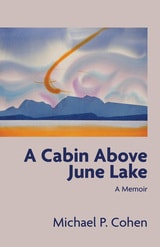
A Cabin Above June Lake
A MemoirMichael P. Cohen
University of Nevada Press, 2027
What does it mean to belong to a place that can never belong to you?
Set in the high country above June Lake on the eastern slope of the Sierra Nevada, this reflective narrative explores the enduring relationship between people and landscape. From their modest cabin near the headwaters of Reversed Creek, Michael and Valerie Cohen look across June Lake toward the vast expanse of the Great Basin. They are drawn to the region by its beauty and solitude, and the conviction that they are exactly where they ought to be.
Yet living in a place also means witnessing its transformation. Over nearly fifty years, the Cohens observe changes that reshape the Mono Basin and surrounding mountains: shifting economies, expanding development, record-breaking winters, wildfire threats, and the gradual erosion of community traditions.
Part memoir, part environmental reflection, part cultural history, this meditative narrative draws on writers and thinkers such as Ralph Waldo Emerson, Aldo Leopold, and Lew Welch. The Cohens’ efforts to maintain an aging cabin and a life together become a lens through which to examine stewardship, memory, resilience, and loss. This meditation on place returns to a question that has occupied generations of writers and naturalists: As the world continually reinvents itself, how must those who live within it respond?
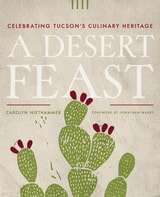
A Desert Feast
Celebrating Tucson's Culinary HeritageCarolyn Niethammer, Foreword by Johnathan Mabry
University of Arizona Press, 2020
Southwest Book of the Year Award Winner
Pubwest Book Design Award Winner
Drawing on thousands of years of foodways, Tucson cuisine blends the influences of Indigenous, Mexican, mission-era Mediterranean, and ranch-style cowboy food traditions. This book offers a food pilgrimage, where stories and recipes demonstrate why the desert city of Tucson became American’s first UNESCO City of Gastronomy.
Both family supper tables and the city’s trendiest restaurants feature native desert plants and innovative dishes incorporating ancient agricultural staples. Award-winning writer Carolyn Niethammer deliciously shows how the Sonoran Desert’s first farmers grew tasty crops that continue to influence Tucson menus and how the arrival of Roman Catholic missionaries, Spanish soldiers, and Chinese farmers influenced what Tucsonans ate.
White Sonora wheat, tepary beans, and criollo cattle steaks make Tucson’s cuisine unique. In A Desert Feast, you’ll see pictures of kids learning to grow food at school, and you’ll meet the farmers, small-scale food entrepreneurs, and chefs who are dedicated to growing and using heritage foods. It’s fair to say, “Tucson tastes like nowhere else.”

A Fistful of Shells
West Africa from the Rise of the Slave Trade to the Age of RevolutionToby Green
University of Chicago Press, 2019
With A Fistful of Shells, Toby Green transforms our view of West and West-Central Africa by reconstructing the world of these kingdoms, which revolved around trade, diplomacy, complex religious beliefs, and the production of art. Green shows how the slave trade led to economic disparities that caused African kingdoms to lose relative political and economic power. The concentration of money in the hands of Atlantic elites in and outside these kingdoms brought about a revolutionary nineteenth century in Africa, parallel to the upheavals then taking place in Europe and America. Yet political fragmentation following the fall of African aristocracies produced radically different results as European colonization took hold.
Drawing not just on written histories, but on archival research in nine countries, art, oral history, archaeology, and letters, Green lays bare the transformations that have shaped world politics and the global economy since the fifteenth century and paints a new and masterful portrait of West Africa, past and present.
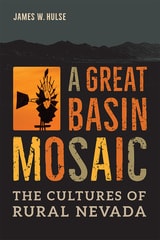
A Great Basin Mosaic
The Cultures of Rural NevadaJames W. Hulse
University of Nevada Press, 2017
The Nevada of lesser-known cities, towns, and outposts deserve their separate chronicles, and here Hulse fills a wide gap. He contributes in a text rich with memories tramping through rural Nevada as a child, then as a journalist seeking news and gossip, then later as an academic historian and a parent trying to share the wonders of the high desert with his family. Nobody is more qualified to write about the cultural nuances of rural Nevada than Hulse, who retired after 35 years as a professor of history at University of Nevada, Reno.
Robert Laxalt wrote an article in National Geographic in 1974 entitled “The Other Nevada” in which he referred to “the Nevada that has been eclipsed by the tinsel trimmings of Las Vegas, the round-the-clock casinos, the ski slopes of the Sierra. It is a Nevada that few tourists see.” With this book Hulse reflects on Laxalt’s insights and shows changes—often slow-moving and incremental—that have occurred since then. Much of the terrain of rural Nevada has not changed at all, while others have adapted to technological revolutions of recent times. Hulse states that there is no single “other” Nevada, but several subcultures with distinct features. He offers a tour of sorts to what John Muir called the “bewildering abundance” of the Nevada landscape.
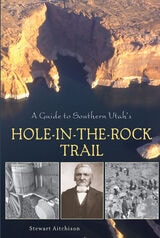
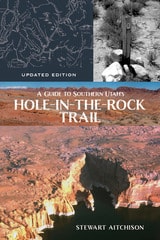
A Guide to Southern Utah's Hole-in-the-Rock Trail
Stewart Aitchison
University of Utah Press, 2005
Though the trail that these devoted pioneers broke across raw frontier was used for several years afterward, no highway was built over most of the route because it was deemed too rugged for modern vehicles. In addition to the historical value of the story of these pioneers, this guide includes road logs, maps, and hiking trails along the historic trail. It also points out fascinating natural history along the way, making A Guide to Southern Utah’s Hole-in-the-Rock Trail a significant reference for a variety of readers.
A Guide to Southern Utah's Hole-in-the-Rock Trail
Updated EditionStewart Aitchison
University of Utah Press, 2026
Updated Edition
In 1879, more than 230 settlers in southwestern Utah heeded the call from leaders of the Church of Jesus Christ of Latter-day Saints to pull up stakes and move to the distant San Juan country of southeastern Utah. Their year-long journey became one of the most extraordinary wagon trips ever undertaken in North America, and their trail became one of peril, difficulty, and spectacular vistas. Beginning in Cedar City, Utah, this trail crosses today’s Dixie National Forest, skirts Bryce Canyon National Park, bisects Grand Staircase-Escalante National Monument, crosses Glen Canyon National Recreation Area, and cuts through Bears Ears National Monument on its way to Bluff, Utah.
Though the trail that these devoted pioneers broke across the raw frontier was used for several years afterward, no highway was built over most of the route because it was deemed too rugged for modern vehicles. This updated edition features pioneer family histories and updated natural history, road logs, maps, and hiking trails along the historic route, making A Guide to Southern Utah’s Hole-in-the-Rock Trail a significant reference for a variety of readers.

A Hiking Guide To Cedar Mesa
Peter Francis Tassoni
University of Utah Press, 2001
A Hiking Guide to Cedar Mesa describes sixty-three routes, ranging from quarter-mile walks to fifteen-mile day hikes, loops, and multi-day backpack trips. There is essential information on permits, weather, gear, road, trailhead access, geology, human history in the region, and leave-no-trace camping.
Care is given to name only those well-known archaeological sites that are visible or immediately accessible from roads. Throughout, the author emphasizes proper visitation protocol for fragile archaeological sites. He states, "I have been touched by this landscape and would prefer to keep its teachings and secrets to myself, but I cannot. The experience of the desert should be available to everyone with the motivation to encounter it."
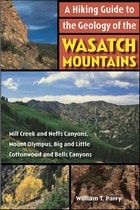
A Hiking Guide to the Geology of the Wasatch Mountains
Mill Creek and Neffs Canyons, Mount Olympus, Big and Little Cottonwood and Bells CanyonsWilliam T Parry
University of Utah Press, 2005
Northern Utah’s Wasatch Mountains are popular destinations for outdoor enthusiasts in every season. These mountains rise spectacularly from the relatively flat valley floor to thirteen peaks over 11,000 feet in elevation. An additional nineteen peaks rise more than 10,000 feet in elevation. Although many hiking guides exist for the Wasatch Mountains, there has been no guide book that focuses on the geologic features visible from the trails—until now.
Written by a recognized authority on the geology of the Wasatch Mountains, this guide is meant to enrich the experience of outdoor enthusiasts who want to understand the geological history and development of the Wasatch range. The first section of the book introduces the major geological time periods—the record of mountain building events from oldest to youngest, the effects of glaciation, and the development of the present topography. It then follows with a descriptive trail guide for each major trail system, including Mill Creek and Neffs Canyons, Mount Olympus, Little and Big Cottonwood Canyons, and Bells Canyon. Trail length, elevation gain, relative difficulty, and major geological features are outlined for each trail. Now you can hike these trails with the answers to all your geologic questions right at your fingertips.

A History of Reading in the West
Guglielmo Cavallo
University of Massachusetts Press, 1999

A History of the Alans in the West
From Their First Appearance in the Sources of Classical Antiquity through the Early Middle AgesBernard S. Bachrach
University of Minnesota Press, 1973
A History of the Alans in the West was first published in 1973. Minnesota Archive Editions uses digital technology to make long-unavailable books once again accessible, and are published unaltered from the original University of Minnesota Press editions.
The Alans, a nomadic people from the steppe lands of south Russia, were among the many invaders of the Roman empire who helped to bring about its fall. Unlike the majority of the invaders, they were not Germans — they were Indo-Iranians—and they were not, like most barbarians, organized in agricultural communities. This history traces their westward movement from the time of their first mention in sources of classical antiquity through the early Middle Ages.
Professor Bachrach discusses the social and religious institutions of the Alans and especially their military customs. As he shows, they contributed much to the military repertoire of the West, especially the feigned retreat tactic and the role of the cavalry as the primary part of the army. In their westward movement the Alans were assimilated by people in Gaul and Italy and served the empire in a military capacity during the fourth and fifth centuries. IN addition to their military and political impact in several areas, the Alans also influenced early medieval artistic styles, literary developments, place names, and personal names.
A number of illustrations provide examples of the artistic influence of the Alans, and there are maps pertinent to the history.
A Home in the West
Or, Emigration and Its ConsequencesRockwell, M. Emilia
University of Iowa Press, 2005

A Journey through the West
Thomas Rodney’s 1803 Journal from Delaware to the Mississippi TerritoryThomas Rodney
Ohio University Press, 1997
In A Journey through the West, Thomas Rodney writes vividly about flea-infested taverns, bad roads, drunken crew members, squatters, Indians sodden berths, food from the wild and treacherous waters. His is one of the most detailed early-nineteenth-century travel accounts.
Rodney, a Revolutionary War patriot and veteran, had been active in Delaware politics and had served in the Continental Congress. In 1803, President Thomas Jefferson appointed him as a land commissioner and a territorial judge in the newly formed Mississippi Territory. To assume his duties, Rodney and a small party traveled overland from Delaware across the length of southern Pennsylvania to Wheeling, (West) Virginia. From there, they boarded their newly constructed boat on the Ohio River and rowed, sailed, and drifted along the borders of (West) Virginia, Ohio, Indiana, Illinois, and Kentucky.
Finally they left the clear rapids of the Ohio and entered the muddy yet majestic Mississippi. They traveled southwesterly into a vast, exotic wilderness valley. The western shore of the Mississippi was still owned by Spain, and foreign soldiers were spotted. Under pressure to meet Rodney’s deadline for arrival in Mississippi Territory, the travelers were grateful for the Mississippi’s fast current. Yet in the journey’s last days they were faced with adventures and with near disaster when their boat struck a snag and partially sank.
Rodney kept a precise journal and sent letters to President Jefferson documenting his trek from the settled East through the barely chartered paths of the western wilderness. He hobnobbed with Meriwether Lewis, enjoyed the hospitality of Harman Blennerhassett, and received a tour of Cincinnati from Arthur St. Clair.
Dwight Smith and Ray Swick have compiled, edited and annotated Rodney’s story to present it in complete form for the first time. A Journey through the West is both a travel adventure and a colorful glimpse into the life of his day.
A Mouth Sweeter Than Salt
An African MemoirToyin Falola
University of Michigan Press, 2005
-Ama Ata Aidoo
"A splendid coming-of-age story so full of vivid color and emotion, the words seem to dance off the page. But this is not only Falola's memoir; it is an account of a new nation coming into being and the tensions and negotiations that invariably occur between city and country, tradition and modernity, men and women, rich and poor. A truly beautiful book."
-Robin D. G. Kelley
"More than a personal memoir, this book is a rich minihistory of contemporary Nigeria recorded in delicious detail by a perceptive eyewitness who grew up at the crossroads of many cultures."
-Bernth Lindfors
"The reader is irresistibly drawn into Falola's world. The prose is lucid. There is humor. This work is sweet. Period."
-Ngugi wa Thiongo'o
A Mouth Sweeter Than Salt gathers the stories and reflections of the early years of Toyin Falola, the grand historian of Africa and one of the greatest sons of Ibadan, the notable Yoruba city-state in Nigeria.
Redefining the autobiographical genre altogether, Falola miraculously weaves together personal, historical, and communal stories, along with political and cultural developments in the period immediately preceding and following Nigeria's independence, to give us a unique and enduring picture of the Yoruba in the mid-twentieth century. This is truly a literary memoir, told in language rich with proverbs, poetry, song, and humor.
Falola's memoir is far more than the story of one man's childhood experiences; rather, he presents us with the riches of an entire culture and community-its history, traditions, pleasures, mysteries, household arrangements, forms of power, struggles, and transformations.
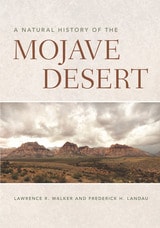
A Natural History of the Mojave Desert
Lawrence R. Walker and Frederick H. Landau
University of Arizona Press, 2018
A Natural History of the Mojave Desert explores how a combination of complex geology, varied geography, and changing climate has given rise to intriguing flora and fauna—including almost 3,000 plant species and about 380 terrestrial vertebrate animal species. Of these, one quarter of the plants and one sixth of the animals are endemic.
The authors, who, combined, have spent more than six decades living in and observing the Mojave Desert, offer a scientifically insightful and personally observed understanding of the desert. They invite readers to understand how the Mojave Desert looks, sounds, feels, tastes, and smells. They prompt us to understand how humans have lived in this desert where scant vegetation and water have challenged humans, past and present.
A Natural History of the Mojave Desert provides a lively and informed guide to understanding how life has adapted to the hidden riverbeds, huge salt flats, tiny wetlands, and windswept hills that characterize this iconic desert.

A New Divan
A Lyrical Dialogue between East and WestEdited by Barbara Schwepcke and Bill Swainson
Gingko, 2019
Reaching through time, language, and poetic history, A New Divan offers a lyrical conversation and opens paths of connection across cultures.

A New Generation Draws the Line
'Humanitarian' Intervention and the Standards of the WestNoam Chomsky
Pluto Press, 2012
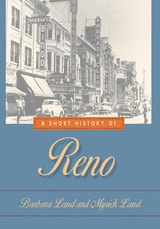
A Short History Of Reno
Barbara Land
University of Nevada Press, 1995
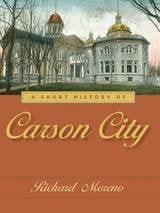
A Short History of Carson City
Richard Moreno
University of Nevada Press, 2011

A Short History of Denver
Stephen J. Leonard
University of Nevada Press, 2016
A Short History of Denver portrays the city’s twentieth-century ups and downs, including the City Beautiful movement, political corruption, the rise of the Ku Klux Klan in the 1920s, and the Great Depression of the 1930s. Here readers will find the meat and potatoes of economic and political history and much more, including sports history, social history, and the history of metropolitan-wide efforts to preserve the past.
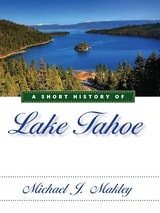
A Short History of Lake Tahoe
Michael J. Makley
University of Nevada Press, 2011
Lake Tahoe is one of the scenic wonders of the American West, a sapphire jewel that attracts millions of visitors each year. But the lake drew Native Americans to its summer shores for millennia, as well as more recent fortune hunters, scientists, and others.
A Short History of Lake Tahoe recounts the long, fascinating history of Lake Tahoe. Author Michael J. Makley examines the geology and natural history of the lake and introduces the people who shaped its history, including the Washoe Indians and such colorful characters as Mark Twain and legendary teamster Hank Monk, and later figures like entertainer Frank Sinatra and Olympic skier Julia Mancuso. He also covers the development of the lake's surrounding valley, including the impacts of mining, logging, and tourism, and the economic, political, and social controversies regarding the use and misuse of the lake's resources.
Generously illustrated with historic photographs, this book is an engaging introduction to one of the most magnificent sites in the world. It also illuminates the challenges of protecting natural beauty and a fragile environment while preserving public access and a viable economy in the surrounding communities.
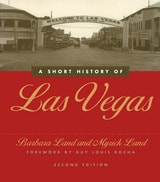
A Short History of Las Vegas
Barbara Land
University of Nevada Press, 2004
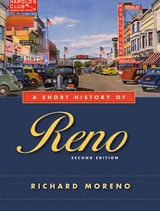
A Short History of Reno, Second Edition
Richard Moreno
University of Nevada Press, 2015
Moreno brings the city’s history up-to-date with coverage of the businesspeople and civic leaders who helped make Reno an attraction that still lures millions of visitors each year. Today’s travelers and residents explore Reno’s flamboyant heart and scenic wonders, topics the author examines in an accessible and lively fashion.

A Short History of San Francisco
Robert W. Cherny
University of Nevada Press, 2026
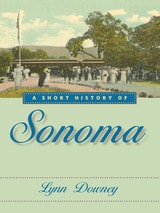
A Short History of Sonoma
Lynn Downey
University of Nevada Press, 2013
The book also addresses such topics as the development of local ranching and businesses and of transportation links to San Francisco that helped to make Sonoma and the surrounding Valley of the Moon a popular location for summer homes and resorts. It discusses the role of the nearby hot springs in attracting visitors and permanent residents, including people seeking cures for various ailments. There are also accounts of some of the famous people who lived in or near Sonoma and helped establish its mystique, including Mexican general Mariano Vallejo, the town’s first leader; Hungarian winemaker Agoston Haraszthy, who first saw the region’s potential for producing superior wines; and writers Jack London and M. F. K. Fisher, who made their homes in the Valley of the Moon, drawn by its beauty and bucolic lifestyle.
A Short History of Sonoma is generously illustrated with vintage photographs. It is a delightful account of one of America’s most charming towns and its evolution from rowdy frontier settlement to the paragon of sophisticated living that it is today.
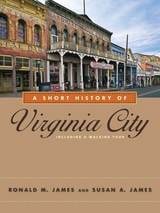
A Short History of Virginia City
Ronald M. James
University of Nevada Press, 2014
The city’s story did not end when the Comstock Lode played out. Beginning in the 1930s, bohemian artists, literati, and tourists were intrigued by this remnant of the Old West. The leader of Manhattan’s café society, Lucius Beebe, moved here and relaunched the Territorial Enterprise in 1950. Television’s most popular western from 1959 to 1973, Bonanza, located its fictional Ponderosa Ranch nearby. In the summer of 1965, a handful of Bay Area musicians, including Big Brother and the Holding Company, performed at the Red Dog Saloon and launched psychedelic rock, part of the inspiration for a defining decade of youth culture. Today it is both a National Historic Landmark District and a living community. Visitors come to enjoy its saloons and restaurants, admire its architecture, and learn from its museums and exhibits. A Short History of Virginia City will enhance their experience and will also be enjoyed by anyone interested in the history of Nevada, mining, and the Old West.
• Includes an illustrated walking tour describing more than thirty buildings and sites

A Short History of the Nigerian Civil War
Douglas A. Anthony
Ohio University Press, 2027
A Short History of the Nigerian Civil War is an accessible and balanced scholarly account of the 1967–70 conflict (also remembered as the Nigeria-Biafra War or simply the Biafran War). More than a seminal event in the history of Africa’s most populous country, the war marked a tragic milestone in the narrative of African decolonization. It also helped shape both international humanitarianism and media coverage of conflicts in developing countries, and offers an interesting, counterintuitive footnote to Cold War history. Interest in the war remains high, though recent book-length treatments have gravitated to memoir and specialized accounts. This book offers readers a concise, evenhanded introduction to the war’s causes, major events, and consequences, presented with a balance of narrative and analysis.
Author Douglas A. Anthony begins by explaining the influence of British imperialism on the country’s historical trajectory. Colonial geography and governance presented the leaders of newly independent Nigeria a template for ongoing polarization and suspicion, and when a military coup toppled the country’s short-lived First Republic (1960–66), existing geopolitical, economic, and ethnic tensions reached unprecedented levels. A second coup, accompanied by lethal coordinated attacks by civilians and soldiers on members of the Igbo ethnic group, triggered the return of most Igbos to their home region in southeastern Nigeria. Here, in May 1967, they declared independence as the Republic of Biafra, led by Chukwuemeka Odumegwu Ojukwu.
The war that followed, which Nigerian military leader Yakubu Gowon had promised would be a brief police action, lasted thirty months. During that time, Biafra, blockaded and diplomatically isolated, confronted larger and better-supplied Nigerian forces, an economic embargo, and escalating starvation. What the Nigerian government described as a war of unification was for most Biafrans a defensive war against a genocidal threat. By most accounts one million people died, the vast majority Biafran civilians.
With the war’s end in 1970, Biafra’s people and greatly diminished territory rejoined Nigeria. But behind formal declarations of “No victor, no vanquished” lingered the war’s enormous human, economic, and political consequences, felt most acutely by Igbos, many of whom continue to contend with a legacy of marginalization.
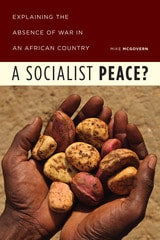
A Socialist Peace?
Explaining the Absence of War in an African CountryMike McGovern
University of Chicago Press, 2017
Guinea is rich in resources, but its people are some of the poorest in the world. Its political situation is polarized by fiercely competitive ethnic groups. Weapons flow freely through its lands and across its borders. And, finally, it is still recovering from the oppressive regime of Sékou Touré. McGovern argues that while Touré’s reign was hardly peaceful, it was successful—often through highly coercive and violent measures—at establishing a set of durable national dispositions, which have kept the nation at peace. Exploring the ambivalences of contemporary Guineans toward the afterlife of Touré’s reign as well as their abiding sense of socialist solidarity, McGovern sketches the paradoxes that undergird political stability.
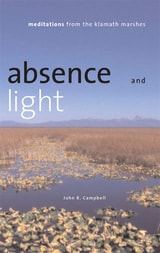
Absence And Light
Meditations From The Klamath MarshesJohn R. Campbell
University of Nevada Press, 2002
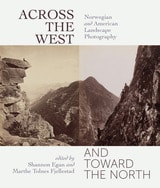
Across the West and Toward the North
Norwegian and American Landscape PhotographyEdited by Shannon Egan and Marthe Tolnes Fjellestad
University of Utah Press, 2021
In this edited volume, Norwegian and American scholars offer the first study of the striking parallels in the production, distribution, and reception of these modern expressions of landscape and nationhood. In recognizing how landscape photographs were made meaningful to international audiences—such as tourists, visitors to world’s fairs, scientists, politicians, and immigrants—the authors challenge notions of American exceptionalism and singularly nationalistic histories.
The book includes stunning photographs of mountainous landscapes, glaciers, and forests, punctuated by signs of human development and engineering, with more than one hundred rarely seen plates by photographers Knud Knudsen, Anders Beer Wilse, Timothy O’Sullivan, Charles R. Savage, and others.
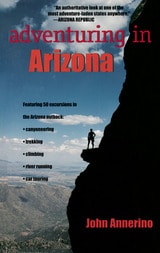
Adventuring in Arizona
John Annerino
University of Arizona Press, 2003

Africa and the West
Philip D. Curtin
University of Wisconsin Press, 1974
“This book offers some exciting examples of the insights to be gained from studies of the intellectual responses of Africans to the West. In six case studies, anthropologists, historians, and a literary critic study the impact of the West on African patterns of thought.”—Library Journal

African Hustler Narratives
E-Fraud Economy and Postmillennial CapitalismDaniel Chukwuemeka
University of Michigan Press, 2027
Across contemporary African literature, hustlers appear as online scammers, sex workers, undocumented migrants, and others who pursue self-advancement through unconventional or compromising means. African Hustler Narratives asks what these figures reveal when we look beyond the familiar discourse of morality or criminality. Daniel Chukwuemeka argues that the hustler’s pursuit of self-advancement through improvised means constitutes a response to structural exclusion from global capitalism, which a purely moral or criminal framing misses entirely.
Moving from earlier forms of hustling to the digital world of e-fraud, Chukwuemeka shows how African writers use these morally complicated figures to explore economic inequality and the difficult choices that arise when the neoliberal promise of opportunity collides with the realities of systemic exclusion. Chukwuemeka also extends the hustler motif to those who tell and study these stories. Though their work differs from the e-scammer’s, African writers and critics negotiate Global North publishing and academic valuation systems that reproduce the disparities they interrogate, making the e-scammer their doppelgänger.

African Miracle, African Mirage
Transnational Politics and the Paradox of Modernization in Ivory CoastAbou B. Bamba
Ohio University Press, 2016
Throughout the 1960s and 1970s, Ivory Coast was touted as an African miracle, a poster child for modernization and the ways that Western aid and multinational corporations would develop the continent. At the same time, Marxist scholars—most notably Samir Amin—described the capitalist activity in Ivory Coast as empty, unsustainable, and incapable of bringing real change to the lives of ordinary people. To some extent, Amin’s criticisms were validated when, in the 1980s, the Ivorian economy collapsed.
In African Miracle, African Mirage, Abou B. Bamba incorporates economics, political science, and history to craft a bold, transnational study of the development practices and intersecting colonial cultures that continue to shape Ivory Coast today. He considers French, American, and Ivorian development discourses in examining the roles of hydroelectric projects and the sugar, coffee, and cocoa industries in the country’s boom and bust. In so doing, he brings the agency of Ivorians themselves to the fore in a way not often seen in histories of development. Ultimately, he concludes that the “maldevelopment” evident by the mid-1970s had less to do with the Ivory Coast’s “insufficiently modern” citizens than with the conflicting missions of French and American interests within the context of an ever-globalizing world.

African Pharmakon
The Asylum as Shrine from Slavery to the ReturnNana Osei Quarshie
University of Chicago Press, 2025
For centuries, mental distress in West Africa has been subject to a mix of healing, harming, ritual, and regulation. In African Pharmakon, Nana Osei Quarshie questions conventional narratives about colonial psychiatry. Instead of displacing African therapeutic traditions, he argues, European psychiatric institutions in fact built upon them, adapting long-standing techniques of social control and healing.
With a focus on Ghana, Quarshie explores the shifting landscape of West African mental health practices, tracking their transformation from shrine-based rituals to colonial asylums and modern psychiatric institutions. Combining extensive archival research and ethnographic fieldwork, including the first scholarly examination of patient records from the Accra Psychiatric Hospital, Quarshie identifies five enduring techniques that have shaped the treatment of mental distress: spiritual pawning, logging, manhunting, mass expulsion, and pharmacotherapy.
Rejecting the simplistic opposition of Indigenous healing versus colonial oppression, African Pharmakon provides a nuanced account of how psychiatric care in Ghana became a tool of empowerment as well as exclusion. This pioneering study reframes our understanding of psychiatry and mental health governance in West Africa, past and present.

African Science
Witchcraft, Vodun, and Healing in Southern BeninDouglas J. Falen
University of Wisconsin Press, 2020
Although the Beninese understanding of àze reflects positive scientific properties in its use of specialized knowledge to harness nature's energy and realize economic success, its boundless power is inherently ambivalent because it can corrupt its users, who dispense death and destruction. Witches and healers are equivalent to supervillains and superheroes, locked in epic battles over malevolent and benevolent human desires. Beninese people's discourse about such mystical confrontations expresses a philosophy of moral duality and cosmic balance. Falen demonstrates how a deep engagement with another lived reality opens our minds and contributes to understanding across cultural difference.

Ageing East and West
Gerontology across the Iron CurtainDaniela Koleva
Central European University Press, 2027
Ageing East and West
Gerontology across the Iron CurtainDaniela Koleva
Central European University Press, 2027
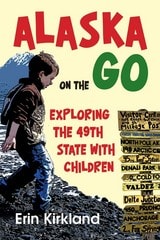
Alaska on the Go
Exploring the 49th State with ChildrenErin Kirkland
University of Alaska Press, 2014
Journalist and Alaska resident Erin Kirkland knows every corner of the state, and she has crossed thousands of miles with her son. In Alaska on the Go, she offers a fresh take on exploring some of the most beautiful land in the world, with tips and tricks that only an insider knows. Serving as the perfect tour guide, Kirkland identifies the best and most kid-friendly destinations in cities across Alaska. She offers practical advice on everything from restaurants to rest stops and from weather surprises to wild animals. Photos, maps, and sample itineraries make it easy for parents to plan a trip that will delight and entertain everyone.
The only family travel guide to Alaska written by a current Alaskan, Alaska on the Go makes the state more accessible than ever. Whether traveling via car, cruise ship, or dogsled, this practical, portable guide will open up a new world of memorable adventures.

Alaska on the Go
Exploring the Alaska Marine Highway System with ChildrenErin Kirkland
University of Alaska Press, 2017
A staple of coastal transportation since the 1950s, the Alaska Marine Highway System is a vital link to cities that are often inaccessible except by air. Alaska on the Go offers fascinating accounts of both the small coastal towns and the larger population centers serviced by the highway along with easy-to-navigate route descriptions, helpful packing lists, and tips for inland and onboard adventures. Portable and personable, and covering all thirty routes that make up the Alaska Marine Highway System, Alaska on the Go is the perfect companion for the intrepid traveler.
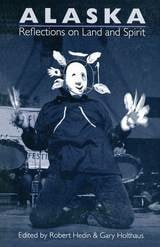
Alaska
Reflections on Land and SpiritEdited by Robert Hedin and Gary Holthaus
University of Arizona Press, 1989

All the Roads Are Open
The Afghan JourneyAnnemarie Schwarzenbach
Seagull Books, 2011

America, New Mexico
Robert Leonard Reid
University of Arizona Press, 1998

Amkoullel, the Fula Boy
Amadou Hampâté Bâ
Duke University Press, 2021

Amílcar Cabral
A Nationalist and Pan-Africanist RevolutionaryPeter Karibe Mendy
Ohio University Press, 2019
Amílcar Cabral was an agronomist who led an armed struggle that ended Portuguese colonialism in Guinea-Bissau and Cabo Verde. The uprising contributed significantly to the collapse of a fascist regime in Lisbon and the dismantlement of Portugal’s empire in Africa. Assassinated by a close associate with the deep complicity of the Portuguese colonial authorities, Cabral not only led one of Africa’s most successful liberation movements, but was the voice and face of the anticolonial wars against Portugal.
A brilliant military strategist and astute diplomat, Cabral was an original thinker who wrote innovative and inspirational essays that still resonate today. His charismatic and visionary leadership, his active pan-Africanist solidarity and internationalist commitment to “every just cause in the world,” remain relevant to contemporary struggles for emancipation and self-determination. Peter Karibe Mendy’s compact and accessible biography is an ideal introduction to his life and legacy.
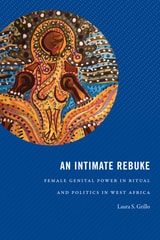
An Intimate Rebuke
Female Genital Power in Ritual and Politics in West AfricaLaura S. Grillo
Duke University Press, 2018
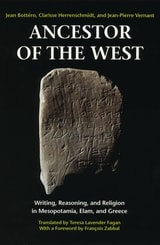
Ancestor of the West
Writing, Reasoning, and Religion in Mesopotamia, Elam, and GreeceJean Bottéro, Clarisse Herrenschmidt, and Jean-Pierre Vernant
University of Chicago Press, 2000
"Full of matter for anyone interested in language, religion, and politics in the ancient world."—R. T. Ridley, Journal of Religious History
"In this accessible introduction to the ancient world, three leading French scholars explore the emergence of rationality and writing in the West, tracing its development and its survival in our own traditions. . . . Jean Bottero focuses on writing and religion in ancient Mesopotamia, Clarisse Herrenschmidt considers a broader history of ancient writing, and Jean-Pierre Vernant examines classical Greek civilization in the context of Near Eastern history."—Translation Review
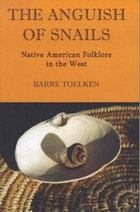
Anguish of Snails
Native American Folklore in the WestBarre Toelken
Utah State University Press, 2003
Winner of the 2004 Chicago Folklore Prize, The Anguish of Snails is an essential work for the collection of any serious reader in folklore or Native American studies.
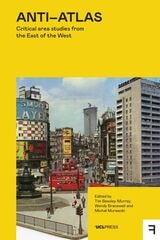
Anti-Atlas
Critical Area Studies from the East of the WestEdited by Tim Beasley-Murray, Wendy Bracewell, and Michal Murawski
University College London, 2025
Anti-Atlas uses the upheavals of Eastern Europe as a lens through which to rethink the politics of area studies. This collection unsettles traditional hierarchies, questioning how knowledge is produced, who controls it, and how we divide the world into “areas.”
Consisting of an eclectic mix of scholars from Europe, the UK, and North America, the book experiments with diverse genres—from academic essays and autobiographical reflections to travel guides and data visualizations. Through this innovative approach, the editors propose a manifesto for area studies to be more critical and reflexive; to be undisciplined and deeply engaged with local perspectives.
By dismantling the assumptions embedded in atlases and disciplinary boundaries, Anti-Atlas invites readers to think differently about how we construct and categorize the world. Of particular interest to scholars of area studies and critical theory, this work reassesses what it means to study places in an era of geopolitical rupture.
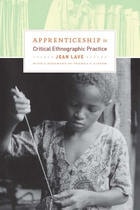
Apprenticeship in Critical Ethnographic Practice
Jean Lave
University of Chicago Press, 2011
In this extended meditation, Jean Lave interweaves analysis of the process of apprenticeship among the Vai and Gola tailors of Liberia with reflections on the evolution of her research on those tailors in the late 1970s. In so doing, she provides both a detailed account of her apprenticeship in the art of sustained fieldwork and an insightful overview of thirty years of changes in the empirical and theoretical facets of ethnographic practice. Examining the issues she confronted in her own work, Lave shows how the critical questions raised by ethnographic research erode conventional assumptions, altering the direction of the work that follows.
As ethnography takes on increasing significance to an ever widening field of thinkers on topics from education to ecology, this erudite but accessible book will be essential to anyone tackling the question of what it means to undertake critical and conceptually challenging fieldwork. Apprenticeship in Critical Ethnographic Practice explains how to seriously explore what it means to be human in a complex world—and why it is so important.

Arizona Friend Trips
Stories from the RoadLisa Schnebly Heidinger and Julie Morrison
University of Arizona Press, 2025
Southwest Books of the Year Pick
In Arizona Friend Trips, Lisa Schnebly Heidinger and Julie Morrison invite readers to explore the state’s most cherished places through a blend of poetry, prose, and photography. From the iconic landmarks to hidden gems, each chapter of this captivating travelogue provides a rich tapestry of historical insight, personal anecdotes, and emotional reflections, painting a vivid portrait of Arizona’s diverse landscapes and vibrant culture. Be part of this unique journey as Lisa and Julie embark on an unforgettable adventure, filled with laughter, nostalgia, and a deep appreciation for the beauty of the Grand Canyon State.
Arizona Friend Trips is a celebration of friendship, discovery, and the enduring spirit of exploration. As Lisa and Julie share their favorite trips and formative experiences, readers are treated to an intimate glimpse into their lives, making this book a joyous and uplifting read for travelers and armchair explorers alike. Whether you're planning your own Arizona adventure or simply yearning to wander from the comfort of home, Arizona Friend Trips promises to inspire, delight, and leave you longing for the open road.