Results by title
21 books match the query 'Western countries'
Art, Politics, and Development
Philipp H Lepenies
Temple University Press, 2013
In the series Politics, History and Social Change, edited by John C. Torpey
Between the Middle East and the Americas
The Cultural Politics of DiasporaEdited by Evelyn Alsultany and Ella Shohat
University of Michigan Press, 2013
Between the Middle East and the Americas: The Cultural Politics of Diaspora traces the production and circulation of discourses about "the Middle East" across various cultural sites, against the historical backdrop of cross-Atlantic Mahjar flows. The book highlights the fraught and ambivalent situation of Arabs/Muslims in the Americas, where they are at once celebrated and demonized, integrated and marginalized, simultaneously invisible and spectacularly visible. The essays cover such themes as Arab hip-hop's transnational imaginary; gender/sexuality and the Muslim digital diaspora; patriotic drama and the media's War on Terror; the global negotiation of the Prophet Mohammad cartoons controversy; the Latin American paradoxes of Turcophobia/Turcophilia; the ambiguities of the bellydancing fad; French and American commodification of Rumi spirituality; the reception of Iranian memoirs as cultural domestication; and the politics of translation of Turkish novels into English. Taken together, the essays analyze the hegemonic discourses that position "the Middle East" as a consumable exoticized object, while also developing complex understandings of self-representation in literature, cinema/TV, music, performance, visual culture, and digital spaces. Charting the shifting significations of differing and overlapping forms of Orientalism, the volume addresses Middle Eastern diasporic practices from a transnational perspective that brings postcolonial cultural studies methods to bear on Arab American studies, Middle Eastern studies, and Latin American studies. Between the Middle East and the Americas disentangles the conventional separation of regions, moving beyond the binarist notion of "here" and "there" to imaginatively reveal the thorough interconnectedness of cultural geographies.
Comic China
Representing Common Ground, 1890-1945Wendy Gan
Temple University Press, 2018
Wendy Gan’s Comic China investigates the circumstances and motivations of cross-cultural humor. How do works that trade in laughter shape our understanding of Western discourses about China? Is humor meant to be inclusive or exclusive? Does it protect or challenge the status quo? Gan suggests that the simple, straightforward laugh may actually be a far more intricate negotiation of power relations.
Gan unpacks texts by authors who had little real contact with China as well as writers whose proximity to China influenced their representations. Looking beyond the familiar canon of serious modernist texts and the Yellow Peril classics of popular fiction, Gan analyzes turn-of-the-twentieth-century musical comedies set in the Far East, Ernest Bramah’s chinoiserie-inspired tales, and interwar travel writing. She also considers the comic works of the missionary Arthur Henderson Smith, the former Maritime Customs Officer J.O.P. Bland, and the Shanghai journalist and advertising man Carl Crow.
Though it includes humor that is less than complimentary to the Chinese, Comic China reminds us that laughter is tied to our common humanity. Gan navigates the humor used in comic depictions ultimately to find, not superiority or ridicule, but common ground.
Crime and Justice, Volume 43
Why Crime Rates Fall, and Why They Don'tEdited by Michael Tonry
University of Chicago Press Journals, 2015
The contributors to this volume include Marcelo Aebi, Andromachi Tseloni, Eric Baumer, Manuel Eisner, Graham Farrell, Janne Kivivuori, Tapio Lappi-Seppälä, Suzy McElrath, Richard Rosenfeld, Rossella Selmini, Nick Tilley, and Kevin T. Wolff.
Crime and Justice, Volume 44
A Review of ResearchEdited by Michael Tonry
University of Chicago Press Journals, 2015
Crime and Justice, Volume 45
Sentencing Policies and Practices in Western Countries: Comparative and Cross-National PerspectivesEdited by Michael Tonry
University of Chicago Press Journals, 2016
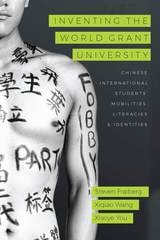
Inventing the World Grant University
Chinese International Students’ Mobilities, Literacies, and IdentitiesSteven Fraiberg
Utah State University Press, 2017
Through an exploration of the literacy practices of undergraduate Chinese international students in the United States and China, Inventing the World Grant University demonstrates the ways in which literacies, mobilities, and transnational identities are constructed and enacted across institutional and geographic borders.
Steven Fraiberg, Xiqiao Wang, and Xiaoye You develop a mobile literacies framework for studying undergraduate Chinese international students enrolling at Western institutions, whose numbers have increased in recent years. Focusing on the literacy practices of these students at Michigan State University and at Sinoway International Education Summer School in China, Fraiberg, Wang, and You draw on a range of mobile methods to map the travel of languages, identities, ideologies, pedagogies, literacies, and underground economies across continents. Case studies of administrators’, teachers’, and students’ everyday literacy practices provide insight into the material and social structures shaping and shaped by a globalizing educational landscape.
Advocating an expansion of focus from translingualism to transliteracy and from single-site analyses to multi-site approaches, this volume situates local classroom practices in the context of the world grant university. Inventing the World Grant University contributes to scholarship in mobility, literacy, spatial theory, transnationalism, and disciplinary enculturation. It further offers insight into the opportunities and challenges of enacting culturally relevant pedagogies.
Love and Friendship in the Western Tradition
From Plato to PostmodernityJames McEvoy
Catholic University of America Press, 2023

Minor China
Method, Materialisms, and the AestheticHentyle Yapp
Duke University Press, 2021
Nothing Has to Make Sense
Upholding White Supremacy through Anti-Muslim RacismSherene H. Razack
University of Minnesota Press, 2022
How Western nations have consolidated their whiteness through the figure of the Muslim in the post-9/11 world
While much has been written about post-9/11 anti-Muslim racism (often termed Islamophobia), insufficient attention has been given to how anti-Muslim racism operates through law and is a vital part of law’s protection of whiteness. This book fills this gap while also providing a unique new global perspective on white supremacy. Sherene H. Razack, a leading critical race and feminist scholar, takes an innovative approach by situating law within media discourses and historical and contemporary realities. We may think of law as logical, but, argues Razack, its logic breaks down when the subject is Muslim.
Tracing how white subjects and majority-white nations in the post-9/11 era have consolidated their whiteness through the figure of the Muslim, Razack examines four sites of anti-Muslim racism: efforts by American evangelical Christians to ban Islam in the school curriculum; Canadian and European bans on Muslim women’s clothing; racial science and the sentencing of Muslims as terrorists; and American national memory of the torture of Muslims during wars and occupations. Arguing that nothing has to make sense when the subject is Muslim, she maintains that these legal and cultural sites reveal the dread, phobia, hysteria, and desire that mark the encounter between Muslims and the West.
Through the prism of racism, Nothing Has to Make Sense argues that the figure of the Muslim reveals a world divided between the deserving and the disposable, where people of European origin are the former and all others are confined in various ways to regimes of disposability. Emerging from critical race theory, and bridging with Islamophobia/critical religious studies, it demonstrates that anti-Muslim racism is a revelatory window into the operation of white supremacy as a global force.

On Western Terrorism - New Edition
From Hiroshima to Drone WarfareNoam Chomsky and Andre Vltchek
Pluto Press, 2017
“Noam Chomsky is a global phenomenon.”—New York Review of Books
In On Western Terrorism, world-renowned intellectual Noam Chomsky discusses Western power and propaganda with filmmaker and investigative journalist Andre Vltchek. Together they touch on colonialism, propaganda, and the media, and cover topics from the Soviet Union to Latin America to the Arab Spring.
Here is the perfect introduction to Chomsky's political thought and provides an accessible approach for anyone who wishes to better understand the West's fraught role in the world. Admired by some, condemned by others, and feared by all—the military might of the West is undeniably colossal.
Beginning with stories of the New York newsstand where Chomsky started his political education as a teenager, the discussion broadens out to encompass colonialism, imperial control, propaganda, and drone warfare.
Chomsky and Vltchek offer a powerful critique of the legacy of colonialism, touching upon many countries including Syria, Nicaragua, Cuba, China, Chile, and Turkey. The Table of Contents:
1. The Murderous Legacy of Colonialism
2. Concealing the Crimes of the West
3. Propaganda and the Media
4. The Soviet Bloc
5. India and China
6. Latin America
7. The Middle East and the Arab Spring
8. Hope in the Most Devastated Places on Earth
9. The Decline of U.S. Power Timeline
With a fresh design and a new foreword by Chomsky, this edition of On Western Terrorism stands as an influential and powerful critique of the West's role in the world, inspiring all who read it to think independently and critically.
Orientalism and the Jews
Edited by Ivan Davidson Kalmar and Derek Penslar
Brandeis University Press, 2004
Politics without Vision
Thinking without a Banister in the Twentieth CenturyTracy B. Strong
University of Chicago Press, 2012
From Plato through the nineteenth century, the West could draw on comprehensive political visions to guide government and society. Now, for the first time in more than two thousand years, Tracy B. Strong contends, we have lost our foundational supports. In the words of Hannah Arendt, the state of political thought in the twentieth and twenty-first centuries has left us effectively “thinking without a banister.”
Postcoloniality-Decoloniality-Black Critique
Joints and FissuresEdited by Sabine Broeck and Carsten Junker
Campus Verlag, 2014

Preserving the Spell
Basile's "The Tale of Tales" and Its Afterlife in the Fairy-Tale TraditionArmando Maggi
University of Chicago Press, 2015
If we want to rediscover the power of fairy tales—as Armando Maggi thinks we should—we need to discover a new mythic lens, a new way of approaching and understanding, and thus re-creating, the transformative potential of these stories. In Preserving the Spell, Maggi argues that the first step is to understand the history of the various traditions of oral and written narrative that together created the fairy tales we know today. He begins his exploration with the ur-text of European fairy tales, Giambattista Basile’s The Tale of Tales, then traces its path through later Italian, French, English, and German traditions, with particular emphasis on the Grimm Brothers’ adaptations of the tales, which are included in the first-ever English translation in an appendix. Carrying his story into the twentieth century, Maggi mounts a powerful argument for freeing fairy tales from their bland contemporary forms, and reinvigorating our belief that we still can find new, powerfully transformative ways of telling these stories.
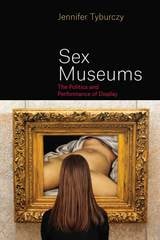
Sex Museums
The Politics and Performance of DisplayJennifer Tyburczy
University of Chicago Press, 2015
All museums are sex museums. In Sex Museums, Jennifer Tyburczy takes a hard look at the formation of Western sexuality—particularly how categories of sexual normalcy and perversity are formed—and asks what role museums have played in using display as a technique for disciplining sexuality. Most museum exhibits, she argues, assume that white, patriarchal heterosexuality and traditional structures of intimacy, gender, and race represent national sexual culture for their visitors. Sex Museums illuminates the history of such heteronormativity at most museums and proposes alternative approaches for the future of public display projects, while also offering the reader curatorial tactics—what she calls queer curatorship—for exhibiting diverse sexualities in the twenty-first century.
Tyburczy shows museums to be sites of culture-war theatrics, where dramatic civic struggles over how sex relates to public space, genealogies of taste and beauty, and performances of sexual identity are staged. Delving into the history of erotic artifacts, she analyzes how museums have historically approached the collection and display of the material culture of sex, which poses complex moral, political, and logistical dilemmas for the Western museum. Sex Museums unpacks the history of the museum and its intersections with the history of sexuality to argue that the Western museum context—from its inception to the present—marks a pivotal site in the construction of modern sexual subjectivity.
Social Security Programs and Retirement around the World
The Effects of Reforms on Retirement BehaviorEdited by Axel Börsch-Supan and Courtney C. Coile
University of Chicago Press, 2025
A global analysis of the effects of social security reforms on the retirement incentives and labor force trends of older workers.
Employment among older men and women has increased dramatically in recent years, reversing a downward trend in the closing decades of the twentieth century. Social Security Programs and Retirement around the World examines how changing retirement incentives have reshaped labor force participation trends among older workers. The chapters feature country-specific analyses for Belgium, Canada, Denmark, France, Germany, Italy, Japan, Netherlands, Spain, Sweden, the United Kingdom, and the United States. They find that while there is significant heterogeneity across countries, the reforms of recent decades have generally reduced the implicit tax on work at older ages. These changes correlate positively with labor force participation. The studies exploit the variation in the timing and extent of reforms of retirement incentives and employ microeconometric methods to investigate whether this correlation reflects a causal relationship. Policy changes appear to have contributed to rising labor force activity, but other factors like the role of women in the labor force, improved health, and changes in private pensions likely also play important roles.
Social Security Programs and Retirement around the World
Working LongerEdited by Courtney C. Coile, Kevin Milligan, and David A. Wise
University of Chicago Press, 2019
This eighth phase of the International Social Security project, which compares the social security and retirement experiences of twelve developed countries, documents trends in participation and employment and explores reasons for the rising participation rates of older workers. The chapters use a common template for analysis, which facilitates comparison of results across countries. Using within-country natural experiments and cross-country comparisons, the researchers study the impact of improving health and education, changes in the occupation mix, the retirement incentives of social security programs, and the emergence of women in the workplace, on labor markets. The findings suggest that social security reforms and other factors such as the movement of women into the labor force have played an important role in labor force participation trends.
Supper at Emmaus
Glenn W. Olsen
Catholic University of America Press, 2016
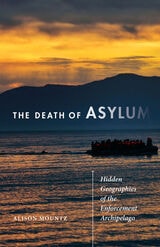
The Death of Asylum
Hidden Geographies of the Enforcement ArchipelagoAlison Mountz
University of Minnesota Press, 2020
Investigating the global system of detention centers that imprison asylum seekers and conceal persistent human rights violations
Remote detention centers confine tens of thousands of refugees, asylum seekers, and undocumented immigrants around the world, operating in a legal gray area that hides terrible human rights abuses from the international community. Built to temporarily house eight hundred migrants in transit, the immigrant “reception center” on the Italian island of Lampedusa has held thousands of North African refugees under inhumane conditions for weeks on end. Australia’s use of Christmas Island as a detention center for asylum seekers has enabled successive governments to imprison migrants from Asia and Africa, including the Sudanese human rights activist Abdul Aziz Muhamat, held there for five years.
In The Death of Asylum, Alison Mountz traces the global chain of remote sites used by states of the Global North to confine migrants fleeing violence and poverty, using cruel measures that, if unchecked, will lead to the death of asylum as an ethical ideal. Through unprecedented access to offshore detention centers and immigrant-processing facilities, Mountz illustrates how authorities in the United States, the European Union, and Australia have created a new and shadowy geopolitical formation allowing them to externalize their borders to distant islands where harsh treatment and deadly force deprive migrants of basic human rights.
Mountz details how states use the geographic inaccessibility of places like Christmas Island, almost a thousand miles off the Australian mainland, to isolate asylum seekers far from the scrutiny of humanitarian NGOs, human rights groups, journalists, and their own citizens. By focusing on borderlands and spaces of transit between regions, The Death of Asylum shows how remote detention centers effectively curtail the basic human right to seek asylum, forcing refugees to take more dangerous risks to escape war, famine, and oppression.
The Making of Modern Medicine
Turning Points in the Treatment of DiseaseMichael Bliss
University of Chicago Press, 2011
At the dawn of the twenty-first century, we have become accustomed to medical breakthroughs and conditioned to assume that, regardless of illnesses, doctors almost certainly will be able to help—not just by diagnosing us and alleviating our pain, but by actually treating or even curing diseases, and significantly improving our lives.
For most of human history, however, that was far from the case, as veteran medical historian Michael Bliss explains in The Making of Modern Medicine. Focusing on a few key moments in the transformation of medical care, Bliss reveals the way that new discoveries and new approaches led doctors and patients alike to discard fatalism and their traditional religious acceptance of suffering in favor of a new faith in health care and in the capacity of doctors to treat disease. He takes readers in his account to three turning points—a devastating smallpox outbreak in Montreal in 1885, the founding of the Johns Hopkins Hospital and Medical School, and the discovery of insulin—and recounts the lives of three crucial figures—researcher Frederick Banting, surgeon Harvey Cushing, and physician William Osler—turning medical history into a fascinating story of dedication and discovery.
Compact and compelling, this searching history vividly depicts and explains the emergence of modern medicine—and, in a provocative epilogue, outlines the paradoxes and confusions underlying our contemporary understanding of disease, death, and life itself.