Results by title
8 books match the query 'Wetland ecology'
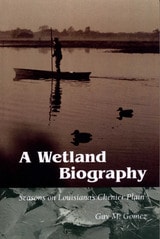
A Wetland Biography
Seasons on Louisiana’s Chenier PlainBy Gay M. Gomez
University of Texas Press, 1998
Louisiana's Chenier Plain is a 2,200-square-mile region of marshes and oak-covered ridges (cheniers) that stretches along the Gulf of Mexico from Sabine Lake to Vermilion Bay. Its inhabitants, some 6,000 people of Cajun and other ancestries, retain strong economic and cultural ties to the land and its teeming wildlife. They call it paradise...but it is a vulnerable paradise. In this multifaceted study, Gay Gomez explores the interaction of the land, people, and wildlife of the Chenier Plain, revealing both the uniqueness of the region and the challenges it faces.
After describing the geography and history of the Chenier Plain, Gomez turns to the lifeways of its people. Drawing on their words and stories, she tells how the chenier dwellers combine modern occupations with traditional pursuits such as alligator and waterfowl hunting, fur trapping, and fishing. She shows how these traditions of wildlife use provide both economic incentives for conservation and a source of personal and place identity. This portrait of a "working wetland" reveals how wildlife use and appreciation can give rise to a stewardship that balances biological, economic, and cultural concerns in species and habitat protection.
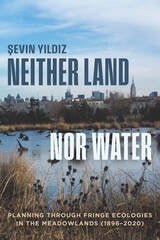
Neither Land nor Water
Planning Through Fringe Ecologies in the Meadowlands (1896–2020)Sevin Yildiz
University of Chicago Press, 2026
An urban and environmental history of the New Jersey Meadowlands, where marsh meets megamall.
The New Jersey Meadowlands, the vast marshes across the Hudson River from New York City, are a mysterious and complex wetland. Both strange and well-known to the millions of people who traverse the northeast corridor every year, this landscape is not well understood despite its familiarity. Seemingly natural and unnatural, human and nonhuman, the Meadowlands has long been shaped by urban development, industry, infrastructure, and countless dreams.
In Neither Land nor Water, Şevin Yıldız offers a close look at the planners, scientists, developers, politicians, industrialists, and others who have engaged with, dreamed about, or damaged this transitional ecology in different ways over the decades. She traces key periods in the area’s rich histories of urban planning and ecological thought, from the dispossession of the Lenape natives, through the dawn of ecological science, and onto both intensive industrial developments and environmental resistance to them. She examines as well how the Meadowlands exposes the inadequacies of today’s approaches to planning in the face of climate change and how they perhaps offer clues to a better future.
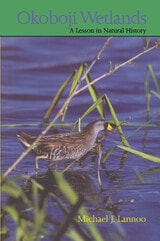
Okoboji Wetlands
A Lesson in Natural HistoryMichael J. Lannoo
University of Iowa Press, 1996
Lake Okoboji in northwest Iowa is the jewel of the Iowa Great Lakes. A region of wetlands formed by prairie potholes, the area is rich with lakes, sloughs, fens, creeks, prairies, and kettleholes. In this readable and beautifully illustrated volume, Michael Lannoo presents an extensive natural history of Okoboji and its cherished wetlands that examines that world of our grandparents, compares it to today's world, and extrapolates to the world of our grandchildren.

Peril in the Ponds
Deformed Frogs, Politics, and a Biologist's QuestJudy Helgen
University of Massachusetts Press, 2012
By the 1990s, wetlands across the United States were endangered from pollution and decades of drainage to convert them into farmland and urban developments. But when deformed frogs—many with missing legs or eyes, footless stumps, or misshapen jaws—began to emerge from Minnesota wetlands, alarm bells went off. What caused such deformities? Pollution? Ultraviolet rays? Biological agents? And could the mysterious cause also pose a threat to humans?
Judy Helgen writes with passionate concern about vulnerable frogs and wetlands as she navigates through a maze of inquisitive media and a reluctant government agency. She reports on the complexity of a growing catastrophe for frogs and broadens the issue as she researches and meets with scientists from around the world. She affirms the importance of examining aquatic life to understand pollution and the need to rescue our remaining wetlands. She also shares the fears expressed by the teachers, students, and other citizens who found these creatures, sensed a problem, and looked to her for answers. Ultimately, this is a story about the biological beauty of wetlands and our need to pay attention to the environment around us.
Playas of the Great Plains
By Loren M. Smith
University of Texas Press, 2003
Winner, Wildlife Publications Award — Outstanding Book Category, The Wildlife Society, 2004
Texas Tech University President's Book Award, 2005
Shallow wetlands that occur primarily in semi-arid to arid environments, playas are keystone ecosystems in the western Great Plains of North America. Providing irreplaceable habitat for native plants and animals, including migratory birds, they are essential for the maintenance of biotic diversity throughout the region. Playas also serve to recharge the aquifer that supplies much of the water for the Plains states. At the same time, however, large-scale habitat changes have endangered playas across the Great Plains, making urgent the need to understand their ecology and implement effective conservation measures.
This book provides a state-of-the-art survey of all that is currently known about Great Plains playa ecology and conservation. Loren Smith synthesizes his own extensive research with other published studies to define playas and characterize their origin, development, flora, fauna, structure, function, and diversity. He also thoroughly explores the human relationship with playas from prehistoric times, when they served as campsites for the Clovis peoples, to today's threats to playa ecosystems from agricultural activities and global climate change. A blueprint for government agencies, private conservation groups, and concerned citizens to save these unique prairie ecosystems concludes this landmark study.
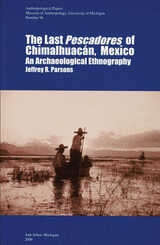
The Last Pescadores of Chimalhuacán, Mexico
An Archaeological EthnographyJeffrey R. Parsons
University of Michigan Press, 2006
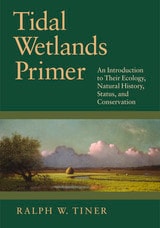
Tidal Wetlands Primer
An Introduction to Their Ecology, Natural History, Status, and ConservationRalph W. Tiner
University of Massachusetts Press, 2013
Illustrated with maps, photographs, and diagrams, this volume provides a clear account of the factors that make these habitats unique and vulnerable. It discusses their formation, the conditions affecting their plant and animal life, and the diversity of types across North America, as well as their history, use by wildlife and humans, current status, conservation, restoration, and likely future. The emphasis is on vegetated wetlands—marshes and swamps—with additional discussion of eelgrass meadows, rocky shores, beaches, and tidal flats.
Ralph Tiner's previous field guides to coastal wetland plants in the Northeast and Southeast have been widely praised. Tidal Wetlands Primer joins Tiner's earlier publications as an authoritative and user-friendly guide that should appeal to anyone with a serious interest in coastal habitats.
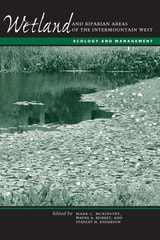
Wetland and Riparian Areas of the Intermountain West
Ecology and ManagementEdited by Mark C. McKinstry, Wayne A. Hubert, and Stanley H. Anderson
University of Texas Press, 2004
Wetlands and riparian areas between the Rocky Mountains and the Sierra Nevada are incredibly diverse and valuable habitats. More than 80 percent of the wildlife species in this intermountain region depend on these wetlands—which account for less than 2 percent of the land area—for their survival. At the same time, the wetlands also serve the water needs of ranchers and farmers, recreationists, vacation communities, and cities. It is no exaggeration to call water the "liquid gold" of the West, and the burgeoning human demands on this scarce resource make it imperative to understand and properly manage the wetlands and riverine areas of the Intermountain West.
This book offers land managers, biologists, and research scientists a state-of-the-art survey of the ecology and management practices of wetland and riparian areas in the Intermountain West. Twelve articles examine such diverse issues as laws and regulations affecting these habitats, the unique physiographic features of the region, the importance of wetlands and riparian areas to fish, wildlife, and livestock, the ecological function of these areas, their value to humans, and the methods to evaluate these habitats. The authors also address the human impacts on the land from urban and suburban development, mining, grazing, energy extraction, recreation, water diversions, and timber harvesting and suggest ways to mitigate such impacts.