Results by title
12 books match the query 'Wetlands'
For All Waters
Finding Ourselves in Early Modern WetscapesLowell Duckert
University of Minnesota Press, 2017
Recent years have witnessed a surge in early modern ecostudies, many devoted to Shakespearean drama. Yet in this burgeoning discipline, travel writing appears moored in historicization, inorganic subjects are far less prevalent than organic ones, and freshwater sites are hardly visited. For All Waters explores these uncharted wetscapes.
Lowell Duckert shows that when playwrights and travel writers such as Sir Walter Raleigh physically interacted with rivers, glaciers, monsoons, and swamps, they composed “hydrographies,” or bodily and textual assemblages of human and nonhuman things that dissolved notions of human autonomy and its singular narrativity. With a playful, punning touch woven deftly into its theoretical rigor, For All Waters disputes fantasies of ecological solitude that would keep our selves high and dry and that would try to sustain a political ecology excluding water and the poor. The lives of both humans and waterscapes can be improved simultaneously through direct engagement with wetness.
For All Waters concludes by investigating waterscapes in peril today—West Virginia’s chemical rivers and Iceland’s vanishing glaciers—and outlining what we can learn from early moderns’ eco-ontological lessons. By taking their soggy and storied matters to heart, and arriving at a greater realization of our shared wetness, we can conceive new directions to take within the hydropolitical crises afflicting us today.
Freshwater Wetlands
A Guide to Common Indicator Plants of the NortheastDennis W. Magee
University of Massachusetts Press, 1981
Following a brief introduction that discusses the functional values of wetlands and describes their various types, the manual is organized into two major components, the first consisting of keys that are based on life form and arrangement of plant parts, the second consisting of a description of each species. Such factors as range, habitat, general characteristics, stem, leaves, inflorescence, fruit, and similar species are covered in the descriptions.
Ghostlight
Photographs by Keith CarterStory by Bret Anthony Johnston
University of Texas Press, 2022
A collection of otherworldly photographs of Southern wetlands featuring an original ghost story.
Southern wetlands, with their moss-draped trees and dark water obscuring mysteries below, are eerily beautiful places, home to ghost stories and haunting, ethereal light. The newest collection from award-winning photographer Keith Carter, Ghostlight captures the otherwordly spirits of swamps, marshes, bogs, baygalls, bayous, and fens in more than a hundred photographs.
From Ossabaw Island, Georgia, to his home ground of East Texas, Carter seeks “the secretive and mysterious” of this often-overlooked landscape: wisps of fog drifting between tree branches; faceless figures contemplating a bog; owls staring directly at the camera lens; infinite paths leading to unknown parts. Similarly, spectral images are evoked in the original short story that opens this book. Ghostlight, writes best-selling author Bret Anthony Johnston, “hovers, darts, disappears. It can be as mean as a cottonmouth, as mischievous aes a child. The closer you get, the farther the light recedes.” A masterpiece of “Bayou Gothic,” Ghostlight challenges our perceptions and invites us to experience the beauty of this elusive world.
In Search of Swampland
A Wetland Sourcebook and Field GuideRalph W. Tiner
Rutgers University Press, 2005
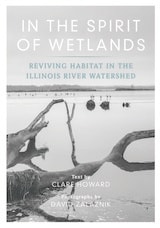
In the Spirit of Wetlands
Reviving Habitat in the Illinois River WatershedText by Clare Howard. Photographs by David Zalaznik
University of Illinois Press, 2022
An inspiring document of passion and advocacy, In the Spirit of Wetlands reveals the transformative power of restoration.
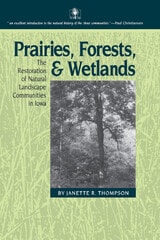
Prairies Forests And Wetlands
Natural Landscape CommunitiesJanette R. Thompson
University of Iowa Press, 1992
Before Euro-American settlement, graceful prairies and prairie-wetland complexes dominated Iowa's rolling landscape, with forest communities hugging rivers and streams and savannas or forests covering the southern and eastern portions of the state. During the last 150 years these original natural communities have nearly been eliminated by conversion of over 95 percent of the land to agricultural and urban uses.
This timely, practical book combines a nontechnical natural history of each native community with a how-to manual for lay restorationists dedicated to reconstructing prairies, forests, and wetlands. Thompson intelligently presents the collective experience of professionals active in restoring the splendid natural areas of Iowa and the greater Midwest—discussing site selection, site preparation, plant species, planting techniques, costs, and maintenance of restoration areas. She includes a useful list of sources for plant materials in and near Iowa as well as information on the birds and mammals, reptiles and amphibians of these landscapes. Prairies, Forests, and Wetlands will help individual landowners, farmers, landscape architects, D.O.T. engineers, teachers, botanists, county conservation boards, and wildlife area managers in their private and professional campaigns to reclaim Iowa's land.
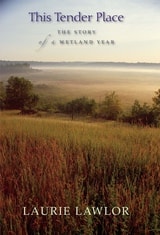
This Tender Place
The Story of a Wetland YearLaurie Lawlor
University of Wisconsin Press, 2007
After the deaths of her father and father-in-law, Laurie Lawlor discovers an unlikely place for healing and transformation in a wetland in southeastern Wisconsin—a landscape of abundant and sometimes inaccessible beauty that has often been ignored, misunderstood, and threatened by human destruction. In her decade-long personal wetland journey, she examines the sky, delves underwater, and peers between sedges in all seasons and all times of day.
This Tender Place is a celebration of nature, the elements, and humanity. From the wetland’s genesis during the ice age to its survival in the twenty-first century, Lawlor chronicles the universal ties among people, wild places, and healthy wetlands.
An engaging and deeply intimate record, This Tender Place is at its heart a story of refuge and renewal refracted through the lens of life within the wetlands—one of the most productive, yet most endangered, ecosystems in the world.
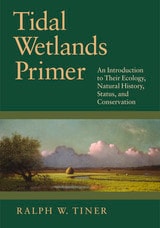
Tidal Wetlands Primer
An Introduction to Their Ecology, Natural History, Status, and ConservationRalph W. Tiner
University of Massachusetts Press, 2013
Illustrated with maps, photographs, and diagrams, this volume provides a clear account of the factors that make these habitats unique and vulnerable. It discusses their formation, the conditions affecting their plant and animal life, and the diversity of types across North America, as well as their history, use by wildlife and humans, current status, conservation, restoration, and likely future. The emphasis is on vegetated wetlands—marshes and swamps—with additional discussion of eelgrass meadows, rocky shores, beaches, and tidal flats.
Ralph Tiner's previous field guides to coastal wetland plants in the Northeast and Southeast have been widely praised. Tidal Wetlands Primer joins Tiner's earlier publications as an authoritative and user-friendly guide that should appeal to anyone with a serious interest in coastal habitats.
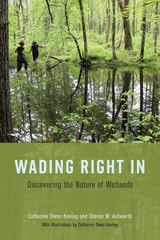
Wading Right In
Discovering the Nature of WetlandsCatherine Owen Koning and Sharon M. Ashworth
University of Chicago Press, 2019
In Wading Right In, Catherine Owen Koning and Sharon M. Ashworth take us on a journey into wetlands through stories from the people who wade in the muck. Traveling alongside scientists, explorers, and kids with waders and nets, the authors uncover the inextricably entwined relationships between the water flows, natural chemistry, soils, flora, and fauna of our floodplain forests, fens, bogs, marshes, and mires. Tales of mighty efforts to protect rare orchids, restore salt marshes, and preserve sedge meadows become portals through which we visit major wetland types and discover their secrets, while also learning critical ecological lessons.
The United States still loses wetlands at a rate of 13,800 acres per year. Such loss diminishes the water quality of our rivers and lakes, depletes our capacity for flood control, reduces our ability to mitigate climate change, and further impoverishes our biodiversity. Koning and Ashworth’s stories captivate the imagination and inspire the emotional and intellectual connections we need to commit to protecting these magical and mysterious places.
Wetland and Riparian Areas of the Intermountain West
Ecology and ManagementEdited by Mark C. McKinstry, Wayne A. Hubert, and Stanley H. Anderson
University of Texas Press, 2004
Wetlands and riparian areas between the Rocky Mountains and the Sierra Nevada are incredibly diverse and valuable habitats. More than 80 percent of the wildlife species in this intermountain region depend on these wetlands—which account for less than 2 percent of the land area—for their survival. At the same time, the wetlands also serve the water needs of ranchers and farmers, recreationists, vacation communities, and cities. It is no exaggeration to call water the "liquid gold" of the West, and the burgeoning human demands on this scarce resource make it imperative to understand and properly manage the wetlands and riverine areas of the Intermountain West.
This book offers land managers, biologists, and research scientists a state-of-the-art survey of the ecology and management practices of wetland and riparian areas in the Intermountain West. Twelve articles examine such diverse issues as laws and regulations affecting these habitats, the unique physiographic features of the region, the importance of wetlands and riparian areas to fish, wildlife, and livestock, the ecological function of these areas, their value to humans, and the methods to evaluate these habitats. The authors also address the human impacts on the land from urban and suburban development, mining, grazing, energy extraction, recreation, water diversions, and timber harvesting and suggest ways to mitigate such impacts.
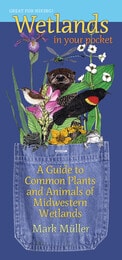
Wetlands in Your Pocket
A Guide to Common Plants and Animals of Midwestern WetlandsMuller, Mark
University of Iowa Press, 2005
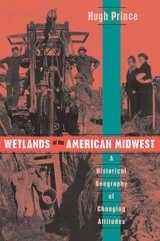
Wetlands of the American Midwest
A Historical Geography of Changing AttitudesHugh Prince
University of Chicago Press, 1997
As attitudes changed, so did scientific research agendas, government policies, and farmers' strategies for managing their land. Originally viewed as bountiful sources of wildlife by indigenous peoples, wet areas called "wet prairies," "swamps," or "bogs" in the late nineteenth and early twentieth centuries were considered productive only when drained for agricultural use. Beginning in the 1950s, many came to see these renamed "wetlands" as valuable for wildlife and soil conservation.
Prince's book will appeal to a wide readership, ranging from geographers and environmental historians to the many government and private agencies and individuals concerned with wetland research, management, and preservation.