Results by title
3 books match the query 'Whitten, Dorothea Scott'
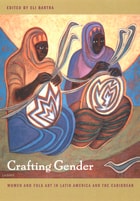
Crafting Gender
Women and Folk Art in Latin America and the CaribbeanEli Bartra, ed.
Duke University Press, 2003
Art historians, anthropologists, and sociologists from Latin America, the Caribbean, and the United States discuss artwork from Mexico, Argentina, Chile, Colombia, Ecuador, Panama, Suriname, and Puerto Rico, and many of their essays focus on indigenous artists. They highlight the complex webs of social relations from which folk art emerges. For instance, while several pieces describe the similar creative and technical processes of indigenous pottery-making communities of the Amazon and of mestiza potters in Mexico and Colombia, they also reveal the widely varying functions of the ceramics and meanings of the iconography. Integrating the social, historical, political, geographical, and economic factors that shape folk art in Latin America and the Caribbean, Crafting Gender sheds much-needed light on a rich body of art and the women who create it.
Contributors
Eli Bartra
Ronald J. Duncan
Dolores Juliano
Betty LaDuke
Lourdes Rejón Patrón
Sally Price
María de Jesús Rodríguez-Shadow
Mari Lyn Salvador
Norma Valle
Dorothea Scott Whitten
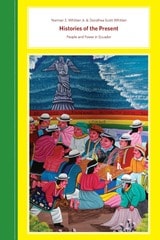
Histories of the Present
People and Power in EcuadorNorman E. Whitten Jr. and Dorothea Scott Whitten
University of Illinois Press, 2011
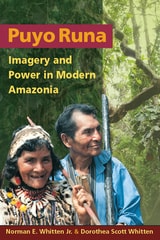
Puyo Runa
Imagery and Power in Modern AmazoniaNorman E. Whitten Jr. and Dorothea Scott Whitten
University of Illinois Press, 2007
The Andean nation of Ecuador derives much of its revenue from petroleum that is extracted from its vast Upper Amazonian rain forest, which is home to ten indigenous nationalities. Norman E. Whitten Jr. and Dorothea Scott Whitten have lived among and studied one such people, the Canelos Quichua, for nearly forty years. In Puyo Runa, they present a trenchant ethnography of history, ecology, imagery, and cosmology to focus on shamans, ceramic artists, myth, ritual, and political engagements. Canelos Quichua are active participants in national politics, including large-scale movements for social justice for Andean and Amazonian people. Puyo Runa offers readers exceptional insight into this cultural world, revealing its intricacies and embedded humanisms.