Results by title
36 books match the query 'Wise, David A.'
Advances in the Economics of Aging
Edited by David A. Wise
University of Chicago Press, 1996
Specific topics include the effect of labor market rigidities on the employment of older workers; the effect on retirement of the availability of continuation coverage benefits; and the influence of the prospective payment system (PPS) on rising Medicare costs. Also considered are the effects of health and wealth on living arrangement decisions; the incentive effects of employer-provided pension plans; the degree of substitution between 401(k) plans and other employer-provided retirement saving arrangements; and the extent to which housing wealth determines how much the elderly save and consume.
Two final studies use simulations that describe the implications of stylized economic models of behavior among the elderly. This timely volume will be of interest to anyone concerned with the economics of aging.
Aging Issues in the United States and Japan
Edited by Seiritsu Ogura, Toshiaki Tachibanaki, and David A. Wise
University of Chicago Press, 2001
Given the undeniable global importance of the Japanese and U.S. economies, these innovative essays shed welcome new light on the complex correlations between aging and economic behavior. This insightful work not only deepens our understanding of the Japanese and American economic landscapes but, through careful examination of the comparative social and economic data, clarifies the complex relation between aging societies, public policies, and economic outcomes.
Aging in the United States and Japan
Economic TrendsEdited by Yukio Noguchi and David A. Wise
University of Chicago Press, 1994
With essays on labor force participation and retirement, housing equity and the economic status of the elderly, budget implications of an aging population, and financing social security and health care in the 1990s, this volume covers a broad spectrum of issues related to the economics of aging. Among the book's findings are that workers are retiring at an increasingly earlier age in both countries and that, as the populations age, baby boomers in the United States will face diminishing financial resources as the ratio of retirees to workers sharply increases.
The result of a joint venture between the National Bureau of Economic Research and the Japan Center for Economic Research, this book complements Housing Markets in the United States and Japan (1994) by integrating research on housing markets with economic issues of the aged in the United States and Japan.
Analyses in the Economics of Aging
Edited by David A. Wise
University of Chicago Press, 2005
The volume begins with a discussion of the risks and merits of 401(k) plans. Subsequent chapters present recent analysis of the growth of Medicare costs; the different aspects of disability; and the evolution of health, wealth, and living arrangements over the life course. Keeping with the global tradition of previous volumes, Analyses in the Economics of Aging also includes comparative studies on savings behavior in Italy, the Netherlands, and the United States; an examination of household savings among different age groups in Germany; and a chapter devoted to population aging and the plight of widows in India.
Carefully compiled and containing some of the most cutting-edge research and analysis available, this volume should be of interest to any specialist or policymaker concerned with ongoing changes in savings and retirement behaviors.
Developments in the Economics of Aging
Edited by David A. Wise
University of Chicago Press, 2009
The number of Americans eligible to receive Social Security benefits will increase from forty-five million to nearly eighty million in the next twenty years. Retirement systems must therefore adapt to meet the demands of the largest aging population in our nation’s history. In Developments in the Economics of Aging, David A. Wise and a distinguished group of analysts examine the economic issues that will confront policy makers as they seek to design policies to protect the economic and physical health of these older Americans.
The volume looks at such topics as factors influencing work and retirement decisions at older ages, changes in life satisfaction associated with retirement, and the shift in responsibility for managing retirement assets from professional money managers of traditional pension plans to individual account holders of 401(k)s. Developments in the Economics of Aging also addresses the complicated relationship between health and economic status, including why health behaviors vary across populations and how socioeconomic measures correlate with health outcomes.
Discoveries in the Economics of Aging
Edited by David A. Wise
University of Chicago Press, 2014
The latest volume in the NBER’s Economics of Aging series, Discoveries in the Economics of Aging assembles incisive analyses of the most recent research in this expanding field of study. A substantive focus of the volume is the well-documented relationship between health and financial well-being, especially as people age. The contributors explore this issue from a variety of perspectives within the context of the changing demographic landscape. The first part of the volume explores recent trends in health measurement, including the use of alternative measurement indices. Later contributions explore, among other topics, alternate determinants of health, including retirement, marital status, and cohabitation with family, and the potential for innovations, interventions, and public policy to improve health and financial well-being.
Explorations in the Economics of Aging
Edited by David A. Wise
University of Chicago Press, 2011
The next two decades will mark a new phase in the demographic transition of the United States as baby boomers become eligible for Social Security and Medicare. Drawing on evidence from the United States and other nations, Explorations in the Economics of Aging yields important new findings on how economic decisions by households and policy choices by governments will influence the effects of this demographic shift. It explores topics such as the implications of differential mortality rates by income on Social Security, the link between cognition and economic outcomes, and scale variations in self-reported work disability. This volume will be an important reference for economists and policymakers alike.
Frontiers in the Economics of Aging
Edited by David A. Wise
University of Chicago Press, 1998
Frontiers in the Economics in Aging directs attention to four topics: the role of retirement accounts, such as IRAs and 401(k)s in personal saving; the economics of health care; new advances in research methodology; and aging in relation to inequality. Some of the issues analyzed within these topics are the implications of rising personal retirement saving in recent years, how health and health insurance affect labor supply, and the effects of pensions on the distribution of wealth.
David Wise's lucid introduction provides an overview of each paper. In addition to this book's appeal for specialists and microeconomists, it offers immediately practical ideas and methods for shaping public policy. In fact, one of the papers in this volume, "The Taxation of Pensions: A Shelter Can Become a Trap," helped to spur new legislation that reformed laws on pension distribution.
Health Care Issues in the United States and Japan
Edited by David A. Wise and Naohiro Yashiro
University of Chicago Press, 2006
Recent data show wide disparity between Japan and the United States in the effectiveness of their health care systems. Japan spends close to the lowest percentage of its gross domestic product on health care among OECD countries, the United States spends the highest, yet life expectancies in Japan are among the world’s longest. Clearly, a great deal can be learned from a comprehensive comparative analysis of health care issues in these two countries.
In Health Care Issues in the United States and Japan, contributors explore the structural characteristics of the health care systems in both nations, the economic incentives underlying the systems, and how they operate in practice. Japan’s system, they show, is characterized by generous insurance schemes, a lack of gatekeepers, and fee-for-service mechanisms. The United States’ structure, on the other hand, is distinguished by for-profit hospitals, privatized health insurance, and managed care. But despite its relative success, an aging population and a general shift from infectious diseases to more chronic maladies are forcing the Japanese to consider a model more closely resembling that of the United States.
In an age when rising health care costs and aging populations are motivating reforms throughout the world, this timely study will prove invaluable.
Health at Older Ages
The Causes and Consequences of Declining Disability Among the ElderlyEdited by David M. Cutler and David A. Wise
University of Chicago Press, 2009
This breakthrough volume argues that educational attainment, high socioeconomic status, an older retirement age, and accessible medical care have improved the health and quality of life of seniors. Along the way, it outlines the economic benefits of disability decline, such as an increased rate of seniors in the workplace, relief for the healthcare system and care-giving families, and reduced medical expenses for the elderly themselves. Health at Older Ages will be an essential contribution to the debate about meeting the medical needs of an aging nation.
Inquiries in the Economics of Aging
Edited by David A. Wise
University of Chicago Press, 1998
Within the next twenty years, an unprecedented proportion of Americans will be over sixty-five. New research in the economics of aging is an essential element of understanding what the future holds for this aging population. Inquiries in the Economics of Aging presents both empirical papers that consider questions that are fundamental to public policy and more theoretical contributions that lay new groundwork for future research in the economics of aging.
Inquiries in the Economics of Aging provides a timely overview of some of the most important questions facing researchers on aging and outlines new techniques and models that may help to answer these questions. This important volume will be of great interest to specialists and policy makers as it paves the way for future analysis.
Insights in the Economics of Aging
Edited by David A. Wise
University of Chicago Press, 2017
The contributions to Insights in the Economics of Aging uncover how financial, physical, and emotional well-being are integrally related. The authors consider the interactions between financial circumstances in later life, such as household savings and home ownership, physical circumstances such as health and disability, and emotional well-being, including happiness and mental health.
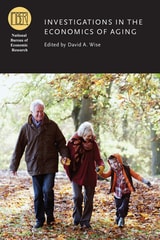
Investigations in the Economics of Aging
Edited by David A. Wise
University of Chicago Press, 2012
One of the most well-established relationships in the economics of aging is that between health and wealth. Yet this relationship is also changing in conjunction with a rapidly aging population as well as a broad evolution in how people live later in life.
Building on findings from earlier editions in this National Bureau of Economic Research series, Investigations in the Economics of Aging focuses on the changing financial circumstances of the elderly and the relationship of these circumstances to health and health care. Among the topics addressed are the significance of out-of-pocket health care costs, the effects of inflation on social security, and the impact of the recent financial crisis on Americans’ well-being. Encompassing new data and advances in research methodology, the developments presented in this volume will have important implications for economies worldwide.
Issues in Pension Economics
Edited by Zvi Bodie, John B. Shoven, and David A. Wise
University of Chicago Press, 1987
The papers in this volume cover such issues as the interaction of pension-funding decisions and corporate finances; the role of pensions in providing adequate and secure retirement income, including the integration of pension plans with social security and significant drops in the U.S. saving rate; and the incentive effects of pension plans on labor market behavior and the implications of plans on labor market behavior and the implications of plans for different demographic groups.
Issues in Pension Economics offers important empirical studies and makes valuable theoretical contributions to current thinking in an area that will most likely continue to be a source of controversy and debate for some time to come. The volume should prove useful to academics and policymakers, as well as to members of the business and labor communities.
Issues in the Economics of Aging
Edited by David A. Wise
University of Chicago Press, 1990
Labor Markets and Firm Benefit Policies in Japan and the United States
Edited by Seiritsu Ogura, Toshiaki Tachibanaki, and David A. Wise
University of Chicago Press, 2003
After an opening chapter assessing the recent ascendance of the U.S. economy, papers diverge to tackle a range of specific issues. Focusing less on international comparison than on the assembly of high-quality research, contributors hone in on a variety of individual topics. Chapters delve into issues of youth employment, participatory employment, information sharing, fringe benefits, and drug coverage in Japan, as well as the dynamics of medical savings accounts, private insurance coverage, and benefit options in the U.S.
Like previous volumes stemming from NBER/JCER collaboration, this book represents a valuable mass of empirical data on some of the most notable employment and benefits issues in each nation, information that will both anchor and provoke scholarly analysis of these topics well into the future.
Pensions in the U.S. Economy
Edited by Zvi Bodie, John B. Shoven, and David A. Wise
University of Chicago Press, 1988
Steven F. Venti and David A. Wise offer a careful analysis of who contributes to IRAs and why. Benjamin M. Friedman and Mark Warshawsky look at the reasons more retirement saving is not used to purchase annuities. Personal saving through pension contribution is discussed by B. Douglas Bernheim and John B. Shoven in the context of recent government and corporate pension funding changes. Michael J. Boskin and John B. Shoven analyze indicators of the economic well-being of the elderly, addressing the problem of why a large fraction of the elderly remain poor despite a general improvement in the economic status of the group as a whole. The relative merits of defined contribution versus defined benefit plans, with emphasis on the risk aspects of the two types of plans for the individual, are examined by Zvi Bodie, Alan J. Marcus, and Robert C. Merton. In the final paper, pension plans and worker turnover are the focus of the discussion by Edward P. Lazear and Robert L. Moore, who propose pension option value rather than the commonly used accrued pension wealth as a measure of pension value.
Pensions, Labor, and Individual Choice
David A. Wise
University of Chicago Press, 1985
Previous books on private pensions have largely neglected behavioral implications of the features of pension plans. The papers in this volume, developed from material presented at a recent National Bureau of Economic Research conference, address two aspects of the relation between varieties of labor coverage and participation in the labor force. First, age at retirement may be correlated with kind of pension coverage. The papers, in fact, provide strong evidence that individual decisions about when to retire are directly influenced by pension options. Second, pension plans usually impose a high cost on workers who change jobs, which suggests that pension coverage reduces instances of job change. Pensions, Labor, and Individual Choice quantifies these correlations and proposes a conceptual framework within which to view them.
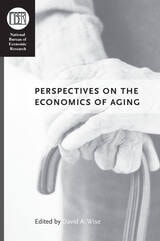
Perspectives on the Economics of Aging
Edited by David A. Wise
University of Chicago Press, 2004
Examining the changes in savings behavior and investment priorities in the United States over the past few decades, contributors to the volume point to a dramatic shift from employer-managed, defined benefit pensions to employee-controlled retirement savings plans. Further, the legislative reforms of the 1980s and the booming stock market of the 1990s did their share to influence individual wealth accumulation patterns of Americans.
These studies also explore the relationship between health status and economic status. Considering issues like pension income and health, mortality, and medical care, contributors present evidence from the United States, Britain, South Africa, and Russia. The volume culminates with wide-ranging discussions on a number of key topics in the field including the innovations that have contributed to a decline in mortality rates; the various medical advances that have benefited populations over time; and the determinants of expenditures on health. The findings with regard to cross-sectional differences in health outcomes and health care utilization also pose troubling questions for policymakers seeking to democratize health care across regions and races.
Public Sector Payrolls
Edited by David A. Wise
University of Chicago Press, 1987
The volume, developed from a 1984 National Bureau of Economic Research conference, focuses on various labor issues in military and other governmental employment. Several contributors discuss compensation in the armed forces and its relationship to that in the private sector, as well as the interaction between the military and the private sector in the employment of youth. This latter is of particular interest because studies of youth employment have generally ignored the important influence of military hiring practices on labor market conditions. In other contributions, the response of wages and employment in the public sector to economic conditions is analyzed, and a detailed study of government pension plans is presented. Also included is a theoretical and empirical analysis of comparable worth in the public sector from the viewpoint of analytical labor economics. The volume concludes with a look at public school teachers' salaries in the context of current debates over improving the quality of American education.
A valuable resource to policymakers, Public Sector Payrolls will be an important addition to research in the field of labor economics.
Research Findings in the Economics of Aging
Edited by David A. Wise
University of Chicago Press, 2010
While choices about when to retire are made by individuals, these decisions are influenced by a set of incentives, including retirement benefits and health care, and this volume includes cross-national analyses of the effects of such programs on these decisions. Furthermore, the volume also offers in-depth analysis of the effects of retirement plans, employer contributions, and housing prices on retirement. It explores well-established relationships among economic circumstances, health, and mortality, as well as the effects of poverty and lower levels of economic development on health and life satisfaction. By combining micro and macro evidence, this volume continues a tradition of expanding the research agenda on the economics of aging.
Social Experimentation
Edited by Jerry A. Hausman and David A. Wise
University of Chicago Press, 1985
The first section of the book looks at four types of experiments and what each accomplished. Frank P. Stafford examines the negative income tax experiments, Dennis J. Aigner considers the experiments with electricity pricing based on time of use, Harvey S. Rosen evaluates housing allowance experiments, and Jeffrey E. Harris reports on health experiments. In the second section, addressing experimental design and analysis, Jerry A. Hausman and David A. Wise highlight the absence of random selection of participants in social experiments, Frederick Mosteller and Milton C. Weinstein look specifically at the design of medical experiments, and Ernst W. Stromsdorfer examines the effects of experiments on policy. Each chapter is followed by the commentary of one or more distinguished economists.
Social Security Policy in a Changing Environment
Edited by Jeffrey R. Brown, Jeffrey B. Liebman, and David A. Wise
University of Chicago Press, 2009

Social Security Programs and Retirement around the World
Disability Insurance Programs and RetirementEdited by David A. Wise
University of Chicago Press, 2015
The sixth stage of an ongoing research project studying the relationship between social security programs and labor force participation, this volume draws on the work of an eminent group of international economists to consider the extent to which differences in labor force participation across countries are determined by the provisions of disability insurance programs. Presented in an easily comparable way, their research covers twelve countries, including Canada, Japan, and the United States, and considers the requirements of disability insurance programs, as well as other pathways to retirement.
Social Security Programs and Retirement around the World
Fiscal Implications of ReformEdited by Jonathan Gruber and David A. Wise
University of Chicago Press, 2007
Drawing on the work of an international group of noted economists, the editors argue that social security programs provide strong incentives for workers to leave the labor force by retiring and taking the benefits to which they are entitled. By penalizing work, social security systems magnify the increased financial burden caused by aging populations, thus contributing to the insolvency of the system. This book is a model of comparative analysis that evaluates the effects of illustrative policies for countries facing the impending rapid growth of social security benefits. Its insights will help inform one of the most pressing debates.
Social Security Programs and Retirement around the World
Historical Trends in Mortality and Health, Employment, and Disability Insurance Participation and ReformsEdited by David A. Wise
University of Chicago Press, 2012
In nearly every industrialized country, large aging populations and increased life expectancy have placed enormous pressure on social security programs—and, until recently, the pressure has been compounded by a trend toward retirement at an earlier age. With a larger fraction of the population receiving benefits, in coming decades social security in many countries may have to be reformed in order to remain financially viable.
This volume offers a cross-country analysis of the effects of disability insurance programs on labor force participation by older workers. Drawing on measures of health that are comparable across countries, the authors explore the extent to which differences in the labor force are determined by disability insurance programs and to what extent disability insurance reforms are prompted by the circumstances of a country’s elderly population.
Social Security Programs and Retirement around the World
Micro-EstimationEdited by Jonathan Gruber and David A. Wise
University of Chicago Press, 2003
In this volume, the authors turn to a country-by-country analysis of retirement behavior based on micro-data. The result of research compiled by teams in twelve countries, the volume shows an almost uniform correlation between levels of social security incentives and retirement behavior in each country. The estimates also show that the effect is strikingly uniform in countries with very different cultural histories, labor market institutions, and other social characteristics.

Social Security Programs and Retirement around the World
The Capacity to Work at Older AgesEdited by David A. Wise
University of Chicago Press, 2017
Social Security Programs and Retirement around the World
The Relationship to Youth EmploymentEdited by Jonathan Gruber and David A. Wise
University of Chicago Press, 2010
Social Security Programs and Retirement around the World
Working LongerEdited by Courtney C. Coile, Kevin Milligan, and David A. Wise
University of Chicago Press, 2019
This eighth phase of the International Social Security project, which compares the social security and retirement experiences of twelve developed countries, documents trends in participation and employment and explores reasons for the rising participation rates of older workers. The chapters use a common template for analysis, which facilitates comparison of results across countries. Using within-country natural experiments and cross-country comparisons, the researchers study the impact of improving health and education, changes in the occupation mix, the retirement incentives of social security programs, and the emergence of women in the workplace, on labor markets. The findings suggest that social security reforms and other factors such as the movement of women into the labor force have played an important role in labor force participation trends.
Social Security and Retirement around the World
Edited by Jonathan Gruber and David A. Wise
University of Chicago Press, 1998
Studies in the Economics of Aging
Edited by David A. Wise
University of Chicago Press, 1994
The Economics of Aging
Edited by David A. Wise
University of Chicago Press, 1988
The Economics of Aging presents results from an ongoing National Bureau of Economic Research project. Contributors consider the housing mobility and living arrangements of the elderly, their labor force participation and retirement, the economics of their health care, and their financial status. The goal of the research is to further our understanding both of the factors that determine the well-being of the elderly and of the consequences that follow from an increasingly older population with longer individual life spans. Each paper is accompanied by critical commentary.
The Youth Labor Market Problem
Its Nature, Causes, and ConsequencesEdited by Richard B. Freeman and David A. Wise
University of Chicago Press, 1982
Themes in the Economics of Aging
Edited by David A. Wise
University of Chicago Press, 2001
This volume begins by looking at the implications of private and public personal retirement plans, focusing in particular on the impact of 401(k) programs on retirement strategies in light of potential social security reform and factors such as annuitization and on asset accumulation. Next, the often-observed relationship between health and wealth is dissected from two different perspectives and correlated with striking increases in health-care spending over the past two decades, despite the improved health of older populations. The volume concludes with an investigation of the retirement effects of various social security provisions in both U.S. and German systems.
This carefully developed collection expands the current investigative focus and broadens the dialogue on a rapidly growing area of social and economic concern.
Topics in the Economics of Aging
Edited by David A. Wise
University of Chicago Press, 1992