Results by title
8 books match the query 'Witches'
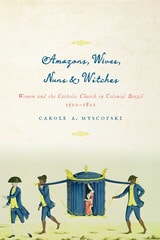
Amazons, Wives, Nuns, and Witches
Women and the Catholic Church in Colonial Brazil, 1500-1822By Carole A. Myscofski
University of Texas Press, 2013
The Roman Catholic church played a dominant role in colonial Brazil, so that women’s lives in the colony were shaped and constrained by the Church’s ideals for pure women, as well as by parallel concepts in the Iberian honor code for women. Records left by Jesuit missionaries, Roman Catholic church officials, and Portuguese Inquisitors make clear that women’s daily lives and their opportunities for marriage, education, and religious practice were sharply circumscribed throughout the colonial period. Yet these same documents also provide evocative glimpses of the religious beliefs and practices that were especially cherished or independently developed by women for their own use, constituting a separate world for wives, mothers, concubines, nuns, and witches.
Drawing on extensive original research in primary manuscript and printed sources from Brazilian libraries and archives, as well as secondary Brazilian historical works, Carole Myscofski proposes to write Brazilian women back into history, to understand how they lived their lives within the society created by the Portuguese imperial government and Luso-Catholic ecclesiastical institutions. Myscofski offers detailed explorations of the Catholic colonial views of the ideal woman, the patterns in women’s education, the religious views on marriage and sexuality, the history of women’s convents and retreat houses, and the development of magical practices among women in that era. One of the few wide-ranging histories of women in colonial Latin America, this book makes a crucial contribution to our knowledge of the early modern Atlantic World.
Magic’s Translations
Reality Politics in Colonial IndonesiaMargaret J. Wiener
Duke University Press, 2025
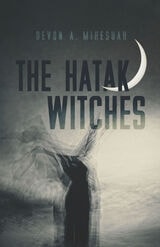
The Hatak Witches
Devon A. Mihesuah
University of Arizona Press, 2021
Monique discovers that a portion of an ancient and deformed skeleton had also been stolen from the neglected museum archives. Her uncle, the spiritual leader Leroy Bear Red Ears, concludes that the stolen remains are those of Hatak haksi, a witch and the matriarch of the Crow family, a group of shape-shifting Choctaws who plan to reestablish themselves as the powerful creatures they were when the tribe lived in Mississippi. Monique, Leroy, and Chris must stop the Crows, but to their dread, the entities have retreated to the dark and treacherous hollow in the center of Chalakwa Ranch. The murderous shape-shifters believe the enormous wild hogs, poisonous snakes, and other creatures of the hollow might form an adequate defense for Hatak haksi.
But what no one counts on is the unexpected appearance and power of the Old Ones who guard the lands of the Choctaw afterlife. Blending tribal beliefs and myths into a modern context, The Hatak Witches continues the storyline of Choctaw cosmology and cultural survival that are prominent in Devon A. Mihesuah’s award-winning novel, The Roads of My Relations.
The Trials of Mrs. K.
Seeking Justice in a World with WitchesAdam Ashforth
University of Chicago Press, 2018
In The Trials of Mrs. K., Adam Ashforth studies this and similar stories of witchcraft that continue to circulate in Malawi. At the heart of the book is Ashforth’s desire to understand how claims to truth, the pursuit of justice, and demands for security work in contemporary Africa, where stories of witchcraft can be terrifying. Guiding us through the history of legal customs and their interactions with the court of public opinion, Ashforth asks challenging questions about responsibility, occult forces, and the imperfect but vital mechanisms of law. A beautifully written and provocative book, The Trials of Mrs. K. will be an essential text for understanding what justice means in a fragile and dangerous world.
The Witch Studies Reader
Soma Chaudhuri and Jane Ward, editors
Duke University Press, 2025
Contributors. Maria Amir, Ruth Asiimwe, Bernadette Barton, Ethel Brooks, Shelina Brown, Ruth Charnock, Soma Chaudhuri, Carolyn Chernoff, Saira Chhibber, Simon Clay, Krystal Cleary, Adrianna L. Ernstberger, Tina Escaja, Laurie Essig, Marcelitte Failla, D Ferrett, Marion Goldman, Jaime Hartless, Margaretha Haughwout, Patricia Humura, Apoorvaa Joshi, Govind Kelkar, Oliver Kellhammer, Ayça Kurtoğlu, Helen Macdonald, Isabel Machado, Brandy Renee McCann, Dev Nathan, Mary Jo Neitz, Amy Nichols-Belo, Allison (or AP) Pierce, Emma Quilty, Anna Rogel, Karen Schaller, Jacquelyn Marie Shannon, Shashank Shekhar Sinha, Gabriella V. Smith, Nathan Snaza, Shannon Hughes Spence, Eric Steinhart, Morena Tartari, Nicole Trigg, Katie Von Wald, Tushabe wa Tushabe, Jane Ward
Witches, Ghosts, and Signs
Folklore of the Southern AppalachiansPatrick W. Gainer
West Virginia University Press, 2008
Witches, Ghosts, and Signs: Folklore of the Southern Appalachians by the renowned West Virginia folklorist and former West Virginia University English professor Patrick W. Gainer not only highlights stories that both amuse and raise goosebumps, but also begins with a description of the people and culture of the state. Based on material Gainer collected from over fifty years of field research in West Virginia and the region, Witches, Ghosts, and Signs presents the rich heritage of the southern Appalachians in a way that has never been equaled. Strange and supernatural tales of ghosts, witches, hauntings, disappearances, and unexplained murders that have been passed down from generation to generation from as far back as the earliest settlers in the region are included in this collection that will send chills down the spine.
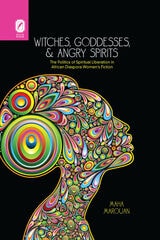
Witches, Goddesses, and Angry Spirits
The Politics of Spiritual Liberation in African Diaspora Women's FictionMaha Marouan
The Ohio State University Press, 2013
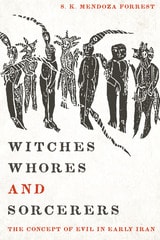
Witches, Whores, and Sorcerers
The Concept of Evil in Early IranBy S. K. Mendoza Forrest
University of Texas Press, 2011
Early Iranians believed evil had to have a source outside of God, which led to the concept of an entity as powerful and utterly evil as God is potent and good. These two forces, good and evil, which have always vied for superiority, needed helpers in this struggle. According to the Zoroastrians, every entity had to take sides, from the cosmic level to the microcosmic self.
One of the results of this battle was that certain humans were thought to side with evil. Who were these allies of that great Evil Spirit? Women were inordinately singled out. Male healers were forbidden to deal with female health disorders because of the fear of the polluting power of feminine blood. Female healers, midwives, and shamans were among those who were accused of collaborating with the Evil Spirit, because they healed women. Men who worked to prepare the dead were also suspected of secret evil. Evil even showed up as animals such as frogs, snakes, and bugs of all sorts, which scuttled to the command of their wicked masters.
This first comprehensive study of the concept of evil in early Iran uncovers details of the Iranian struggle against witchcraft, sorcery, and other "evils," beginning with their earliest texts.