Results by title
3 books match the query 'Woloson, Wendy A.'
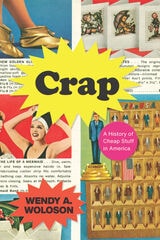
Crap
A History of Cheap Stuff in AmericaWendy A. Woloson
University of Chicago Press, 2020
In Crap: A History of Cheap Stuff in America, Wendy A. Woloson takes seriously the history of objects that are often cynically-made and easy to dismiss: things not made to last; things we don't really need; things we often don't even really want. Woloson does not mock these ordinary, everyday possessions but seeks to understand them as a way to understand aspects of ourselves, socially, culturally, and economically: Why do we—as individuals and as a culture—possess these things? Where do they come from? Why do we want them? And what is the true cost of owning them?
Woloson tells the history of crap from the late eighteenth century up through today, exploring its many categories: gadgets, knickknacks, novelty goods, mass-produced collectibles, giftware, variety store merchandise. As Woloson shows, not all crap is crappy in the same way—bric-a-brac is crappy in a different way from, say, advertising giveaways, which are differently crappy from commemorative plates. Taking on the full brilliant and depressing array of crappy material goods, the book explores the overlooked corners of the American market and mindset, revealing the complexity of our relationship with commodity culture over time.
By studying crap rather than finely made material objects, Woloson shows us a new way to truly understand ourselves, our national character, and our collective psyche. For all its problems, and despite its disposability, our crap is us.
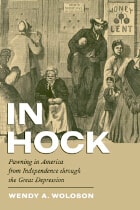
In Hock
Pawning in America from Independence through the Great DepressionWendy A. Woloson
University of Chicago Press, 2009

Under the Rug
The (Not So) Hidden History of Men and Their HairpiecesWendy A. Woloson
University of Chicago Press, 0
False hair can reveal honest truths—about the past, gender, identity, and the stories men tell about themselves.
History has seen its share of famous toupees. John Wayne’s. Frank Sinatra’s. Humphrey Bogart’s. Hairpieces can reveal a wearer’s inner motivations, reinforce gender norms, cause embarrassment, and even provoke disgust. Although false, they can create real meaning.
In Wendy A. Woloson’s hands, the toupee helps us see how men have understood themselves and fashioned their identities over time. Starting in the late eighteenth century, when men stopped wearing white powdered wigs, and moving to the 1920s, when toupees could be easily mass-produced, Woloson tells the story of the “Toupee Age.” She investigates why balding was considered such a problem in the first place, how hair became entangled with anxieties about aging, and the ways that looking old posed a threat to manhood. She details the bear’s grease pomades, brush-on dyes, elixirs, false whiskers, and hairpieces that were created to meet shifting notions of masculinity and style. Under the Rug also introduces readers to the people who styled and traded hair, made wigs, and hawked baldness cures. Drawing on business records, advertisements, graphic images, and a host of other primary sources, Woloson incisively explains how such trades seeded fears about thinning hair and sold men solutions. This vanity project continues today, as hair transplants, medications to stimulate hair growth, and Toupee TikTok encourage people to reinvent the way they’re seen—by others and themselves.