Results by title

7 books match the query 'Women's Interests'
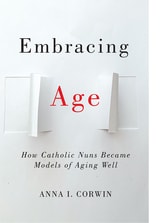
cover of Embracing Age: How Catholic Nuns Became Models of Aging Well

Embracing Age

How Catholic Nuns Became Models of Aging Well

Anna I. Corwin

Rutgers University Press, 2021

Embracing Age: How Catholic Nuns Became Models of Aging Well examines a community of individuals whose aging trajectories contrast mainstream American experiences. In mainstream American society, aging is presented as a “problem,” a state to be avoided as long as possible, a state that threatens one’s ability to maintain independence, autonomy, control over one’s surroundings. Aging “well” (or avoiding aging) has become a twenty-first century American preoccupation. Embracing Age provides a window into the everyday lives of American Catholic nuns who experience longevity and remarkable health and well-being at the end of life. Catholic nuns aren’t only healthier in older age, they are healthier because they practice a culture of acceptance and grace around aging. Embracing Age demonstrates how aging in the convent becomes understood by the nuns to be a natural part of the life course, not one to be feared or avoided. Anna I. Corwin shows readers how Catholic nuns create a cultural community that provides a model for how to grow old, decline, and die that is both embedded in American culture and quite distinct from other American models.

Instructor's Guide is available at no cost (https://www.rutgersuniversitypress.org/media/wysiwyg/documents/corwin_instructor_guide_final.pdf).

Open access edition funded by the National Endowment for the Humanities.

The text of this book is licensed under a Creative Commons Attribution NonCommercial-NoDerivatives 4.0 International License: https://creativecommons.org/licenses/by-nc-nd/4.0/ 

Download open access ebook here (https://www.rutgersuniversitypress.org/media/wysiwyg/documents/embracing_age_open_access.pdf).
 

[more]
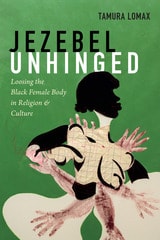
cover of Jezebel Unhinged: Loosing the Black Female Body in Religion and Culture

Jezebel Unhinged

Loosing the Black Female Body in Religion and Culture

Tamura Lomax

Duke University Press, 2018
In Jezebel Unhinged Tamura Lomax traces the use of the jezebel trope in the black church and in black popular culture, showing how it is pivotal to reinforcing men's cultural and institutional power to discipline and define black girlhood and womanhood. Drawing on writing by medieval thinkers and travelers, Enlightenment theories of race, the commodification of women's bodies under slavery, and the work of Tyler Perry and Bishop T. D. Jakes, Lomax shows how black women are written into religious and cultural history as sites of sexual deviation. She identifies a contemporary black church culture where figures such as Jakes use the jezebel stereotype to suggest a divine approval of the “lady” while condemning girls and women seen as "hos." The stereotype preserves gender hierarchy, black patriarchy, and heteronormativity in black communities, cultures, and institutions. In response, black women and girls resist, appropriate, and play with the stereotype's meanings. Healing the black church, Lomax contends, will require ceaseless refusal of the idea that sin resides in black women's bodies, thus disentangling black women and girls from the jezebel narrative's oppressive yoke.
[more]
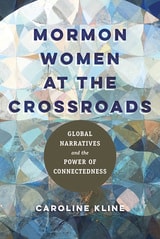
cover of Mormon Women at the Crossroads: Global Narratives and the Power of Connectedness

Mormon Women at the Crossroads

Global Narratives and the Power of Connectedness

Caroline Kline

University of Illinois Press, 2022

Winner of the Mormon History Association Best International Book Award

The Church of Jesus Christ of Latter-day Saints continues to contend with longstanding tensions surrounding gender and race. Yet women of color in the United States and across the Global South adopt and adapt the faith to their contexts, many sharing the high level of satisfaction expressed by Latter-day Saints in general. Caroline Kline explores the ways Latter-day Saint women of color in Mexico, Botswana, and the United States navigate gender norms, but also how their moral priorities and actions challenge Western feminist assumptions. Kline analyzes these traditional religious women through non-oppressive connectedness, a worldview that blends elements of female empowerment and liberation with a broader focus on fostering positive and productive relationships in different realms. Even as members of a patriarchal institution, the women feel a sense of liberation that empowers them to work against oppression and against alienation from both God and other human beings.

Vivid and groundbreaking, Mormon Women at the Crossroads merges interviews with theory to offer a rare discussion of Latter-day Saint women from a global perspective.
[more]
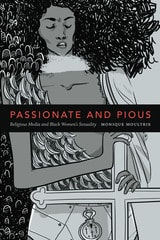
cover of Passionate and Pious: Religious Media and Black Women's Sexuality

Passionate and Pious

Religious Media and Black Women's Sexuality

Monique Moultrie

Duke University Press, 2018
In Passionate and Pious Monique Moultrie explores the impact of faith-based sexual ministries on black women's sexual agency to trace how these women navigate sexuality, religious authority, and their spiritual walk with God. Providing churchwomen a space to candidly discuss these issues, these popular ministries exist largely beyond the traditional church, with dialogues about sex taking place in chat rooms and through text messages, social media, email, and other media. Moultrie foregrounds televangelist Juanita Bynum's construction of the black Christian sexual identity these ministries promote while emphasizing how churchwomen reconcile these prescriptive identities with their individual experiences. What does it mean for senior women to exercise sexual agency when their church standing could be questioned? What does celibacy mean for women who experience same-sex desire while believing that such desire goes against God's will? Advancing a womanist sexual ethics, Moultrie reframes biblical interpretations and conceptions of what constitutes a healthy relationship to provide a basis for sexual decision making that does not privilege monogamy or deny female pleasure, thereby calling on black churchwomen to experience responsible and life-enhancing sex.
[more]
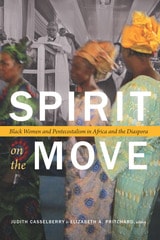
cover of Spirit on the Move: Black Women and Pentecostalism in Africa and the Diaspora

Spirit on the Move

Black Women and Pentecostalism in Africa and the Diaspora

Judith Casselberry and Elizabeth Pritchard, editors

Duke University Press, 2019

Pentecostalism is currently the fastest-growing Christian movement, with hundreds of millions of followers. This growth overwhelmingly takes place outside of the West, and women make up 75 percent of the membership. The contributors to Spirit on the Move examine Pentecostalism's appeal to black women worldwide and the ways it provides them with a source of community and access to power. Exploring a range of topics, from Neo-Pentecostal churches in Ghana that help women challenge gender norms to evangelical gospel musicians in Brazil, the contributors show how Pentecostalism helps black women draw attention to and seek remediation from the violence and injustices brought on by civil war, capitalist exploitation, racism, and the failures of the state. In fleshing out the experiences, theologies, and innovations of black women Pentecostals, the contributors show how Pentecostal belief and its various practices reflect the movement's complexity, reach, and adaptability to specific cultural and political formations.

Contributors. Paula Aymer, John Burdick, Judith Casselberry, Deidre Helen Crumbley, Elizabeth McAlister, Laura Premack, Elizabeth A. Pritchard, Jane Soothill, Linda van de Kamp
[more]
cover of Stained Glass Ceilings: How Evangelicals Do Gender and Practice Power

Stained Glass Ceilings

How Evangelicals Do Gender and Practice Power

Lisa Weaver Swartz

Rutgers University Press, 2023
Stained Glass Ceilings speaks to the intersection of gender and power within American evangelicalism by examining the formation of evangelical leaders in two seminary communities.Southern Baptist Theological Seminary inspires a vision of human flourishing through gender differentiation and male headship. Men practice “Godly Manhood," and are taught to act as the "head" of a family, while their wives are socialized into codes of “Godly Womanhood" that prioritize prescribed gender roles. This power structure privileges men yet offers agency to their wives in women-centered spaces and through marital relationships. Meanwhile, Asbury Theological Seminary promises freedom from gendered hierarchies. Appealing to a story of gender-blind equality, Asbury welcomes women into classrooms, administrative offices, and pulpits. But the institution’s construction of egalitarianism obscures the fact that women are rewarded for adapting to an existing male-centered status quo rather than for developing their own voices as women. Featuring high-profile evangelicals such as Al Mohler and Owen Strachan, along with young seminarians poised to lead the movement in the coming decades, Stained Glass Ceilings illustrates the liabilities of white evangelical toolkits and argues that evangelical culture upholds male-centered structures of power even as it facilitates meaning and identity.
[more]
cover of The Complementarity of Women and Men: Philosophy, Theology, Psychology, and Art

The Complementarity of Women and Men

Philosophy, Theology, Psychology, and Art

Paul C. Vitz

Catholic University of America Press, 2021

The Complementarity of Women and Men provides a Catholic Christian case that men and women are in certain respects quite different but also have a positive, synergistic complementary relationship. Although differences and their mutually supporting relationships are focused on throughout the volume, men and women are assumed to have equal dignity and value. This underlying interpretation comes from the familiar, basic theological position in Genesis that both sexes were made in the image of God. After a cogent philosophical introduction to complementary differences by J. Budziszewski, this position is developed from theological, philosophical, and historical perspectives by Sr. Prudence Allen. Next Deborah Savage, building upon the writings of St. John Paul II, gives a strong theological basis for complementarity. This is followed by Elizabeth Lev’s chapter presenting new and surprising art history evidence from the paintings of Michelangelo in the Sistine Chapel supporting the complementarity interpretation. A final chapter by Paul Vitz documents and summarizes the scientific evidence supporting sexual difference and complementarity in the disciplines of psychology and neuroscience. As a consequence of both the individual chapters and the integrated understanding they present The Complementarity of Women and Men is a significant contribution to the important, complex, contemporary debate about men, women, sex, and gender.
[more]