Results by title
4 books match the query 'Women's colleges'
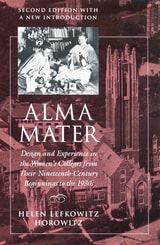
Alma Mater
Design and Experience in the Women's Colleges from Their Nineteenth-Century Beginnings to the 1930sHelen Lefkowitz Horowitz
University of Massachusetts Press, 1993
An examination of the founding and development of the Seven Sisters colleges—Mount Holyoke, Vassar, Wellesley, Smith, Radcliffe, Bryn Mawr, and Barnard—Alma Mater focuses on the ideas behind their establishment and the colleges' architectural, academic, and social histories, as well as those of their twentieth-century successors—Sarah Lawrence, Bennington, and Scripps.
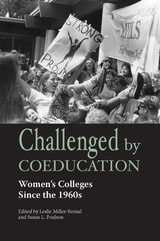
Challenged by Coeducation
Women's Colleges Since the 1960sLeslie Miller-Bernal
Vanderbilt University Press, 2007
In the mid-twentieth century colleges' concerns about finances and enrollments, as well as ideological pressures to integrate formerly separate social groups, led men's colleges, and some women's colleges, to become coeducational. The admission of women to practically all men's colleges created a serious challenge for women's colleges. Most people no longer believed women's colleges were necessary since women had virtually unlimited access to higher education. Even though research spawned by the women's movement indicated the benefits to women of a "room of their own," few young women remained interested in applying to women's colleges.
Challenged by Coeducation details the responses of women's colleges to this latest wave of coeducation. Case studies written expressly for this volume include many types of women's colleges-Catholic and secular; Seven Sisters and less prestigious; private and state; liberal arts and more applied; northern, southern, and western; urban and rural; independent and coordinated with a coeducational institution. They demonstrate the principal ways women's colleges have adapted to the new coeducational era: some have been taken over or closed, but most have changed by admitting men and thereby becoming coeducational, or by offering new programs to different populations. Some women's colleges, mostly those that are in cities, connected to other colleges, and prestigious with a high endowment, still enjoy success.
Despite their dramatic drop in numbers, from 250 to fewer than 60 today, women's colleges are still important, editors Miller-Bernal and Poulson argue. With their commitment to enhancing women's lives, women's colleges and formerly women's colleges can serve as models of egalitarian coeducation.
Mothers, Daughters, and Political Socialization
Two Generations at an American Women's CollegeKrista Jenkins
Temple University Press, 2013
Using a unique data set comparing mothers and daughters who attended Douglass College—the women's college of Rutgers University—twenty-five years apart, Krista Jenkins perceptively observes the changes in how women acquire their attitudes toward gender roles and behaviors in the post-women's movement years.
Mothers, Daughters, and Political Socialization examines the role of intergenerational transmission—the maternal influences on younger women—while also looking at differences among women in attitudes and behaviors relative to gender roles that might be attributed to the nature of the times during their formative years. How do daughters coming of age in an era when the women's movement is far less visible deal with gendered expectations compared to their mothers? Do they accept the contemporary status quo their feminist mothers fought so hard to achieve? Or, do they press forward with new goals?
Jenkins shows how contemporary women are socialized to accept or reject traditional gender roles that serve to undermine their equality.
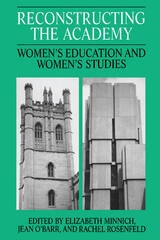
Reconstructing the Academy
Women's Education and Women's StudiesEdited by Elizabeth Minnich, Jean F. O'Barr, and Rachel A. Rosenfeld
University of Chicago Press, 1988