130 books match the query 'Women's rights' and 8 start with a
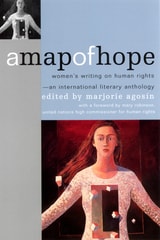
cover of A Map of Hope: Women's Writing on Human Rights—An International Literary Anthology

A Map of Hope

Women's Writing on Human Rights—An International Literary Anthology

Agosín, Marjorie

Rutgers University Press, 1999

The first international anthology to explore women’s human rights from a literary perspective.

More than half a century after the United Nations Declaration of Human Rights, women throughout the world still struggle for social and political justice. Many fight back with the only tools of resistance they possess—words. A Map of Hope presents a collection of 77 extraordinary literary works documenting the ways women writers have spoken out about human rights issues.

Writers young and old, known and unknown, explore the dimensions of terror, the unspeakable atrocities of war, and the possibilities of resistance and refusal against all odds. Their poems, essays, memoirs, and brief histories examine issues that affect the condition of women in war, prison camps, exile, and as victims of domestic and political violence.

A Map of Hope presents diverse women writers who have created a literature of global consciousness and justice. Their works give a face, an image, and a human dimension to the dehumanization of human rights violations. The collection allows readers to hear voices that have decided to make a difference. It goes beyond geography and ethnic groups; writers from around the globe are united by the universal dimensions of horror and deprivation, as well as the unique common struggle for justice and solidarity.
[more]
cover of A Map of Hope: Women's Writing on Human Rights—An International Literary Anthology

A Map of Hope

Women's Writing on Human Rights—An International Literary Anthology

Agosín, Marjorie

Rutgers University Press, 1999

The first international anthology to explore women’s human rights from a literary perspective.

More than half a century after the United Nations Declaration of Human Rights, women throughout the world still struggle for social and political justice. Many fight back with the only tools of resistance they possess—words. A Map of Hope presents a collection of 77 extraordinary literary works documenting the ways women writers have spoken out about human rights issues.

Writers young and old, known and unknown, explore the dimensions of terror, the unspeakable atrocities of war, and the possibilities of resistance and refusal against all odds. Their poems, essays, memoirs, and brief histories examine issues that affect the condition of women in war, prison camps, exile, and as victims of domestic and political violence.

A Map of Hope presents diverse women writers who have created a literature of global consciousness and justice. Their works give a face, an image, and a human dimension to the dehumanization of human rights violations. The collection allows readers to hear voices that have decided to make a difference. It goes beyond geography and ethnic groups; writers from around the globe are united by the universal dimensions of horror and deprivation, as well as the unique common struggle for justice and solidarity.
[more]
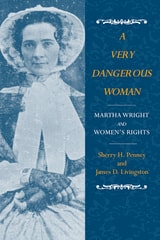
cover of A Very Dangerous Woman: Martha Wright and Women's Rights

A Very Dangerous Woman

Martha Wright and Women's Rights

Sharon H. Penney

University of Massachusetts Press, 2004

A very dangerous woman is what Martha Coffin Wright's conservative neighbors considered her, because of her work in the women's rights and abolition movements. In 1848, Wright and her older sister Lucretia Mott were among the five brave women who organized the historic Seneca Falls Women's Rights Convention. Wright remained a prominent figure in the women's movement until her death in 1875 at age sixty-eight, when she was president of the National Woman Suffrage Association. At age twenty-six, she attended the 1833 founding of the American Anti-Slavery Society and later presided over numerous antislavery meetings, including two in 1861 that were disrupted by angry antiabolitionist mobs. Active in the Underground Railroad, she sheltered fugitive slaves and was a close friend and supporter of Harriet Tubman.

In telling Wright's story, the authors make good use of her lively letters to her family, friends, and colleagues, including Susan B. Anthony and Elizabeth Cady Stanton. These letters reveal Wright's engaging wit and offer an insider's view of nineteenth-century reform and family life. Her correspondence with slaveholding relatives in the South grew increasingly contentious with the approach of the Civil War. One nephew became a hero of the Confederacy with his exploits at the Battle of Fredericksburg, and her son in the Union artillery was seriously wounded at Gettysburg while repelling Pickett's Charge.

Wright's life never lacked for drama. She survived a shipwreck, spent time at a frontier fort, experienced the trauma of the deaths of a fiancé, her first husband, and three of her seven children, and navigated intense conflicts within the women's rights and abolition movements. Throughout her tumultuous career, she drew on a reservoir of humor to promote her ideas and overcome the many challenges she faced. This accessible biography, written with the general reader in mind, does justice to her remarkable life.
[more]
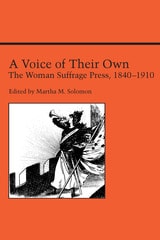
cover of A Voice Of Their Own: The Woman Suffrage Press, 1840-1910

A Voice Of Their Own

The Woman Suffrage Press, 1840-1910

Martha Solomon

University of Alabama Press, 1991
A Voice of Their Own explores the consciousness-raising role of the American Suffrage press of the latter half of the 19th century.  From the first women's rights convention--a modest gathering of three hundred sympathizers led by Elizabeth Cady Stanton--grew the ever-expanding movement for equal rights, greater protection, and improved opportunities.  Although the leaders of that and subsequent conventions realized that such public rallies, with their exhortative speeches, were crucial in gaining support for the movement, they also recognized the potentioal impact of another medium--woman's suffrage periodicals, written and published by and expressly for women.  The eleven essays of this volume demonstrate how the suffrage press-- in such works as Woman's Journal, Woman's Tribune, Woman's Exponent, and Farmer's Wife-- was able to educate an audience of women readers, crate a sense of community among them, and help alter their self-image.
[more]
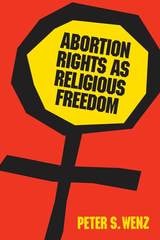
cover of Abortion Rights as Religious Freedom

Abortion Rights as Religious Freedom

Peter S. Wenz

Temple University Press, 1992
"This excellent books is bound to stir debate on the abortion issue and to occupy a rather distinctive position." --R.G. Frey, Bowling Green State University With the current composition of the Supreme Court and recent challenges to Roe v. Wade, Peter S. Wenz's new approach to the ethical, moral, and legal issues related to a woman's right to elective abortion may turn the tide in this debate. He argues that the Supreme Court reached the right decision in Roe v. Wade but for the wrong reasons. Wenz contends that a woman's right to terminated her pregnancy should be based, not on her constitutional right to privacy, but on the constitutional guarantee of religious freedom, a basis for freedom of choice that is not subject to the legal criticisms advanced against Roe. At least up to the 20th week of a pregnancy, one's belief whether a human fetus is a human person or not is a religious decision. He maintains that because questions about the moral status of a fetus are religious, it follows that anti-abortion legislation, to the extent that it is predicated on such "inherently religious beliefs," is unconstitutional. In this timely and topical book, Wenz also examines related cases that deal with government intervention in an individual's procreative life, the regulation of contraceptives, and other legislation that is either applied to or imposed upon select groups of people (e.g., homosexuals, drug addicts). He builds a concrete argument that could replace Roe v. Wade. Reviews "In this important study of abortion and the Constitiution, legal philosopher Peter Wenz contends that Roe v. Wade was wrongly argued but well conlcuded. Wenz presents a substantial review of Supreme Court decisions on abortion, then critically exposes flaws, including the privacy justification for abortion as well as the trimester scheme. --Religious Studies Review "In this major work, Peter Wenz has analyzed the relation of the Constitution's religion clauses to the abortion controversy. His principal contribution is to shift the argument from the right of privacy (invoked, he believes, unsuccessfully in Roe v. Wade) to the Establishment Clause. The Court's concern in Roe was whether the statute unduly burdened a fundamental right. But tested by the Establishment Clause, statutes may violate the Constitution by implicitly endorsing a religious belief, namely, the personhood of the unborn. Wenz concludes that the Establishment Clause permits abortions prior to the twenty-first week of pregnancy." --C. Herman Prichett, Professor of Political Science Emeritus, University of California, Santa Barbara "This is an original and scholarly exposition of the view that abortion rights fall under the religion clauses of the First Amendment. The view defended is an important alternative to the privacy defense upon which the Roe v. Wade decision was based and should help to expand the ethical and constitutional debate about abortion rights." --Mary Anne Warren, Associate Professor of Philosophy, San Francisco State University, and author of Gendercide: The Implications of Sex Selection Contents Preface Introduction Roe v. Wade under Attack • Individual Rights and Majority Rule • Constitutional Interpretation • Preview of Chapters 1. The Derivation of Roe v. Wade Economic Substantive Due Process • Due Process and the Family • Contraception and Privacy in Griswold v. Connecticut • Contraception and Privacy in Eisenstadt v. Baird • Blackmun's Privacy Rationale in Roe v. Wade • Stewart's Due Process Rationale in Roe v. Wade • Tribe on Substantive Due Process • Conclusion 2. Potentiality and Viability The Roe v. Wade Decision • The Concept of Viability in Abortion Cases • Dividing the Gestational Continuum • The Genetic Approach to Personhood • Viability versus Similarity to Newborns • Two Consequentialist Arguments • Feminism and Viability • Conclusion 3. The Evolution of "Religion" Religion in the Abortion Debate • The Original Understanding of the Religion Clauses • The Evolution of Religion Clause Doctrine • Incorporation of the Religion Clauses • From Belief to Practice • Alleviating Indirect Burdens on Religious Practice • Expanding the Meaning of "Religion" • The Original Understanding View • Bork: Conservative or Moderate? • Conflicts between the Religion Clauses • The Elusive Meaning of "Religion" • Conclusion 4. The Definition of "Religion" The Adjectival Sense of Religion • Religious Beliefs Independent of Organized Religions • Religious Belief as Fundamental to Organized Religion • Secular Beliefs Related to Material Reality • Secular Beliefs Related to Social Interaction • Secular Facts versus Secular Values • The Court's Characterizations of Secular Beliefs • Secular (Nonreligious) Belief • The Epistemological Standard for Distinguishing Religious from Secular Belief • Judicial Examples of Religious Beliefs • General Characteristics of Religious Beliefs • Summary 5. "Religion" in Court The Epistemological Standard Applied • Cults and Crazies • Secular Religions • Tensions between the Religion Clauses • The Unitary Definition of "Religion" 6. Fetal Personhood as Religious Belief Anti-Contraception Laws and the Establishment Clause • Belief in the Existence of God • Belief in the Personhood of Young Fetuses • Distinguishing Religious from Secular Determinations of Fetal Personhood • Religious versus Secular Uncertainty • Environmental Preservation and Animal Protection versus Fetal Value • Greenawalt's Argument • The Reach of Secular Considerations • Secular versus Religious Matters • Conclusion 7. The Regulation of Abortion The Trimester Framework and Its Exceptions • O'Connor's Objections to the Trimester Framework • Superiority of the Establishment Clause Approach to the Trimester Framework • Required Efforts to Save the Fetus • The Neutrality Principle • Appropriate Judicial Skepticism • Undue Burdens and Unconstitutional Endorsements • Conclusion 8. Abortion and Others Public Funding of Abortion • The Establishment Clause Approach to Public Funding • The Court's Funding Rationale • The Court's Inconsistent Rationale • Publicly Funded Family Planning Clinics • Spousal Consent • The Court's Flawed Parental Consent Rationale • Information Requirements • Spousal and Parental Consent • The Establishment Clause Approach: Medical Dimension • The Establishment Clause Approach: Religious Dimension • Implications of the Establishment Clause Approach • The Court's Inconsistency • Equivalent Results • Parental Notification • Conclusion Conclusion Justice Scalia's View • The Fundamental Flaw in Roe • The Rationale for the Establishment Clause Approach • Advantages of the Establishment Clause Approach Notes Glossary of Terms Annotated Table of Cases Bibliography Index About the Author(s): Peter S. Wenz is Professor of Philosophy and Legal Studies at Sangamon State University.
[more]
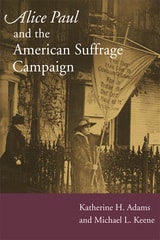
cover of Alice Paul and the American Suffrage Campaign

Alice Paul and the American Suffrage Campaign

Katharine H. Adams and Michael L. Keene

University of Illinois Press, 2007

Past biographies, histories, and government documents have ignored Alice Paul's contribution to the women's suffrage movement, but this groundbreaking study scrupulously fills the gap in the historical record. Masterfully framed by an analysis of Paul's nonviolent and visual rhetorical strategies, Alice Paul and the American Suffrage Campaign narrates the remarkable story of the first person to picket the White House, the first to attempt a national political boycott, the first to burn the president in effigy, and the first to lead a successful campaign of nonviolence.

Katherine H. Adams and Michael L. Keene also chronicle other dramatic techniques that Paul deftly used to gain publicity for the suffrage movement. Stunningly woven into the narrative are accounts of many instances in which women were in physical danger. Rather than avoid discussion of Paul's imprisonment, hunger strikes, and forced feeding, the authors divulge the strategies she employed in her campaign. Paul's controversial approach, the authors assert, was essential in changing American attitudes toward suffrage.
[more]
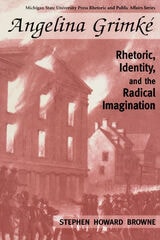
cover of Angelina Grimke: Rhetoric, Identity, and the Radical Imagination

Angelina Grimke

Rhetoric, Identity, and the Radical Imagination

Stephen H. Browne

Michigan State University Press, 1999

Abolitionist, women's rights activist, and social reformer, Angelina Grimké (1805-79) was among the first women in American history to seize the public stage in pursuit of radical social reform. "I will lift up my voice like a trumpet," she proclaimed, "and show this people their transgressions." And when she did lift her voice in public, on behalf of the public, she found that, in creating herself, she might transform the world. In the process, Grimké crossed the wires of race, gender, and power, and produced explosions that lit up the world of antebellum reform. Among the most remarkable features of Angelina Grimké's rhetorical career was her ability to stage public contests for the soul of America—bringing opposing ideas together to give them voice, depth, and range to create new and more compelling visions of social change. 
     Angelina Grimké: Rhetoric, Identity, and the Radical Imagination is the first full-length study to explore the rhetorical legacy of this most unusual advocate for human rights. Stephen Browne examines her epistolary and oratorical art and argues that rhetoric gave Grimké a means to fashion not only her message but her very identity as a moral force.
[more]
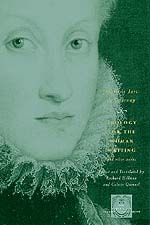
cover of Apology for the Woman Writing and Other Works

Apology for the Woman Writing and Other Works

Marie le Jars de Gournay

University of Chicago Press, 2002

During her lifetime, the gifted writer Marie le Jars de Gournay (1565-1645) was celebrated as one of the "seventy most famous women of all time" in Jean de la Forge's Circle of Learned Women (1663). The adopted daughter of Montaigne, as well as his editor, Gournay was a major literary force and a pioneering feminist voice during a tumultuous period in France.

This volume presents translations of four of Gournay's works that address feminist issues. Two of these appear here in English for the first time—The Promenade of Monsieur de Montaigne and The Apology for the Woman Writing. One of the first modern psychological novels, the best-selling Promenade was also the first to explore female sexual feeling. With the autobiographical Apology, Gournay defended every aspect of her life, from her moral conduct to her household management. The book also includes Gournay's last revisions (1641) of her two best-known feminist treatises, The Equality of Men and Women and The Ladies' Complaint. The editors provide a general overview of Gournay's career, as well as individual introductions and extensive annotations for each work.
[more]