Results by title
14 books match the query 'Women on television'

Gender Politics And MTV
Voicing the DifferenceLisa Lewis
Temple University Press, 1991
Justice Provocateur
Jane Tennison and Policing in Prime SuspectGray Cavender and Nancy C. Jurik
University of Illinois Press, 2012
Lear’s Other Shadow
A Cultural History of Queen LearThomas G. Olsen
University of Delaware Press, 2025
Mediating the Uprising
Narratives of Gender and Marriage in Syrian Television DramaRebecca Joubin
Rutgers University Press, 2020
While for some screenwriters a return to pre-2011 life would be welcome after so much bloodshed, others advocated profound cultural and social transformation, instead. They employed marriage and gender metaphors in the stories they wrote to engage in political critique, even at the risk of creating marketing difficulties for the shows or they created escapist stories such as transnational adaptations and Old Damascus tales. Serving as heritage preservation, Mediating the Uprising underscores that television drama creators in Syria have many ways of engaging in protest, with gender and marriage at the heart of the polemic.
Private Screenings
Television and the Female ConsumerLynn Spigel
University of Minnesota Press, 1992
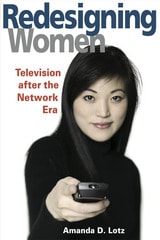
REDESIGNING WOMEN
Television after the Network EraAmanda D. Lotz
University of Illinois Press, 2010
Employing a cultural studies framework, Lotz examines whether the multiplicity of female-centric networks and narratives renders certain gender stereotypes uninhabitable, and how new dramatic portrayals of women have redefined narrative conventions. Redesigning Women also reveals how these changes led to narrowcasting, or the targeting of a niche segment of the overall audience, and the ways in which the new, sophisticated portrayals of women inspire sympathetic identification while also commodifying viewers into a marketable demographic for advertisers.

Sexual Generations
Star Trek: The Next Generation and GenderRobin Roberts
University of Illinois Press, 1999
The incisive and innovative readings in Sexual Generations provide food for thought about how the final frontier can clarify pressing questions of our own space and time.

Television Antiheroines
Women Behaving Badly in Crime and Prison DramaEdited by Milly Buonanno
Intellect Books, 2017
The essays collected in Television Antiheroines are divided into four sections or types of characters: mafia women, drug dealers and aberrant mothers, women in prison, and villainesses. Looking specifically at shows such as Gomorrah, Mafiosa, The Wire, The Sopranos, Sons of Anarchy, Orange is the New Black, and Antimafia Squad, the contributors explore the role of race and sexuality and focus on how many of the characters transgress traditional ideas about femininity and female identity, such as motherhood. They examine the ways in which bad women are portrayed and how these characters undermine gender expectations and reveal the current challenges by women to social and economic norms. Television Antiheroines will be essential reading for anyone with a serious interest in crime and prison drama and the rising prominence of women in nontraditional roles.
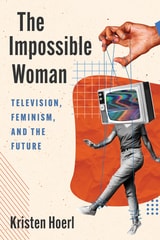
The Impossible Woman
Television, Feminism, and the FutureKristen Hoerl
Rutgers University Press, 2026
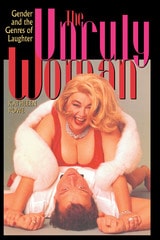
The Unruly Woman
Gender and the Genres of LaughterBy Kathleen Rowe
University of Texas Press, 1995
Unruly women have been making a spectacle of themselves in film and on television from Mae West to Roseanne Arnold. In this groundbreaking work, Kathleen Rowe explores how the unruly woman—often a voluptuous, noisy, joke-making rebel or "woman on top"—uses humor and excess to undermine patriarchal norms and authority.
At the heart of the book are detailed analyses of two highly successful unruly women—the comedian Roseanne Arnold and the Muppet Miss Piggy. Putting these two figures in a deeper cultural perspective, Rowe also examines the evolution of romantic film comedy from the classical Hollywood period to the present, showing how the comedic roles of actresses such as Katharine Hepburn, Barbara Stanwyck, and Marilyn Monroe offered an alternative, empowered image of women that differed sharply from the "suffering heroine" portrayed in classical melodramas.
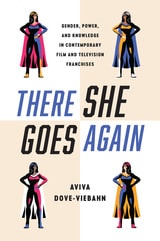
There She Goes Again
Gender, Power, and Knowledge in Contemporary Film and Television FranchisesAviva Dove-Viebahn
Rutgers University Press, 2024
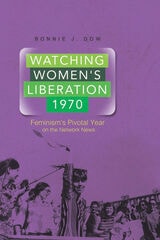
Watching Women's Liberation, 1970
Feminism's Pivotal Year on the Network NewsBonnie J. Dow
University of Illinois Press, 2014
In Watching Women's Liberation, 1970: Feminism's Pivotal Year on the Network News, Bonnie J. Dow uses case studies of key media events to delve into the ways national TV news mediated the emergence of feminism's second wave. First legitimized as a big story by print media, the feminist movement gained broadcast attention as the networks’ eagerness to get in on the action was accompanied by feminists’ efforts to use national media for their own purposes. Dow chronicles the conditions that precipitated feminism's new visibility and analyzes the verbal and visual strategies of broadcast news discourses that tried to make sense of the movement.
Groundbreaking and packed with detail, Watching Women's Liberation, 1970 shows how feminism went mainstream--and what it gained and lost on the way.
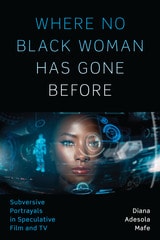
Where No Black Woman Has Gone Before
Subversive Portrayals in Speculative Film and TVBy Diana Adesola Mafe
University of Texas Press, 2018
When Lieutenant Uhura took her place on the bridge of the Starship Enterprise on Star Trek, the actress Nichelle Nichols went where no African American woman had ever gone before. Yet several decades passed before many other black women began playing significant roles in speculative (i.e., science fiction, fantasy, and horror) film and television—a troubling omission, given that these genres offer significant opportunities for reinventing social constructs such as race, gender, and class. Challenging cinema’s history of stereotyping or erasing black women on-screen, Where No Black Woman Has Gone Before showcases twenty-first-century examples that portray them as central figures of action and agency.
Writing for fans as well as scholars, Diana Adesola Mafe looks at representations of black womanhood and girlhood in American and British speculative film and television, including 28 Days Later, AVP: Alien vs. Predator, Children of Men, Beasts of the Southern Wild, Firefly, and Doctor Who: Series 3. Each of these has a subversive black female character in its main cast, and Mafe draws on critical race, postcolonial, and gender theories to explore each film and show, placing the black female characters at the center of the analysis and demonstrating their agency. The first full study of black female characters in speculative film and television, Where No Black Woman Has Gone Before shows why heroines such as Lex in AVP and Zoë in Firefly are inspiring a generation of fans, just as Uhura did.
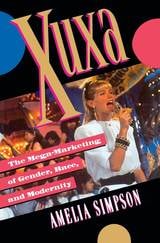
Xuxa
The Mega-Marketing of Gender, Race, and ModernityAmelia Simpson
Temple University Press, 1993