Results by title
8 books match the query 'Wonders'
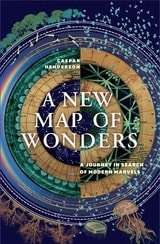
A New Map of Wonders
A Journey in Search of Modern MarvelsCaspar Henderson
University of Chicago Press, 2017
Henderson’s brilliant exploration borrows from the form of one of the oldest and most widely known sources of wonder: maps. Large, detailed mappae mundi invited people in medieval Europe to vividly imagine places and possibilities they had never seen before: manticores with the head of a man, the body of a lion, and the stinging tail of a scorpion; tribes of one-eyed men who fought griffins for diamonds; and fearsome Scythian warriors who drank the blood of their enemies from their skulls. As outlandish as these maps and the stories that went with them sound to us today, Henderson argues that our views of the world today are sometimes no less incomplete or misleading. Scientists are only beginning to map the human brain, for example, revealing it as vastly more complex than any computer we can conceive. Our current understanding of physical reality is woefully incomplete. A New Map of Wonders explores these and other realms of the wonderful, in different times and cultures and in the present day, taking readers from Aboriginal Australian landscapes to sacred sites in Great Britain, all the while keeping sight questions such as the cognitive basis of wonder and the relationship between wonder and science.
Beautifully illustrated and written with wit and moral complexity, this sequel to The Book of Barely Imagined Beings is a fascinating account of the power of wonder and an unforgettable meditation on its importance to our future.
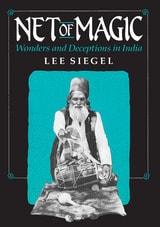
Net of Magic
Wonders and Deceptions in IndiaLee Siegel
University of Chicago Press, 1991
Siegel's journeys take him from ancient Sanskrit texts to the slums of New Delhi to find remnants of a remarkable magical tradition. In the squalid settlement of Shadipur, he is initiated into a band of Muslim street conjurers and performs as their shill while they tutor him in their con and craft. Siegel also becomes acquainted with Hindu theatrical magicians, who claim descent from court illusionists and now dress as maharajahs to perform a repertoire of tricks full of poignant kitsch and glitz.
Masterfully using a panoply of narrative sleights to recreate the magical world of India, Net of Magic intersperses travelogue, history, ethnography, and fiction. Siegel's vivid, often comic tale is crowded with shills and stooges, tourists and pickpockets, snake charmers and fakirs. Among the cast of characters are Naseeb, a poor Muslim street magician who guides Siegel into the closed circle of itinerant performers; the Industrial Magician, paid by a bank, who convinces his audience to buy traveler's checks by making twenty-rupee notes disappear; the Government Magician, who does a trick with condoms to encourage family planning; P. C. Sorcar, Jr., the most celebrated Indian stage magician; and the fictive Professor M. T. Bannerji, the world's greatest magician, who assumes various guises over a millennium of Indian history and finally arrives in the conjuring capital of the world—Las Vegas.
Like Indra's net—the web of illusion in which Indian performers ensnare their audience—Net of Magic captures the reader in a seductive portrayal of a world where deception is celebrated and lies are transformed into compelling and universal truths.
Of Wonders and Wise Men
Religion and Popular Cultures in Southeast Mexico, 1800-1876By Terry Rugeley
University of Texas Press, 2001
2004 – Harvey L. Johnson Award – Southwest Council of Latin American Studies
In the tumultuous decades following Mexico's independence from Spain, religion provided a unifying force among the Mexican people, who otherwise varied greatly in ethnicity and socioeconomic status. Accordingly, religion and the popular cultures surrounding it form the lens through which Terry Rugeley focuses this cultural history of southeast Mexico from independence (1821) to the rise of the dictator Porfirio Díaz in 1876.
Drawing on a wealth of previously unused archival material, Rugeley vividly reconstructs the folklore, beliefs, attitudes, and cultural practices of the Maya and Hispanic peoples of the Yucatán. In engagingly written chapters, he explores folklore and folk wisdom, urban piety, iconography, and anticlericalism. Interspersed among the chapters are detailed portraits of individual people, places, and institutions, that, with the archival evidence, offer a full and fascinating history of the outlooks, entertainments, and daily lives of the inhabitants of southeast Mexico in the nineteenth century. Rugeley also links this rich local history with larger events to show how macro changes in Mexico affected ordinary people.
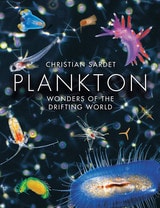
Plankton
Wonders of the Drifting WorldChristian Sardet
University of Chicago Press, 2015
Viewing these creatures up close for the first time can be a thrilling experience—an elaborate but hidden world truly opens up before your eyes. Through hundreds of close-up photographs, Plankton transports readers into the currents, where jeweled chains hang next to phosphorescent chandeliers, spidery claws jut out from sinuous bodies, and gelatinous barrels protect microscopic hearts. The creatures’ vibrant colors pop against the black pages, allowing readers to examine every eye and follow every tentacle. Jellyfish, tadpoles, and bacteria all find a place in the book, representing the broad scope of organisms dependent on drifting currents.
Christian Sardet’s enlightening text explains the biological underpinnings of each species while connecting them to the larger living world. He begins with plankton’s origins and history, then dives into each group, covering ctenophores and cnidarians, crustaceans and mollusks, and worms and tadpoles. He also demonstrates the indisputable impact of plankton in our lives. Plankton drift through our world mostly unseen, yet they are diverse organisms that form ninety-five percent of ocean life. Biologically, they are the foundation of the aquatic food web and consume as much carbon dioxide as land-based plants. Culturally, they have driven new industries and captured artists’ imaginations.
While scientists and entrepreneurs are just starting to tap the potential of this undersea forest, for most people these pages will represent uncharted waters. Plankton is a spectacular journey that will leave readers seeing the ocean in ways they never imagined.
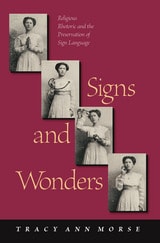
Signs and Wonders
Religious Rhetoric and the Preservation of Sign LanguageTracy Ann Morse
Gallaudet University Press, 2014
In Chapter One, Morse analyzes Thomas Hopkins Gallaudet’s use of religious references in his 1817 maiden address at the first American school for deaf students. She examines his and other speeches as examples of the intersection of education for deaf Americans and Protestant missionary efforts to convert them. In the second chapter, she presents the different religious perspectives of the two deaf education camps: Manualists argued that sign language was a gift from God, while Oralists viewed hand gestures as animal-like, indicative of lower evolutionary development.
Chapter Three explores the religious rhetoric in churches, sanctuaries where sign language flourished and deaf members formed relationships. In the fourth chapter, Morse shows how Deaf activist George Veditz signed using religious themes in his political films. She also comments on the impact of the bilingual staging of Big River: The Adventures of Huckleberry Finn, which began to change the hearing world’s opinion about the Deaf community. Morse concludes with speculation on the shifting terrain for deaf people due to technological innovations that might supplant religious rhetoric as a tool to support the Deaf community.
This State of Wonders
The Letters of an Iowa Frontier Family, 1858-1861John Kent Folmar
University of Iowa Press, 1991
When the John Hugh Williams family immigrated to Homer, Iowa, in the 1850s, they had six children, ranging in age from five to twenty. Suddenly land poor, in debt, and caught in the Panic of '57, they sent their eldest son, James, to Georgia to work and add to the family income.
The seventy-five letters collected here represent the family's correspondence to their absent son and brother. From 1858 to 1861, James' sisters, brothers, mother, and father wrote to him frequently, each with distinct views on their daily life and struggles. While Mr. Williams wrote most often about money, farming, and moral advice (he was minister in the Church of New Jerusalem, as well as a merchant and farmer), Mrs. Williams commented on her daily chores, the family's health, the ever-important weather, and her leisure activities, including the contemporary journals and books she read, such as David Copperfield and Jane Eyre. James' sisters and brothers wrote about many concerns, from schoolwork and housework to games and family celebrations in nearby Webster City.
As the letters continue, the affection for the absent James becomes more pronounced. And, as the years go by, the letters touch on more current national trends, including the Pikes Peak Gold Rush and the growing North/South crisis, on which James and his family strongly disagree. James was never to return to Iowa but married and remained in the South, becoming a lieutenant colonel in the Confederate army.
Complete with voices both young and old, male and female, This State of Wonders offers a wealth of information about the daily life of an ordinary family on the Iowa prairie. It is a book to be treasured by all Iowans interested in the early life of their state and by all historians looking for a complete portrait of family life on the midwestern frontier.
Wonders of Sand and Stone
A History of Utah's National Parks and MonumentsFrederick H. Swanson
University of Utah Press, 2020
Drawing on extensive historical research, Swanson presents little-known accounts of people who saw in these sculptured landscapes something worth protecting. Readers are introduced to the region’s early explorers, scientists, artists, and travelers as well as the local residents and tourism promoters who worked with the National Park Service to build the system of parks and monuments we know today, when Utah’s national parks and monuments face multiple challenges from increased human use and from development outside their borders. As scientists continue to uncover the astonishing diversity of life in these desert and mountain landscapes, and archaeologists and Native Americans document their rich cultural resources, the management of these federal lands remains critically important. Swanson provides us with a detailed and timely background to advance and inform discussions about what form that management should take.
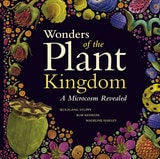
Wonders of the Plant Kingdom
A Microcosm RevealedWolfgang Stuppy, Rob Kesseler, and Madeline Harley
University of Chicago Press, 2015
With Wonders of the Plant Kingdom, the naked eye gets an unforgettable boost. A stunning collaboration between science and art, this gorgeous book presents hundreds of images of plants taken with a scanning electron microscope and hand-colored by artist Rob Kesseler to reveal the awe-inspiring adaptations all around us. The surface of a peach—with its hairs, or trichomes, and sunken stomata, or breathing pores—emerges from these pages in microscopic detail. The dust-like seeds of the smallest cactus species in the world, the Blossfeldia liliputana—which measures just twelve millimeters fully grown—explode here with form, color, and character, while the flower bud of a kaffir lime, cross-sectioned, reveals the complex of a flower bud with the all-important pistil in the center.
Accompanying these extraordinary images are up-to-date explanations of the myriad ways that these plants have ensured their own survival—and, by proxy, our own. Gardeners and science buffs alike will marvel at this wholly new perspective on the world of plant diversity.