Results by title
21 books match the query 'Woods'
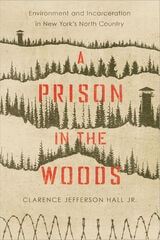
A Prison in the Woods
Environment and Incarceration in New York's North CountryClarence Jefferson Hall
University of Massachusetts Press, 2020
Clarence Jefferson Hall Jr. reveals that the introduction of correctional facilities—especially in the last three decades of the twentieth century—unearthed long-standing conflicts over the proper uses of Adirondack nature, particularly since these sites have contributed to deforestation, pollution, and habitat decline, even as they've provided jobs and spurred economic growth. Additionally, prison plans have challenged individuals' commitment to environmental protection, tested the strength of environmental regulations, endangered environmental and public health, and exposed tensions around race, class, place, and belonging in the isolated prison towns of America's largest state park.

Back to the Woods
Cynthia Cruz
Four Way Books, 0
National Book Critics Circle Award Winner Cynthia Cruz reevaluates the paradox of the death drive in her eighth collection of poetry, Back to the Woods. Could it be that in ceaselessly snuffing ourselves out we are, in fact, trying to survive? In “Shine,” Cruz’s speaker attests that “if [she] had a home, it would be // a still in a film / where the sound / got jammed.” This book inhabits the silence of the empty orchestra pit, facing “dread, and its many / instruments of sorrow.” The quiet asks, “Did you love this world / and did this world / not love you?” We return to the site of our suffering, we perform the symphony of all our old injuries, to master what has broken us. To make possible the future, we retreat into the past. “I don’t know / the ending. // I don’t know anything,” our speaker insists, but she follows the wind’s off-kilter song of “winter / in the pines” and “the dissonance / of siskins.” Cruz heeds the urgency of our wandering, the mandate that we must get back to the woods, not simply for the forest to devour us — she recognizes in the oblivion “flooding out / from its spiral branches” an impossible promise. At the tree line, we might vanish to begin again.
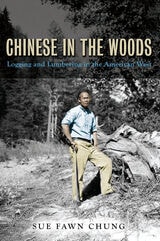
Chinese in the Woods
Logging and Lumbering in the American WestSue Fawn Chung
University of Illinois Press, 2015

Eyes Glowing at the Edge of the Woods
Fiction and Poetry from West VirginiaLaura Long
West Virginia University Press, 2017
Throughout this collection, we see profound wonder, questioning, and conflicts involving family, sexual identity, class, discrimination, environmental beauty, and peril, and all the sorts of rebellion, error, contemplation, and contentment that an intrepid soul can devise. These stories and poems, all published within the last fifteen years, are grounded in what it means to live in and identify with a complex place.
With a mix of established writers like Jayne Anne Phillips, Norman Jordan, Ann Pancake, Maggie Anderson, and Denise Giardina and fresh voices like Matthew Neill Null, Ida Stewart, Rajia Hassib, and Scott McClanahan, this collection breaks open new visions of all-American landscapes of the heart. By turns rowdy and contemplative, hilarious and bleak, and lyrical and gritty, it is a collage of extraordinary literary visions.
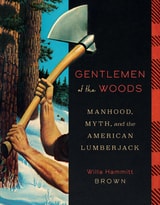
Gentlemen of the Woods
Manhood, Myth, and the American LumberjackWilla Hammitt Brown
University of Minnesota Press, 2025
Lumberjacks: the men, the myth, and the making of an American legend
The folk hero Paul Bunyan, burly, bearded, wielding his big ax, stands astride the story of the upper Midwest—a manly symbol of the labor that cleared the vast north woods for the march of industrialization while somehow also maintaining an aura of pristine nature. This idea, celebrated in popular culture with songs and folktales, receives a long overdue and thoroughly revealing correction in Gentlemen of the Woods, a cultural history of the life and lore of the real lumberjack and his true place in American history.
Now recalled as heroes of wilderness and masculinity, lumberjacks in their own time were despised as amoral transients. Willa Hammitt Brown shows that nineteenth-century jacks defined their communities of itinerant workers by metrics of manhood that were abhorrent to the residents of the nearby Northwoods boomtowns, valuing risk-taking and skill rather than restraint and control. Reviewing songs, stories, and firsthand accounts from loggers, Brown brings to life the activities and experiences of the lumberjacks as they moved from camp to camp. She contrasts this view with the popular image cultivated by retreating lumber companies that had to sell off utterly barren land. This mythologized image glorified the lumberjack and evoked a kindly, flannel-wearing, naturalist hero.
Along with its portrait of lumberjack life and its analysis of the creation of lumberjack myth, Gentlemen of the Woods offers new insight into the intersections of race and social class in the logging enterprise, considering the actual and perceived roles of outsider lumberjacks and Native inhabitants of the northern forests. Anchored in the dual forces of capitalism and colonization, this lively and compulsively readable account offers a new way to understand a myth and history that has long captured our collective imagination.

Her Place in the Woods
The Life of Helen HooverDavid Hakensen
University of Minnesota Press, 2025
The biography of one of Minnesota’s most beloved nature writers, from her career in the city to her rustic cabin on Gunflint Lake
During the late 1950s through the early 1970s, Helen Hoover’s stories and essays of life in the wilderness on northern Minnesota’s Gunflint Lake, published in popular magazines and several bestselling books (including The Gift of the Deer in 1966 and A Place in the Woods in 1969), found millions of fans and earned her accolades alongside nature writers like Sigurd Olson, Rachel Carson, Sally Carrighar, and Calvin Rutstrum. Hoover’s own unlikely history of leaving a corporate career in Chicago for a small cabin without electricity or running water—with no interest in hunting or fishing—is just one chapter of the remarkable life that David Hakensen describes in Her Place in the Woods. This first complete biography illuminates how Helen Hoover (1910–1984) made a place for herself and for countless readers in, as she put it, the world of her time.
Hoover defied convention. Self-trained and without an academic degree, she worked in the male-dominated metallurgical field as a researcher at International Harvester, where she solved a long-standing problem with the manufacture of discs for farm implements and earned a patent. She and her husband, Adrian, a commercial artist, had long dreamed of moving to a remote cabin in the woods. As they started the long return drive to Chicago after a summer spent on Gunflint Lake, they finally made the leap, quitting their jobs with a long-distance phone call from Grand Marais and figuring out the rest as they went.
The Hoovers were woefully unprepared for life off the grid and slowly learned how to convert sheds into chicken coops and fend off bears. Social encounters presented their own challenges, with Helen’s fiery personality leading to clashes with hunters and other Gunflint neighbors. Gradually, the Hoovers settled into the rhythms of their remote homestead, and Helen would craft a prolific literary livelihood from her keen observations of nature and encounters with animals in the surrounding woods.
Her Place in the Woods captures both an awakening to the power and fragility of the natural world and the efforts and talents of an extraordinary woman defining herself as a writer. Though Helen Hoover would move on from the secluded North Woods, as she wrote in her final book, The Years of the Forest, “From this time on it would be both here and with me wherever I might be, as long as I should live.”

In a Cabin, in the Woods
Michael Krüger
Seagull Books, 2024
When the COVID-19 pandemic hit, Michael Krüger was suffering from severe shingles and just beginning treatment for leukemia. Because his immune system was so compromised that even a cough would have knocked him flat, he had to stay away from people. He retired to a wooden house near Lake Starnberg in Germany, and from there he dispatched his poetic messages. Krüger’s meditations from quarantine were printed for many months in the magazine of the Süddeutsche Zeitung and met with an enthusiastic response. In a Cabin, in the Woods collects fifty tableaux of nature, images of the immediate surroundings of a restricted life that also look beyond the horizon. At the same time, these poems look inward to explore transience, illness, and death. Humorous and melancholy, these are studies of the world made with the tiniest compass—meditations on nature and the nature of self that touch us all.

Living in the Woods in a Tree
Remembering Blaze FoleySybil Rosen
University of North Texas Press, 2008
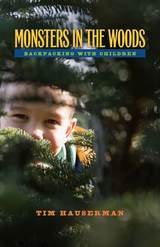
Monsters In The Woods
Backpacking With ChildrenTim Hauserman
University of Nevada Press, 2007
How and why you should take your children backpacking
Despite America’s enthusiasm for outdoors activities like hiking and backpacking, most books on these subjects focus on adults. Backpacking, however, is an ideal activity for the entire family. Tim Hauserman, who is both an experienced outdoors guide and the father of two daughters, now offers a handbook for parents who would like to introduce their children to backpacking and camping. Hauserman provides practical, humorous advice for families new to the outdoors and for trail-savvy parents planning to take their children along for the first time: how to prepare, what to bring, who carries what, how far to walk, what to do in camp, safety precautions, dealing with mishaps, and proper trail and campground etiquette. He includes guidance about appropriate distances and pack weights for every age level of child, as well as tips about backpacking with an infant and bringing the family dog along on the adventure. He even suggests appealing destinations in the Sierra Nevada appropriate for various age groups and recounts some of his (and his daughters’) favorite hikes. Hauserman’s down-to-earth encouragement is based on decades of backpacking and camping with his own children, their friends, and other groups of youngsters. He is candid about his experiences and the lessons he learned from his own mistakes and how he dealt with them. Ultimately, the reward of sharing a special adventure and the peace and beauty of the outdoors makes all the effort worthwhile.

Naked in the Woods
My Unexpected Years in a Hippie CommuneMargaret Grundstein
Oregon State University Press, 2015
Naked in the Woods chronicles Grundstein’s shift from reluctant hippie to committed utopian—sacrificing phones, electricity, and running water to live on 160 acres of remote forest with nothing but a drafty cabin and each other. Grundstein, (whose husband left, seduced by “freer love”) faced tough choices. Could she make it as a single woman in man’s country? Did she still want to? How committed was she to her new life? Although she reveled in the shared transcendence of communal life deep in the natural world, disillusionment slowly eroded the dream. Brotherhood frayed when food became scarce. Rifts formed over land ownership. Dogma and reality clashed.
Many people, baby boomers and millennials alike, have romantic notions about the 1960s and 70s. Grundstein’s vivid account offers an unflinching, authentic portrait of this iconic and often misreported time in American history. Accompanied by a collection of distinctive photographs she took at the time, Naked in the Woods draws readers into a period of convulsive social change and raises timeless questions: how far must we venture to find the meaning we seek, and is it ever far out enough to escape our ingrained human nature?

North Writers II
Our Place in the WoodsJohn Henricksson
University of Minnesota Press, 1997
A new collection of writing by contemporary Minnesota writers.
This companion volume to the widely praised North Writers: A Strong Woods Collection features the work of a variety of authors-some new voices, some old friends-all of them writing about life in northern Minnesota.
The essays included in North Writers II explore the special relationship that exists between the people of northern Minnesota and the rugged yet beautiful landscape that surrounds them. These writers consider the things that make living in the far north unique—the red earth of the Iron Range, the spectacular and forbidding wildness of Lake Superior’s North Shore, the elemental nature of climate and wilderness that tests one’s mettle. There are also the farms and towns of northern Minnesota, with their heritage of self-reliance and the insight that comes with it. Taken together, these essays provide an exploration of the character, the essence, the spirit of this northern country, as well as the mystique it holds for those from more hospitable climes.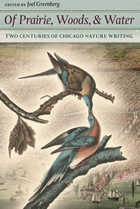
Of Prairie, Woods, and Water
Two Centuries of Chicago Nature WritingEdited by Joel Greenberg
University of Chicago Press, 2008
These writings tell the tale of a land in transition—one with abundant, unique, and incredibly lush flora and fauna, a natural history quite elusive today. Drawing on archives he uncovered while writing his acclaimed A Natural History of the Chicago Region, Greenberg hand-selected these first-person narratives, all written between 1721 and 1959. Not every author is familiar, but every contribution is distinctive. From a pioneer’s hilarious notes on life in the Kankakee marsh to Theodore Drieser’s poignant plea for conservation of the Tippecanoe River to infamous murderer Nathan Leopold’s charming description of a pet robin he kept in prison, the sources included are as diverse as the nature they describe.
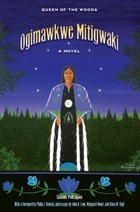
Ogimawkwe Mitigwaki (Queen of the Woods)
Simon Pokagon
Michigan State University Press, 2010
Simon Pokagon, the son of tribal patriarch Leopold Pokagon, was a talented writer, advocate for the Pokagon Potawatomi community, and tireless self-promoter.
In 1899, shorty after his death, Pokagon's novel Ogimawkwe Mitigwaki (Queen of the Woods)—only the second ever published by an American Indian—appeared. It was intended to be a testimonial to the traditions, stability, and continuity of the Potawatomi in a rapidly changing world. Read today, Queen of the Woods is evidence of the author's desire to mark the cultural, political, and social landscapes with a memorial to the past and a monument to a future that included the Pokagon Potawatomi as distinct and honored people.
This new edition offers a reprint of the original 1899 novel with the author's introduction to the language and culture of his people. In addition, new accompanying materials add context through a cultural biography, literary historical analysis, and linguistic considerations of the unusual text.
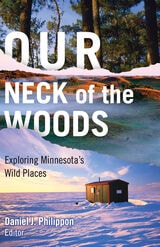
Our Neck of the Woods
Exploring Minnesota's Wild PlacesDaniel J. Philippon
University of Minnesota Press, 2009
What are the odds of finding Minnesota's tiniest orchid? Why take a Breathalyzer test to study frogs? How does ice fishing warm the heart? Who would live in such a cold, lean region? Our Neck of the Woods takes on these and other urgent (and sometimes quirky) questions, showcasing writers' own experiences in the best-loved places in Minnesota, including the North Shore, Lake Bemidji, the western prairies and grasslands, the Boundary Waters, and the Mesabi Iron Range.
The outdoor experiences described here range from sweeping natural history observations to adventurous tales of coming-of-age camping and hunting trips. We follow notable writers and conservationists Sigurd F. Olson, Paul Gruchow, Bill Holm, Jan Zita Grover, Greg Breining, Laurie Allmann, and many others as they descend a frozen river toward Lake Superior, explore a crystalline palace at minus 20 degrees, and trace a family's history along the Mississippi River. Writing on such themes as embracing winter, making camp, and finding wildness even amid development, these authors tell of hunting, fishing, birding, canoeing, and other great outdoor activities that help define what it means to be Minnesotan.
Drawn from the pages of Minnesota Conservation Volunteer magazine-published by the Department of Natural Resources since 1940-these writings evoke a strong sense of place and suggest that the outdoor experiences we share with others come to mean the most to us. With rich observations and spirited tales, Our Neck of the Woods beckons Minnesotans to work, play, and explore in the natural places close to their homes and hearts.

Out of the Woods
A Bird Watcher’s YearOra E. Anderson
Ohio University Press, 2007
Out of the Woods: A Bird Watcher’s Year is a journey through the seasons and a joyous celebration of growing old. In fifty-nine essays and poems, Ora E. Anderson, birder, bird carver, naturalist, and nature writer, reveals the insights and recollections of a keen-eyed observer of nature, both human and avian. The essays follow the rivers and creeks, the highways and little-known byways of Appalachia, and along the way we become nearly as familiar with its numerous bird, plant, and animal species as with the author himself.
These are not the memories of a single year, however, but of a long lifetime spent immersed in the natural world. Out of the Woods, presented with humor and passion, is an account of a well-lived, productive, and satisfying life. The essays offer an intimate portrait of a half century of Anderson's life on his beloved old farm (more nearly a nature preserve), where he lived in harmony with birds and nature and followed the rhythm of the seasons. We are invited to share the joys—and the disappointments and sorrows—inherent in such a life.
Generously illustrated with Julie Zickefoose’s detailed and evocative drawings, this book will delight bird watchers, artists, naturalists, backyard gardeners, and anyone who is ever tempted to take a rutted, overgrown path just to see where it leads.
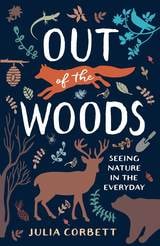
Out of the Woods
Seeing Nature in the EverydayJulia Corbett
University of Nevada Press, 2018
Have you ever wondered about society’s desire to cultivate the perfect lawn, why we view some animals as “good” and some as “bad,” or even thought about the bits of nature inside everyday items–toothbrushes, cell phones, and coffee mugs? In this fresh and introspective collection of essays, Julia Corbett examines nature in our lives with all of its ironies and contradictions by seamlessly integrating personal narratives with morsels of highly digestible science and research. Each story delves into an overlooked aspect of our relationship with nature—insects, garbage, backyards, noise, open doors, animals, and language—and how we cover our tracks.
With a keen sense of irony and humor and an awareness of the miraculous in the mundane, Julia recognizes the contradictions of contemporary life. She confronts the owner of a high-end market who insists on keeping his doors open in all temperatures. Takes us on a trip to a new mall with a replica of a trout stream that once flowed nearby. The phrase “out of the woods” guides us through layers of meaning to a contemplation of grief, remembrance, and resilience.
Out of the Woods leads to surprising insights into the products, practices, and phrases we take for granted in our everyday encounters with nature and encourages us all to consider how we might re-value or reimagine our relationships with nature in our everyday lives.

Shadows on the Klamath
A Woman in the WoodsLouise Wagenknecht
Oregon State University Press, 2021
With Shadows on the Klamath, Louise Wagenknecht completes her trilogy about life in remote northwestern California. In this new work, she recounts her years in the Forest Service, starting as a clerical worker on the Klamath National Forest before moving to a field position where she did everything from planting trees to fighting fires.
Her story is about a Forest Service in transition, as forest management practices began to shift. Not least among these changes was the presence of women in the ranks—a change that many in the Forest Service resisted. Wagenknecht blends the personal and professional to describe land management in the West and the people who do it—their friendships, rivalries, and rural communities.
Anyone with an interest in the Klamath-Siskiyou region, or the history of women in natural resource agencies, or the many issues associated with industrial forestry, should read this book for its valuable firsthand perspective. General readers interested in the rural West and personal memoir will also be richly rewarded.

The Edge of the Woods
Iroquoia, 1534-1701Jon Parmenter
Michigan State University Press, 2010

The Ends of Research
Indigenous and Settler Science after the War in the WoodsTom Özden-Schilling
Duke University Press, 2023
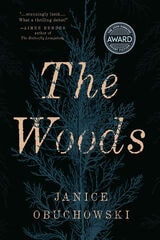
The Woods
StoriesJanice Obuchowski
University of Iowa Press, 2022
What do we find in the woods? An uplifting of spirit or a quieting of sorrow. A sense of being haunted by the past. Sometimes rougher, more violent things: abandoned quarries and feral cats, black bears, brothers caught up in an escalating war, a ghost who wishes to pass on her despair, monsters who boom with hollow ecstatic laughter. But also songbirds: the hermit thrush and the winter wren. Rushing rivers glossy with froth. A nineteenth-century inn that’s somehow gotten by all these years. And far within, a vegetal twilight and constant dusk that feels outside of time. This remarkable debut illuminates the ways we all carry within ourselves aspects stark, beautiful, wild, and unknowable.
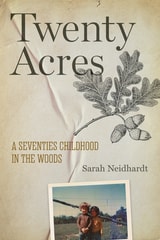
Twenty Acres
A Seventies Childhood in the WoodsSarah Neidhardt
University of Arkansas Press, 2023
"A memoir infused with both empathy and inquiry."
—Wendy J. Fox, Electric Literature
“Twenty Acres is an engaging, thoughtful memoir of growing up in an off-the-grid cabin as part of the 1970s back-to-the-land movement. Sarah Neidhardt captures her subject beautifully and offers a compelling portrait of a highly specific, historically significant time and place.”
—Kate Daloz, author of We Are As Gods: Back to the Land in the 1970s on the Quest for a New America
Sarah Neidhardt grew up in the woods. When she was an infant, her parents left behind comfortable, urbane lives to take part in the back-to-the-land movement. They moved their young family to an isolated piece of land deep in the Arkansas Ozarks where they built a cabin, grew crops, and strove for eight years to live self-sufficiently.
In this vivid memoir Neidhardt explores her childhood in wider familial and social contexts. Drawing upon a trove of family letters and other archival material, she follows her parents’ journey from privilege to food stamps—from their formative youths, to their embrace of pioneer homemaking and rural poverty, to their sudden and wrenching return to conventional society—and explores the back-to-the-land movement of the 1970s as it was, and as she lived it.
A story of strangers in a strange land, of class, marriage, and family in a changing world, Twenty Acres: A Seventies Childhood in the Woods is part childhood idyll, part cautionary tale. Sarah Neidhardt reveals the treasures and tolls of unconventional, pastoral lives, and her insightful reflections offer a fresh perspective on what it means to aspire to pre-industrial lifestyles in a modern world.