Results by title
353 books match the query 'World War II' and 37 start with a
A Captive Audience
Voices of Japanese American Youth in World War II ArkansasAli Welky
Butler Center for Arkansas Studies, 2015
Intended for young-adult readers, this book explores important dimensions of Arkansas and U.S. history, including human rights and what it means to be an American.
A City At War
Milwaukee Labor During World War IIRichard L. Pifer
Wisconsin Historical Society Press, 2003
A Colonel in the Armored Divisions
A Memoir, 1941-1945William S. Triplet, Edited by Robert H. Ferrell
University of Missouri Press, 2001
In this fascinating memoir William S. Triplet continues the saga begun in his earlier book, A Youth in the Meuse-Argonne: A Memoir, 1917-1918. After serving in World War I, Triplet chose to become a career military man and entered West Point. Upon graduation in 1924, his assignments were routine—to regiments in the Southwest and in Panama or as an officer in charge of Reserve Officers' Training Corps units or of men sent to a tank school. All this changed, however, when a new war opened in Europe.
From 1940 to1942, Triplet was assigned to the Infantry Board at Fort Benning, Georgia, where he engaged in testing new weapons and machines for the expanding army. He became a full colonel in December 1942. After leaving Benning he received posts with four armored forces: the Thirteenth Armored Division forming in the United States, an amphibious tank and troop carrier group training at Fort Ord, California, and the Second and Seventh Armored Divisions in Europe. His extraordinary abilities as a tank commander became evident in the Seventh Armored, where he took over a four-thousand-man unit known as Combat Command A. He was soon moving from triumph to triumph as he led his unit into Germany. Here was much room for professional judgment and decision, and the colonel was in his element. In the war's last days Triplet and his men fought their way to the Baltic, preventing many German troops from joining in the defense of Berlin against the advancing Soviet army.
Although Triplet was recommended for brigadier general, Dwight D. Eisenhower believed the U.S. Army had enough generals to finish the war; thus, the indomitable Triplet served out the few remaining years of his career as a colonel. After retiring in 1954, Triplet moved to Leesburg, Virginia, where he soon began to mull over his military experiences. Fascinated by the history he had witnessed, engaged by the attraction of writing about it, he recorded his memories with a combination of verve, thoughtfulness, and harsh judgments concerning ranking officers he considered incompetent— generals not excluded.
Through his annotations, Robert H. Ferrell provides the historical context for Triplet's experiences. Well written and completely absorbing, A Colonel in the Armored Divisions provides readers the rare opportunity to see firsthand what a real professional in the U.S. Army thought about America's preparation for and participation in the war against Germany and Japan.
A Date Which Will Live
Pearl Harbor in American MemoryEmily S. Rosenberg
Duke University Press, 2005
Rosenberg considers the emergence of Pearl Harbor’s symbolic role within multiple contexts: as a day of infamy that highlighted the need for future U.S. military preparedness, as an attack that opened a "back door" to U.S. involvement in World War II, as an event of national commemoration, and as a central metaphor in American-Japanese relations. She explores the cultural background that contributed to Pearl Harbor’s resurgence in American memory after the fiftieth anniversary of the attack in 1991. In doing so, she discusses the recent “memory boom” in American culture; the movement to exonerate the military commanders at Pearl Harbor, Admiral Husband Kimmel and General Walter Short; the political mobilization of various groups during the culture and history "wars" of the 1990s, and the spectacle surrounding the movie Pearl Harbor. Rosenberg concludes with a look at the uses of Pearl Harbor as a historical frame for understanding the events of September 11, 2001.
A Few Planes for China
The Birth of the Flying TigersEugenie Buchan
University Press of New England, 2017
A History of the Second World War in 100 Maps
Jeremy Black
University of Chicago Press, 2020
The First World War was marked by an exceptional expansion in the use and production of military cartography. But World War II took things even further, employing maps, charts, reconnaissance, and the systematic recording and processing of geographical and topographical information on an unprecedented scale. As Jeremy Black—one of the world’s leading military and cartographic historians—convincingly shows in this lavish full-color book, it is impossible to understand the events and outcomes of the Second World War without deep reference to mapping at all levels. In World War II, maps themselves became the weapons.
A History of the Second World War in 100 Maps traces how military cartography developed from simply recording and reflecting history to having a decisive impact on events of a global scale. Drawing on one hundred key maps from the unparalleled collections of the British Library and other sources—many of which have never been published in book form before--Jeremy Black takes us from the prewar mapping programs undertaken by both Germany and the United Kingdom in the mid-1930s through the conflict’s end a decade later. Black shows how the development of maps led directly to the planning of the complex and fluid maneuvers that defined the European theater in World War II: for example, aerial reconnaissance photography allowed for the charting of beach gradients and ocean depths in the runup to the D-Day landings, and the subsequent troop movements at Normandy would have been impossible without the help of situation maps and photos. In the course of the conflict, both in Europe and the Pacific, the realities of climate, terrain, and logistics—recorded on maps—overcame the Axis powers. Maps also became propaganda tools as the pages of Time outlined the directions of the campaigns and the Allies dropped maps from their aircraft.
In this thrilling and unique book, Jeremy Black blends his singular cartographic and military expertise into a captivating overview of World War II from the air, sea, and sky, making clear how fundamental maps were to every aspect of this unforgettable global conflict.
A Marine Dive-bomber Pilot at Guadalcanal
John Howard McEniry
University of Alabama Press, 1987
This book chronicles the World War II experiences of the author, who served as a Marine Corps pilot in the South Pacific. Colonel McEniry describes the organization and deployment of a Marine dive-bombing squadron (VMSB-132) in the early days of the war and follows the squadron through its actions in November and December of 1942.
The participation by the squadron in the naval battle of Guadalcanal, November 12-15, 1942, is related in detail and includes the personal experiences of the author on several bombing missions. This battle, described by Admiral Ernest J. King, the Chief of Naval Operations, as “the fiercest naval battle ever fought,” resulted in the loss by the Japanese of two battleships, ten transport ships, and numerous cruisers and destroyers.

A People's History of the Second World War
Resistance Versus EmpireDonny Gluckstein
Pluto Press, 2012
A People's History of the Second World War unearths the fascinating history of the war as fought 'from below'. Until now, the vast majority of historical accounts have focussed on the conflict between the Allied and Axis powers for imperialist mastery. Donny Gluckstein shows that in fact between 1939 and 1945 two distinct wars were fought – one ‘from above’ and one ‘from below’.
Using examples from countries under the Nazi heel, in the colonies and within the Axis and Allied camps, Gluckstein brings to life the very different struggle of the people's and resistance movements which proliferated during the war. He shows how they fought not just fascism, but colonialism and empire, and were betrayed by the Allies at the war’s end.
This book will fundamentally challenge our understanding of the Second World War – both about the people who fought it and the reasons for which it was fought.
A Reckoning
Philippine Trials of Japanese War CriminalsSharon W. Chamberlain
University of Wisconsin Press, 2019
Chamberlain highlights the differing views of Filipinos and Japanese about the trials. The Philippine government aimed to show its commitment to impartial proceedings with just outcomes. In Japan, it appeared that defendants were selected arbitrarily, judges and prosecutors were biased, and lower-ranking soldiers were punished for crimes ordered by their superior officers. She analyzes the broader implications of this divergence as bilateral relations between the two nations evolved and contends that these competing narratives were reimagined in a way that, paradoxically, aided a path toward postwar reconciliation.
A World in Flames
A Concise Military History of World War IIMartha Byrd
University of Alabama Press, 2008
An essential, accessible guide to the greatest conflict in human history.
A World in Flames by Martha Byrd offers a clear, compelling, and comprehensive chronicle of World War II, guiding readers through the defining battles, strategies, and turning points that reshaped the modern world. Emphasizing the military history of the conflict, Byrd structures the narrative as a battle‑by‑battle survey, covering major campaigns including Stalingrad, Omaha Beach, and the Battle of the Atlantic, each presented with clarity and precision.
Beginning with the prelude to war and the rising tensions across Europe and Asia, the book traces Germany’s swift subjugation of Holland, Belgium, and France before shifting to Britain’s determined resistance. As the conflict expands, Byrd explores Japan’s entry into the war, the rapid advances across the Pacific, and the United States’ pivotal role in reversing Axis momentum.
Byrd’s accessible style makes complex military operations understandable without sacrificing depth, offering readers both a broad overview and meaningful detail. Maps, campaign analyses, and vivid summaries of naval, air, and ground operations provide context for the global scale of the conflict. From the brutal Eastern Front to the island‑hopping campaigns of the Pacific, the book highlights the strategic decisions and human costs that defined the war’s progression.
Concluding with the collapse of Axis power and the war’s final climactic battles in Europe and the Pacific, A World in Flames stands as an excellent introduction for readers seeking a concise but thorough account of World War II—one praised for its balance of readability, accuracy, and narrative drive.
A-Train
Memoirs of a Tuskegee AirmanCharles W. Dryden
University of Alabama Press, 1997
A moving personal account of a man’s flight for freedom—above the clouds and beyond prejudice—by one of the first Tuskegee airmen.
A-Train is the story of one of the black Americans who, during World War II, graduated from Tuskegee (AL) Flying School and served as a pilot in the Army Air Corps’ 99th Pursuit Squadron. Charles W. Dryden presents a fast-paced, balanced, and personal account of what it was like to prepare for a career traditionally closed to African Americans, how he coped with the frustrations and dangers of combat, and how he, along with many fellow black pilots, navigators, bombardiers, and crewmen, emerged with a magnificent war record.
Under the command of Colonel Benjamin O. Davis Jr., the Tuskegee airmen fought over North Africa, Sicily, and Europe, escorting American bomber crews who respected their "no-losses" record. Some were shot down, many of them were killed or captured by the enemy, and several won medals of valor and honor. But the airmen still faced great barriers of racial prejudice in the armed forces and at home. As a member of that elite group of young pilots who fought for their country overseas while being denied civil liberties at home, Dryden presents an eloquent story that will touch every reader.
Agents of Liberations
Holocaust Memory in Contemporary Art and Documentary FilmZoltán Kékesi
Central European University Press, 2015
Air Officer Commanding
Hugh Dowding, Architect of the Battle of BritainJohn T. LaSaine
University Press of New England, 2018
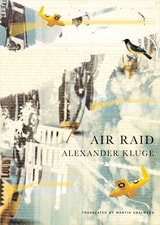
Air Raid
Alexander Kluge
Seagull Books, 2014
A powerful work by the heralded writer, this collection is a touchstone event in German literature of the post-war era.
On April 8, 1945, several American bomber squadrons were informed that their German targets were temporarily unavailable due to cloud cover. As it was too late to turn back, the assembled ordnance of more than two hundred bombers was diverted to nearby Halberstadt. A mid-sized cathedral town of no particular industrial or strategic importance, Halberstadt was almost totally destroyed, and a then-thirteen-year-old Alexander Kluge watched his town burn to the ground.
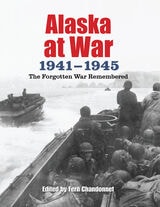
Alaska at War, 1941-1945
The Forgotten War RememberedEdited by Fern Chandonnet
University of Alaska Press, 2007
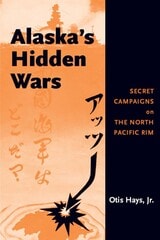
Alaska's Hidden Wars
Secret Campaigns on the North Pacific RimOtis Hays Jr.
University of Alaska Press, 2004
Alaska's Hidden Wars tells the story of the war in the North Pacific, a story of savage weather, isolation, and sacrifice.
Two island chains, the Aleutians and the Kuriles, became the focus of a series of major campaigns that pitted the Americans against the Japanese. Alaska's Hidden Wars chronicles the role of Japanese-American intelligence specialists and reveals a Japanese eyewitness account of the defense of Attu. Two virtually unknown aspects of the North Pacific war are also exposed: the brutal North Pacific weather and the imprisonment of American airmen in Kamchatka.
In 1942, the Japanese raided Dutch Harbor in the Aleutian Islands and occupied the islands of Kiska and Attu. The Americans mounted a vigorous campaign, and the Japanese retreated to the Kuriles. For the next two years, the Americans launched air raids and fleet bombardments, while American soldiers maintained lonely outposts along Aleutian coasts. But in 1945, when Japan finally surrendered, the Kuriles were taken, not by the waiting Americans, but by the Soviets.
Alaska's Hidden Wars is a fast-moving history that brings declassified archival sources to light and draws the reader into the lonely, bitter war fought in the North Pacific.
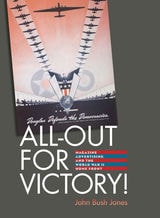
All-Out for Victory!
Magazine Advertising and the World War II Home FrontJohn Bush Jones
Brandeis University Press, 2009

America and the Blitz
The Shaping of US Public Opinion and Policy on Great BritainSean Dettman
University of Missouri Press, 2026
In this work, Sean Dettman traces an observable correlation over the course of late summer 1940 between the bombings of London and other UK cities and the changing attitude of the American people towards adopting a moderate pro-aid position, and argues that these processes were aided by pro-aid US journalists who deployed a positive Blitz narrative centered on themes of resilience, courage, and fortitude. This shift in US public opinion allowed the Roosevelt Administration and pro-aid pressure groups to advance conversations in Washington towards aiding Britain, even at the risk of war.
Dettman also argues that this shift in opinion was caused by fear that a Nazi victory would threaten US national security and the American way of life, rather than an interest in expanding pro-democratic structures and institutions in Britain.
Whereas the vast body of literature examining US public opinion during the ‘Great Debate’ reduces the Blitz narrative to a minor cause, America and the Blitz demonstrates how the Blitz narrative influenced domestic conversations regarding US national security and the American way of life. The author reveals that when the events and themes of the Blitz come into dialogue with conversations about US aid to Britain and national security, the traditional narrative changes.
America and the Blitz offers a new framework for understanding the ‘Great Debate,’ revealing the relationship between US journalists’ Blitz narrative and its effect on US public opinion towards aiding Britain and the ascendancy of American global power.
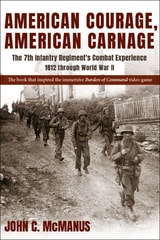
American Courage, American Carnage
The 7th Infantry Regiment's Combat Experience, 1812 through World War IIJohn C. McManus
University of Missouri Press, 2025
In the months leading up to the War of 1812, Congress authorized the creation of this regiment. It fought with distinction at the Battle of New Orleans, anchoring General Andrew Jackson's main defensive line, forever earning the nickname "Cottonbalers" because the soldiers of the 7th were said to have battled the British from behind large rows of cotton bales. From now on, whenever Americans went to war, the Cottonbalers would always find themselves in the center of the action, where the danger was greatest.
Between these covers is the whole story, told through the eyes of the soldiers—the realities of combat expressed in raw human terms. From the marshy grounds of the Chalmette plantation in New Orleans to the daunting heights of Chapultepec in Mexico City; from the bloody horror of the long, stone wall at Fredericksburg to the deadly crossfire of the Wheatfield at Gettysburg, from the shocking gore of Custer's massacre at Little Bighorn to the desperation of dusty frontier battles; from the foggy hills of Santiago in Cuba to the muddy, pockmarked no man's land of Belleau Wood in France; from the invasion of North Africa to Sicily, Anzio, southern France, the Vosges Mountains, the breaching of the Rhine, and the 7th's triumphant capture of Hitler's mountain home at Berchtesgaden in May, 1945, this remarkable book chronicles multiple generations of Cottonbalers who have fought and bled for their country.
American Courage, American Carnage is an inside look at the drama, tragedy, fatigue and pathos of war, from America's early nineteenth century struggles as a fledgling republic to its emergence as a superpower in the twentieth. Based on nearly a decade of archival research, battlefield visits, interviews, and intensive study, and illustrated with copious maps and photographs, this book is a moving, authoritative, tale of Americans in combat.
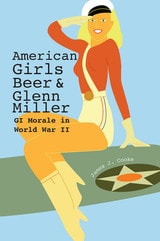
American Girls, Beer, and Glenn Miller
GI Morale in World War IIJames J. Cooke
University of Missouri Press, 2016
As World War II dawned in Europe, General George C. Marshall, the new Army Chief of Staff, had to acknowledge that American society—and the citizens who would soon become soldiers—had drastically changed in the previous few decades. Almost every home had a radio, movies could talk, and driving in an automobile to the neighborhood soda fountain was part of everyday life. A product of newly created mass consumerism, the soldier of 1940 had expectations of material comfort, even while at war. Historian James J. Cooke presents the first comprehensive look at how Marshall’s efforts to cheer soldiers far from home resulted in the enduring morale services that the Army provides still today.
Marshall understood that civilian soldiers provided particular challenges and wanted to improve the subpar morale services that had been provided to Great War doughboys. Frederick Osborn, a civilian intellectual, was called to head the newly formed morale branch, which quickly became the Special Services Division. Hundreds of on-post movie theaters showing first-run movies at reduced prices, service clubs where GIs could relax, and inexpensive cafeterias were constructed. The Army Exchange System took direction under Brigadier General Joseph Byron, offering comfort items at low prices; the PX sold everything from cigarettes and razor blades to low-alcohol beer in very popular beer halls.
The great civic organizations—the YMCA, the Salvation Army, the Jewish Welfare Board, and others—were brought together to form the United Service Organizations (USO). At USO Camp Shows, admired entertainers like Bob Hope, Bing Crosby, and Frances Langford brought home-style entertainment to soldiers within the war zones. As the war heightened in intensity, the Special Service Companies grew to over forty in number, each containing more than one hundred enlisted men. Trained in infantry skills, soldiers in the companies at times would have to stop showing movies, pick up their rifles, and fight.
The Special Services Division, PX, and USO were crucial elements in maintaining GI morale, and Cooke’s work makes clear the lasting legacy of these efforts to boost the average soldier’s spirits almost a century ago. The idea that as American soldiers serve abroad, they should have access to at least some of the comforts of home has become a cultural standard.
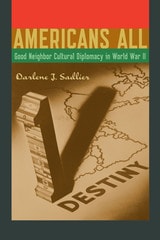
Americans All
Good Neighbor Cultural Diplomacy in World War IIBy Darlene J. Sadlier
University of Texas Press, 2012
Cultural diplomacy—“winning hearts and minds” through positive portrayals of the American way of life—is a key element in U.S. foreign policy, although it often takes a backseat to displays of military might. Americans All provides an in-depth, fine-grained study of a particularly successful instance of cultural diplomacy—the Office of the Coordinator of Inter-American Affairs (CIAA), a government agency established by President Franklin D. Roosevelt in 1940 and headed by Nelson A. Rockefeller that worked to promote hemispheric solidarity and combat Axis infiltration and domination by bolstering inter-American cultural ties.
Darlene J. Sadlier explores how the CIAA used film, radio, the press, and various educational and high-art activities to convince people in the United States of the importance of good neighbor relations with Latin America, while also persuading Latin Americans that the United States recognized and appreciated the importance of our southern neighbors. She examines the CIAA’s working relationship with Hollywood’s Motion Picture Society of the Americas; its network and radio productions in North and South America; its sponsoring of Walt Disney, Orson Welles, John Ford, Gregg Toland, and many others who traveled between the United States and Latin America; and its close ties to the newly created Museum of Modern Art, which organized traveling art and photographic exhibits and produced hundreds of 16mm educational films for inter-American audiences; and its influence on the work of scores of artists, libraries, book publishers, and newspapers, as well as public schools, universities, and private organizations.

An American in Hitler's Berlin
Abraham Plotkin's Diary, 1932-33Abraham Plotkin; Edited & with an introduction by Catherine Collomp & Bruno Grop
University of Illinois Press, 2007
Compared to the writings of other American observers of the Third Reich, Plotkin's diary is unique in style, scope, themes, and time span. Most accounts of Hitler's rise to power emphasize political institutions by focusing on the Nazi party's clashes with other political forces. In contrast, Plotkin is especially attentive to socioeconomic factors, providing an alternative view from the left that stems from his access to key German labor and socialist leaders. Chronologically, the diary reports on the moment when Hitler's seizure of power was not yet inevitable and when leaders on the left still believed in a different outcome of the crisis, but it also includes Plotkin's account of the complete destruction of German labor in May 1933.
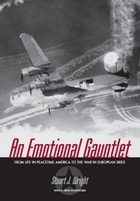
An Emotional Gauntlet
From Life in Peacetime America to the War in European SkiesStuart J. Wright
University of Wisconsin Press, 2008
In recounting the harrowing conditions and horrors of bombing missions over Europe, An Emotional Gauntlet emphasizes the interpersonal relationships within the crew and the spirit these men shared. Corky's crew served under Operations Officer Major James Stewart (the Hollywood movie star.) They often returned from arduous bombing missions to sleep in half-empty huts—their friends in other planes had not been so lucky. Pilot Jack Nortridge regularly assured his crew, "If you fly with me, I'm going to bring you home." This book is a testament to their strength and determination.
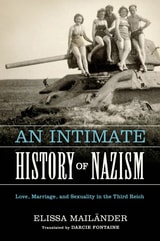
An Intimate History of Nazism
Love, Marriage, and Sexuality in the Third ReichElissa Mailänder
University of Wisconsin Press, 2027
Published to great acclaim in French and now available for the first time in English, this groundbreaking book explores how the Nazi regime used sexuality to promote political loyalty, conformity, and cohesion among “ordinary” Germans. Beginning before the collapse of the Weimar Republic and continuing through the postwar American occupation of Germany, Elissa Mailänder’s study highlights the complex and conflicted ways that sexual “liberation,” repression, and violence were used and experienced in the everyday lives of citizens of the Reich. Her analysis draws on a vast array of sources, from legal dossiers to private photographs and letters, as well as public archives, magazines, and movies. Mailänder’s findings are often uncomfortable; she demonstrates, for example, that a significant number of women who were not persecuted by the regime saw shifts in gender and sexual norms as positive developments—ones that some felt were lost under the American occupation, with its own routines of military sexual exploitation. What emerges is a portrait of a regime that was less interested in repressing sexuality than in reinventing it according to a racist, elitist, and homophobic agenda.
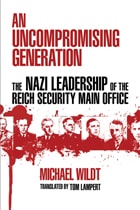
An Uncompromising Generation
The Nazi Leadership of the Reich Security Main OfficeMichael Wildt
University of Wisconsin Press, 2009
Wildt’s study traces the intellectual evolution of key members of the Reich Security Main Office (RSHA) from their days as students until the end of World War II. Established in 1939, this office fused together the Gestapo, the Criminal Police, and the Sicherheitsdienst (Security Service) of the SS. Far from being small cogs in a big bureaucratic machine, Wildt finds that the people who made up the RSHA constructed the concepts and operated the apparatus that carried out the Holocaust.
At the center of both theory and practice of persecution and genocide in Nazi-occupied Europe, these young men of the RSHA—none of whom envisioned the systematic annihilation of the European Jews—became radicalized. How this occurred is the central question of Wildt’s book. Wildt also discusses the postwar careers of the members of the RSHA. Strikingly, he shows how the leaders of the RSHA evaded the consequences of their actions under the Nazi regime and went on to have important careers in the rebuilt West Germany.
An alternate selection of the History Book Club and Military Book Club
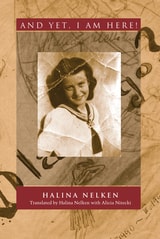
And Yet, I Am Here!
Halina Nelken
University of Massachusetts Press, 1999
When Germany invaded Poland in 1939, Halina Nelken was a precocious fifteen-year-old, living a middle-class life in Krakow. Like other girls her age, she recorded her personal observations and feelings in a diary. As conditions in Krakow deteriorated and her family was forced into the Jewish ghetto, she continued to write, eventually smuggling her diary out with a Catholic friend. This remarkable book tells the story of Nelken's experiences in the ghetto and later in eight Nazi concentration camps, including Plaszow, Auschwitz, and Ravensbrück. Her diary entries, written between 1938 and 1943, form the core of the volume and are supplemented by recollections written shortly after the war, and by later commentaries and explanatory notes which she added in the mid-1980s. Although there exist numerous published and unpublished memoirs by Holocaust survivors, Nelken's book presents one of the few extant diaries written at the time. Already released in Polish and German editions, it has been hailed as one of the finest works of its kind. Now it is available in English for the first time.
Anthropological Intelligence
The Deployment and Neglect of American Anthropology in the Second World WarDavid H. Price
Duke University Press, 2008
Anthropological Intelligence is based on interviews with anthropologists as well as extensive archival research involving many Freedom of Information Act requests. Price looks at the role played by the two primary U.S. anthropological organizations, the American Anthropological Association and the Society for Applied Anthropology (which was formed in 1941), in facilitating the application of anthropological methods to the problems of war. He chronicles specific projects undertaken on behalf of government agencies, including an analysis of the social effects of postwar migration, the design and implementation of OSS counterinsurgency campaigns, and the study of Japanese social structures to help tailor American propaganda efforts. Price discusses anthropologists’ work in internment camps, their collection of intelligence in Central and South America for the FBI’s Special Intelligence Service, and their help forming foreign language programs to assist soldiers and intelligence agents. Evaluating the ethical implications of anthropological contributions to World War II, Price suggests that by the time the Cold War began, the profession had set a dangerous precedent regarding what it would be willing to do on behalf of the U.S. government.
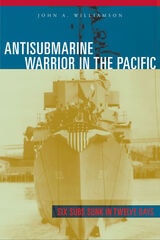
Antisubmarine Warrior in the Pacific
Six Subs Sunk in Twelve DaysJohn A. Williamson
University of Alabama Press, 2005
A commanding firsthand account of the most successful antisubmarine campaign in U.S. Naval History.
The USS England was a 1200-ton, 306-foot, long-hull destroyer escort. Commissioned into service in late 1943 and dispatched to the Pacific the following February, the England and its crew, in one 12-day period in 1944, sank more submarines than any other ship in U.S. naval history: of the six targets attacked, all six were destroyed. For this distinction, legendary in the annals of antisubmarine warfare, the ship and her crew were honored with the Presidential Unit Citation.
After convoying in the Atlantic, John A. Williamson was assigned to the England—first as its executive officer, then as its commanding officer—from the time of her commissioning until she was dry-docked for battle damage repairs in the Philadelphia Naval Yard fifteen months later. Besides being a key participant in the remarkable antisubmarine actions, Williamson commanded the England in the battle of Okinawa, where she was attacked by kamikaze planes.
Williamson narrates his memoir with authority and authenticity, describes naval tactics and weaponry precisely, and provides information gleaned from translations of the orders from the Japanese high command to Submarine Squadron 7. The author details the challenges of communal life aboard ship and explains the intense loyalty that bonds crew members for life. Ultimately, Williamson offers a compelling portrait of himself, an inexperienced naval officer who, having come of age in Alabama during the Depression, rose to become the most successful World War II antisubmarine warfare officer in the Pacific.
Apocalypse Undone
My Survival of Japanese Imprisonment During World War IIPreston John Hubbard
Vanderbilt University Press, 1990

Architects of Globalism
Building a New World Order during WWIIPatrick J. Hearden
University of Arkansas Press, 2002
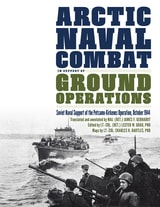
Arctic Naval Combat in Support of Ground Operations
Soviet Naval Support of the Petsamo-Kirkenes Operation, October 1944James F Gebhardt
University of Alaska Press, 2025
The largest Arctic battle on record, involving 133,500 Soviets and 45,000 Germans and Quisling Norwegians, the Petsamo-Kirkenes Operation sought to liberate the northernmost part of Norway from German occupation during World War II. The Soviet navy played a previously unrecognized crucial role in the operation by providing fire support and transportation, as well as conducting raids and combat landings on the enemy-held coast. The harsh Arctic environment, including extreme cold, ice, and limited daylight, posed significant challenges to the Soviet and German forces. Despite these hardships, the Soviet forces achieved their objectives, defeated the German Army, and successfully liberated the area.
Arctic Naval Combat in Support of Ground Operations is a powerful companion to Gebhardt’s previous translation, The Petsamo-Kirkenes Operation: Soviet Breakthrough and Pursuit in the Arctic, October 1944, which details this operation’s ground offensive. Providing a starting point for the study and understanding of combined arms and services combat in the Arctic, an increasingly important and accessible part of the planet where military concerns are rapidly expanding, this work is a valuable addition to the literature of World War II military history and a significant additional perspective on the Soviet military.
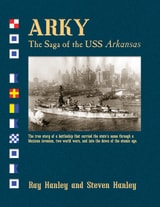
Arky
The Saga of the USS ArkansasRay Hanley
Butler Center for Arkansas Studies, 2015
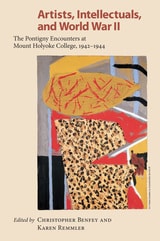
Artists, Intellectuals, and World War II
The Pontigny Encounters at Mount Holyoke College, 1942-1944Christopher E. G. Benfey
University of Massachusetts Press, 2006
Sixty years ago, at the height of World War II, an extraordinary series of gatherings took place at Mount Holyoke College in western Massachusetts. During the summers of 1942–1944, leading European figures in the arts and sciences met at the college with their American counterparts for urgent conversations about the future of human civilization in a precarious world.
Two Sorbonne professors, the distinguished medievalist Gustave Cohen and the existentialist philosopher Jean Wahl, organized these “Pontigny” sessions, named after an abbey in Burgundy where similar symposia had been held in the decades before the war. Among the participants—many of whom were Jewish or had Jewish backgrounds—were the philosophers Hannah Arendt and Rachel Bespaloff, the poets Marianne Moore and Wallace Stevens, the anthropologist Claude Lévi-Strauss and the linguist Roman Jakobson, and the painters Marc Chagall and Robert Motherwell.
In this collection of original essays, Stanley Cavell and Jacques Derrida lead an international group of scholars—including Jed Perl, Mary Ann Caws, Jeffrey Mehlman, and Elisabeth Young-Bruehl—in assessing the lasting impact and contemporary significance of Pontigny-en- Amérique. Rachel Bespaloff, a tragic figure who wrote a major work on the Iliad, is restored to her rightful place beside Arendt and Simone Weil. Anyone interested in the “intellectual resistance” of Francophone intellectuals and artists, and the inspiring support from such American figures as Stevens and Moore, will want to read this pioneering work of scholarship and historical re-creation.
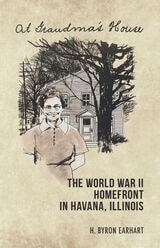
At Grandma's House
The World War II Homefront in Havana, IllinoisH. Byron Earhart with Illustrations by John Michael Downs
Southern Illinois University Press, 2020
When H. Byron Earhart’s father enlisted in the U.S. Navy in 1942, young Byron and his family moved into his grandparents' old-fashioned home with a coal-fired range and potbelly stove, and his mother took charge of the family business, a frozen food locker. Grandma was the undisputed head of the family. While his father served on the battleship USS Missouri, his grandparents and mother held the family and the business together. At Grandma’s House is a tribute to everyday Americans who provided the social glue for a country at war as they balanced fear and anxiety for loved ones with the challenges and pleasures of daily life. The experiences of the Earhart family and this Midwestern community, supplemented by contemporary documents, family photos, and professional illustrations, recount with vivid local color the drama that played out on the national and international stage.
Athene Palace
Hitler's "New Order" Comes to RumaniaR. G. Waldeck
University of Chicago Press, 2013
Atrocity, Deviance, and Submarine Warfare
Norms and Practices during the World WarsNachman Ben-Yehuda
University of Michigan Press, 2013
In the early 20th century, the diesel-electric submarine made possible a new type of unrestricted naval warfare. Such brutal practices as targeting passenger, cargo, and hospital ships not only violated previous international agreements; they were targeted explicitly at civilians. A deviant form of warfare quickly became the norm.
In Atrocity, Deviance, and Submarine Warfare, Nachman Ben-Yehuda recounts the evolution of submarine warfare, explains the nature of its deviance, documents its atrocities, and places these developments in the context of changing national identities and definitions of the ethical, at both social and individual levels. Introducing the concept of cultural cores, he traces the changes in cultural myths, collective memory, and the understanding of unconventionality and deviance prior to the outbreak of World War I. Significant changes in cultural cores, Ben-Yehuda concludes, permitted the rise of wartime atrocities at sea.
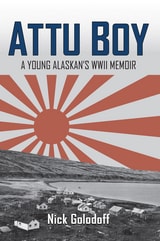
Attu Boy
A Young Alaskan's WWII MemoirNick Golodoff
University of Alaska Press, 2015
One of those survivors, Nick Golodoff, became a prisoner of war at just six years old. He was among the dozens of Unangan Attu residents swept away to Hokkaido, and one of only twenty-five to survive. Attu Boy tells Golodoff’s story of these harrowing years as he found both friendship and cruelty at the hands of the Japanese. It offers a rare look at the lives of civilian prisoners and their captors in WWII-era Japan. It also tells of Golodoff’s bittersweet return to a homeland torn apart by occupation and forced internments. Interwoven with other voices from Attu, this richly illustrated memoir is a testament to the struggles, triumphs, and heartbreak of lives disrupted by war.