Results by title
16 books match the query 'World War II & Holocaust'
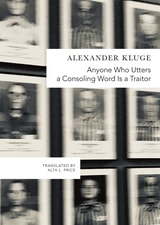
Anyone Who Utters a Consoling Word Is a Traitor
48 Stories for Fritz BauerAlexander Kluge
Seagull Books, 2020
Alexander Kluge’s work has long grappled with the Third Reich and its aftermath, and the extermination of the Jews forms its gravitational center. Kluge is forever reminding us to keep our present catastrophes in perspective—“calibrated”—against this historical monstrosity. Kluge’s newest work is a book about bitter fates, both already known and yet to unfold. Above all, it is about the many kinds of organized machinery built to destroy people. These forty-eight stories of justice and injustice are dedicated to the memory of Fritz Bauer, a determined fighter for justice and district attorney of Hesse during the Auschwitz Trials. “The moment they come into existence, monstrous crimes have a unique ability,” Bauer once said, “to ensure their own repetition.” Kluge takes heed, and in these pages reminds us of the importance of keeping our powers of observation and memory razor sharp.
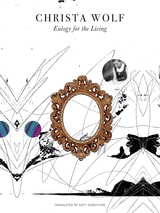
Eulogy for the Living
Taking FlightChrista Wolf
Seagull Books, 2018
Christa Wolf tried for years to find a way to write about her childhood in Nazi Germany. In her 1976 book Patterns of Childhood, she explained why it was so difficult: “Gradually, over a period of months, the dilemma has emerged: to remain speechless or to live in the third person, these seem to be the options. One is impossible, the other sinister.” During 1971 and 1972 she made thirty-three attempts to start the novel, abandoning each manuscript only pages in. Eulogy for the Living, written over the course of four weeks, is the longest of those fragments. In its pages, Wolf recalls with crystalline precision the everyday details of her life as a middle-class grocer’s daughter, and the struggles within the family—struggles common to most families, but exacerbated by the rise of Nazism. And as Nazism fell, the Wolfs fled west, trying to stay ahead of the rampaging Red Army.
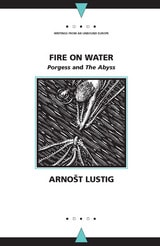
Fire on Water
Porgess and The AbyssArnost Lustig
Northwestern University Press, 2005
It occurred to me why I was able to forgive the Italians, but never the Germans. Was it because the Italians never slept on mattresses stuffed with the hair of Luster Leibling or Weltfeind Flusser?
In this pair of short novels, Arnošt Lustig continues his lifelong project of creating a universe-at once concrete and dreamlike-to examine the horrors of the Holocaust and the impossible burden of living as a survivor.
The Abyss is the fragmented memories of David Wiesenthal, aged twenty, tortured by what he has witnessed and by the knowledge that luck-not skill, not courage, certainly not goodness-separated the survivors from the doomed. He seeks solace remembering the women he's loved or desired, even the one who represents his death.
In Porgess, the narrator recounts the life of the title character, "the most handsome boy in Jewish Prague" who was paralyzed on the last day of World War II. The two discuss their mutual fascinations-women, jazz, the significance of numbers-in sometimes bitter, sometimes sardonic voices, but always with the specters of the dead and the guilt of survival close at hand.
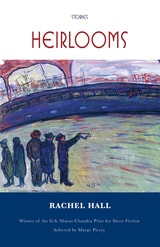
Heirlooms
storiesRachel Hall
BkMk Press, 2016
Lifespan Narratives
Ten Stories from a Time of Disruption; Chronicle of Emotions, Notebook 3Alexander Kluge
Seagull Books, 2025
A poignant exploration of post–World War II life, blending fictional and non-fictional stories that challenge traditions and reflect on the enduring impact of historical disruptions.
Lifespan Narratives has to do with stories, fictitious and not, which present a sad chronicle and question tradition from several different perspectives. Originally comprising Alexander Kluge’s first book, these stories were written between the years 1958 and 1962, in which he emphasizes the importance of continuously questioning our past. He underscores the necessity of recounting lifespan narratives even from today’s viewpoint, proposing that “life in a time of disruption” should be viewed as a constant experiential substance, transcending any single era.
In Lifespan Narratives, readers are invited to explore the enduring impact of historical disruptions through Kluge’s masterful storytelling, which remains as relevant today as it was in the years following the Second World War. For this edition, the English translation of a selection of stories by Leila Vennewitz has been expanded by Alexander Booth in conjunction with the author.
My Mother's Silver Fox
Alois Hotschnig
Seagull Books, 2025
Heinz Fitz has only one tangible clue to his past: a worn piece of paper from the SS-Lebensborn program, a Nazi initiative designed to promote so-called racial purity. His mother, a Norwegian woman, fell in love with the wrong man—an Austrian soldier—during the German occupation. Betrayed and abandoned, she fled to Austria, only to be turned away by his family. Branded a collaborator in her homeland and a pariah in a foreign land, she was left to survive as best she could. Now, years later, her son is determined to piece together the fragments of his origins.
But every answer leads to more questions, and as he unearths painful truths, an alternative story—one of resilience, love, and survival—emerges from the darkness. Inspired by real events, Alois Hotschnig’s novel is both a fierce reckoning with history and a poignant tribute to a mother’s strength. A masterful meditation on memory and storytelling, My Mother’s Silver Fox asks whether the past can ever truly be understood—or if it will always slip through our grasp, like snow through our fingers.
Northern Lights
Drago Jancar
Northwestern University Press, 2001
Ruta Tannenbaum
A NovelMiljenko Jergovic
Northwestern University Press, 2011
Using their shared Jewish heritage as a starting point, Jergovic constructs a fictional family history populated by historical figures with the precocious Ruta at the center. Stephen Dickey’s translation masterfully captures Jergovic´’s colloquial yet deeply observed style, which animates the tangled and troubled history of persecution and war in Croatia.
Shadow of the White Chrysanthemum
A NovelJan Morrill
University of Arkansas Press, 2027
In 1957 Berkeley, California, Nobu Kimura runs a nursery with his older brother, Taro—until a hidden letter exposes a family secret and reopens old wounds left by his family’s internment. As Nobu wrestles with a renewed sense of betrayal, Taro, still haunted by wartime memories, confronts his own deepest fears when he learns he is about to become a father.
In Arkansas, their sister, Sachiko Kimura Baker, and her best friend, Jubie, watch nine Black students attempt to enter the newly desegregated Little Rock Central High School. The past collides with the present when Terrence Harris—a man who caused one of the Kimura family’s darkest moments—unexpectedly saves Sachiko and her daughter, forcing the family to reckon with old hatreds, buried truths, and the possibility of forgiveness.
In the midst of the family’s turmoil, their mother’s return from Japan brings revelations about the misunderstandings that have kept her away since the war’s end. Yet even as some of the family begins to heal, Nobu retreats further into a dangerous obsession with honor, shame, and revenge—a spiral that threatens to shatter the family.
Set in the aftermath of Japanese American internment and against the rising heat of the civil rights movement, Shadow of the White Chrysanthemum continues the Kimura family saga that began with Jan Morrill’s The Red Kimono and explores the bonds that hold a family together—and the secrets that threaten to break them apart.
The Aesthetics of Resistance, Volume III
A Novel, Volume 3Peter Weiss
Duke University Press, 2025
Volume III, initially published in 1981, teems with characters, many of whom are based on historical figures. It commences in May of 1940, as the narrator’s parents flee Nazi forces in Eastern Europe and reunite with their son in Sweden. While in Stockholm, the narrator and other Communist activists living in exile struggle to build structures in the German underground. The story then follows Communist resistance fighter Charlotte Bischoff as she is smuggled to Bremen on a freighter. In Berlin, she contacts the narrator’s friends and joins the Red Orchestra resistance group. Soon, the Gestapo cracks the underground group’s code, arrests a number of its members, and takes them to Plötzensee Prison, where most of them are executed. Featuring the narrator’s meditations on paintings, sculpture, and literature throughout, The Aesthetics of Resistance demonstrates the affinity between political resistance and art. Ultimately, Weiss argues that we must look to art for new models of political action and social understanding.

The Devil’s Own Luck
From Hell to HappinessLadislav Grosman
Karolinum Press, 2026
Ladislav Grosman's powerful story of a twelve-year-old Jewish boy in wartime Slovakia smuggled into Hungary to escape deportation.
In The Devil's Own Luck, readers experience the horrors of war and the Holocaust through the lens of the young boy's obsessive reading of pulp fiction, imposing a layer of adventure on the bleak landscape of his experience. This simultaneously tragic, humorous, and poetic novel by Ladislav Grosman was published posthumously.
The Hours and the Minutes
Alfonz Bednár
Karolinum Press, 2025
The Hours and The Minutes was first published in Bratislava in 1956, the year of Nikita Khrushchev’s “secret speech,” in which the Soviet leader formally acknowledged Stalin’s tyranny and opened the way for political reform throughout the Eastern Bloc. Alfonz Bednár’s writing was one of the first free of nationalist and communist propaganda, rejecting earlier ideologization of life by both the fascist right and Stalinist left and finding more empathetic ways to explore the complexity of human experience. His novellas defy traditional heroic depictions and portray the human individual, his relations, and morality as the subject of history rather than a utopian, collectivist ideology.
In these five novellas, Bednár is preoccupied with the insensitive, even inhuman, rootless, and amoral modernity that the war and Communist Party import into traditional Slovak life. The destruction of the traditional Slovak countryside during the twentieth century through modernization and urbanization, and with it a particular approach to life, forms his central theme. His spare, epic style and devotion to plot and dynamic narration render The Hours and The Minutes a genuine and gripping read.
The Last Thing
Leopold Lahola
Karolinum Press, 2025
Slovak Jewish writer Leopold Lahola was able to escape deportation to a concentration camp and fight in the resistance only to find himself forced into exile by the postwar communist regime. He emerged from obscurity during the brief thaw of the Prague Spring, when he was able to return to his homeland and thrive as a playwright and film director. It was also in 1968 that his short story collection The Last Thing appeared in Slovakia. The collection’s title proved sadly prophetic with the author suffering a fatal heart attack in January 1968, just before his 50th birthday and as his short stories finally appeared in book form.
The nine stories which make up The Last Thing range from the prewar rise of fascism and its dangers for the Jewish community through the concentration camps and the partisan fight against the Germans, concluding in the devastating awareness of all that had been lost and destroyed in the war. Lahola is a master of writing outside of conventional tropes, exploring moral ambivalences where others work within the comforts of good versus evil. He punctures the standard historical image of the partisan fighters by depicting their heroism along with their cruelty and pettiness while also showing how often bravery and madness, kindness and stupidity can coexist. Lahola has written a World War II story collection whose translation will offer not only a compelling read but starkly new perspectives on the tragedy and grandeur of that momentous time in history.
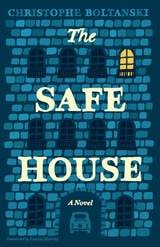
The Safe House
A NovelChristophe Boltanski
University of Chicago Press, 2017
When the Nazis came, Étienne Boltanski divorced his wife and walked out the front door, never to be seen again during the war. So far as the outside world knew, the Jewish doctor had fled. The truth was that he had sneaked back to hide in a secret crawl space at the heart of the house. There he lived for the duration of the war. With the Liberation, Étienne finally emerged, but he and his family were changed forever—anxious, reclusive, yet proudly eccentric. Their lives were spent, amid Bohemian disarray and lingering wartime fears, in the mansion’s recesses or packed comically into the protective cocoon of a Fiat.
That house (and its vehicular appendage) is at the heart of Christophe Boltanski’s ingeniously structured, lightly fictionalized account of his grandparents and their extended family. The novel unfolds room by room—each chapter opening with a floorplan—introducing us to the characters who occupy each room, including the narrator’s grandmother—a woman of “savage appetites”—and his uncle Christian, whose haunted artworks would one day make him famous. “The house was a palace,” Boltanski writes, “and they lived like hobos.” Rejecting convention as they’d rejected the outside world, the family never celebrated birthdays or even marked the passage of time, living instead in permanent stasis, ever more closely bonded to the house itself.
The Safe House was a literary sensation when published in France in 2015 and won the Prix de Prix, France’s most prestigious book prize. A French-language film adaptation, La cache, was released in 2025 from director Lionel Baier. With hints of Oulipian playfulness and an atmosphere of dark humor, The Safe House is an unforgettable portrait of a self-imprisoned family.
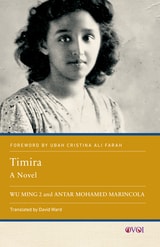
Timira
A NovelWu Ming Wu Ming 2
Rutgers University Press, 2027
Isabella Marincola lived between two cultures. The child of an Italian military officer father and a Somali mother, she was never fully part of either culture. In Somalia, she was seen as a child of the ruling colonizers, while in Italy her darker skin made her an object of both fascination and contempt. Even as she worked as an actress and model in postwar Italy, she was valued for her exotically beautiful body, not her keen mind or her captivating voice.
Titled after Isabella’s Somali name, Timira is a unique combination of novel, archival sources, and oral history. It finally gives her a chance to articulate her experiences of being a Black Italian woman in different epochs of Italian history, from Fascism to the 1990s, in all of which italianità was assumed to be exclusively white.
Cowritten by her son Antar Mohamed Marincola and a founding member of the Wu Ming writers’ collective, it is based on a series of writings and interviews Isabella gave towards the end of her long, eventful life. A compelling novel rooted in truth, Timira reflects on Italy’s colonial legacy and ingrained racism, while telling the story of a courageous woman and her struggles to assert herself in a nation unprepared to accommodate its Black citizens.
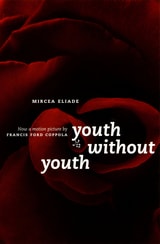
Youth Without Youth
Mircea Eliade
University of Chicago Press, 2007
Bucharest, 1938: while Hitler gains power in Germany, the Romanian police start arresting students they suspect of belonging to the Iron Guard. Meanwhile, a man who has spent his life studying languages, poetry, and history—a man who thought his life was over—lies in a hospital bed, inexplicably alive and miraculously healthy, trying to figure out how to conceal his identity.
At the intersection of the natural and supernatural, myth and history, dream and science, lies Mircea Eliade’s novella. The psychological thriller features Dominic Matei, an elderly academic who experiences a cataclysmic event that allows him to live a new life with startling intellectual capacity. Sought by the Nazis for their medical experiments on the potentially life-prolonging power of electric shocks, Matei is helped to flee through Romania, Switzerland, Malta and India. Newly endowed with prodigious powers of memory and comprehension, he finds himself face to face with the glory and terror of the supernatural. In this surreal, philosophy-driven fantasy, Eliade tests the boundaries of literary genre as well as the reader’s imagination.
Suspenseful, witty, and poignant, Youth Without Youth illuminates Eliade’s longing for past loves and new texts, his erotic imagination, and his love of a thrilling mystery. It was adapted for the screen in 2007 by Francis Ford Coppola