Results by title
32 books match the query 'Worlds'

A Foray into the Worlds of Animals and Humans
with A Theory of MeaningJakob von Uexküll
University of Minnesota Press, 2010
A key document in the genealogy of posthumanist thought, A Foray into the Worlds of Animals and Humans advances Uexküll's revolutionary belief that nonhuman perceptions must be accounted for in any biology worth its name; it also contains his arguments against natural selection as an adequate explanation for the present orientation of a species' morphology and behavior. A Theory of Meaning extends his thinking on the umwelt, while also identifying an overarching and perceptible unity in nature. Those coming to Uexküll's work for the first time will find that his concept of the umwelt holds out new possibilities for the terms of animality, life, and the whole framework of biopolitics itself.
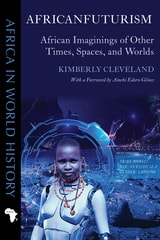
Africanfuturism
African Imaginings of Other Times, Spaces, and WorldsKimberly Cleveland
Ohio University Press, 2024
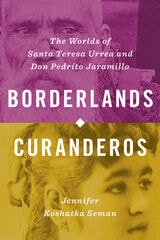
Borderlands Curanderos
The Worlds of Santa Teresa Urrea and Don Pedrito JaramilloBy Jennifer Koshatka Seman
University of Texas Press, 2021
2022 Americo Paredes Award, Center for Mexican American Studies at South Texas College
A historical exploration of the worlds and healing practices of two curanderos (faith healers) who attracted thousands, rallied their communities, and challenged institutional powers.
Santa Teresa Urrea and Don Pedrito Jaramillo were curanderos—faith healers—who, in the late nineteenth and early twentieth centuries, worked outside the realm of "professional medicine," seemingly beyond the reach of the church, state, or certified health practitioners whose profession was still in its infancy. Urrea healed Mexicans, Indigenous people, and Anglos in northwestern Mexico and cities throughout the US Southwest, while Jaramillo conducted his healing practice in the South Texas Rio Grande Valley, healing Tejanos, Mexicans, and Indigenous people there. Jennifer Koshatka Seman takes us inside the intimate worlds of both "living saints," demonstrating how their effective healing—curanderismo—made them part of the larger turn-of-the century worlds they lived in as they attracted thousands of followers, validated folk practices, and contributed to a modernizing world along the US-Mexico border.
While she healed, Urrea spoke of a Mexico in which one did not have to obey unjust laws or confess one's sins to Catholic priests. Jaramillo restored and fed drought-stricken Tejanos when the state and modern medicine could not meet their needs. Then, in 1890, Urrea was expelled from Mexico. Within a decade, Jaramillo was investigated as a fraud by the American Medical Association and the US Post Office. Borderlands Curanderos argues that it is not only state and professional institutions that build and maintain communities, nations, and national identities but also those less obviously powerful.
Citizens of Worlds
Open-Air Toolkits for Environmental StruggleJennifer Gabrys
University of Minnesota Press, 2022
An unparalleled how-to guide to citizen-sensing practices that monitor air pollution
Modern environments are awash with pollutants churning through the air, from toxic gases and intensifying carbon to carcinogenic particles and novel viruses. The effects on our bodies and our planet are perilous. Citizens of Worlds is the first thorough study of the increasingly widespread use of digital technologies to monitor and respond to air pollution. It presents practice-based research on working with communities and making sensor toolkits to detect pollution while examining the political subjects, relations, and worlds these technologies generate.
Drawing on data from the Citizen Sense research group, which worked with communities in the United States and the United Kingdom to develop digital-sensor toolkits, Jennifer Gabrys argues that citizen-oriented technologies promise positive change but then collide with entrenched and inequitable power structures. She asks: Who or what constitutes a “citizen” in citizen sensing? How do digital sensing technologies enable or constrain environmental citizenship?
Spanning three project areas, this study describes collaborations to monitor air pollution from fracking infrastructure, to document emissions in urban environments, and to create air-quality gardens. As these projects show, how people respond to, care for, and struggle to transform environmental conditions informs the political subjects and collectives they become as they strive for more breathable worlds.
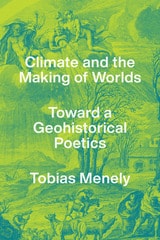
Climate and the Making of Worlds
Toward a Geohistorical PoeticsTobias Menely
University of Chicago Press, 2021
In this book, Tobias Menely develops a materialist ecocriticism, tracking the imprint of the planetary across a long literary history of poetic rewritings and critical readings which continually engage with the climate as a condition of human world making. Menely’s central archive is English poetry written between John Milton’s Paradise Lost (1667) and Charlotte Smith’s “Beachy Head” (1807)—a momentous century and a half during which Britain, emerging from a crisis intensified by the Little Ice Age, established the largest empire in world history and instigated the Industrial Revolution. Incorporating new sciences into ancient literary genres, these ambitious poems aspired to encompass what the eighteenth-century author James Thomson called the “system . . . entire.” Thus they offer a unique record of geohistory, Britain’s epochal transition from an agrarian society, buffeted by climate shocks, to a modern coal-powered nation. Climate and the Making of Worlds is a bracing and sophisticated contribution to ecocriticism, the energy humanities, and the prehistory of the Anthropocene.
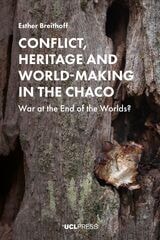
Conflict, Heritage and World-Making in the Chaco
War at the End of the Worlds?Esther Breithoff
University College London, 2020
Framing the study as an exploration of modern, industrialized warfare as a sort of “hyper object”, Breithoff shows how the material culture and heritage of modern conflict fuse together objects, people, and landscapes, connecting them physically and conceptually across vast, almost unimaginable distances and time periods. This book makes a major contribution to key debates in anthropology, archaeology, critical heritage, and material culture studies on the significance of conflict in understanding the Anthropocene, and the roles played by its persistent heritages in assembling worlds.
Crossing Waters, Crossing Worlds
The African Diaspora in Indian CountryTiya Miles and Sharon P. Holland, eds.
Duke University Press, 2006
Essays range from a close reading of the 1838 memoirs of a black and Native freewoman to an analysis of how Afro-Native intermarriage has impacted the identities and federal government classifications of certain New England Indian tribes. One contributor explores the aftermath of black slavery in the Choctaw and Chickasaw nations, highlighting issues of culture and citizenship. Another scrutinizes the controversy that followed the 1998 selection of a Miss Navajo Nation who had an African American father. A historian examines the status of Afro-Indians in colonial Mexico, and an ethnographer reflects on oral histories gathered from Afro-Choctaws. Crossing Waters, Crossing Worlds includes evocative readings of several of Toni Morrison’s novels, interpretations of plays by African American and First Nations playwrights, an original short story by Roberta J. Hill, and an interview with the Creek poet and musician Joy Harjo. The Native American scholar Robert Warrior develops a theoretical model for comparative work through an analysis of black and Native intellectual production. In his afterword, he reflects on the importance of the critical project advanced by this volume.
Contributors. Jennifer D. Brody, Tamara Buffalo, David A. Y. O. Chang, Robert Keith Collins, Roberta J. Hill, Sharon P. Holland, ku'ualoha ho’omnawanui, Deborah E. Kanter, Virginia Kennedy, Barbara Krauthamer, Tiffany M. McKinney, Melinda Micco, Tiya Miles, Celia E. Naylor, Eugene B. Redmond, Wendy S. Walters, Robert Warrior
Designs for the Pluriverse
Radical Interdependence, Autonomy, and the Making of WorldsArturo Escobar
Duke University Press, 2018

Exactly What I Said
Translating Words and WorldsElizabeth Yeoman
University of Manitoba Press, 2022
Fusion of the Worlds
An Ethnography of Possession among the Songhay of NigerPaul Stoller
University of Chicago Press, 1989
"Stoller brilliantly recreates the reality of spirit presence; hosts are what they mediate, and spirits become flesh and blood in the 'fusion' with human existence. . . . An excellent demonstration of the benefits of a new genre of ethnographic writing. It expands our understanding of the harsh world of Songhay mediums and sorcerers."—Bruce Kapferer, American Ethnologist
"A vivid story that will appeal to a wide audience. . . . The voices of individual Songhay are evident and forceful throughout the story. . . . Like a painter, [Stoller] is concerned with the rich surface of things, with depicting images, evoking sensations, and enriching perceptions. . . . He has succeeded admirably." —Michael Lambek, American Anthropologist
"Events (ceremonies and life histories) are evoked in cinematic style. . . . [This book is] approachable and absorbing—it is well written, uncluttered by jargon and elegantly structured."—Richard Fardon, Times Higher Education Supplement
"Compelling, insightful, rich in ethnographic detail, and worthy of becoming a classic in the scholarship on Africa."—Aidan Southall, African Studies Review

Maximum Movies—Pulp Fictions
Film Culture and the Worlds of Samuel Fuller, Mickey Spillane, and Jim ThompsonStanfield, Peter
Rutgers University Press, 2011
Maya Creation Myths
Words and Worlds of the Chilam BalamTimothy Knowlton
University Press of Colorado, 2010
Maya Creation Myths provides not only new and outstanding translations of these myths but also an interpretive journey through these often misunderstood texts, providing insight into Maya cosmology and how Maya intellectuals met the challenge of the European clergy's attempts to eradicate their worldviews. Unlike many scholars who focus primarily on traces of pre-Hispanic culture or Christian influence within the Books of Chilam Balam, Knowlton emphasizes the diversity of Maya mythic traditions and the uniquely Maya discursive strategies that emerged in the Colonial period.
This book will be of significant interest to Maya scholars, folklorists, and historians, as well as students and scholars of religion, cosmology, and anthropology.
Modern Tragedy and the End of Worlds
Lillo, Leopardi, IbsenLeonardo F. Lisi
Northwestern University Press, 2026
The emergence of a distinctly modern form of tragedy is often associated with the introduction of middle-class characters and settings to high drama during the early eighteenth century. What has not been explored previously, however, is how such tragedy uses modernity’s social circumstances to stage metaphysical conditions that are destructive to human worlds. Leonardo F. Lisi pursues this argument by focusing on three central yet distinct figures in the history of modern thought and theater: eighteenth-century English dramatist George Lillo, early nineteenth-century Italian poet Giacomo Leopardi, and late nineteenth-century Norwegian iconoclast Henrik Ibsen. Modern Tragedy and the End of Worlds: Lillo, Leopardi, Ibsen shows that their works share a critical theme: the impossibility of sustaining human forms of meaning in the face of modern materialism, finance, and reason. Viewed in this light, Lisi argues that modern tragedy requires thinking together the incommensurable scales of human existence and the inhuman processes on which it rests—a task that continues to have profound relevance for imagining the end of worlds in the Anthropocene.
Monkeytalk
Inside the Worlds and Minds of PrimatesJulia Fischer
University of Chicago Press, 2017
An eye-opening blend of storytelling, memoir, and science, Monkeytalk takes us into the field and the world’s primate labs to investigate the intricacies of primate social mores through the lens of communication. After first detailing the social interactions of key species from her fieldwork—from baby-wielding male Barbary macaques, who use infants as social accessories in a variety of interactions, to aggression among the chacma baboons of southern Africa and male-male tolerance among the Guinea baboons of Senegal—Fischer explores the role of social living in the rise of primate intelligence and communication, ultimately asking what the ways in which other primates communicate can teach us about the evolution of human language.
Funny and fascinating, Fischer’s tale roams from a dinner in the field shared with lionesses to insights gleaned from Rico, a border collie with an astonishing vocabulary, but its message is clear: it is humans who are the evolutionary mimics. The primate heritage visible in our species is far more striking than the reverse, and it is the monkeys who deserve to be seen. “The social life of macaques and baboons is a magnificent opera,” Fischer writes. “Permit me now to raise the curtain on it.”
Of the Plurality of Worlds
A facsimile of the first edition of 1853; plus previously unpublished material excised by the author just before the book went to press; and Whewell's dialogue rebutting his critics, reprinted from the second editionWilliam Whewell
University of Chicago Press, 2001
The publication of Plurality in 1853 ignited a bitter Victorian debate on science and religion. This book reprints the first edition in facsimile, together with a vigorous response to his critics that Whewell added later and new introductory and bibliographic material by noted Darwin scholar Michael Ruse. This edition also includes 84 typeset pages—never before published—that Whewell cut from the original book at the last moment. Showing clearly the theological underpinnings of Whewell's thinking, these chapters also reveal the difficulties facing any Victorian who tried to reconcile traditional Christian thought with the findings of modern science.
Other Cities, Other Worlds
Urban Imaginaries in a Globalizing AgeAndreas Huyssen, ed.
Duke University Press, 2008
The effects of global processes such as the growth of transnational corporations and investment, the weakening of state sovereignty, increasing poverty, and the privatization of previously public services are described and analyzed in essays by Teresa P. R. Caldeira (São Paulo), Beatriz Sarlo (Buenos Aires), Néstor García Canclini (Mexico City), Farha Ghannam (Cairo), Gyan Prakash (Mumbai), and Yingjin Zhang (Beijing). Considering Johannesburg, the architect Hilton Judin takes on themes addressed by other contributors as well: the relation between the country and the city, and between racial imaginaries and the fear of urban violence. Rahul Mehrotra writes of the transitory, improvisational nature of the Indian bazaar city, while AbdouMaliq Simone sees a new urbanism of fragmentation and risk emerging in Douala, Cameroon. In a broader comparative frame, Okwui Enwezor reflects on the proliferation of biennales of contemporary art in African, Asian, and Latin American cities, and Ackbar Abbas considers the rise of fake commodity production in China. The volume closes with the novelist Orhan Pamuk’s meditation on his native city of Istanbul.
Contributors: Ackbar Abbas, Teresa P. R. Caldeira, Néstor García Canclini, Okwui Enwezor, Farha Ghannam, Andreas Huyssen, Hilton Judin, Rahul Mehrotra, Orhan Pamuk, Gyan Prakash, Beatriz Sarlo, AbdouMaliq Simone, Yingjin Zhang
Spaces, Worlds, and Grammar
Edited by Gilles Fauconnier and Eve Sweetser
University of Chicago Press, 1996
These twelve original papers extend the mental-spaces framework and demonstrate its utility in solving deep problems in linguistics and discourse theory. Investigating the ties between mental constructs, they analyze a wide range of phenomena, including analogical counterfactuals; the metaphor system for conceptualizing the self; abstract change expressions in Japanese; mood in Spanish; deictic expressions; copular sentences in Japanese; conditional constructions; and reference in American Sign Language.
The ground-breaking research presented in this volume will be of interest to linguists and cognitive scientists.
The contributors are Claudia Brugman, Gilles Fauconnier, George Lakoff, Yo Matsumoto, Errapel Mejias-Bikandi, Laura A. Michaelis, Gisela Redeker, Jo Rubba, Shigeru Sakahara, Jose Sanders, Eve Sweetser, and Karen van Hoek.

The Worlds of Lincoln Kirstein
Martin Duberman
Northwestern University Press, 2008
Lincoln Kirstein was a tireless champion of the arts in America. Working behind the scenes to provide artists with money, space, audiences, and, at times, emotional support, he helped found such landmark cultural institutions as the New York City Ballet, the School of American Ballet, New York’s Lincoln Center and Stratford's American Shakespeare Festival.
The Worlds of Petrarch
Giuseppe Mazzotta
Duke University Press, 1993
Written in a clear and passionate style, The Worlds of Petrarch takes us into the politics of culture, the poetic imagination, into history and ethics, art and music, rhetoric and theology. With this encyclopedic strategy, Mazzotta is able to demonstrate that the self for Petrarch is not a unified whole but a unity of parts, and, at the same time, that culture emerges not from a consensus but from a conflict of ideas produced by opposition and dark passion. These conflicts, intrinsic to Petrarch's style of thought, lead Mazzotta to a powerful rethinking of the concepts of "fragments" and "unity" and, finally, to a new understanding of the relationship between them.
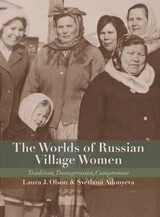
The Worlds of Russian Village Women
Tradition, Transgression, CompromiseLaura J. Olson and Svetlana Adonyeva
University of Wisconsin Press, 2012
Based upon nearly three decades of fieldwork, from 1983 to 2010, The Worlds of Russian Rural Women follows three generations of Russian women and shows how they alternately preserve, discard, and rework the cultural traditions of their forebears to suit changing needs and self-conceptions. In a major contribution to the study of folklore, Laura J. Olson and Svetlana Adonyeva document the ways that women’s tales of traditional practices associated with marriage, childbirth, and death reflect both upholding and transgression of social norms. Their romance songs, satirical ditties, and healing and harmful magic reveal the complexity of power relations in the Russian villages.
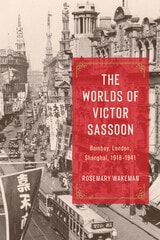
The Worlds of Victor Sassoon
Bombay, London, Shanghai, 1918–1941Rosemary Wakeman
University of Chicago Press, 2024
In this book, historian Rosemary Wakeman brings to life the frenzied, crowded streets, markets, ports, and banks of Bombay, London, and Shanghai. In the early twentieth century, these cities were at the forefront of the sweeping changes taking the world by storm as it entered an era of globalized commerce and the unprecedented circulation of goods, people, and ideas. Wakeman explores these cities and the world they helped transform through the life of Victor Sassoon, who in 1924 gained control of his powerful family’s trading and banking empire. She tracks his movements between these three cities as he grows his family’s fortune and transforms its holdings into a global juggernaut. Using his life as its point of entry, The Worlds of Victor Sassoon paints a broad portrait not just of wealth, cosmopolitanism, and leisure but also of the discrimination, exploitation, and violence wreaked by a world increasingly driven by the demands of capital.
The Worlds of William Penn
Murphy, Andrew R
Rutgers University Press, 2019
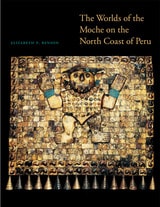
The Worlds of the Moche on the North Coast of Peru
By Elizabeth P. Benson
University of Texas Press, 2012
The Moche, or Mochica, created an extraordinary civilization on the north coast of Peru for most of the first millennium AD. Although they had no written language with which to record their history and beliefs, the Moche built enormous ceremonial edifices and embellished them with mural paintings depicting supernatural figures and rituals. Highly skilled Moche artisans crafted remarkable ceramic vessels, which they painted with figures and scenes or modeled like sculpture, and mastered metallurgy in gold, silver, and copper to make impressive symbolic ornaments. They also wove textiles that were complex in execution and design.
A senior scholar renowned for her discoveries about the Moche, Elizabeth P. Benson published the first English-language monograph on the subject in 1972. Now in this volume, she draws on decades of knowledge, as well as the findings of other researchers, to offer a grand overview of all that is currently known about the Moche. Touching on all significant aspects of Moche culture, she covers such topics as their worldview and ritual life, ceremonial architecture and murals, art and craft, supernatural beings, government and warfare, and burial and the afterlife. She demonstrates that the Moche expressed, with symbolic language in metal and clay, what cultures in other parts of the world presented in writing. Indeed, Benson asserts that the accomplishments of the Moche are comparable to those of their Mesoamerica contemporaries, the Maya, which makes them one of the most advanced civilizations of pre-Columbian America.
Their System, Our Game
Homebrew and the Worlds of PathfinderScott DeJong and Marc Lajeunesse
University of Michigan Press, 2026
Our favorite tabletop role-playing games (TTRPGs) provide a chance to act out a fantasy. It might be the desire to wipe out foes with a single strike, the ability to charm even the most curmudgeonly townsfolk, or maybe even just the aspiration to adventure as a potted plant. Since game systems don’t always let players craft the kinds of games they want to experience, this is when they turn to the “homebrew” process to create personal rules and worlds. While Pathfinder has a history of being an underdog to the longtime industry leader Dungeons & Dragons, it has an ethos of open game design that inspires players, indie makers, and third-party content creators to brew up new rules, characters, classes, and game settings.
Their System, Our Game looks at the history of Pathfinder and how it encourages aspiring makers to break into the game design space. Through interviews with player-creators and third party makers, the authors use a range of perspectives to define homebrew for TTRPGs. Taking a closer look at homebrew design, they create two homebrew campaigns (available as free downloads) collaboratively with two different groups of players. Player accounts of gameplay and designer reflections of how their homebrew actually played out at the game table outline some of the challenges and perks of designing on the fly, creating customized settings, and bending or breaking rules. The book concludes by going through the research, interviews, design, and play analysis to show what homebrew and Pathfinder mean together. Ultimately Their System, Our Game is a celebration of how players use homebrew to explore creation and expression in their own TTRPGs.
Tracing the Relational
The Archaeology of Worlds, Spirits, and TemporalitiesMeghan E. Buchanan and B. Jacob Skousen
University of Utah Press, 2015
Tsvetaeva's Orphic Journeys in the Worlds of the Word
Olga Peters Hasty
Northwestern University Press, 1996
Tsvetaeva’s Orphic Journeys in the Worlds of the Word explores the rich theme of the myth of Orpheus as master narrative for poetic inspiration and creative survival in the life and work of Marina Tsvetaeva. Olga Peters Hasty establishes the basic themes of the Orphic Complex—the poet’s longing to mediate between the embodied physical world and an “elsewhere,” the poet’s inability to do so, the primacy of the voice over the visual world, the insistence on concrete imagery, the costs of the poet’s gift—and orders her arguments in the tragic shape of the Orpheus myth as it worked itself out organically in Tsvetaeva’s own life. Hasty delineates the connections between the Orpheus myth and other key mythological and literary figures in the poet’s life—including Alexander Blok, Anna Akhmatova, Alexander Pushkin, and Rainer Maria Rilke—to make an important and original critical contribution.

WORLDS OF MEDIEVAL WOMEN
"CREATIVITY, INFLUENCE, AND IMAGINATION"CONSTANCE H. BERMAN
West Virginia University Press, 1985
Words and Worlds
A Lexicon for Dark TimesVeena Das and Didier Fassin, editors
Duke University Press, 2021
Contributors. Banu Bargu, Veena Das, Alex de Waal, Didier Fassin, Peter Geschiere, Behrooz Ghamari-Tabrizi, Caroline Humphrey, Ravi Kanbur, Julieta Lemaitre, Uday S. Mehta, Jan-Werner Müller, Jonathan Pugh, Elizabeth F. Sanders, Todd Sanders
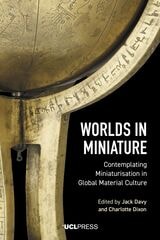
Worlds in Miniature
Contemplating Miniaturisation in Global Material CultureEdited by Jack Davy and Charlotte Dixon
University College London, 2019
Beginning with an introduction by the editors, which offers a guide to studying and comparing miniatures, the following chapters include studies of miniature Neolithic stone circles on Exmoor, Ancient Egyptian miniature assemblages, miniaturization under colonialism as practiced by the Makah People of Washington State, miniature watercraft from India, miniaturized contemporary tourist art of the Warao people of Venezuela, and dioramas on display in the Science Museum. Interspersing the chapters are interviews with miniature-makers, including two miniature boat builders at the National Maritime Museum, Cornwall and a freelance architectural model maker. The interdisciplinary nature of the volume makes it suitable reading for anthropologists, historians, archaeologists, artists, and researchers in related fields across the social sciences.
Worlds in the Sky
Planetary Discovery from Earliest Times Through Voyager and MagellanWilliam Sheehan
University of Arizona Press, 1992
In Worlds in the Sky, William Sheehan gives us a history of this long fascination, weaving together scientific history, anecdotes surrounding planetary discoveries, and the personal reflections of an incurable amateur astronomer. He describes how we arrived at our current understanding of the Moon and the planets and shows how certain individuals in history shaped the world’s knowledge about the Solar System.
Worlds of Appearance
An Introduction to Aesthetics in PracticeWalead Beshty
University of Chicago Press, 2026
An accessible primer on aesthetics in art and everyday life, written by artist and scholar Walead Beshty.
In this general guide to the foundations of aesthetics, Walead Beshty introduces the complexities of aesthetics through succinct language and real-world examples, presenting an introductory theory of how the world becomes known to us through our senses and how that knowledge in turn builds our experience of everything around us.
Considering aesthetics on both a practical and a theoretical level, Worlds of Appearance asserts that art and aesthetics are inherently political, composing a fundamental form of communication and a means by which we can imagine the very nature of what can be experienced, sensed, and expressed. Aesthetics, argues Beshty, is a corporeal and material area of study, one that reveals how we perceive the world and how we develop technologies in response. With this book, he aims to fill a gap in existing writing about aesthetics, offering a clear explanation of how it acts as a dynamic force in our daily lives, how it functions on a concrete level, and how we can understand its possibilities.
Beginning with how we transform a flood of sensations into a coherent perception of the world, the book considers the basics of aesthetic production and reception, then moves on to look at specific examples of aesthetics in practice, with a focus on art, architecture, and performance. It concludes by laying out how aesthetic literacy is key to understanding the production of wide-ranging aspects of our lives, including digitization, mass media, systems of communications, and power relations.
Worlds of Autism
Across the Spectrum of Neurological DifferenceJoyce Davidson
University of Minnesota Press, 2013
Since first being identified as a distinct psychiatric disorder in 1943, autism has been steeped in contestation and controversy. Present-day skirmishes over the potential causes of autism, how or even if it should be treated, and the place of Asperger’s syndrome on the autism spectrum are the subjects of intense debate in the research community, in the media, and among those with autism and their families. Bringing together innovative work on autism by international scholars in the social sciences and humanities, Worlds of Autism boldly challenges the deficit narrative prevalent in both popular and scientific accounts of autism spectrum disorders, instead situating autism within an abilities framework that respects the complex personhood of individuals with autism.
A major contribution to the emerging, interdisciplinary field of critical autism studies, this book is methodologically and conceptually broad. Its authors explore the philosophical questions raised by autism, such as how it complicates neurotypical understandings of personhood; grapple with the politics that inform autism research, treatment, and care; investigate the diagnosis of autism and the recognition of difference; and assess representations of autism and stories told by and about those with autism.
From empathy, social circles, and Internet communities to biopolitics, genetics, and diagnoses, Worlds of Autism features a range of perspectives on autistic subjectivities and the politics of cognitive difference, confronting society’s assumptions about those with autism and the characterization of autism as a disability.
Contributors: Dana Lee Baker, Washington State U; Beatrice Bonniau, Paris Descartes U; Charlotte Brownlow, U of Southern Queensland, Australia; Kristin Bumiller, Amherst College; Brigitte Chamak, Paris Descartes U; Kristina Chew, Saint Peter’s U, New Jersey; Patrick McDonagh, Concordia U, Montreal; Stuart Murray, U of Leeds; Majia Holmer Nadesan, Arizona State U; Christina Nicolaidis, Portland State U; Lindsay O'Dell, Open U, London; Francisco Ortega, State U of Rio de Janeiro; Mark Osteen, Loyola U, Maryland; Dawn Eddings Prince; Dora Raymaker; Sara Ryan, U of Oxford; Lila Walsh.