Results by title
4 books match the query 'Yanomamo Indians'
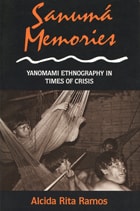
Sanuma Memories
Yanomami Ethnography in Times of CrisisAlcida Rita Ramos
University of Wisconsin Press, 1995
The Yanomami people of Brazil first attracted anthropological and popular attention in the 1960s, when they were portrayed as essentially primitive and violent in the widely read book Yanomamo: The Fierce People. To this image of the Yanomami another has recently been added: that of victims of the economic rapacity devouring the Amazon.
Sanumá Memories moves beyond these images to provide the first anthropologically sophisticated account of the Yanomami and their social organization, kinship, and marriage, capturing both individual experiences and the broader sociological trends that engulf them. A poignant personal story as well, it draws on Alcida Ramos's extensive fieldwork among the Sanumá (the northernmost Yanomami subgroup) from 1968 to 1992, as she reports on the brutal impact of many invasions—from road construction to the gold rush that brought the Yanomami social chaos, thousands of deaths, devastation of gardens and forest, and a disquietingly uncertain future.
At the cutting edge of anthropological description and analysis, Sanumá Memories ponders the importance of "otherness" to the Sanumá; describes Sanumá spaces, from the grandiosity of the rain forest to cozy family compartments; analyzes their notions of time, from the minute reckoning of routine village life to historical and metaphysical macro-time; shows how power and authority are generated and allocated in space and time; and examines the secrecy of personal names and the all-pervading consequences of disclosing them.

State Healthcare and Yanomami Transformations
A Symmetrical EthnographyJosé Antonio Kelly
University of Arizona Press, 2011
That long-standing dichotomy is challenged in this new ethnography by anthropologist José Kelly. Kelly places the study of culture and cosmology squarely within the context of the modern nation-state and its institutions. He explores Indian-white relations as seen through the operation of a state-run health system among the indigenous Yanomami of southern Venezuela.
With theoretical foundations in the fields of medical and Amazonian anthropology, Kelly sheds light on how Amerindian cosmology shapes concepts of the state at the community level. The result is a symmetrical anthropology that treats white and Amerindian perceptions of each other within a single theoretical framework, thus expanding our understanding of each group and its influences on the other. This book will be valuable to those studying Amazonian peoples, medical anthropology, development studies, and Latin America. Its new takes on theory and methodology make it ideal for classroom use.
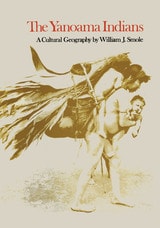
The Yanoama Indians
A Cultural GeographyBy William J. Smole
University of Texas Press, 1976
The Yanoama are one of the most numerous remaining aboriginal populations of the South American tropical forests, and their large territory constitutes a significant culture region. Although other scholars (anthropologists, geneticists, linguists) have studied this contemporary "neolithic" population, this is the first geographic study of the Yanoama. It is also the only book to focus on the Yanoama highland core area—the Parima massif—and it is the first study to analyze Yanoama horticulture as an integral part of their ecosystem.
The author is concerned principally with the spatial dimension as developed in Yanoama culture, with the spatial patterns of functioning systems, and with Yanoama ecology in this highland habitat. The natural environment is viewed, not as a cultural determinant, but as part of the total ecosystem. Livelihood activities constitute a major organizing theme and, among these, gardening receives the most attention. Frequently classified as a nomadic hunter-gatherer group, the Yanoama are found to have a deep-seated horticultural tradition, and many new data on this tradition are presented. As this study reveals, the Yanoama have created and maintained a cultural landscape that bears their distinctive stamp.
Tribal and Chiefly Warfare in South America
Elsa M. Redmond
University of Michigan Press, 1994
This book presents new data on warfare from both ethnohistoric and ethnographic sources. The author documents principal differences between tribal and chiefly warfare; outlines the evidence archaeologists can expect to recover from warfare; and formulates testable hypotheses on the role of warfare in social and political evolution. This monograph is part of a series on Latin American Ethnohistory and Archaeology.