Results by title
6 books match the query 'Yesterday'

American Education
Yesterday, Today, TomorrowEdited by Thomas L. Good
University of Chicago Press, 2000
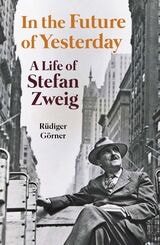
In the Future of Yesterday
A Life of Stefan ZweigRüdiger Görner
Haus Publishing, 2025
In the Future of Yesterday delves into Stefan Zweig’s considerable contribution to world literature, rooted in the Austro-Jewish tradition. His privileged social background saw him embrace European culture and cosmopolitanism. A world traveler from the outset, he liked to uproot himself, but whether he stayed in London, New York, or, eventually, in Brazil, his literary baggage continued to contain the flair of fin de siècle Vienna.
This biography re-examines Zweig’s influential time in England and offers new insights into his final years in the United States and Brazil. It discusses some of his prolific literary output in relation to his life and explores his political views on Europe, Zionism, and the world order in greater depth than previous appraisals of Zweig’s life.
The book also considers the many contradictions in Zweig’s views and attitudes, which included an initial, and surprising, leniency towards fascism. Most importantly, though, In the Future of Yesterday presents Zweig as a towering figure of a form of writing that was bursting with life and that was written in the knowledge that there can only be a future if we remain conscious of the past. In that sense, Zweig is a writer for our time.
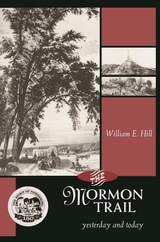
Mormon Trail
Yesterday and TodayWilliam E. Hill
Utah State University Press, 1996
Back in print, this essential reference for readers interested in the Mormon Trail is part history, part resource book, part guide and photographic essay. Driven from their home in Nauvoo, Illinois, Mormons led by Brigham Young began in 1846 to journey west to an expected haven in the Great Salt Lake Valley. The first party arrived there in July 1847. Thousands of members and converts later followed the Mormon Trail, which for much of its way traced the route of the Oregon Trail, although it generally stayed across the Platte River from the more-traveled way. It was thus, until the railroad's arrival in 1869, one of the West's most important and heavily used roads.
Although the Mormons' experience was in most ways similar to that of other emigrants, the religious motivations, tight organization, and family groups of the Mormons gave their migration a distinct character. William E. Hill introduces the Mormons, their eventful early history, and the characteristics of the migration west. His book also includes a chronology of trail-related events, excerpts from diaries and guidebooks, songs, historical maps, over 200 then-and-now illustrations, descriptions of major museums and displays on the trail, and recommendations for further reading.
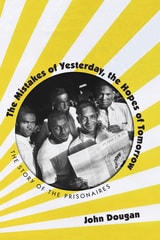
The Mistakes of Yesterday, the Hopes of Tomorrow
The Story of the PrisonairesJohn Dougan
University of Massachusetts Press, 2012
Early in the morning on June 1, 1953, five African American men boarded a van to make the 200-mile trip from Nashville to Memphis for a daylong recording session at the legendary Sun Studios, to be overseen by Sun founder Sam Phillips. One of the two tracks cut that day, “Just Walkin' in the Rain,” would go on to become a regional R&B hit, Sun Records' biggest record of the pre-Elvis era. It would, however, be the group's only hit. They were the Prisonaires, a vocal quintet who had honed their skills while inmates at the Tennessee State Penitentiary in Nashville.
In this book, John Dougan tells the story of the Prisonaires, their hit single, and the afterlife of this one remarkable song. The group and the song itself represent a compelling concept: imprisoned men using music as a means of cultural and personal survival. The song was re-recorded by white singer Johnnie Ray, who made it a huge hit in 1956. Over the years, other singers and groups would move the song further away from its origins, recasting the deep emotions that came from creating music in a hostile, controlled environment.
The story of the Prisonaires, for all of its triumphs, reflects the disappointment of men caught in a paradoxical search for personal independence while fully cognizant of a future consigned to prison. Their brief career and the unusual circumstances under which it flourished sheds light on the harsh realities of race relations in the pre–Civil Rights South. The book also provides a portrait of Nashville just as it was gaining traction as a nationally recognized music center.
The Pariahs of Yesterday
Breton Migrants in ParisLeslie Page Moch
Duke University Press, 2012
Yesterday in Mexico
A Chronicle of the Revolution, 1919–1936By John W. F. Dulles
University of Texas Press, 1961
Early in a sixteen-year sojourn in Mexico as an engineer for an American mining company, John W. F. Dulles became fascinated by the story of Mexico’s emergence as a modern nation, and was imbued with the urge to tell that story as it had not yet been told—by letting events speak for themselves, without any interpretations or appraisal.
The resultant book offers an interesting paradox: it is “chronicle” in the medieval sense—a straightforward record of events in chronological order, recounted with no effort at evaluation or interpretation; yet in one aspect it is a highly personal narrative, since much of its significant new material came to Dulles as a result of personal interviews with principals of the Revolution. From them he obtained firsthand versions of events and other reminiscences, and he has distilled these accounts into a work of history characterized by thorough research and objective narration.
These fascinating interviews were no more important, however, than were the author’s many hours of laborious search in libraries for accounts of the events from Carranza’s last year to Calles’ final retirement from the Mexican scene. The author read scores of impassioned versions of what transpired during these fateful years, accounts written from every point of view, virtually all of them unpublished in English and many of them documents which had never been published in any language.
Combining this material with the personal reminiscences, Dulles has provided a narrative rich in its new detail, dispassionate in its presentation of facts, dramatic in its description of the clash of armies and the turbulence of rough-and-tumble politics, and absorbing in its panoramic view of a people’s struggle.
In it come to life the colorful men of the Revolution —Obregón, De la Huerta, Carranza, Villa, Pani, Carillo Puerto, Morones, Calles, Portes Gil, Vasconcelos, Ortiz Rubio, Garrido Canabal, Rodríguez, Cárdenas. (Dulles’ narrative of their public actions is illumined occasionally by humorous anecdotes and by intimate glimpses.) From it emerges also, as the main character, Mexico herself, struggling for self-discipline, for economic stability, for justice among her citizens, for international recognition, for democracy.
This account will be prized for its encyclopedic collection of facts and for its important clarification of many notable events, among them the assassination of Carranza, the De La Huerta revolt, the assassination of Obregón, the trial of Toral, the resignation of President Ortiz Rubio, and the break between Cárdenas and Calles. More than sixty photographs supplement the text.