Results by title

7 books match the query 'Yoga'
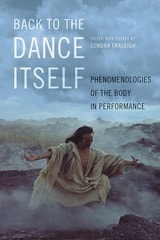
cover of Back to the Dance Itself: Phenomenologies of the Body in Performance

Back to the Dance Itself

Phenomenologies of the Body in Performance

Edited with Essays by Sondra Fraleigh

University of Illinois Press, 2018

In Back to the Dance Itself, Sondra Fraleigh edits essays that illuminate how scholars apply a range of phenomenologies to explore questions of dance and the world; performing life and language; body and place; and self-knowing in performance. Some authors delve into theoretical perspectives, while others relate personal experiences and reflections that reveal fascinating insights arising from practice. Collectively, authors give particular consideration to the interactive lifeworld of making and doing that motivates performance. Their texts and photographs study body and the environing world through points of convergence, as correlates in elemental and constant interchange modeled vividly in dance. Selected essays on eco-phenomenology and feminism extend this view to the importance of connections with, and caring for, all life.

Contributors: Karen Barbour, Christine Bellerose, Robert Bingham, Kara Bond, Hillel Braude, Sondra Fraleigh, Kimerer LaMothe, Joanna McNamara, Vida Midgelow, Ami Shulman, and Amanda Williamson.

[more]
cover of Dreams, Illusion, and Other Realities

Dreams, Illusion, and Other Realities

Wendy Doniger O'Flaherty

University of Chicago Press, 1984

"Wendy Doniger O'Flaherty . . . weaves a brilliant analysis of the complex role of dreams and dreaming in Indian religion, philosophy, literature, and art. . . . In her creative hands, enchanting Indian myths and stories illuminate and are illuminated by authors as different as Aeschylus, Plato, Freud, Jung, Kurl Gödel, Thomas Kuhn, Borges, Picasso, Sir Ernst Gombrich, and many others. This richly suggestive book challenges many of our fundamental assumptions about ourselves and our world."—Mark C. Taylor, New York Times Book Review

"Dazzling analysis. . . . The book is firm and convincing once you appreciate its central point, which is that in traditional Hindu thought the dream isn't an accident or byway of experience, but rather the locus of epistemology. In its willful confusion of categories, its teasing readiness to blur the line between the imagined and the real, the dream actually embodies the whole problem of knowledge. . . . [O'Flaherty] wants to make your mental flesh creep, and she succeeds."—Mark Caldwell, Village Voice
[more]
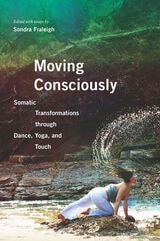
cover of Moving Consciously: Somatic Transformations through Dance, Yoga, and Touch

Moving Consciously

Somatic Transformations through Dance, Yoga, and Touch

Edited by Sondra Fraleigh

University of Illinois Press, 2015
The popularity of yoga and Zen meditation has heightened awareness of somatic practices. Individuals develop the conscious embodiment central to somatics work via movement and dance, or through touch from a skilled teacher or therapist often called a somatic bodyworker. Methods of touch and movement foster generative processes of consciousness in order to create a fluid interconnection between sensation, thought, movement, and expression. In Moving Consciously , Sondra Fraleigh gathers essays that probe ideas surrounding embodied knowledge and the conscious embodiment of movement and dance. Using a variety of perspectives on movement and dance somatics, Fraleigh and other contributors draw on scholarship and personal practice to participate in a multifaceted investigation of a thriving worldwide phenomenon. Their goal: to present the mental and physical health benefits of experiencing one's inner world through sensory awareness and movement integration. A stimulating addition to a burgeoning field, Moving Consciously incorporates concepts from East and West into a timely look at life-changing, intertwined practices that involve dance, movement, performance studies, and education. Contributors: Richard Biehl, Robert Bingham, Hillel Braude, Alison East, Sondra Fraleigh, Kelly Ferris Lester, Karin Rugman, Catherine Schaeffer, Jeanne Schul, and Ruth Way.
[more]
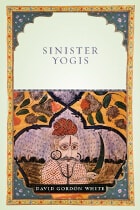
cover of Sinister Yogis

Sinister Yogis

David Gordon White

University of Chicago Press, 2009

Since the 1960s, yoga has become a billion-dollar industry in the West, attracting housewives and hipsters, New Agers and the old-aged. But our modern conception of yoga derives much from nineteenth-century European spirituality, and the true story of yoga’s origins in South Asia is far richer, stranger, and more entertaining than most of us realize.

To uncover this history, David Gordon White focuses on yoga’s practitioners. Combing through millennia of South Asia’s vast and diverse literature, he discovers that yogis are usually portrayed as wonder-workers or sorcerers who use their dangerous supernatural abilities—which can include raising the dead, possession, and levitation—to acquire power, wealth, and sexual gratification. As White shows, even those yogis who aren’t downright villainous bear little resemblance to Western assumptions about them. At turns rollicking and sophisticated, Sinister Yogis tears down the image of yogis as detached, contemplative teachers, finally placing them in their proper context.

[more]
cover of Stories, Songs, and Stretches!: Creating Playful Storytimes with Yoga and Movement

Stories, Songs, and Stretches!

Creating Playful Storytimes with Yoga and Movement

Katie Scherrer

American Library Association, 2017
[more]
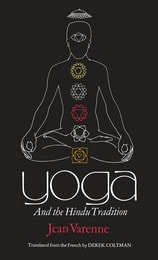
cover of Yoga and the Hindu Tradition

Yoga and the Hindu Tradition

Jean Varenne

University of Chicago Press, 1977

A popular and critical success when it first appeared in France, Yoga and the Hindu Tradition has freed Yoga from the common misconceptions of the recent Yoga vogue. Jean Varenne, the distinguished French Orientalist, presents the theory of classical Yoga, in all its richness, as a method—a concrete way to reach the Absolute through spiritual exercises—which makes possible the transition from existence to essence.

This excellent translation, including line drawings and charts, a glossary of technical terms, and a complete translation of the Yoga Darshana Upanishad, begins with a brief description of the metaphysical and religious history on which Yoga is based. Varenne discusses the theoretical conception of Yoga as the search for liberating knowledge, concluding with a brief indication of the physical practices and extra Yogic themes such as Kundalini and Tantrism. It is the author's hope that "those who read [this book] will come to realize that it is in fact dishonest to reduce Yoga to some sort of physical training, or to just an occult doctrine; it is a 'world view' a Weltanschauung that comprehends reality in its totality."

"The straightforward, well-organized presentation makes the book itself a microcosm of what Varenne singles out as a dominant feature of classical Hindu thought—a bringing of the complex and multitudinous into a unity."—Judith Guttman, Yoga Journal
[more]
cover of Yoga: A Theological Investigation

Yoga

A Theological Investigation

Ezra Sullivan

Catholic University of America Press, 2026

A very large number of people have asked: can Christians practice yoga? To put it more precisely: may Christians practice yoga without betraying, undermining, or diluting their faith? Might yoga strengthen Christian belief and practice—or at least be as neutral as baseball or soccer are toward it? Although these questions could be motivated by solely commercial interests or by mere curiosity, this work is a theological investigation that emerges from the spiritual need to know whether practicing yoga would be compatible with Christian faith and practice. The book begins by establishing an Aristotelian-Boethian method of definition of systematic comparison. It spells out the investigation’s primary sources, noting the great diversity of texts, teachings, and practice that adopt the name “yoga,” and the unified works in Catholicism that guide later comparison, especially the Church Fathers in relation to Greco-Roman paganism. After considering the historical development of yoga, the book asks questions such as, “Is yoga a branch of Hinduism?” and, “Is yoga a philosophy?” A great variety of yogic sources then help formulate a definition of yoga according to its material, formal, efficient, and final causes. After this, the semiology of St. Augustine and John of St. Thomas illuminates the meaning of yogic postures, and the issue of Hindu gods in relation to yoga practice. The investigation concludes by assessing the moral and spiritual issues bound up with yoga practice, including how intentionality affects yoga practice, and whether postural practices always have spiritual effects. Finally, lessons are drawn up from the adaptive missionary work of Jesuit Roberto de Nobili in sixteenth-century India, and the physical prayer postures of St. Dominic, the founder of the Order of Preachers. With fresh insights and original research throughout, this theological investigation into yoga has wide-ranging consequences for today’s Church as it faces non-Christian practices and beliefs throughout the world.
[more]