Results by title
8 books match the query 'Zoos'
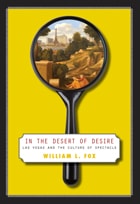
In the Desert of Desire
Las Vegas and the Culture of SpectacleWilliam L. Fox
University of Nevada Press, 2007
Las Vegas, says William Fox, is a pay-as-you-play paradise that succeeds in satisfying our fantasies of wealth and the excesses of pleasure and consumption that go with it. In this context, Fox examines how Las Vegas’s culture of spectacle has obscured the boundaries between high art and entertainment extravaganza, nature and fantasy, for-profit and nonprofit enterprises. His purview ranges from casino art galleries—including Steve Wynn’s private collection and a branch of the famed Guggenheim Museum—to the underfunded Las Vegas Art Museum; from spectacular casino animal collections like those of magicians Siegfried and Roy and Mandalay Bay’s Shark Reef exhibit to the city’s lack of support for a viable public zoo; from the environmental and psychological impact of lavish water displays in the arid desert to the artistic ambiguities intrinsic to Las Vegas’s floating world of showgirls, lapdancers, and ballet divas. That Las Vegas represents one of the world’s most opulent displays of private material wealth in all its forms, while providing miserly funding for local public amenities like museums and zoos, is no accident, Fox maintains. Nor is it unintentional that the city’s most important collections of art and exotic fauna are presented in the context of casino entertainment, part of the feast of sensation and excitement that seduces millions of visitors each year. Instead, this phenomenon shows how our insatiable modern appetite for extravagance and spectacle has diminished the power of unembellished nature and the arts to teach and inspire us, and demonstrates the way our society privileges private benefit over public good. Given that Las Vegas has been a harbinger of national cultural trends, Fox’s commentary offers prescient insight into the increasing commercialization of nature and culture across America.
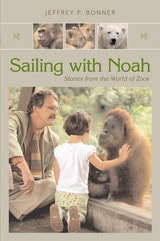
Sailing with Noah
Stories from the World of ZoosJeffrey P. Bonner
University of Missouri Press, 2013
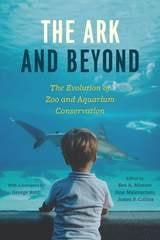
The Ark and Beyond
The Evolution of Zoo and Aquarium ConservationEdited by Ben A. Minteer, Jane Maienschein, and James P. Collins
University of Chicago Press, 2018
While early menageries were anything but the centers of conservation that many zoos are today, a concern with wildlife preservation has been an integral component of the modern, professionally run zoo since the nineteenth century. From captive breeding initiatives to rewilding programs, zoos and aquariums have long been at the cutting edge of research and conservation science, sites of impressive new genetic and reproductive techniques. Today, their efforts reach even further beyond recreation, with educational programs, community-based conservation initiatives, and international, collaborative programs designed to combat species extinction and protect habitats at a range of scales. Addressing related topics as diverse as zoo animal welfare, species reintroductions, amphibian extinctions, and whether zoos can truly be “wild,” this book explores the whole range of research and conservation practices that spring from zoos and aquariums while emphasizing the historical, scientific, and ethical traditions that shape these efforts. Also featuring an inspiring foreword by the late George Rabb, president emeritus of the Chicago Zoological Society / Brookfield Zoo, The Ark and Beyond illuminates these institutions’ growing significance to the preservation of global biodiversity in this century.
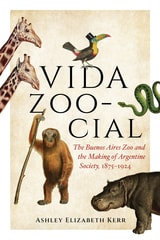
Vida Zoo-cial
The Buenos Aires Zoo and the Making of Argentine Society, 1875–1924Ashley Elizabeth Kerr
Vanderbilt University Press, 2025
Premio al Mejor Libro en Humanidades, Latin American Studies Association, Nineteenth-Century Section, 2026
In late nineteenth- and early twentieth‑century Buenos Aires, elites attempted to tackle growing poverty and social problems with a suite of social, educational, and medical reforms, hoping to make the city and larger nation more “modern” and “progressive” on the world stage. Known as the “social question,” this turn-of-the-century preoccupation with the future of the city and nation was undergirded by a larger set of social Darwinist beliefs about the biological and racial inferiority of immigrants and the working class, linking them to higher susceptibility to alcoholism, sexual deviancy, insanity, and disease.
In Vida Zoo-cial, Ashley Elizabeth Kerr argues that the Buenos Aires Zoo and its many animal species were an important tool in attempts to remake Argentinian society. Elites used the zoo’s physical spaces, programming, and visual and literary representations of its animals to try to educate and “improve” the masses, especially immigrants and the poor, but stopped short of supporting more radical social transformations. Drawing upon extensive archival research from the zoo’s archive, including correspondence, municipal reports, receipts, and employment records, as well as a range of literary and popular culture sources, Kerr records these efforts, which included enlisting lionesses as object lessons in proper motherhood and elephants as model immigrants. Although some projects were successful, Kerr also documents the many ways others went awry when the zoo's animals and the humans who came to see them failed to cooperate.
Vida Zoo-cial is not only a story about how the poor and working class resisted elite efforts for social reform founded upon racialized beliefs and pseudoscience, but also one that challenges readers to rethink the relationship between humans and non‑humans.
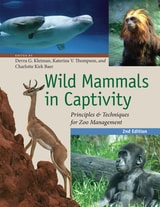
Wild Mammals in Captivity
Principles and Techniques for Zoo Management, Second EditionEdited by Devra G. Kleiman, Katerina V. Thompson, and Charlotte Kirk Baer
University of Chicago Press, 2010
Zoos, aquaria, and wildlife parks are vital centers of animal conservation and management. For nearly fifteen years, these institutions have relied on Wild Mammals in Captivity as the essential reference for their work. Now the book reemerges in a completely updated second edition. Wild Mammals in Captivity presents the most current thinking and practice in the care and management of wild mammals in zoos and other institutions. In one comprehensive volume, the editors have gathered the most current information from studies of animal behavior; advances in captive breeding; research in physiology, genetics, and nutrition; and new thinking in animal management and welfare.
In this edition, more than three-quarters of the text is new, and information from more than seventy-five contributors is thoroughly updated. The standard text for all courses in zoo biology, Wild Mammals in Captivity will, in its new incarnation, continue to be used by zoo managers, animal caretakers, researchers, and anyone with an interest in how to manage animals in captive conditions.
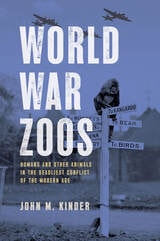
World War Zoos
Humans and Other Animals in the Deadliest Conflict of the Modern AgeJohn M. Kinder
University of Chicago Press, 2025
As Europe lurched into war in 1939, zookeepers started killing their animals. On September 1, as German forces invaded Poland, Warsaw began with its reptiles. Two days later, workers at the London Zoo launched a similar spree, dispatching six alligators, seven iguanas, sixteen southern anacondas, six Indian fruit bats, a fishing cat, a binturong, a Siberian tiger, five magpies, an Alexandrine parakeet, two bullfrogs, three lion cubs, a cheetah, four wolves, and a manatee over the next few months. Zoos worldwide did the same. The reasons were many, but the pattern was clear: The war that was about to kill so many people started by killing so many animals. Why? And how did zoos, nevertheless, not just survive the war but play a key role in how people did, too?
A harrowing yet surprisingly uplifting chronicle, Kinder’s World War Zoos traces how zoos survived the deadliest decades of global history, from the Great Depression, through the terrors of World War II, to the dawn of the Cold War. More than anything before or since, World War II represented an existential threat to the world’s zoological institutions. Some zoos were bombed; others bore the indignities of foreign occupation. Even zoos that were spared had to wrestle with questions rarely asked in public: What should they do when supplies ran low? Which animals should be killed to protect the lives of others? And how could zoos justify keeping dangerous animals that might escape and run wild during an aerial attack?
Zoos in wartime reveal the shared vulnerabilities of humans and animals during periods of social unrest and environmental peril. World War II–era zoos offered people ways to think about and grapple with imprisonment, powerlessness, and degradation. Viewed today, the story of zoos during World War II can be read as an allegory of twenty-first-century crises, as the effects of climate change threaten all life across the planet.
A one-of-a-kind history, World War Zoos is the story of how the world’s zoos survived the deadliest conflict of the twentieth century—and what was lost along the way.

Zoo Culture
Bob Mullan and Garry Marvin
University of Illinois Press, 1999
In this provocative book, the authors demonstrate that zoos tell us as
much about humans as they do about animals and suggest that while animals
may not need zoos, urban societies seem to.
A new introduction takes note of dramatic changes in the perceived role
of zoos that have occurred since the book's original publication.
"Bob Mullan and Garry Marvin delve into the assumptions about animals
that are embedded in our culture. . . . A thought-provoking glimpse of
our own ideas about the exotic, the foreign." -- Tess Lemmon, BBC
Wildlife Magazine
"A thoughtful and entertaining guided tour." -- David White,
New Society
"[An] unusual and intriguing combination of historical survey, psychological
enquiry, and compendium of fascinating facts." -- Evening Standard
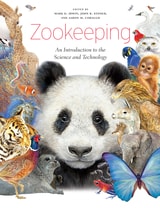
Zookeeping
An Introduction to the Science and TechnologyEdited by Mark D. Irwin, John B. Stoner, and Aaron M. Cobaugh
University of Chicago Press, 2013