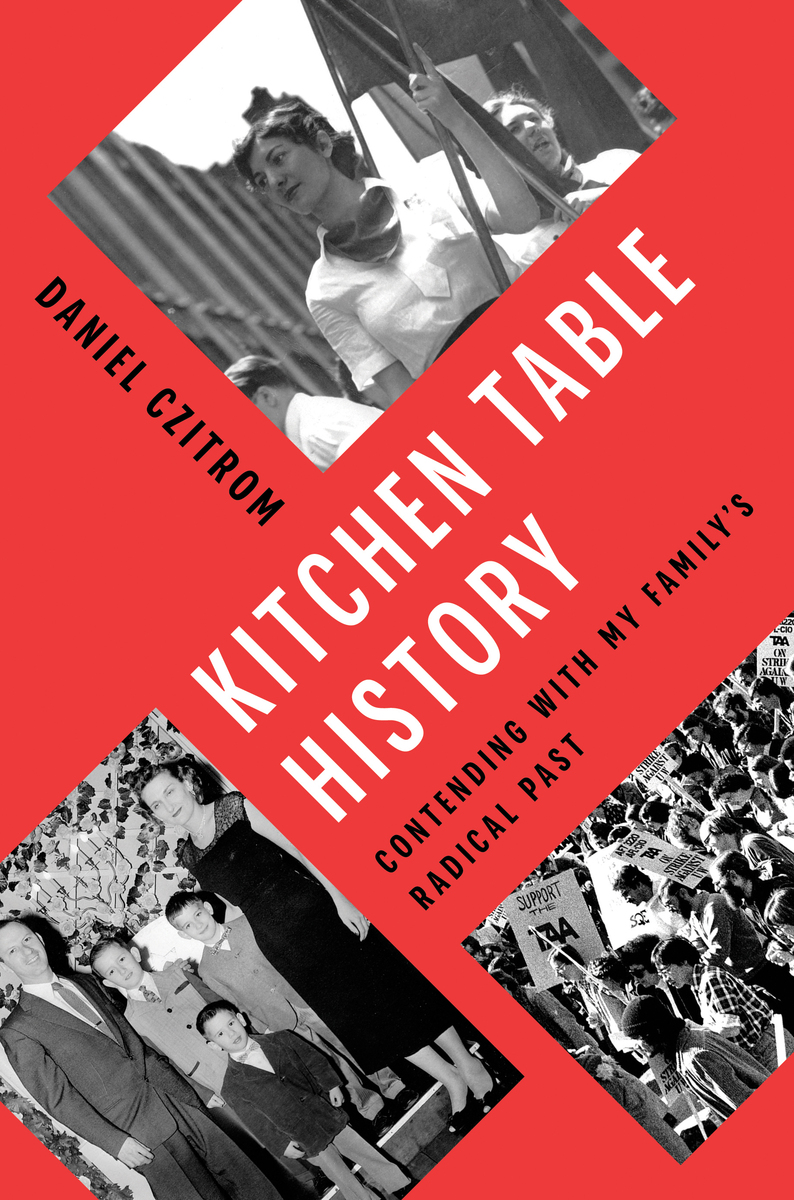
Kitchen Table History: Contending with My Family’s Radical Past
University of Illinois Press, 2027
Cloth: 978-0-252-05980-3 | Paper: 978-0-252-08969-5 | eISBN: 978-0-252-04920-0 (standard)
See other books on: 20th Century | Czitrom, Daniel | Memoirs | Political Ideologies | Radicalism
See other titles from University of Illinois Press
Cloth: 978-0-252-05980-3 | Paper: 978-0-252-08969-5 | eISBN: 978-0-252-04920-0 (standard)
ABOUT THIS BOOK | AUTHOR BIOGRAPHY | REVIEWS | TOC
ABOUT THIS BOOK
Daniel Czitrom learned early on that radical politics was a family affair that stretched across generations and was shared around the kitchen table. In this historical memoir, Czitrom explores how memories and political beliefs shaped his life and his identity as a historian.
Czitrom follows three generations of his family as they fled violence in Eastern Europe, built new lives in America, and committed themselves to radical political movements. Their works and trials included union organizing, volunteering to fight fascism in Spain and elsewhere, harassment by the FBI, and everyday acts of survival. Czitrom describes what he discovered in his years of historical detective work while pondering the still-unanswered questions wrapped in silence and pain. He also recounts his years-long journey to balance loyalty to his family’s values with a desire to succeed, question authority, and become his own person.
An engaging blend of memoir and history, Kitchen Table History is the chronicle of a family and a personal search for the meaning of the past.
Czitrom follows three generations of his family as they fled violence in Eastern Europe, built new lives in America, and committed themselves to radical political movements. Their works and trials included union organizing, volunteering to fight fascism in Spain and elsewhere, harassment by the FBI, and everyday acts of survival. Czitrom describes what he discovered in his years of historical detective work while pondering the still-unanswered questions wrapped in silence and pain. He also recounts his years-long journey to balance loyalty to his family’s values with a desire to succeed, question authority, and become his own person.
An engaging blend of memoir and history, Kitchen Table History is the chronicle of a family and a personal search for the meaning of the past.
See other books on: 20th Century | Czitrom, Daniel | Memoirs | Political Ideologies | Radicalism
See other titles from University of Illinois Press