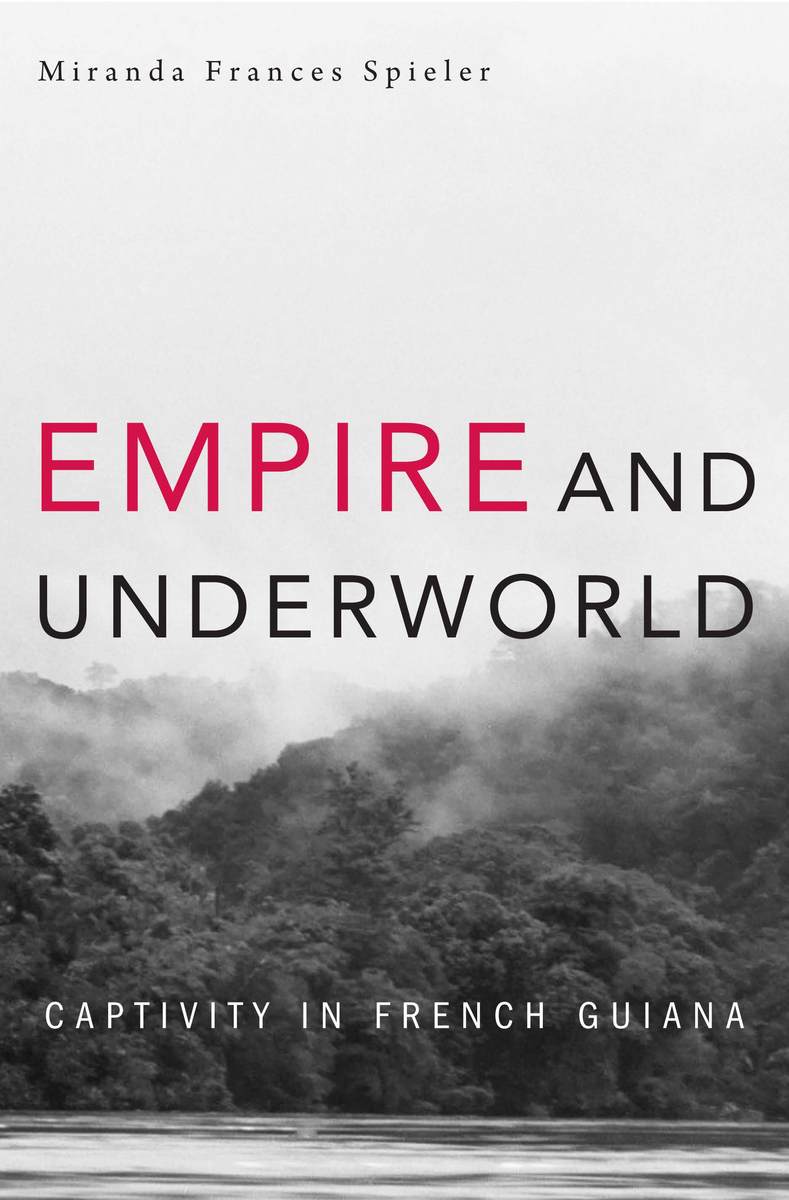
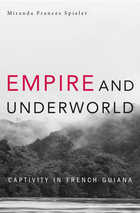
Although [this] remarkable book concerns a marginal place, its insights and implications should be of compelling interest to historians across a wide range of subfields and regional specialties...Refreshingly original, deeply researched, and elegantly argued, Spieler's study could also be seen as a call for further research, from Parchman Farm to Guantanamo.
-- John Savage American Historical Review
By interweaving narratives of outcasts in metropolitan France with those in French Guiana, Spieler vividly illustrates the relationship between metropolitan France and its colonies.
-- Rebecca Hartkopf Schloss Journal of World History
An original and provocative study that recasts the relationship between metropole and colony in the nineteenth century, while also raising broader questions about law and incarceration relevant to today’s world…Spieler elegantly enacts her original ‘thought experiment’ of moving Guiana across the Atlantic and treating it as an integral, if unrecognizable, part of France. The feat involved in researching and holding together these two sides of the story sets a new standard in the historiographical reorientation toward studying colony and metropole as one.
-- Thomas Dodman Journal of Modern History
Spieler’s original analysis merits attention, usefully complicating liberal accounts of law as well as French colonial history.
-- Peter Redfield New West Indian Guide
This highly original book offers a history of the penal colony of French Guiana. More importantly, it also provides a sophisticated meditation on the intersections of space, law, and imperialism in the late eighteenth and nineteenth centuries.
-- Jennifer Heuer The Historian
Cultural historians, scholars of empire, and intellectual historians will all take great value from this well-researched, well-argued book.
-- Erica Foss Essays in History
A subtle and sophisticated study of a complex historical process, Spieler’s book refocuses our way of seeing colonial space and suggests how the highly refined legal innovations of a modern state can be discerned beneath the surface of an apparent wilderness.
-- Michael Clinton Middle Ground Journal
This striking, original, and very intelligent book is concerned with a vast theme: the contrast between the principles of 1789 (liberty, equality, fraternity) and the realities of the lives of deportees in Guiana. In an age concerned with human rights, this book is of universal relevance. These pages may seem to be about the heart of colonial darkness in a far away place, but they are in fact about the heart of darkness in France itself.
-- Patrice Higonnet, Harvard University
This sophisticated study illuminates the history of French Guiana and enriches our understanding of the intertwined histories of France and the Caribbean. Braiding together vivid narratives of exile and imprisonment with detailed legal history, Spieler brilliantly analyzes the complexities of the French colonial order.
-- Laurent Dubois, Duke University
In this provocative book, we learn how the juridical order of a nation—even a democratic one—can create an administrative space which definitively erased its inhabitants from the civil sphere. In French Guiana, émigrés from the French Revolution, then slaves and ex-slaves, deported convicts and indentured workers were rendered invisible before the law. Inspired by the Australian and the Algerian experiences and also by Catholic and Socialist utopias, this process required juridical imagination as well as the ambiguities of empire. While set in nineteenth-century colonial France, Spieler's powerfully illuminating story has deep relevance for today's world.
-- Jean M. Hébrard, École des Hautes Études en Sciences Sociales
This terrific book extends well beyond its apparent subject: late eighteenth- and nineteenth-century French colonial Guiana...It is to Spieler's great credit that she manages to reconstruct from the available archival fragments a remarkably rich and fascinating story of a colony's contingent evolution toward an end that was never foreordained.
-- Malick W. Ghachem Law and History Review