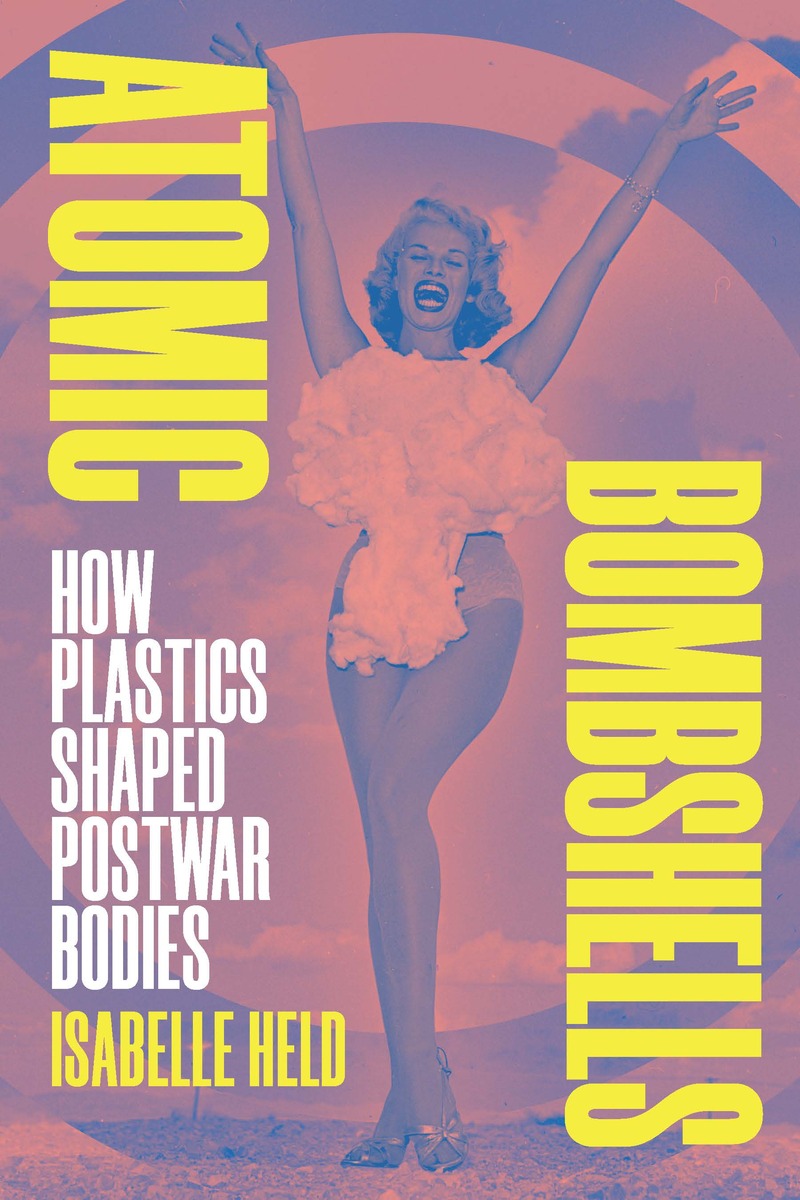
Atomic Bombshells: How Plastics Shaped Postwar Bodies
Duke University Press, 2026
Cloth: 978-1-4780-2965-6 | Paper: 978-1-4780-3310-3 | eISBN: 978-1-4780-6185-4 (standard)
Library of Congress Classification HD9661.U6H45 2026
See other books on: Beauty culture | Fashion & Accessories | Gender expression | Plastics industry and trade | Surgery, Plastic
See other titles from Duke University Press
Cloth: 978-1-4780-2965-6 | Paper: 978-1-4780-3310-3 | eISBN: 978-1-4780-6185-4 (standard)
Library of Congress Classification HD9661.U6H45 2026
ABOUT THIS BOOK | AUTHOR BIOGRAPHY | REVIEWS | TOC | REQUEST ACCESSIBLE FILE
ABOUT THIS BOOK
Bullet bras, bazookas, bombshells, bikinis. In Atomic Bombshells, Isabelle Held challenges the usual narratives of how war technologies enter domestic use by following plastics on their journey into women’s bodies. Held explores the effects of military-industrial science and the emergence of nylon, silicone, and plastic foams on embodied and expressive configurations of gender, sexuality, and race. She focuses on the United States between the late 1930s with the launch of nylon—whose potential was widely celebrated as the world’s first fully synthetic fiber and the ideal replacement for silk stockings—and the late 1970s, when policies began addressing the dangerous health consequences of implantable plastics. Held untangles the complex relationships between chemical companies, the US military, the Federal Drug Administration, plastic surgeons, advertising agencies, the Hollywood star system, go-go dancers, drag queens, and fashion and industrial designers. Using feminist, queer, and trans lenses, she shows that there was never just one bombshell identity. In so doing, Held complicates typical understandings of the shaping and reshaping of gender.
See other books on: Beauty culture | Fashion & Accessories | Gender expression | Plastics industry and trade | Surgery, Plastic
See other titles from Duke University Press