Cloth: 978-1-64642-990-5 | eISBN: 978-1-64642-991-2 (ePub) | eISBN: 978-1-64642-992-9 (PDF)
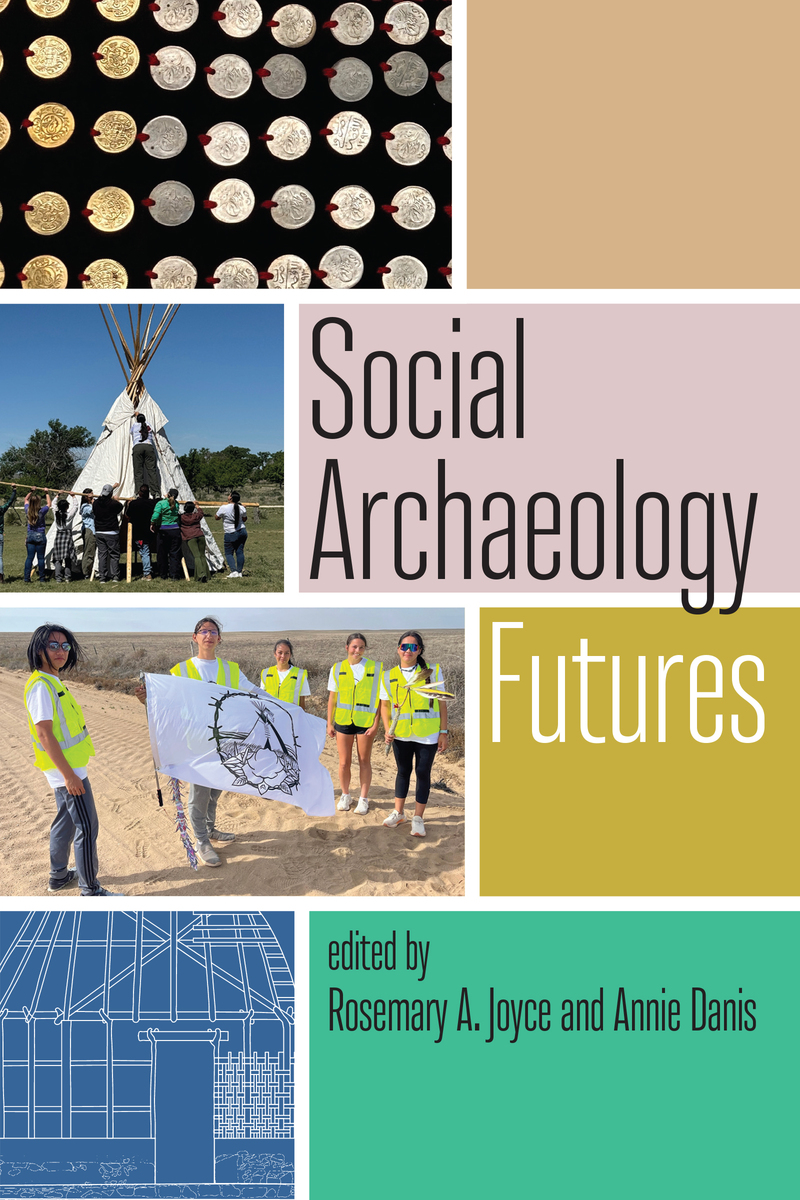
Social Archaeology Futures brings together archaeologists from the Mediterranean, North America, and Latin America to consider what a “social archaeology” should be after the emergence of strong commitments to community engagement and ethical conduct in the field, establishing archaeology as a practice that both presents research and theories about people in the past and engages with people in the present to whom those findings matter. These rich narratives present a cutting-edge approach from established and emerging scholars, bridging the gap between the scholarly project of knowledge production and the social projects of care and repair.
What archaeologists say matters because they shape ideas about what is natural, what “past” led to the present, and how people’s identities took form. This leads to concerns with ethical approaches to representation, to amending the fractures archaeology has produced in previous periods, and to ensuring that communities that are sources of information also benefit from the knowledge produced. Contributors share an understanding of the historical development of social life as an outcome of the decisions and dispositions of living people. Reaching beyond archaeology to natural science, social science, humanities, and the arts, they demonstrate the continued and expanding relevance of archaeological work in transdisciplinary, not merely interdisciplinary, contexts.
Social Archaeology Futures broadens concepts around who counts as a participant in the archaeological process and what counts as archaeology, extending the understanding of the practice well beyond the idea of excavation and lab analysis to include community events, reconsideration of museum collections and archives, and engagement in storytelling. Social archaeology is the future of archaeology, making this volume of considerable interest to students, scholars, and general readers interested in anthropology, art history, heritage studies, and museum studies.
See other books on: Anthropology | Archaeology | Cultural & Ethnic Studies | Cultural & Social | Joyce, Rosemary A.
See other titles from University Press of Colorado