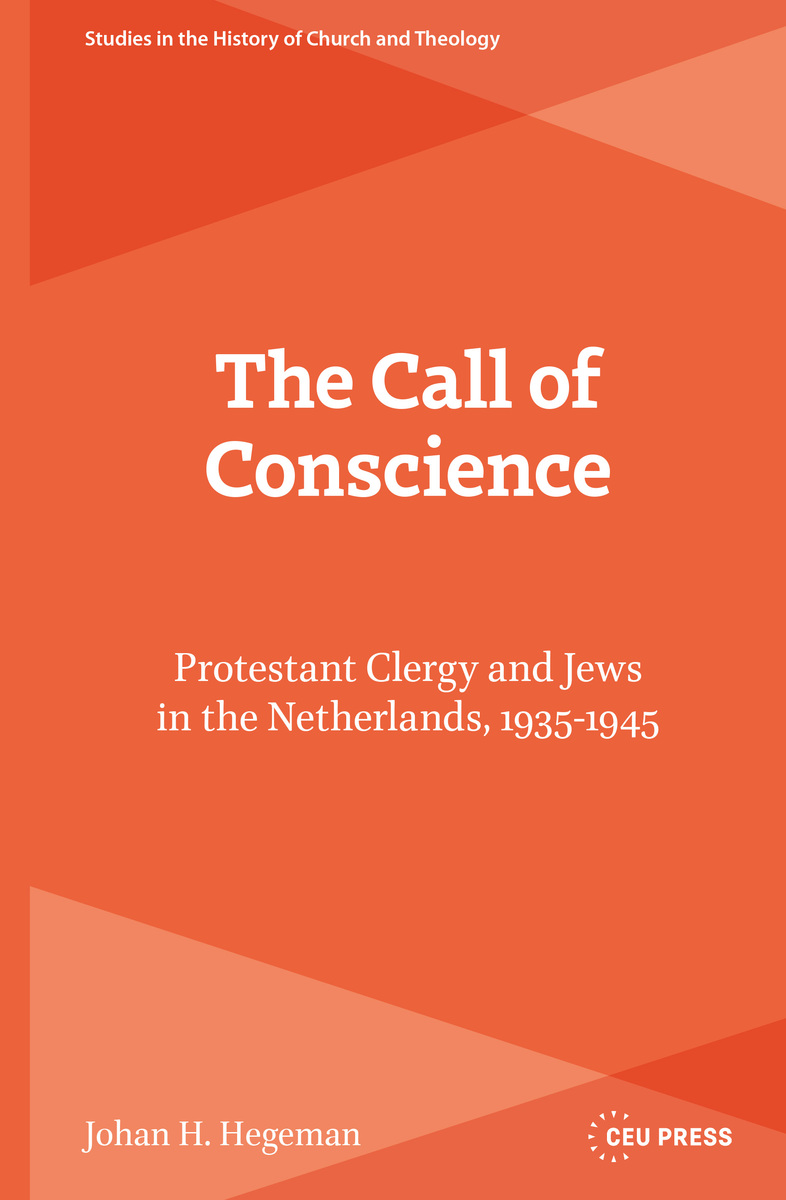
Cover
Title
Copyright
Dedication
Table of Contents
Abbreviations and general notes
Acknowledgements
Preface
Chapter 1: The Call of Guilt
1.2. Portrayal of the PKN statement of guilt
1.3.1: The history of antisemitism
1.3.3. Social antisemitism
1.3.4. Philosemitism
1.3.5. Modern antisemitism
1.4. The description of morality in history
1.4.1. The general history of the persecution of the Jews in the Netherlands
1.4.2. The institutional involvement with the Jews
1.4.3. The role of individual clergy in aiding Jews
1.4.4. Life stories
1.5. The focus on theologians and clergy
1.6.1. The history of religious registration, in particular Jewish religion
1.6.2. The difficulty of defining ‘Jewish Christians’
1.6.3. The profiles of Jewish Christians followed in this book
1.6.4. Questions to be treated regarding Jewish Christians
1.7.1. Objectives and themes
1.7.2. Sources used
2.1. Introduction
2.2.1. Historical background
2.2.2. Willem ten Boom
2.3. Nederlandsche Vereeniging voor Zending onder Israël
2.4. The GKN Mission to Jews
2.5. De Nederlandse Vereeniging van Joden-Christenen
2.6. Dealing with antisemitism
2.6.2. Anti-Judaic theology
2.6.3. National Socialism in Germany and the Netherlands
2.6.4. Antisemitism in the Netherlands in two Protestant churches
2.7. Conclusion
3.1. Introduction
3.2.1. The historical background
3.2.2. Victor Rutgers
3.2.3. The struggle with the government
3.2.4. The modernists in the NHK and the Jews
3.3.1. The Reichskristallnacht pogrom
3.3.2. Johan Eykman
3.3.3. The refugee camps
3.3.5. PHU involvement with the refugees
3.4.1. Heinrich Grüber
3.4.2. Tinus Slotemaker de Bruïne
3.4.3. Bruno Benfey
3.4.4. Roderich Wolff
3.5.1. Paul Scholten and the call to denounce antisemitism
3.5.2. Gerrit Kersten and the adoption of political antisemitism
3.6. The last phase of the PHU
3.7. Evaluation by historians
3.8. Conclusion
4.1. Introduction
4.2.1. The combined efforts by clergy
4.2.2. The Institution of the Convent of Churches
4.2.3. Dealing with the German occupier
4.2.4. The Lunterse Kring
4.3.1. The German prelude
4.3.2. Resistance to natural theology
4.3.3. The relation to the state
4.3.4. The reception of Barth in the Netherlands
4.3.5. Dealing with antisemitism in the progressive approach
4.4.1. Eykman’s protest
4.4.2. Jan Koopmans
4.5. Conservative calls for moral leadership
4.5.1. Principled, moderate Reformed conservative calls
4.5.2. Pro-German Reformed conservative calls
4.5.3. The submission ethos
4.6.1. The Aryan attestation
4.6.2. The Protestant petition of October 24, 1940
4.7. Conclusion
5.1. Introduction
5.2.1. The history of the pamphlet
5.2.2. Theological background
5.3.1. The ethics regarding the Jews
5.3.2. The use of conscience
5.3.3. Koopmans’s use of ethics
5.4. The measures facing the Jews
5.5.1. Letter of the Convent of Churches, March 5, 1941
5.5.2. Pastoral letter of the GKN, March 1941
5.5.3. Pamphlet from Barthian theologians, July 1941
5.5.4. Pastoral Letter I from the NHK, September 1941
5.6. The crisis in moral leadership
5.7. Conclusion
6.1. Introduction
6.2. Forced labor
6.3.1. The rise of the IKO in January 1942
6.3.2. The conference with Seyss-Inquart
6.3.3. Dealing with anti-Jewish restrictions in the churches
6.3.4. Bruno Benfey
6.4.1. Start of the deportations and the response from the churches
6.4.2. The three-week telegram episode
6.4.3. The Declaration of Affiliation, August 21, 1942
6.4.4. Roderich Wolff
6.4.5. The aftermath of the declaration
6.5. Conclusion
7.1. Introduction
7.2.1. Dealing with raids
7.2.2. The care for the mixed-married group
7.2.3. The final negotiations regarding the ‘affiliated’
7.2.4. The Camp Westerbork ministry to Protestants
7.3. Protesting the sterilization measure
7.4.1. The influence of National Socialist clergy
7.4.2. The Pastoral Letter II from the NHK, October 1943
7.4.3. Protesting the deportation of Jewish Christians
7.5.1. How the ministry at Westerbork was handled
7.5.2. The incident in the Protestant congregation in 1944
7.5.3. The final care for the Jewish Christians
7.6.1. Abraham Rutgers
7.6.2. Marten Geertsema
7.7. Conclusion
8.1. Introduction
8.2.1. A change in perspective
8.2.2. The confessional approaches of the Protestant clergy
8.2.3. The role of the Jewish Christians
8.2.4. Conclusion
8.3.2. The appeal to normative order
8.3.3. The appeal to mercy
8.3.4. The ethics of conscience
8.3.5. Conclusion
8.4. The moral leadership by the clergy
8.4.2. The hallowing out of Protestant church leadership
8.4.3. The confusion in theology and morality about Jews
8.4.4. The hard confrontations with the German occupier
8.4.5. The antinomy regarding negotiations
8.4.6. The split responsibility
8.4.7. The post-war reflection of two historians
8.4.8. Conclusion
8.5.1. Moral responsibility counts
8.5.2. Moral courage counts
8.6. An interpretation regarding guilt
8.7. Epilogue
Appendix: Text Exhibits
Exhibit 1: Pamphlet Jan Koopmans, Almost Too Late!, November 1940
Exhibit 2: Letter by Convent of Churches (CVK), March 5, 1941
Exhibit 3: Pamphlet by J. Koopmans, K.H. Miskotte, and K.H. Kroon, What We Believe, July 1941
Exhibit 4: Pastoral Letter I from the Netherlands Reformed Church (NHK), September 1941
Exhibit 5: Memorandum for the Conference with the Reichskommissar by the Inter-Church Council (IKO), February 17, 1942
Exhibit 6: Pulpit Announcement with Telegram of July 11, 1942, and Prayer from the Inter-Church Council (IKO), July 26, 1942
Exhibit 7: Letter with Protest Against the Sterilization Policy from the Inter-Church Council (IKO), May 19, 1943
Exhibit 8: Pastoral Letter II from the Netherlands Reformed Church (NHK), October 1943
Sources and Archives
Bibliography
Index Bible
Index Names Proper
Index Personal Names
Index Subjects