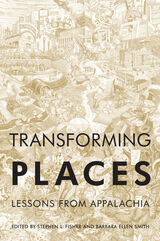
In this era of globalization's ruthless deracination, place attachments have become increasingly salient in collective mobilizations across the spectrum of politics. Like place-based activists in other resource-rich yet impoverished regions across the globe, Appalachians are contesting economic injustice, environmental degradation, and the anti-democratic power of elites. This collection of seventeen original essays by scholars and activists from a variety of backgrounds explores this wide range of oppositional politics, querying its successes, limitations, and impacts. The editors' critical introduction and conclusion integrate theories of place and space with analyses of organizations and events discussed by contributors. Transforming Places illuminates widely relevant lessons about building coalitions and movements with sufficient strength to challenge corporate-driven globalization.
Contributors are Fran Ansley, Yaira Andrea Arias Soto, Dwight B. Billings, M. Kathryn Brown, Jeannette Butterworth, Paul Castelloe, Aviva Chomsky, Dave Cooper, Walter Davis, Meredith Dean, Elizabeth C. Fine, Jenrose Fitzgerald, Doug Gamble, Nina Gregg, Edna Gulley, Molly Hemstreet, Mary Hufford, Ralph Hutchison, Donna Jones, Ann Kingsolver, Sue Ella Kobak, Jill Kriesky, Michael E. Maloney, Lisa Markowitz, Linda McKinney, Ladelle McWhorter, Marta Maria Miranda, Chad Montrie, Maureen Mullinax, Phillip J. Obermiller, Rebecca O'Doherty, Cassie Robinson Pfleger, Randal Pfleger, Anita Puckett, Katie Richards-Schuster, June Rostan, Rees Shearer, Daniel Swan, Joe Szakos, Betsy Taylor, Thomas E. Wagner, Craig White, and Ryan Wishart.