
 A SCHOLARLY BOOK REPOSITORY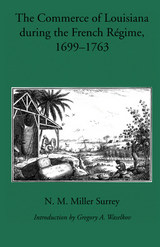
By the time French colonists sought a portion of the New World’s riches, much of those resources had already been claimed by Spain and Portugal. Once settled in North America, however, they quickly turned their attentions to commerce, specifically to trade within the Louisiana region. For almost 65 years French explorers, soldiers, administrators, and accountants focused on establishing a string of forts and small villages at key points in the Mississippi and Illinois River valleys, eastward to the Mobile River drainage, and westward toward New Mexico. Despite a long and costly war at home, for a time it looked as though the French would be successful in controlling a vast swath of the middle of North America with routes stretching from Quebec City to New Orleans.
Under the guidance of leaders such as LaSalle, Joliet, Father Marquette, Frontenac, Hennepin, and Bienville, the French made a good start in the lucrative trading business and established working relationships with most of the Indians of the region. But by 1763, with war in Europe and a faltering economy at home, commerce in the New World eroded along with the ability of the French to control the region and to protect their investments from the encroachment of the Spanish and English.
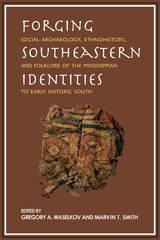
Forging Southeastern Identities explores the many ways archaeologists and ethnohistorians define and trace the origins of Native Americans’ collective social identity.
Forging Southeastern Identities: Social Archaeology and Ethnohistory of the Mississippian to Early Historic South, a groundbreaking collection of ten essays, covers a broad expanse of time—from the ninth to the nineteenth centuries—and focuses on a common theme of identity. These essays represent the various methods used by esteemed scholars today to study how Native Americans in the distant past created new social identities when old ideas of the self were challenged by changes in circumstance or by historical contingencies.
Archaeologists, anthropologists, and folklorists working in the Southeast have always recognized the region’s social diversity; indeed, the central purpose of these disciplines is to study peoples overlooked by the mainstream. Yet the ability to define and trace the origins of a collective social identity—the means by which individuals or groups align themselves, always in contrast to others—has proven to be an elusive goal. Here, editors Gregory A. Waselkov and Marvin T. Smith champion the relational identification and categorical identification processes, taken from sociological theory, as effective analytical tools.
Taking up the challenge, the contributors have deployed an eclectic range of approaches to establish and inform an overarching theme of identity. Some investigate shell gorgets, textiles, shell trade, infrastructure, specific sites, or plant usage. Others focus on the edges of the Mississippian world or examine colonial encounters between Europeans and native peoples. A final chapter considers the adaptive malleability of historical legend in the telling and hearing of slave narratives.
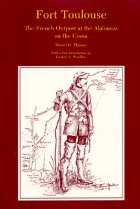
Situated at the head of the Alabama River system—at the juncture of the Coosa and Tallapoosa rivers—Fort Toulouse in 1717 was planned to keep the local Indians neutral, if not loyal, to the French and contain the British in their southernmost Atlantic colonies. Unlike the usual frontier settlements, Fort Toulouse was both a diplomatic post, since its officers acted as resident ministers, and a military post. Because it was located in a friendly territory adjoining an area under a rival (British) influence, the post participated in psychological warfare rather than in blood-letting. It used trade and aid, and was familiar with spies and double-agents—welcoming and debriefing British defectors; no cannon was discharged in anger at Toulouse.
The most eminent figure to have been connected directly with Fort Toulouse was General Andrew Jackson, who established a military post there during the War of 1812 after his victory over the Indians at Horseshoe Bend. The outpost was named Fort Jackson in his honor and played a key role in the treaty negotiations and eventual settlement of the Indian land by Americans.
In addition to discussing geopolitical and military affairs and diplomatic relations with Indian chiefs, Thomas describes daily life at the post and the variety of interactions between residents and visitors. Waselkov's introduction places the original 1960 book within the context of the existing scholarship of that time and adds an extensive and enlightening review of the most recent archaeological and historical research to Thomas' pioneering work.
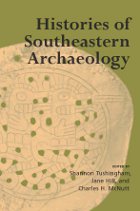
Histories of Southeastern Archaeology originated as a symposium at the 1999 Southeastern Archaeological Conference (SEAC) organized in honor of the retirement of Charles H. McNutt following 30 years of teaching anthropology. Written for the most part by members of the first post-depression generation of southeastern archaeologists, this volume offers a window not only into the archaeological past of the United States but also into the hopes and despairs of archaeologists who worked to write that unrecorded history or to test scientific theories concerning culture.
The contributors take different approaches, each guided by experience, personality, and location, as well as by the legislation that shaped the practical conduct of archaeology in their area. Despite the state-by-state approach, there are certain common themes, such as the effect (or lack thereof) of changing theory in Americanist archaeology, the explosion of contract archaeology and its relationship to academic archaeology, goals achieved or not achieved, and the common ground of SEAC.
This book tells us how we learned what we now know about the Southeast's unwritten past. Of obvious interest to professionals and students of the field, this volume will also be sought after by historians, political scientists, amateurs, and anyone interested in the South.
Additional reviews:
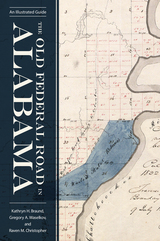
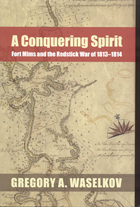
Forged through the territory of the Creek Nation by the United States federal government, the Federal Road was developed as a communication artery linking the east coast of the United States with Louisiana. Its creation amplified already tense relationships between the government, settlers, and the Creek Nation, culminating in the devastating Creek War of 1813–1814, and thereafter it became the primary avenue of immigration for thousands of Alabama settlers.
Central to understanding Alabama’s territorial and early statehood years, the Federal Road was both a physical and symbolic thoroughfare that cut a swath of shattering change through the land and cultures it traversed. The road revolutionized Alabama’s expansion, altering the course of its development by playing a significant role in sparking a cataclysmic war, facilitating unprecedented American immigration, and enabling an associated radical transformation of the land itself.
The first half of The Old Federal Road in Alabama: An Illustrated Guide offers a narrative history that includes brief accounts of the construction of the road, the experiences of historic travelers, and descriptions of major changes to the road over time. The authors vividly reconstruct the course of the road in detail and make use of a wealth of well-chosen illustrations. Along the way they give attention to the very terrain it traversed, bringing to life what traveling the road must have been like and illuminating its story in a way few others have ever attempted.
The second half of the volume is divided into three parts—Eastern, Central, and Southern—and serves as a modern traveler’s guide to the Federal Road. This section includes driving tours and maps, highlighting historical sites and surviving portions of the old road and how to visit them.
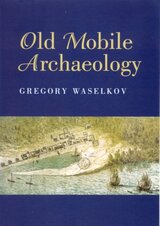
An archaeological guide to the earliest French settlement on the northern Gulf Coast. Archaeological excavations since 1989 have uncovered exciting evidence of the original townsite of Mobile, first capital of the Louisiana colony, and remnants of the colony's port on Dauphin Island.
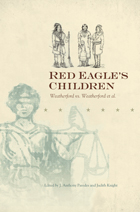
Red Eagle’s Children presents the legal proceedings in an inheritance dispute that serves as an unexpected window on the intersection of two cultural and legal systems: Creek Indian and Euro-American.
events that complement the narratives of professional historians.
David I. Durham / Robbie Ethridge / Judith
Knight / J. Anthony Paredes / Paul M. Pruitt
Jr. / Nina Gail Thrower / Robert Thrower /
Gregory A. Waselkov
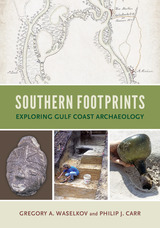
Unearthing the Gulf Coast’s past—one footprint at a time.
Southern Footprints celebrates more than fifty years of archaeological research along the Gulf Coast by the University of South Alabama and the Center for Archaeological Studies. Archaeologists Gregory A. Waselkov and Philip J. Carr, the former and current directors of the center, present the “greatest hits” that have transformed knowledge of human history on the Alabama and Mississippi Gulf Coast from the Ice Age until recently. Each archaeological site, from surface collections to premiere archaeological preserves, such as Old Mobile and Holy Ground, offers clues to the past.
The chapters in this collection are arranged chronologically and survey the history and archaeology of a wide range of significant sites, including the Gulf Shores canoe canal, Bottle Creek Mounds, Old Mobile, Fort Mims, Spanish Fort, Spring Hill College, and Mobile River Bridge.
Waselkov and Carr take care to acknowledge in these stories populations who have been historically underdocumented, now recognizing the contributions of Native Americans and African Americans that have been uncovered through archaeology. The authors reveal the dire impacts of climate change, environmental disasters, development, and neglect—and convey their urgency to protect these areas of shared history—as a result of the meticulous excavation, analysis, and preservation of artifacts from these sites. Color photographs showcase the archaeology as it unfolds, often with the help of dedicated volunteers. Southern Footprints will serve as an indispensable reference on the rich Gulf Coast heritage for all to appreciate.
New attention to material culture and documentary and archaeological records fills in details, adds new information, and helps disabuse the reader of outdated interpretations.
Susan M. Abram / Kathryn E. Holland Braund/Robert P. Collins / Gregory Evans Dowd /
READERS
Browse our collection.
PUBLISHERS
See BiblioVault's publisher services.
STUDENT SERVICES
Files for college accessibility offices.
RECENTLY PUBLISHED


UChicago Accessibility Resources
home | accessibility | search | about | contact us
BiblioVault ® 2001 - 2025
The University of Chicago Press