
 A SCHOLARLY BOOK REPOSITORY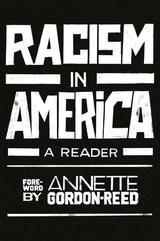
Racism in America has been the subject of serious scholarship for decades. At Harvard University Press, we’ve had the honor of publishing some of the most influential books on the subject. The excerpts in this volume—culled from works of history, law, sociology, medicine, economics, critical theory, philosophy, art, and literature—are an invitation to understand anti-Black racism through the eyes of our most incisive commentators.
Readers will find such classic selections as Toni Morrison’s description of the Africanist presence in the White American literary imagination, Walter Johnson’s depiction of the nation’s largest slave market, and Stuart Hall’s theorization of the relationship between race and nationhood. More recent voices include Khalil Gibran Muhammad on the pernicious myth of Black criminality, Elizabeth Hinton on the link between mass incarceration and 1960s social welfare programs, Anthony Abraham Jack on how elite institutions continue to fail first-generation college students, Mehrsa Baradaran on the racial wealth gap, Nicole Fleetwood on carceral art, and Joshua Bennett on the anti-Black bias implicit in how we talk about animals and the environment.
Because the experiences of non-White people are integral to the history of racism and often bound up in the story of Black Americans, we have included writers who focus on the struggles of Native Americans, Latinos, and Asians as well. Racism in America is for all curious readers, teachers, and students who wish to discover for themselves the complex and rewarding intellectual work that has sustained our national conversation on race and will continue to guide us in future years.

“A powerful and extraordinarily important book.”
—James P. Comer, MD
“A marvelous personal journey that illuminates what it means to care for people of all races, religions, and cultures. The story of this man becomes the aspiration of all those who seek to minister not only to the body but also to the soul.”
—Jerome Groopman, MD, author of How Doctors Think
Growing up in Jim Crow–era Tennessee and training and teaching in overwhelmingly white medical institutions, Gus White witnessed firsthand how prejudice works in the world of medicine. While race relations have changed dramatically since then, old ways of thinking die hard. In this blend of memoir and manifesto, Dr. White draws on his experience as a resident at Stanford Medical School, a combat surgeon in Vietnam, and head orthopedic surgeon at one of Harvard’s top teaching hospitals to make sense of the unconscious bias that riddles medical care, and to explore how we can do better in a diverse twenty-first-century America.
“Gus White is many things—trailblazing physician, gifted surgeon, and freedom fighter. Seeing Patients demonstrates to the world what many of us already knew—that he is also a compelling storyteller. This powerful memoir weaves personal experience and scientific research to reveal how the enduring legacy of social inequality shapes America’s medical field. For medical practitioners and patients alike, Dr. White offers both diagnosis and prescription.”
—Jonathan L. Walton, Plummer Professor of Christian Morals, Harvard University
“A tour de force—a compelling story about race, health, and conquering inequality in medical care…Dr. White has a uniquely perceptive lens with which to see and understand unconscious bias in health care…His journey is so absorbing that you will not be able to put this book down.”
—Charles J. Ogletree, Jr., author of All Deliberate Speed

If you’re going to have a heart attack, an organ transplant, or a joint replacement, here’s the key to getting the very best medical care: be a white, straight, middle-class male. This book by a pioneering black surgeon takes on one of the few critically important topics that haven’t figured in the heated debate over health care reform—the largely hidden yet massive injustice of bias in medical treatment.
Growing up in Jim Crow–era Tennessee and training and teaching in overwhelmingly white medical institutions, Gus White witnessed firsthand how prejudice works in the world of medicine. And while race relations have changed dramatically, old ways of thinking die hard. In Seeing Patients White draws upon his experience in startlingly different worlds to make sense of the unconscious bias that riddles medical treatment, and to explore what it means for health care in a diverse twenty-first-century America.
White and coauthor David Chanoff use extensive research and interviews with leading physicians to show how subconscious stereotyping influences doctor–patient interactions, diagnosis, and treatment. Their book brings together insights from the worlds of social psychology, neuroscience, and clinical practice to define the issues clearly and, most importantly, to outline a concrete approach to fixing this fundamental inequity in the delivery of health care.
READERS
Browse our collection.
PUBLISHERS
See BiblioVault's publisher services.
STUDENT SERVICES
Files for college accessibility offices.
RECENTLY PUBLISHED






UChicago Accessibility Resources
home | accessibility | search | about | contact us
BiblioVault ® 2001 - 2025
The University of Chicago Press