
 A SCHOLARLY BOOK REPOSITORY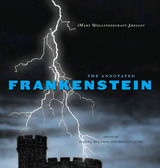
An annotated and illustrated edition of Mary Shelley's classic work, celebrating its 200th anniversary in 2018.
First published in 1818, Frankenstein has spellbound, disturbed, and fascinated readers for generations. One of the most haunting and enduring works ever written in English, it has inspired numerous retellings and sequels in virtually every medium, making the Frankenstein myth familiar even to those who have never read a word of Mary Shelley’s remarkable novel. Now, this freshly annotated, illustrated edition illuminates the novel and its electrifying afterlife with unmatched detail and vitality.
From the first decade after publication, “Frankenstein” became a byword for any new, disturbing developments in science, technology, and human imagination. The editors’ Introduction explores the fable’s continuing presence in popular culture and intellectual life as well as the novel’s genesis and composition. Mary Shelley’s awareness of European politics and history, her interest in the poets and philosophical debates of the day, and especially her genius in distilling her personal traumas come alive in this engaging essay.
The editors’ commentary, placed conveniently alongside the text, provides stimulating company. Their often surprising observations are drawn from a lifetime of reading and teaching the novel. A wealth of illustrations, many in color, immerses the reader in Shelley’s literary and social world, in the range of artwork inspired by her novel, as well as in Frankenstein’s provocative cinematic career. The fresh light that The Annotated Frankenstein casts on a story everyone thinks is familiar will delight readers while deepening their understanding of Mary Shelley’s novel and the Romantic era in which it was created.
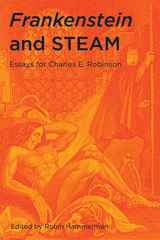
Charles E. Robinson, Professor Emeritus of English at The University of Delaware, definitively transformed study of the novel Frankenstein with his foundational volume The Frankenstein Notebooks and, in nineteenth century studies more broadly, brought heightened attention to the nuances of writing and editing. Frankenstein and STEAM consolidates the generative legacy of his later work on the novel's broad relation to topics in science, technology, engineering, arts, and mathematics (STEAM). Seven chapters written by leading and emerging scholars pay homage to Robinson's later perspectives of the novel and a concluding postscript contains remembrances by his colleagues and students. This volume not only makes explicit the question of what it means to be human, a question Robinson invited students and colleagues to examine throughout his career, but it also illustrates the depth of the field and diversity of those who have been inspired by Robinson's work. Frankenstein and STEAM offers direction for continuing scholarship on the intersections of literature, science, and technology.
Published by the University of Delaware Press. Distributed worldwide by Rutgers University Press.
“Jane Austen lovers worldwide will cherish these books...Prepare yourself for a major treat.”
—Christian Science Monitor
If adventures will not befall a young lady in her own village, she must seek them abroad (or in a good book).
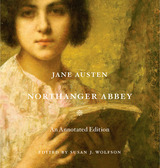
Despite being the first novel she completed in full, Jane Austen’s Northanger Abbey was published posthumously in 1817—a fitting fate for a story about late discoveries. Catherine Morland is Austen’s youngest, most impressionable heroine, a connoisseur of Gothic novels with a tendency to confuse fact with fiction. This extraordinary, annotated edition will appeal to casual readers, “Friends of Jane,” and everyone eager to fall under a great book’s spell.
For beginners and experts alike—immerse yourself in Jane Austen’s world: For the modern reader, our annotations provide clear explanations and illuminating context for period language and references. For the enthusiast, they offer fresh, exciting analysis—a passionate friend in the margins.
A work of art—the ideal gift: Perfect for gifting, collecting, and cherishing, this grand hardcover (9” x 9.5”) brims with hundreds of full-color illustrations that vividly recreate Austen’s Bath—its fashions, carriages, libraries, and estates.
The story: Seventeen-year-old Catherine Morland is dreamy, naïve, and fond of Gothic novels. Though a tomboy in her youth, she is “in training for a heroine” when we meet her. When she’s invited to stay with the wealthy Allen family in Bath, her overactive imagination leads her to badly misinterpret events and places. As she learns to live outside the pages of her favorite books, Catherine matures and realizes her place in the world—finding true love in the process.
READERS
Browse our collection.
PUBLISHERS
See BiblioVault's publisher services.
STUDENT SERVICES
Files for college accessibility offices.
RECENTLY PUBLISHED


UChicago Accessibility Resources
home | accessibility | search | about | contact us
BiblioVault ® 2001 - 2025
The University of Chicago Press