
 A SCHOLARLY BOOK REPOSITORY
533 start with A start with A
Analyzes the myth of the artist in western culture.
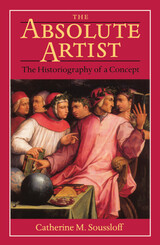
The myth of the artist-genius has long had a unique hold on the imagination of Western culture. Iconoclastic, temperamental, and free from the constraints of society, these towering figures have been treated as fixed icons regardless of historical context or individual situation. In The Absolute Artist, Catherine M. Soussloff challenges this view in an engaging consideration of the social construction of the artist from the fifteenth century to the present.
Traditional art history has held that the concept of the artist-genius arose in the Enlightenment. Soussloff disputes this, arguing that earlier writings—artists’ biographies written as long ago as the early fifteenth century-determined and continue to determine our understanding of the myth of the artist. Moving chronologically, Soussloff shifts from fifteenth-century Florence to nineteenth-century Germany, the birthplace of the discipline of art history in its academic form, and considers the cultural historiography of Aby Warburg and Jacob Burckhardt. She discusses intellectual life in early-twentieth-century Vienna, demonstrating the rich cross-fertilization that occurred between art history and psychoanalysis, and scrutinizes the historical situation of Jewish art historians and psychoanalysts in Vienna in the 1930s, considering the impact of exile and an assimilationist ethic on the discourse of art history. Soussloff concludes with a groundbreaking analysis of one of the earliest and most persistent elements of biography, the “artist anecdote,” demonstrating that it is essential in the construction of the figure of the artist. Singular in its breadth and ambition, The Absolute Artist is the first book to analyze the artist’s biography as a rhetorical form and literary genre rather than as an unassailable source of fact and knowledge.
"A reinterpretation supported by immense learning and by a series of brilliantly perceptive readings of paintings and criticism alike. . . . An exhilarating book."—John Barrell, London Review of Books

Bringing together fifteen original and path-breaking essays by world-class authorities on Abstract Expressionism as well as by younger scholars, this anthology looks beyond the canonical painters to explore the broader connections among abstract artists of the post–World War II era. Moving from the margins to the center, the essays recognize the contributions of artists working far beyond New York City. Topics include Jackson Pollock’s contact with Mexican muralists and the legacy of Abstract Expressionism for leftist artists in Latin America, the relevance of Jean-Paul Sartre and Samuel Beckett as sources of philosophical thought, the significance of northern European CoBrA painters such as Asger Jorn, the impact of Japanese Gutai artists, and connections with the revolutionary art of Italy, Belgium, and France. Abstract Expressionism is also described as a model for contemporaneous developments in the former Soviet Union.
As the first book to consider the movement in relation to post–World War II abstraction on four continents, this book brings a fresh perspective to this widely studied school of painting. Scholars and students alike will find this anthology essential reading in creating a more complete and nuanced understanding of Abstract Expressionism.
Alexander Alberro demonstrates that artists such as Tomás Maldonado, Jesús Soto, Julio Le Parc, and Lygia Clark, in breaking with the core tenets of the form of abstract art known as Concrete art, redefined the role of both the artist and the spectator. Instead of manufacturing autonomous art, these artists produced artworks that required the presence of the spectator to be complete. Alberro also shows the various ways these artists strategically demoted regionalism in favor of a new modernist voice that transcended the traditions of the nation-state and contributed to a nascent globalization of the art world.

How do you write a history of a group that has been written out of history? In The Accidental Archives of the Royal Chicano Air Force, world-famous archaeologist La Stef and the clandestine Con Sapos Archaeological Collective track down the “facts” about the elusive RCAF, the Rebel Chicano Art Front that, through an understandable mix-up with the Royal Canadian Air Force, became the Royal Chicano Air Force.
La Stef and her fellow archaeologists document the plight and locura que cura of the RCAF, a group renowned for its fleet of adobe airplanes, ongoing subversive performance stance, and key role as poster makers for the United Farm Workers Union during the height of the Chicano civil rights movement. As the Con Sapos team uncovers tensions between fact and fiction in historical consciousness and public memory, they abandon didactic instruction and strive instead to offer a historiography in which various cultural paradigms already intersect seamlessly and on equal ground. That they often fail to navigate the blurred lines between “objective” Western archival sciences and Indigenous/Chicana/o cosmologies reflects the very human predicament of documenting the histories of complicated New Worlds everywhere. Uniquely blending art history, oral history, cultural studies, and anthropology, The Accidental Archives of the Royal Chicano Air Force suspends historical realities and leaps through epochs and between conversations with various historical figures, both dead and alive, to offer readers an intimate experience of RCAF history.
Examines how images of accumulation help open up the climate to political mobilization
The current epoch is one of accumulation: not only of capital but also of raw, often unruly material, from plastic in the ocean and carbon in the atmosphere to people, buildings, and cities. Alongside this material growth, image-making practices embedded within the fields of art and architecture have proven to be fertile, mobile, and capacious. Images of accumulation help open up the climate to cultural inquiry and political mobilization and have formed a cultural infrastructure focused on the relationships between humans, other species, and their environments.
The essays in Accumulation address this cultural infrastructure and the methodological challenges of its analysis. They offer a response to the relative invisibility of the climate now seen as material manifestations of social behavior. Contributors outline opportunities and ambitions of visual scholarship as a means to encounter the challenges emergent in the current moment: how can climate become visible, culturally and politically? Knowledge of climatic instability can change collective behavior and offer other trajectories, counteraccumulations that draw the present into a different, more livable, future.
Contributors: Emily Apter, New York U; Hans Baumann; Amanda Boeztkes, U of Guelph; Dominic Boyer, Rice U; Lindsay Bremner, U of Westminster; Nerea Calvillo, U of Warwick; Beth Cullen, U of Westminster; T. J. Demos, U of California, Santa Cruz; Jeff Diamanti, U of Amsterdam; Jennifer Ferng, U of Sydney; Jennifer Gabrys, U of Cambridge; Ian Gray, U of California, Los Angeles; Gökçe Günel, Rice U; Orit Halpern, Concordia U; Gabrielle Hecht, Stanford U; Cymene Howe, Rice U; Wendy Hui Kyong Chun, Simon Fraser U; Robin Kelsey, Harvard U; Bruno Latour, Sciences Po, Paris; Hannah le Roux, U of the Witwatersrand, Johannesburg; Stephanie LeMenager, U of Oregon; Nashin Mahtani; Kiel Moe, McGill U; Karen Pinkus, Cornell U; Stephanie Wakefield, Life U; McKenzie Wark, The New School; Kathryn Yusoff, Queen Mary U of London.

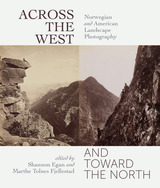
In this edited volume, Norwegian and American scholars offer the first study of the striking parallels in the production, distribution, and reception of these modern expressions of landscape and nationhood. In recognizing how landscape photographs were made meaningful to international audiences—such as tourists, visitors to world’s fairs, scientists, politicians, and immigrants—the authors challenge notions of American exceptionalism and singularly nationalistic histories.
The book includes stunning photographs of mountainous landscapes, glaciers, and forests, punctuated by signs of human development and engineering, with more than one hundred rarely seen plates by photographers Knud Knudsen, Anders Beer Wilse, Timothy O’Sullivan, Charles R. Savage, and others.
In Acting and its Refusal in Theatre and Film, Marian McCurdy considers the ethical desire of refusing to act—which results from blurred boundaries of acting and living—and examines how real life and performance are intertwined. Offering a number of in-depth case studies, the book contextualizes refusals of acting on stage and screen and engages in an analysis of fascist theatricality, sexual theatricality, and the refusal of theatricality altogether.

Published by the Newark Museum. Distributed worldwide by Rutgers University Press.
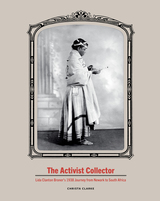
“After twenty-eight years of desire and determination, I have visited Africa, the land of my forefathers.” So wrote Lida Clanton Broner (1895–1982), an African American housekeeper and hairstylist from Newark, New Jersey, upon her return from an extraordinary nine-month journey to South Africa in 1938. This epic trip was motivated not only by Broner’s sense of ancestral heritage, but also a grassroots resolve to connect the socio-political concerns of African Americans with those of black South Africans under the segregationist policies of the time. During her travels, this woman of modest means circulated among South Africa’s Black intellectual elite, including many leaders of South Africa’s freedom struggle. Her lectures at Black schools on “race consciousness and race pride” had a decidedly political bent, even as she was presented as an “American beauty specialist.”
How did Broner—a working class mother—come to be a globally connected activist? What were her experiences as an African American woman in segregated South Africa and how did she further her work after her return? Broner’s remarkable story is the subject of this book, which draws upon a deep visual and documentary record now held in the collection of the Newark Museum of Art. This extraordinary archive includes more than one hundred and fifty objects, ranging from beadwork and pottery to mission school crafts, acquired by Broner in South Africa, along with her diary, correspondence, scrapbooks, and hundreds of photographs with handwritten notations.
This book breaks new ground by bringing scholars from a range of disciplines together with industry professionals to explore the concept of festivals as spaces through an activist lens, as spaces where the sociopolitical identities of communities and individuals are confronted and shaped. Tracing the growth of activist and human rights-focused films from the 1970s to the present, and using case studies from San Francisco, Brazil, Bristol, and elsewhere, the book addresses such contentious topics as whether activist films can achieve humanitarian aims or simply offer “cinema of suffering.” Ultimately, the contributors attack the question of just how effective festivals are at producing politically engaged spectators?
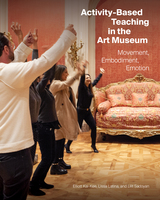
An essential resource for museum professionals, teachers, and students, the award winning Teaching in the Art Museum (Getty Publications, 2011) set a new standard in the field of gallery education. This follow-up book blends theory and practice to help educators—from teachers and docents to curators and parents—create meaningful interpretive activities for children and adults.
Written by a team of veteran museum educators, Activity-Based Teaching in the Art Museum offers diverse perspectives on embodiment, emotions, empathy, and mindfulness to inspire imaginative, spontaneous interactions that are firmly grounded in history and theory. The authors begin by surveying the emergence of activity-based teaching in the 1960s and 1970s and move on to articulate a theory of play as the cornerstone of their innovative methodology. The volume is replete with sidebars describing activities facilitated with museum visitors of all ages.
Table of Contents
Introduction
Part I History
1 The Modern History of Presence and Meaning
A philosophical shift from a language-based understanding of the world to direct, physical interaction with it.
2 A New Age in Museum Education: The 1960s and 1970s
A brief history of some of the innovative museum education programs developed in the United States in the late 1960s and 1970s. The sudden and widespread adoption of nondiscursive gallery activities during this period, especially but not exclusively in programs designed for younger students and school groups, expressed the spirit of the times.
Part II Theory
3 Starts and Stops
Two attempts by American museum educators to articulate a theory for their new, nondiscursive programs: the first deriving from the early work of Project Zero, the Harvard Graduate School of Education program founded by the philosopher Nelson Goodman to study arts learning as a cognitive activity; the second stemming from the work of Viola Spolin, the acclaimed theater educator and coach whose teaching methods, embodied in a series of “theater games,” were detailed in her well-known book Improvisation for the Theater (1963).
4 A Theory of Play in the Museum
A theory of play that posits activities in the museum as forms of play that take place in spaces (or “playgrounds”) temporarily designated as such by educators and their adult visitors or students. Play is defined essentially as movement—both physical and imaginary (metaphorical)—toward and away from, around, and inside and outside the works of art that are foregrounded within those spaces. Gallery activities conceived in this way respond to the possibilities that the objects themselves offer for the visitor to explore and engage with them. The particular movements characterizing an activity are crucially conditioned by the object in question; they constitute a process of discovery and learning conceptually distinct from, but supportive of, traditional dialogue-based modes of museum education, which they supplement rather than supplant.
Part III Aspects of Play
5 Embodiment, Affordances
The idea of embodiment adopted here recognizes that both mind and body are joined in their interactions with things. Investigating works of art thus involves apprehending them physically as well as intellectually—in the sense of responding to the ways in which a particular work allows and even solicits the viewer’s physical grasp of it.
6 Skills
Ways in which objects present themselves to us, as viewers, and what we might do in response as they fit with the bodily skills we have developed over the course of our lives. Such skills might be as simple as getting dressed, washing, or eating; or as specialized as doing one’s hair, dancing, playing an instrument, or acting—all of which may allow us to “grasp” and even feel that we inhabit particular works of art.
7 Movement
Embodied looking is always looking from somewhere. We apprehend objects as we physically move around and in front of them; they reveal themselves differently as we approach them from different viewpoints. Viewers orient themselves spatially to both the surfaces of objects and to the things and spaces depicte4d in or suggested by representational works of art. Activity-based teaching gets visitors and students to move among the objects—away from them, close to them, and even into them.
8 The Senses
Both adult visitors and younger students come to the museum expecting to use their eyes, yet “visual” art appeals to several of the senses at once, though rarely to the same degree. Sculpture, for example, almost always appeals to touch (whether or not that is actually possible or allowed) as well as sight. A painting depicting a scene in which people appear to be talking may induce viewers to not only look but also “listen” to what the figures might be saying.
9 Drawing in the Museum
Looking at art with a pencil in hand amplifies viewers’ ability to imaginatively touch and feel their way across and around an artwork. Contour drawing by its nature requires participants to imagine that they are touching the contours of an object beneath the tips of their pencils. Other types of drawing allow viewers to feel their way around objects through observation and movement.
10 Emotion
Visitors’ emotional responses to art represent a complex process with many components, from physiological to cognitive, and a particular work of art may elicit a wide range of emotional reactions. This chapter describes specific ways in which museum educators can go well beyond merely asking visitors how a work of art makes them feel.
11 Empathy and Intersubjectivity
One aspect of viewers’ emotional responses to art that is often taken for granted, if not neglected altogether: the empathetic connections that human beings make to images of other people. This chapter advocates an approach that prompts viewers to physically engage with the representations of people they see.
12 Mindful Looking
Mindfulness involves awareness and attention, both as a conscious practice and as an attitude that gallery teachers can encourage in museum visitors. This is not solely a matter of cultivating the mind, however; it is also a matter of cultivating the body, since mindfulness is only possible when mind and body are in a state of harmonious, relaxed attentiveness. Mindfulness practice in the art museum actively directs the viewer’s focus on the object itself and insists on returning to it over and over; yet it also balances activity with conscious stillness.
Afterword
Acknowledgments
Reclaims the lost history of one of the twentieth century’s most innovative theaters
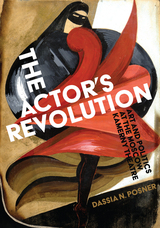
The Moscow Kamerny Theatre created stage worlds of movement, color, and light. Cofounded in 1914 by Alexander Tairov, a Jewish director from Ukraine, and Alisa Koonen, a Moscow-born actress from an immigrant family, the company celebrated the actor’s virtuosic inventiveness during an era when most theaters imitated daily life or prioritized the autocratic director’s vision. By the 1920s, it had become the most famous Soviet theater in the world, renowned for its actors’ acrobatic grace, its bold collaborations with avant-garde artists, and its revolutionary redefinition of what theater can be. But the accusations of Soviet disloyalty that were used to destroy the Kamerny during Stalin’s post–World War II antisemitic purge have rendered it little known outside Russia today and frequently misunderstood even there.
The Actor’s Revolution vividly reclaims this lost history by reconstructing the theater’s most illustrious premieres, analyzing them within the turbulent artistic and political context of the early Soviet era. Drawing on a decade of archival research, Dassia N. Posner restores Tairov’s legacy as one of history’s most significant directors and celebrates Koonen’s liberatory physical expressiveness as a vital alternative to Konstantin Stanislavsky’s better-known acting system. Drawing on rich archival sources, from unpublished memoirs to vibrant scenic and costume designs, this timely volume grapples with the entangled histories of art, politics, and erasure and celebrates the radical power of human creativity under—and in spite of—totalitarianism.
Acts of Dramaturgy is a critical frame for Michael Pinchbeck’s The Shakespeare Trilogy, a recent touring project comprising three performances—The Beginning, The Middle, and The End—that explored the role of the dramaturg. This book sets the playtexts in dialogue with reflexive essays and provocations on contemporary dramaturgy from a range of contributors.
Weaving together different modes of writing, the volume reflects on the politics of dramaturgy, authorship, adaptation, performance, and the use of Shakespeare as a stimulus for making contemporary theater. The resulting work is as much a reflection on the entanglements of processes, lineages, and relations that have shaped the work and its reception as it is an exploration of ways of reflecting and being with practice now. A valuable new contribution to the study of contemporary dramaturgy, the book will be of interest to makers and scholars of theater and performance and anyone interested in practice research and creative critical writing.

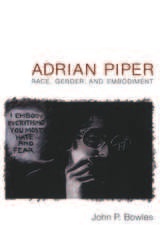
Over the course of a decade, John P. Bowles and Piper conversed about her art and its meaning, reception, and relation to her scholarship on Kant’s philosophy. Drawing on those conversations, Bowles locates Piper’s work at the nexus of Conceptual and feminist art of the late 1960s and 1970s. Piper was the only African American woman associated with the Conceptual artists of the 1960s and one of only a few African Americans to participate in exhibitions of the nascent feminist art movement in the early 1970s. Bowles contends that Piper’s work is ultimately about our responsibility for the world in which we live.
Addressing a growing area of focus in contemporary art, Aesthetic Journalism investigates why contemporary art exhibitions often consist of interviews, documentaries, and reportage. Art theorist and critic Alfredo Cramerotti traces the shift in the production of truth from the domain of the news media to that of art and aestheticism—a change that questions the very foundations of journalism and the nature of art. This volume challenges the way we understand art and journalism in contemporary culture and suggests future developments of this new relationship.

This study of modern Japan engages the fields of art history, literature, and cultural studies, seeking to understand how the “beautiful woman” (bijin) emerged as a symbol of Japanese culture during the Meiji period (1868–1912). With origins in the formative period of modern Japanese art and aesthetics, the figure of the bijin appeared across a broad range of visual and textual media: photographs, illustrations, prints, and literary works, as well as fictional, critical, and journalistic writing. It eventually constituted a genre of painting called bijinga (paintings of beauties).
Aesthetic Life examines the contributions of writers, artists, scholars, critics, journalists, and politicians to the discussion of the bijin and to the production of a national discourse on standards of Japanese beauty and art. As Japan worked to establish its place in the world, it actively presented itself as an artistic nation based on these ideals of feminine beauty. The book explores this exemplary figure for modern Japanese aesthetics and analyzes how the deceptively ordinary image of the beautiful Japanese woman—an iconic image that persists to this day—was cultivated as a “national treasure,” synonymous with Japanese culture.
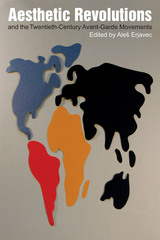
Contributors. John E. Bowlt, Sascha Bru, David Craven, Aleš Erjavec, Tyrus Miller, Raymond Spiteri, Miško Šuvakovic
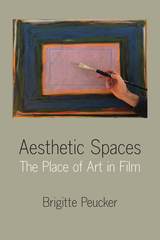
The films studied in these chapters include those by Abbas Kiarostami, Alfred Hitchcock, Michelangelo Antonioni, Jean-Luc Godard, Carl Th. Dreyer, Peter Greenaway, Rainer Werner Fassbinder, Ingmar Bergman, Jacques Rivette, Fritz Lang, F. W. Murnau, Lars von Trier, Spike Jonze, Éric Rohmer, Lech Majewski, and others. Where two media are in evidence in these films, there is usually a third, and often theater mediates between film and painting. Aesthetic Spaces interrogates issues of cinematic space and mise-en-scène from different but interconnected theoretical perspectives, organizing its chapters around some of the formal principles—space, spectator, frame, color and lighting, props, décor, and actor—that shape films.
Drawing on the older arts to renew cinema, the films examined deploy paintings as material: Poussin and Bruegel, Rembrandt, Hals and Klimt, and medieval illustrations and modernist abstractions are used to expand our notions of cinematic space. Peucker shows that when different media come together in film, they create effects of dissonance out of which new modes of looking may arise.
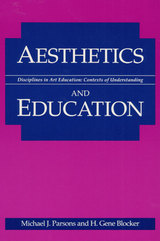
What is the appropriate content of aesthetics for students of art at different age levels? How can it best be taught? How should it be combined with studio work and other art disciplines?
Michael J. Parsons and H. gene Blocker answer these and other questions in a volume designed to help art educators, potential educators, and curriculum developers integrate aesthetics into the study of art in the school curriculum. The two introduce some of the philosophical problems and questions in art, encouraging teachers and others to form a personal outlook on these issues.
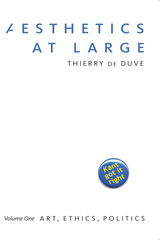
Central to de Duve’s re-reading of the Critique of Judgment is Kant’s idea of sensus communis, ultimately interpreted as the mere yet necessary idea that human beings are capable of living in peace with one another. De Duve pushes Kant’s skepticism to its limits by submitting the idea of sensus communis to various tests leading to questions such as: Do artists speak on behalf of all of us? Is art the transcendental ground of democracy? Or, Was Adorno right when he claimed that no poetry could be written after Auschwitz?
Loaded with de Duve’s trademark blend of wit and erudition and written without jargon, these essays radically renew current approaches to some of the most burning issues raised by modern and contemporary art. They are indispensable reading for anyone with a deep interest in art, art history, or philosophical aesthetics.
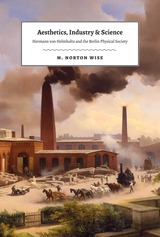
In Aesthetics, Industry, and Science M. Norton Wise answers these questions not simply from a technical perspective of theories and practices but with a broader cultural view of what was happening in Berlin at the time. He emphasizes in particular how rapid industrial development, military modernization, and the neoclassical aesthetics of contemporary art informed the ways in which these young men thought. Wise argues that aesthetic sensibility and material aspiration in this period were intimately linked, and he uses these two themes for a final reappraisal of Helmholtz’s early work. Anyone interested in modern German cultural history, or the history of nineteenth-century German science, will be drawn to this landmark book.
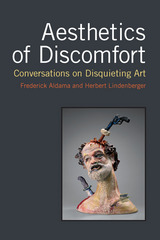
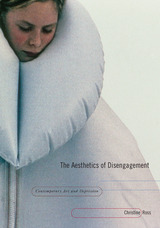
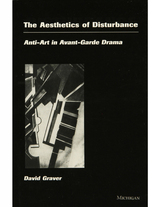
Violence in the modernist mode, an ostensible intrusion of raw bodily harm into the artwork, aspires to transcend its own textuality, and yet, as An Aesthetics of Injury establishes, the wound paradoxically remains the essence of inscription. Fleishman thus shows how the wound, once the modernist emblem par excellence of an immediate aesthetic experience, comes to be implicated in a postmodern understanding of reality reduced to ceaseless mediation. In so doing, he demonstrates how what we think of as the most real object, the human body, becomes indistinguishable from its “nonreal” function as text. At stake in this tautological textual model is the heritage of narrative thought: both the narratological workings of these texts (how they tell stories) and the underlying epistemology exposed (whether these narrativists still believe in narrative at all).
With fresh and revealing readings of canonical authors and filmmakers seldom treated alongside one another, An Aesthetics of Injury is important reading for scholars working on literary or cinematic modernism and the postmodern, philosophy, narratology, body culture studies, queer and gender studies, trauma studies, and cultural theory.

Contributors: Carrie Mae Weems, Carmen Gillespie, Rikki Byrd, Amber Lauren Johnson, Doria E. Charlson, Florencia V. Cornet, Daniel McNeil, Lucy Caplan, Genevieve Hyacinthe, Sammantha McCalla, Nettrice R. Gaskins, Abby Dobson, J. Michael Kinsey, Shondrika Moss-Bouldin, Julie B. Johnson, Sharrell D. Luckett, Jasmine Eileen Coles, Tawnya Pettiford-Wates, Rickerby Hinds.
Published by Bucknell University Press. Distributed worldwide by Rutgers University Press.

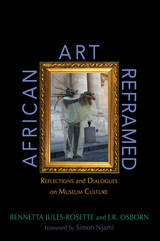
The authors take a three-pronged approach. Part One ranges from curiosity cabinets to virtual websites to offer a history of ethnographic and art museums and look at their organization and methods of reaching out to the public. In the second part, the authors examine museums as ecosystems and communities within communities, and they use semiotic methods to analyze images, signs, and symbols drawn from the experiences of curators and artists. The third part introduces innovative strategies for displaying, disseminating, and reclaiming African art. The authors also propose how to reinterpret the art inside and outside the museum and show ways of remixing the results.
Drawing on extensive conversations with curators, collectors, and artists, African Art Reframed is an essential guide to building new exchanges and connections in the dynamic worlds of African and global art.
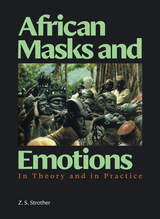
In this groundbreaking book, Z. S. Strother, inspired by dialogues with African masquerade patrons and performers, disputes assumptions that masks universally hide, reveal, or transform.
In Western European languages, the word mask exerts a powerful presence as a figure of speech. To masquerade is to pretend to be someone or something one is not. By extension, unmasking is a heroic metaphor for exposing a hidden truth. In this volume, art historian Z. S. Strother counters that narrative, using African case studies to offer an alternative vision of masquerading. She explores the aesthetic emotions aroused by masks, or more precisely, by “dances of masks”: joy, wonder, awe, fear, and the release of laughing out loud. She also investigates the uncanny—a sensation of “delicious shiveriness” triggered when familiar spaces and individuals become strange and changeable. Inspired by Strother’s studies in DR Congo, African Masks and Emotions takes a comparative perspective and moves emotion from the periphery to the center of analysis.
Reflecting Getty's commitment to open content, African Masks and Emotions is available as a free PDF download at: https://www.getty.edu/publications/virtuallibrary/9781606069936.html. This paperback edition is available for sale for readers who wish to have a bound reference copy.
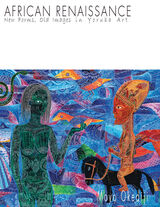
African Renaissance: New Forms, Old Images in Yoruba Art describes, analyzes, and interprets the historical and cultural contexts of an African art renaissance using the twentieth- and twenty-first-century transformation of ancient Yoruba artistic heritage. Juxtaposing ancient and contemporary Yoruba art, Moyo Okediji defines this art history through the lens of colonialism, an experience that served to both destroy ancient art traditions and revive Yoruba art in the twentieth century.
With vivid reproductions of paintings, prints, and drawings, Okediji describes how Yoruba art has replenished and redefined itself. Okediji groups the text into several broadly overlapping periods that intricately detail the journey of Yoruba art and artists: first through oppression by European colonialism, then the attainment of Nigeria’s independence and the new nation’s subsequent military coup, and ending with present-day native Yoruban artists fleeing their homeland.

More than ornamentation, royal objects embodied the strength and status of African rulers. The gold-plated stools of the Ashanti, the delicately carved ivory bracelets of the Edo-these objects were meant not simply to adorn but to affirm and enhance the power and prestige of the wearer. Unlike the abstract style frequently seen in African ritual art, realism became manifest in courtly arts. Realism directly linked the symbolic value of the object-a portrait or relief-with the physical person of the king. The contours of the monarch's face, his political and military exploits rendered on palace walls, became visual histories, the work of art in essence corroborating the ruler's sovereign might.
Richly illustrated and wonderfully detailed, Coquet's influential volume offers both a splendid visual presentation and an authoritative analysis of African royal arts.
"[This] beautiful and exciting book emphasizes the skillful court art of the Benin, Dahomey, and the Kongo. A very interesting and unusual approach to the art of the continent that has been too easily situated 'outside of history.'"—Le Figaro
In this first major study of its kind, Suzanne Preston Blier examines the artworks of the contemporary vodun cultures of southern Benin and Togo in West Africa as well as the related voudou traditions of Haiti, New Orleans, and historic Salem, Massachusetts. Blier employs a variety of theoretically sophisticated psychological, anthropological, and art historical approaches to explore the contrasts inherent in the vodun arts—commoners versus royalty, popular versus elite, "low" art versus "high." She examines the relation between art and the slave trade, the psychological dynamics of artistic expression, the significance of the body in sculptural expression, and indigenous perceptions of the psyche.
Throughout, Blier pushes African art history to a new height of cultural awareness that recognizes the complexity of traditional African societies as it acknowledges the role of social power in shaping aesthetics and meaning generally. This book will be of critical importance not only to those concerned with African, African American, and Caribbean art, but also to anthropologists, African diaspora scholars, students of comparative religion and comparative psychology, and anyone fascinated by the traditions of voudou and vodun.
"An extraordinary tour de force."—Choice
"Extraordinarily detailed....Blier's examination of the entire, often mysterious history of vodun is...in a word, definitive."—Booklist
"A serious study that concentrates on the hidden power of objects and the meaning behind that potency is long overdue. Welcome Susan Blier's African Vodun....Certainly a must for...those concerned with the psychology of art."—Janet L. Stanley, Art Documentation
"[Blier] is usually sensitive to the need to resist imposing Western artistic values and academic methodologies inappropriately upon such art. But she offers the reader a gift even more precious; she offers rare insights into how various art forms—sculpture and home architecture in particular—yield meanings for the African users of such art.—Norman Weinstein, Boston Book Review

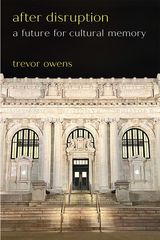
After Disruption posits that we are no longer planning for a digital future, but instead living in a digital present. In this context, Owens asks how we plan for and develop a more just, sustainable, and healthy future for cultural memory. The first half of the book draws on critical scholarship on the history of technology and business to document and expose the sources of tech startup ideologies and their pernicious results, revealing that we need powerful and compelling counter frameworks and values to replace these ideologies. The second half of the book makes the case for the centrality of maintenance, care, and repair as interrelated frameworks to build a better future in which libraries, archives, and museums can thrive as sites of belonging and connection through collections.
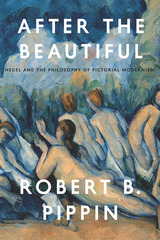
While Hegel could never engage modernist painting, he did have an understanding of modernity, and in it, art—he famously asserted—was “a thing of the past,” no longer an important vehicle of self-understanding and no longer an indispensable expression of human meaning. Pippin offers a sophisticated exploration of Hegel’s position and its implications. He also shows that had Hegel known how the social institutions of his day would ultimately fail to achieve his own version of genuine equality, a mutuality of recognition, he would have had to explore a different, new role for art in modernity. After laying this groundwork, Pippin goes on to illuminate the dimensions of Hegel’s aesthetic approach in the path-breaking works of Manet, the “grandfather of modernism,” drawing on art historians T. J. Clark and Michael Fried to do so. He concludes with a look at Cézanne, the “father of modernism,” this time as his works illuminate the relationship between Hegel and the philosopher who would challenge Hegel’s account of both modernity and art—Martin Heidegger.
Elegantly inter-weaving philosophy and art history, After the Beautiful is a stunning reassessment of the modernist project. It gets at the core of the significance of modernism itself and what it means in general for art to have a history. Ultimately, it is a testament, via Hegel, to the distinctive philosophical achievements of modernist art in the unsettled, tumultuous era we have inherited.
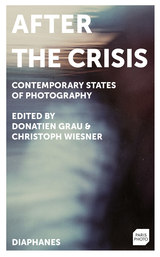
Musicologist Georgia J. Cowart explores how Antoine Watteau’s late paintings reimagine the symbolic order of absolutism in the wake of Louis XIV’s death.
Antoine Watteau has long been known for the theatricality of his paintings, but what that theatricality signifies has remained elusive. In After the King, Georgia Cowart contends that this mode of painting takes shape in response to the spectacle of Louis XIV’s absolutism, which the painter’s late works transform into a new aesthetic language.
The king’s death marked a turning point in Watteau’s art. In the six years that followed, his paintings turned more decisively toward the musical stage. Evoking theatrical plots, frontispieces, and costume types, they conjured a world in which the legacy of absolutist culture lingered as stylized memory—its rituals, emblems, and pleasures recast through theatrical illusion and ironic distance.
Rather than treating Watteau as a painter of nostalgic reverie or Rococo charm, Cowart situates his art within the immersive performance culture of Versailles and the vibrant Parisian stage, at a time when the opéra-ballet, popular opera, and the commedia dell’arte were charting new theatrical landscapes. Drawing on art history, musicology, theater studies, and Pierre Nora’s theory of lieux de mémoire, she proposes a new framework that understands Watteau’s paintings as acts of theatrical memory and cultural recomposition.
Elegantly written and conceptually ambitious, After the King reveals how Watteau recoded the symbols of monarchy to stage a post-absolutist cultural imagination shaped by irony, sensuality, and poetic transformation.
Victorian Aestheticism has often been traded as a frivolous elevation of art above the concerns of political and social life. This book reinterprets Aestheticism as a significant exploration of what it might mean to produce works of art in the modern world. The chapters address not only "art for art's sake" but also linkages with the realms of science and morality. A major concern is the relationship between art and sexuality, from the experiments of the Rossetti circle in the 1860s to the male nude in late-Victorian sculpture. Both homosexual and heterosexual eroticism emerge as key issues in the artistic debates of the late-Victorian period.
As a complement to the existing literature on Pre-Raphaelitism, this collection is essential reading for all students of nineteenth-century art, literature, and culture.
Contributors are: Caroline Arscott, Robyn Asleson, Colin Cruise, Whitney Davis, Kate Flint, Alastair Grieve, Michael Hatt, Anne Koval, Alison Smith, and Robin Spencer
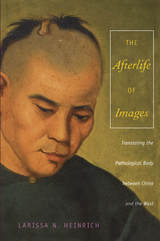
Combining literary studies, the history of science, and visual culture studies, Heinrich analyzes the rhetoric and iconography through which medical missionaries transmitted to the West an image of China as “sick” or “diseased.” He also examines the absorption of that image back into China through missionary activity, through the earliest translations of Western medical texts into Chinese, and even through the literature of Chinese nationalism. Heinrich argues that over time “scientific” Western representations of the Chinese body and culture accumulated a host of secondary meanings, taking on an afterlife with lasting consequences for conceptions of Chinese identity in China and beyond its borders.
Reconsiders exceptionalism between aesthetics and politics
Here, Arne De Boever proposes the notion of aesthetic exceptionalism to describe the widespread belief that art and artists are exceptional. Against Aesthetic Exceptionalism challenges that belief by focusing on the sovereign artist as genius, as well as the original artwork as the foundation of the art market. Engaging with sculpture, conceptual artwork, and painting by emerging and established artists, De Boever proposes a worldly, democratic notion of unexceptional art as an antidote to the problems of aesthetic exceptionalism.
Forerunners: Ideas First
Short books of thought-in-process scholarship, where intense analysis, questioning, and speculation take the lead
In this timely and incisive work, Nicols Fox examines contemporary resistance to technology and places it in a surprising historical context. She brilliantly illuminates the rich but oftentimes unrecognized literary and philosophical tradition that has existed for nearly two centuries, since the first Luddites—the ""machine breaking"" followers of the mythical Ned Ludd—lifted their sledgehammers in protest against the Industrial Revolution. Tracing that current of thought through some of the great minds of the 19th and 20th centuries—William Blake, Mary Shelley, Charles Dickens, John Ruskin, William Morris, Henry David Thoreau, Ralph Waldo Emerson, Robert Graves, Aldo Leopold, Rachel Carson, and many others—Fox demonstrates that modern protests against consumptive lifestyles and misgivings about the relentless march of mechanization are part of a fascinating hidden history. She shows as well that the Luddite tradition can yield important insights into how we might reshape both technology and modern life so that human, community, and environmental values take precedence over the demands of the machine.
In Against the Machine, Nicols Fox writes with compelling immediacy—bringing a new dimension and depth to the debate over what technology means, both now and for our future.
"If Age of the Cathedrals has a fault, it is that Professor Duby knows too much, has too many new ideas and takes such a delight in setting them out. . . insights whiz to and fro like meteorites."—John Russell, New York Times Book Review

Showcasing artwork by contemporary disabled artists Corban Walker, Christine Sun Kim, and Carmen Papalia, among others, The Agency of Access inscribes contemporary disability art in the broad canon of contemporary art, where the artistic past is regarded differently.
Cachia is an outspoken advocate for artists living with sensory disabilities. She understands disabled artists’ experiences in both the world and the gallery. The artists she has curated make bold, astonishing, and compelling statements about interdependency, care, and the ways in which our environment affects disabled, ill, and immunocompromised bodies.

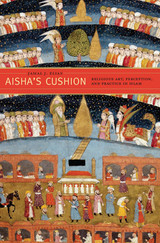
Media coverage of the Danish cartoon crisis and the destruction of the Buddhas of Bamiyan left Westerners with a strong impression that Islam does not countenance depiction of religious imagery. Jamal J. Elias corrects this view by revealing the complexity of Islamic attitudes toward representational religious art. Aisha’s Cushion emphasizes Islam’s perceptual and intellectual modes and in so doing offers the reader both insight into Islamic visual culture and a unique way of seeing the world.
Aisha’s Cushion evaluates the controversies surrounding blasphemy and iconoclasm by exploring Islamic societies at the time of Muhammad and the birth of Islam; during early contact between Arab Muslims and Byzantine Christians; in medieval Anatolia and India; and in modern times. Elias’s inquiry then goes further, to situate Islamic religious art in a global context. His comparisons with Christian, Jewish, Buddhist, and Hindu attitudes toward religious art show them to be as contradictory as those of Islam. Contemporary theories about art’s place in society inform Elias’s investigation of how religious objects have been understood across time and in different cultures.
Elias contends that Islamic perspectives on representation and perception should be sought not only in theological writings or aesthetic treatises but in a range of Islamic works in areas as diverse as optics, alchemy, dreaming, calligraphy, literature, vehicle and home decoration, and Sufi metaphysics. Unearthing shades of meaning in Islamic thought throughout history, Elias offers fresh insight into the relations among religion, art, and perception across a broad range of cultures.
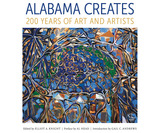
Alabama artists have been an integral part of the story of the state, reflecting a wide-ranging and multihued sense of place through images of the land and its people. Quilts, pottery, visionary paintings, sculpture, photography, folk art, and abstract art have all contributed to diverse visions of Alabama’s culture and environment. The works of art included in this volume have all emerged from a distinctive milieu that has nourished the creation of powerful visual expressions, statements that are both universal and indigenous.
Published to coincide with the state’s bicentennial, Alabama Creates: 200 Years of Art and Artists features ninety-four of Alabama’s most accomplished, noteworthy, and influential practitioners of the fine arts from 1819 to the present. The book highlights a broad spectrum of artists who worked in the state, from its early days to its current and contemporary scene, exhibiting the full scope and breadth of Alabama art.
This retrospective volume features biographical sketches and representative examples of each artist’s most masterful works. Alabamians like Gay Burke, William Christenberry, Roger Brown, Thornton Dial, Frank Fleming, the Gee’s Bend Quilters, Lonnie Holley, Dale Kennington, Charlie Lucas, Kerry James Marshall, David Parrish, and Bill Traylor are compared and considered with other nationally significant artists.
Alabama Creates is divided into four historical periods, each spanning roughly fifty years and introduced by editor Elliot A. Knight. Knight contextualizes each era with information about the development of Alabama art museums and institutions and the evolution of college and university art departments. The book also contains an overview of the state’s artistic heritage by Gail C. Andrews, director emerita of the Birmingham Museum of Art. Alabama Creates conveys in a sweeping and captivating way the depth of talent, the range of creativity, and the lasting contributions these artists have made to Alabama’s extraordinarily rich visual and artistic heritage.

For each major Alaska Eskimo group—Inupiaq, Yup’ik, Aleut, Alutiiq, St. Lawrence Islander—authors Oakes and Riewe discuss pattern, design, and techniques for skin preparation, construction, and decoration. They describe the reasons for design and decorative differences in boots used for ceremonies and dancing versus those for everyday wear and hunting, trapping, and fishing.
Developed with Eskimo seamstresses from each Alaskan region, this full-color volume features photographs from museum collections in the United States and Russia. Detailed drawings of patterns, construction techniques, and decorative details illustrate the complexity of this ancient art and provide readers with guidance in identifying regional styles. A tribute to an exquisite art and the women who practice it, Alaska Eskimo Footwear brings the beauty of the North to life.
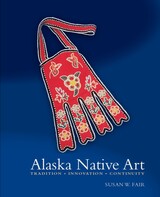
The rich artistic traditions of Alaska Natives are the subject of this landmark volume, which examines the work of the premier Alaska artists of the twentieth century. Ranging across the state from the islands of the Bering Sea to the interior forests, Alaska Native Art provides a living context for beadwork, ivory carving, basketry, and skin sewing. Examples of work from Tlingit, Aleutian Islanders, Pacific Eskimo, Athabaskan, Yupik, and Inupiaq artists make this volume the most comprehensive study of Alaskan art ever published.
Beautifully illustrated with full-color photographs of artists and their works, Alaska Native Art examines the concept of tradition in the modern world. Fair demonstrates that tradition is alive and well in Alaska through the words of Native artists and a multitude of examples, reproduced in color and accompanied by historic photographs.
Alaska Native Art is a volume to treasure, a tribute to the incredible vision of Alaska's artists and to the enduring traditions of all of Alaska's Native peoples.
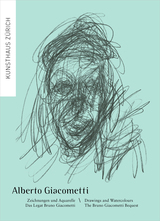
Comprising about one hundred of Giacometti’s works on paper, this well-guarded family treasure represents the artist’s entire life, from his youth in Stampa, Switzerland to his later years in Paris. This collection includes very early copies of works by old masters as well as studies of ancient Egyptian and Roman sculptures from the 1920s. It also shows how closely Giacometti looked at the art of Henri Matisse, Paul Cézanne, and Auguste Rodin, which then led to highly individual interpretations of their work. In addition, it contains important drawings of some of Giacometti’s relatives along with self-portraits, alpine landscapes from his native Val Bregaglia, and masterful figure studies from the 1950s and 60s.
Featuring 144 color images, this concise book features the first selection of these works the world has seen alongside an essay on their history and significance and an illustrated catalogue of the entire collection.
David Price is Associate Professor of History and of Church History, Southern Methodist University.
In the early modern period, before the establishment of a reliable postal system, letters faced risks of interception and delay. During the Reformation, the printing press threatened to expose intimate exchanges and blur the line between public and private life. Exploring the complex travel patterns of sixteenth-century missives, Brisman explains how these issues of sending and receiving informed Dürer’s artistic practices. His success, she contends, was due in large part to his development of pictorial strategies—an epistolary mode of address—marked by a direct, intimate appeal to the viewer, an appeal that also acknowledged the distance and delay that defers the message before it can reach its recipient. As images, often in the form of prints, coursed through an open market, and artists lost direct control over the sale and reception of their work, Germany’s chief printmaker navigated the new terrain by creating in his images a balance between legibility and concealment, intimacy and public address.
Alchemies of Theater brings together a broad selection of Higgins’s writings and theater-related work, much of it unpublished or long out of print, including plays and performance scores, drawings, and writings on theater and performance. As this book demonstrates, Higgins deconstructed the drama long before it became a project of theater; undercut the traditional roles of author and director; created what is now considered “devised” theater; pioneered the use of media in theater, writing the first electronic opera; and was a precursor in deconstruction and “postdramatic” avant-garde traditions. His Intermedia manifesto offered a sweeping view of interdisciplinarity—in effect, a new arts ecology.
This book is the first companion to the film in any language. It recounts the film’s plot and turbulent production history, and it also offers a close analysis of the artistic vision of its director, Aleksandr Askoldov, and the ways that viewers can trace in the film not only his complex aesthetics, but also the personal crises he endured in the years leading up to the film. The result is an indispensable companion to an unforgettable film.
This companion to Russian Ark addresses all key aspects of the film, beginning with a comprehensive synopsis, an in-depth analysis, and an account of the production history. Birgit Beumers goes on from there to discuss the work that went into the now-legendary Steadicam shot—which required two thousand actors and three orchestras—and she also offers an account of the film’s critical and public reception, showing how it helped to establish director Aleksandr Sokurov as perhaps the leading filmmaker in Russia today.

Audubon was not the father of American ornithology. That honorific belongs to Alexander Wilson, whose encyclopedic American Ornithology established a distinctive approach that emphasized the observation of live birds. In the first full-length study to reproduce all of Wilson’s unpublished drawings for the nine-volume Ornithology, Edward Burtt and William Davis illustrate Wilson’s pioneering and, today, underappreciated achievement as the first ornithologist to describe the birds of the North American wilderness.
Abandoning early ambitions to become a poet in the mold of his countryman Robert Burns, Wilson emigrated from Scotland to settle near Philadelphia, where the botanist William Bartram encouraged his proclivity for art and natural history. Wilson traveled 12,000 miles on foot, on horseback, in a rowboat, and by stage and ship, establishing a network of observers along the way. He wrote hundreds of accounts of indigenous birds, discovered many new species, and sketched the behavior and ecology of each species he encountered.
Drawing on their expertise in both science and art, Burtt and Davis show how Wilson defied eighteenth-century conventions of biological illustration by striving for realistic depiction of birds in their native habitats. He drew them in poses meant to facilitate identification, making his work the model for modern field guides and an inspiration for Audubon, Spencer Fullerton Baird, and other naturalists who followed. On the bicentennial of his death, this beautifully illustrated volume is a fitting tribute to Alexander Wilson and his unique contributions to ornithology, ecology, and the study of animal behavior.
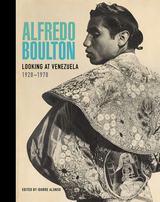
Alfredo Boulton (1908–1995) is considered one of the most important champions of modern art in Venezuela and a key intellectual of twentieth-century modernism. He was a pioneer of modern photography, an art critic, a researcher and historian of Venezuelan art, a friend to many of the great artists and architects of the twentieth century, and an expert on the imagery of the heroes of his country’s independence.
Yet, Boulton is shockingly underrecognized outside of his native land. The few exhibitions related to his work have focused exclusively on his photographic production; never has there been a project that looks at the full range of Boulton’s efforts, foregrounding his influence on the shaping of Venezuelan art. This volume addresses these lacunae by analyzing Boulton’s groundbreaking photographic practice, his central role in the construction of a modern national artistic canon, and his influence in formalizing and developing art history and criticism in Venezuela. Based on the extensive materials held in Boulton’s archive at the Getty Research Institute, Alfredo Boulton brings together essays by leading scholars in the field to offer a commanding, original perspective on his contributions to the formation of a distinctive modernity at home and beyond.
This volume is published to accompany an exhibition on view at the Getty Research Institute at the Getty Center from August 29, 2023, to January 21, 2024.
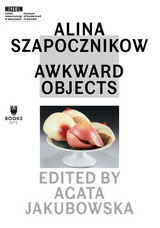
Drawing on the work of prominent art historians, curators, critics, and collectors, this exhibition catalogue presents the most current research on the work of Alina Szapocznikow.
Born in Kalisz, Poland, in 1926, Szapocznikow studied in Prague and Paris, spent the last decade of her life in France, and created an impressive number of sculptures and drawings that are now defined as post-surrealist and proto-feminist. Recent exhibitions of the artist’s work in Germany and France, along with acquisitions by prominent collections worldwide, have bolstered Szapocznikow’s international reputation and ignited discussion of her significance to twentieth-century art.
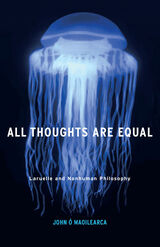
All Thoughts Are Equal is both an introduction to the work of French philosopher François Laruelle and an exercise in nonhuman thinking. For Laruelle, standard forms of philosophy continue to dominate our models of what counts as exemplary thought and knowledge. By contrast, what Laruelle calls his “non-standard” approach attempts to bring democracy into thought, because all forms of thinking—including the nonhuman—are equal.
John Ó Maoilearca examines how philosophy might appear when viewed with non-philosophical and nonhuman eyes. He does so by refusing to explain Laruelle through orthodox philosophy, opting instead to follow the structure of a film (Lars von Trier’s documentary The Five Obstructions) as an example of the non-standard method. Von Trier’s film is a meditation on the creative limits set by film, both technologically and aesthetically, and how these limits can push our experience of film—and of ourselves—beyond what is normally deemed “the perfect human.”
All Thoughts Are Equal adopts film’s constraints in its own experiment by showing how Laruelle’s radically new style of philosophy is best presented through our most nonhuman form of thought—that found in cinema.
READERS
Browse our collection.
PUBLISHERS
See BiblioVault's publisher services.
STUDENT SERVICES
Files for college accessibility offices.
RECENTLY PUBLISHED


UChicago Accessibility Resources
home | accessibility | search | about | contact us
BiblioVault ® 2001 - 2026
The University of Chicago Press