
 A SCHOLARLY BOOK REPOSITORY
14 start with A start with A

The notion of academic freedom dates back to the creation of universities and has long been understood to be central to their vocation. This freedom has come under attack by different actors throughout its history. In the current context, rising threats to democracy and human liberties, the corporatization of research, concerns about diversity and increased societal polarization, are putting a considerable pressure on its exercise. However, academic freedom is also a concept that suffers from persistent ambiguities associated with the general notion of freedom as well as debates about the function of universities.
This edited collection addresses the question of academic freedom by situating it in its broader global context. More conceptual treatments contribute to an understanding of academic freedom as distinct and separate from, although related to, freedom of expression, or student rights. These conceptual treatments are combined with studies of actual struggles over the scope of academic freedom in specific universities. The contributions come from a broad variety of sites seek to deprovincialize the conversation beyond North America or the English-speaking world.
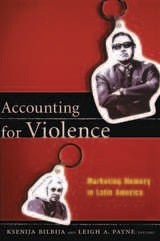
Contributors. Rebecca J. Atencio, Ksenija Bilbija, Jo-Marie Burt, Laurie Beth Clark, Cath Collins, Susana Draper, Nancy Gates-Madsen, Susana Kaiser, Cynthia E. Milton, Alice A. Nelson, Carmen Oquendo Villar, Leigh A. Payne, José Ramón Ruisánchez Serra, Maria Eugenia Ulfe
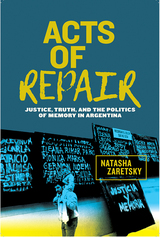
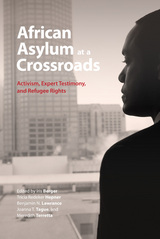
African Asylum at a Crossroads: Activism, Expert Testimony, and Refugee Rights examines the emerging trend of requests for expert opinions in asylum hearings or refugee status determinations. This is the first book to explore the role of court-based expertise in relation to African asylum cases and the first to establish a rigorous analytical framework for interpreting the effects of this new reliance on expert testimony.
Over the past two decades, courts in Western countries and beyond have begun demanding expert reports tailored to the experience of the individual claimant. As courts increasingly draw upon such testimony in their deliberations, expertise in matters of asylum and refugee status is emerging as an academic area with its own standards, protocols, and guidelines. This deeply thoughtful book explores these developments and their effects on both asylum seekers and the experts whose influence may determine their fate.
Contributors: Iris Berger, Carol Bohmer, John Campbell, Katherine Luongo, E. Ann McDougall, Karen Musalo, Tricia Redeker Hepner, Amy Shuman, Joanna T. Tague, Meredith Terretta, and Charlotte Walker-Said.
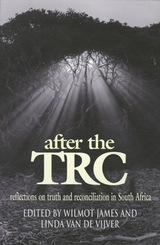
Has South Africa dealt effectively with the past, and is the country ready to face the future? What are the challenges facing both government and civil society in the years ahead? These and other questions are explored in this collection of essays by international and local commentators on the Truth and Reconciliation Commission.
A range of perspectives on whether the TRC met its objectives of truth and reconciliation is presented. The areas of particular contention-the payment of reparation, the granting of amnesty, and memorialization-are also examined.
Finally, the major challenges facing South Africa are identified, and ways of meeting these challenges and developing the assets of the nation are explored.
Contributors: Haribert Adam, Kanya Adam, Alex Boraine, Colin Bundy, Mary Burton, John de Gruchy, Richard Goldstone, Willem Heath, Wilmot James, Jeffrey Lever, Mahmood Mamdani, Gary Minkley, Njabulo Ndebele, Dumisa Ntsebeza, Kaizer Nyatsumba, Grace Naledi Pandor, Mamphela Ramphele, Ciraj Rassool, Albie Sachs, Patricia Valdez, Linda van de Vijver, Jan van Eck, Frederik Van Zyl Slabbert, Charles Villa-Vicencio, Francis Wilson, and Leslie Witz
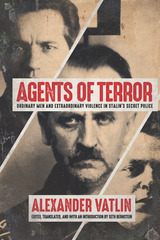
Agents of Terror reveals stunning, detailed evidence from archives available for a limited time in the 1990s. Going beyond the central figures of the terror, Vatlin takes readers into the offices and interrogation rooms of secret police at the district level. Spurred at times by ambition, and at times by fear for their own lives, agents rushed to fulfill quotas for arresting “enemies of the people”—even when it meant fabricating the evidence. Vatlin pulls back the curtain on a Kafkaesque system, forcing readers to reassess notions of historical agency and moral responsibility in Stalin-era crimes.
Does foreign aid promote human rights? As the world’s largest aid donor, the United States has provided foreign assistance to more than 200 countries. Deploying global numerical data on US foreign aid and comparative historical analysis of America’s post–Cold War foreign policies in Southeast Asia, Aid Imperium provides the most comprehensive explanation that links US strategic assistance to physical integrity rights outcomes in recipient countries, particularly in ways that previous quantitative studies have systematically ignored. The book innovatively highlights the active political agency of Global South states and actors as they negotiate and chart their political trajectories with the United States as the core state of the international system. Drawing from theoretical insights in the humanities and the social sciences as well as a wide range of empirical documents, Aid Imperium is the first multidisciplinary study to explain how US foreign policy affects state repression and physical integrity rights outcomes in Southeast Asia and the rest of the Global South.
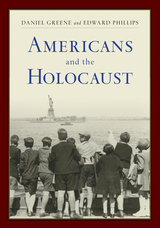
Americans and the Holocaust explores these enduring questions by gathering together more than one hundred primary sources that reveal how Americans debated their responsibility to respond to Nazism. Drawing on groundbreaking research conducted for the United States Holocaust Memorial Museum’s Americans and the Holocaust exhibition, these carefully chosen sources help readers understand how Americans’ responses to Nazism were shaped by the challenging circumstances in the United States during the 1920s, 1930s, and 1940s, including profound economic crisis, fear of communism, pervasive antisemitism and racism, and widespread isolationism.
Collecting newspaper and magazine articles, popular culture materials, and government records, Americans and the Holocaust is a valuable resource for students and historians seeking to shed light on this dark era in world history.
To explore further, visit the United States Holocaust Memorial Museum's digital exhibit, available here: https://exhibitions.ushmm.org/americans-and-the-holocaust
Published in association with the United States Holocaust Memorial Museum.
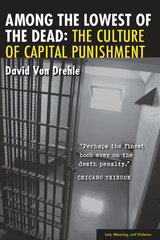
"Has all the tension of the best true crime stories . . . This is journalism at its best."
--Library Journal
"A compelling argument against capital punishment. . . . Examining politicians, judges (including Supreme Court Justices), prosecutors, defense attorneys and the condemned themselves, the author makes an effective case that, despite new laws, execution is no less a lottery than it has always been."
--Publishers Weekly
"In a fine and important book, Von Drehle writes elegantly and powerfully. . . . Anyone certain of their opinion about the death penalty ought to read this book."
-- Booklist
"An extremely well-informed and richly insightful book of great value to students of the death penalty as well as intelligent general readers with a serious interest in the subject, Among the Lowest of the Dead is also exciting reading. The book is an ideal guide for new generations of readers who want to form knowledgeable judgments in the continuing--and recently accelerating--controversies about capital punishment."
--Anthony Amsterdam, New York University
"Among the Lowest of the Dead is a powerfully written and meticulously researched book that makes an invaluable contribution to the growing public dialogue about capital punishment in America. It's one of those rare books that bridges the gap between mass audiences and scholarly disciplines, the latter including sociology, political science, criminology and journalism. The book is required reading in my Investigative Journalism classes--and my students love it!"
--David Protess, Northwestern University
"Among The Lowest of the Dead deserves a permanent place in the literature as literature, and is most relevant to today's death penalty debate as we moderate advocates and abolitionists search for common ground."
--Robert Blecker, New York Law School
David Von Drehle is Senior Writer, The Washington Post and author of Triangle: The Fire that Changed America.
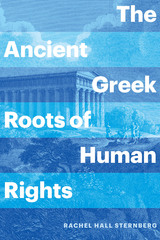
2022 PROSE Award Finalist in Classics
Although the era of the Enlightenment witnessed the rise of philosophical debates around benevolent social practice, the origins of European humane discourse date further back, to Classical Athens. The Ancient Greek Roots of Human Rights analyzes the parallel confluences of cultural factors facing ancient Greeks and eighteenth-century Europeans that facilitated the creation and transmission of humane values across history. Rachel Hall Sternberg argues that precursors to the concept of human rights exist in the ancient articulation of emotion, though the ancient Greeks, much like eighteenth-century European societies, often failed to live up to those values.
Merging the history of ideas with cultural history, Sternberg examines literary themes upholding empathy and human dignity from Thucydides’s and Xenophon’s histories to Voltaire’s Candide, and from Greek tragic drama to the eighteenth-century novel. She describes shared impacts of the trauma of war, the appeal to reason, and the public acceptance of emotion that encouraged the birth and rebirth of humane values.
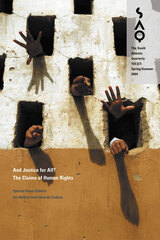
Grappling with the philosophical and theoretical questions at the heart of human rights, these essays take into consideration current political configurations such as sovereignty, genocide, humanitarian intervention, and the neglected domain of cultural rights (the right to a cultural identity). Drawing on Enlightenment thinking about human rights at the same time that they analyze the central concepts at work there—including the “humanity of man” and the nature of rights or of law—the contributors make a necessary intervention in a world system that Enlightenment thinkers could scarcely have envisioned.
Contributors. Etienne Balibar, Rony Brauman, Wendy Brown, Rebecca Comay, Jacques Derrida, Paul Downes, Werner Hamacher, Thomas Keenan, Susan Maslan, Jacques Rancière, Bruce Robbins, Avital Ronell, Gayatri Chakravorty Spivak, Elsa Stamatopoulou, Slavoj Zizek
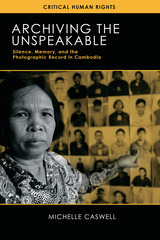
Winner, Waldo Gifford Leland Award, Society of American Archivists
Longlist, ICAS Book Prize, International Convention of Asia Scholars
READERS
Browse our collection.
PUBLISHERS
See BiblioVault's publisher services.
STUDENT SERVICES
Files for college accessibility offices.
RECENTLY PUBLISHED


UChicago Accessibility Resources
home | accessibility | search | about | contact us
BiblioVault ® 2001 - 2026
The University of Chicago Press