
 A SCHOLARLY BOOK REPOSITORY
9 start with A start with A
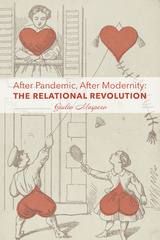
Without Trinitarian framework ancient and new idols emerge, as the Covid-19 tragedies have shown. Yet post-pandemic must be a moment of clarity and realism, as we can see how necessary it is that humanity place itself in relation to something beyond. The post-modern journey, however, must be in the spirit of Christian humanism or else any so-called progress will no longer be unable to speak authentically of our humanity. That is to say, the relational dimension of human life will be erased right along with the other ills that plague our earth.
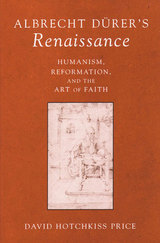
David Price is Associate Professor of History and of Church History, Southern Methodist University.
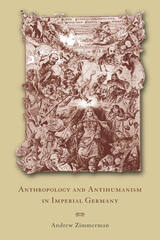
Drawing on sources ranging from scientific papers and government correspondence to photographs, pamphlets, and police reports of "freak shows," Zimmerman demonstrates how German imperialism opened the door to antihumanism. As Germans interacted more frequently with peoples and objects from far-flung cultures, they were forced to reevaluate not just those peoples, but also the construction of German identity itself. Anthropologists successfully argued that their discipline addressed these issues more productively—and more accessibly—than humanistic studies.
Scholars of anthropology, European and intellectual history, museum studies, the history of science, popular culture, and colonial studies will welcome this book.

A sustained engagement between contemporary art and philosophy relating to our place in, and responsibility to, the nonhuman world
How do contemporary art and theory contemplate the problem of the “bio” of biopolitics and bioart? How do they understand the question of “life” that binds human and nonhuman worlds in their shared travail? In Art and Posthumanism, Cary Wolfe argues for the reconceptualization of nature in art and theory to turn the idea of the relationship between the human and the planet upside down.
Wolfe explores a wide range of contemporary artworks—from Sue Coe’s illustrations of animals in factory farms and Eduardo Kac’s bioart to the famous performance pieces of Joseph Bueys and the video installations of Eija-Liisa Ahtila, among others—examining how posthumanist theory can illuminate, and be illuminated by, artists’ engagement with the more-than-human world. Looking at biological and social systems, the question of the animal, and biopolitics, Art and Posthumanism explores how contemporary art rivets our attention on the empirically thick, emotionally charged questions of “life” and the “living” amid ecological catastrophe.
One of the foremost theorists of posthumanism, Wolfe pushes that philosophy out of the realm of the purely theoretical to show how a posthumanist engagement with particular works and their conceptual underpinnings help to develop more potent ethical and political commitments.
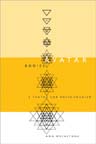
An ethically-based approach to human relations for the media age
Otherness, alterity, the alien—over the course of the past fifty years many of us have based our hopes for more ethical relationships on concepts of difference. Combining philosophy, literary criticism, fiction, autobiography, and real and imagined correspondence, Ann Weinstone proposes that only when we stop ordering the other to be other—whether technological, animal, or simply inanimate—will we truly become posthuman.
Posthumanism has thus far focused nearly exclusively on human–technology relations. Avatar Bodies develops a posthumanist vocabulary for human-to-human relationships that turns our capacities for devotion, personality, and pleasure. Drawing on both the philosophies and practices of Indian Tantra, Weinstone argues for the impossibility of absolute otherness; we are all avatar bodies, consisting of undecidably shared gestures, skills, memories, sensations, beliefs, and affects.
Weinstone calls her book a “tantra”—by which she means a set of instructions for practices aimed at sensitizing the reader to the inherent permeability of self to other, self to world. This tantra for posthumanism elaborates devotional gestures that will expose us to more unfettered contacts and the transformative touch.
READERS
Browse our collection.
PUBLISHERS
See BiblioVault's publisher services.
STUDENT SERVICES
Files for college accessibility offices.
RECENTLY PUBLISHED




UChicago Accessibility Resources
home | accessibility | search | about | contact us
BiblioVault ® 2001 - 2025
The University of Chicago Press