
 A SCHOLARLY BOOK REPOSITORY
9 start with A start with A
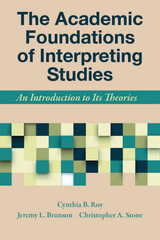
As sign language interpreting has emerged and evolved in the last 20 years as an academic field of study, the scope of learning has broadened to include fields beyond the language and culture of deaf people. This text surveys six disciplines that have informed the study of sign language interpreting: history, translation, linguistics, sociology, social psychology, and cognitive psychology, along with their major ideas, principal scholars, and ways of viewing human interaction. Each chapter includes clear learning goals, definitions, discussion questions, and images to aid understanding. The Academic Foundations of Interpreting Studies is required reading for upper-level undergraduate or first-year graduate students in interpreting, Deaf studies, and sign language programs.
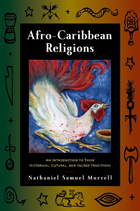
This accessibly written introduction to Afro-Caribbean religions examines the cultural traditions and transformations of all of the African-derived religions of the Caribbean along with their cosmology, beliefs, cultic structures, and ritual practices. Ideal for classroom use, Afro-Caribbean Religions also includes a glossary defining unfamiliar terms and identifying key figures.
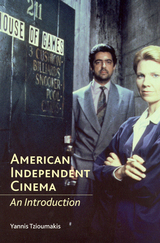
From the prestige films of Cagney Productions to recent, ultra-low budget cult hits, such as Clerks and The Blair Witch Project, American independent cinema has produced some of the most distinctive films ever made. This comprehensive introduction draws on key films, filmmakers, and film companies from the early twentieth century to the present to examine the factors that shaped this vital and evolving mode of filmmaking.
Specifically, it explores the complex and dynamic relations between independent and mainstream Hollywood cinema, showing how institutional, industrial, and economic changes in the latter have shaped and informed the former. Ordered chronologically, the book begins with Independent Filmmaking in the Studio Era (examining both top-rank and low-end film production), moves to the 1950s and 1960s (discussing both the adoption of independent filmmaking as the main method of production as well as exploitation filmmaking), and finishes with contemporary American independent cinema (exploring areas such as the New Hollywood, the rise of mini-major and major independent companies and the institutionalization of independent cinema in the 1990s). Each chapter includes case studies which focus on specific films, filmmakers, and production and distribution companies.
The only comprehensive and up-to-date look at Reform Judaism, this book analyzes the forces currently challenging the Reform movement, now the largest Jewish denomination in the United States.
To distinguish itself from Orthodox and Conservative Judaism, the Reform movement tries to be an egalitarian, open, and innovative version of the faith true to the spirit of the tradition but nonetheless fully compatible with modern secular life. Promoting itself in this way, Reform Judaism has been tremendously successful in recruiting a variety of people—intermarried families, feminists, gays and lesbians, and interracial families among others—who resist more traditional forms of worship.
As an unintended result of this success, the movement now struggles with an identity crisis brought on by its liberal theology, which teaches that each Jew is free to practice Judaism more or less as he or she pleases. In the absence of the authority that comes from a theology based on a commanding, all-powerful God, can Reform Judaism continue to thrive? Can it be broadly inclusive and still be uniquely and authentically Jewish?
Taking this question as his point of departure, Dana Evan Kaplan provides a broad overview of the American Reform movement and its history, theology, and politics. He then takes a hard look at the challenges the movement faces as it attempts to reinvent itself in the new millennium. In so doing, Kaplan gives the reader a sense of where Reform Judaism has come from, where it stands on the major issues, and where it may be going.
Addressing the issues that have confronted the movement—including the ordination of women, acceptance of homosexuality, the problem of assimilation, the question of rabbinic officiation at intermarriages, the struggle for acceptance in Israel, and Jewish education and others—Kaplan sheds light on the connection between Reform ideology and cultural realities. He unflinchingly, yet optimistically, assesses the movement’s future and cautions that stormy weather may be ahead.
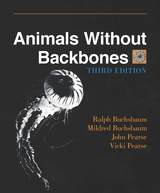
This new edition has been completely rewritten and redesigned, but it retains the same clarity and careful scholarship that have earned this book its continuing readership for half a century. It is even more lavishly illustrated than earlier editions, incorporating many new drawings and photographs. Informative, concise legends that form an integral part of the text accompany the illustrations. The text has been updated to include findings from recent research. Eschewing pure morphology, the authors use each group of animals to introduce one or more biological principles.
In recent decades, courses and texts on invertebrate zoology at many universities have been available only for advanced biology majors specializing in this area. The Third Edition of Animals Without Backbones remains an ideal introduction to invertebrates for lower-level biology majors, nonmajors, students in paleontology and other related fields, junior college and advanced high school students, and the general reader who pursues the rewarding study of the natural world.
Anthropologists profiled: Leslie Aiello, Lee Baker, João Biehl, Tom Boellstorff, Jacqueline Comito, Shannon Dawdy, Virginia R. Dominguez, T.J. Ferguson, Brigittine French, Agustín Fuentes, Amy Goldenberg, Mary Gray, Sarah Green, Monica Heller, Douglas Hertzler, Ed Liebow, Mariano Perelman, Jeremy Sabloff, Carolyn Sargent, Marilyn Strathern, Nandini Sundar, Alaka Wali.
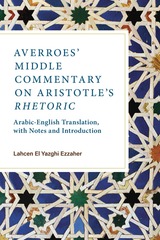
Abū al-Walīd Muḥammad ibn Aḥmad ibn Rushd (d. 1198 AD), known as Averroes in the West, wrote one of the most significant medieval Arabic commentaries on Aristotle’s famous treatise, Rhetoric. Averroes worked within a tradition that included the Muslim philosophers Al-Farabi (d. 950) and Avicenna (d. 1037), who together built an early canon introducing Aristotle’s writings to the academies of medieval Europe. Here, for the first time, Lahcen El Yazghi Ezzaher translates Averroes’ Middle Commentary into English, with analysis highlighting its shaping of philosophical thought.
Ibn Rushd was born into a prominent family living in Córdoba and Seville during the reign of the Almoḥad dynasty in the Maghreb and al-Andalus. At court, he received support to write a body of rhetorical commentaries extending the work of his Arabic-Muslim predecessors, a critical step in fostering Aristotle’s influence on European scholasticism and Western education. Ezzaher’s meticulous translation of Averroes’ Middle Commentary reflects the depth and breadth of this engagement, incorporating a discussion of the Arabic-Muslim commentary tradition and Averroes’ contribution to it. His research illuminates the complexity of Averroes’ position, articulating the challenges Muslim scholars faced in making non-Muslim texts available to their community. Through his work, we see how people at different historical moments have adapted intellectual concepts to preserve rhetoric’s vitality and relevance in new contexts.
Averroes’ Middle Commentary exemplifies the close connections between ancient Greece and medieval Muslim scholarship and the ways Muslim scholars navigated an appreciation for Aristotelian philosophy alongside a commitment to their cultural and religious systems.
READERS
Browse our collection.
PUBLISHERS
See BiblioVault's publisher services.
STUDENT SERVICES
Files for college accessibility offices.
RECENTLY PUBLISHED



UChicago Accessibility Resources
home | accessibility | search | about | contact us
BiblioVault ® 2001 - 2026
The University of Chicago Press