
 A SCHOLARLY BOOK REPOSITORY
26 start with A start with A
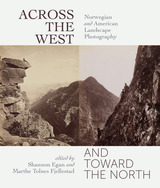
In this edited volume, Norwegian and American scholars offer the first study of the striking parallels in the production, distribution, and reception of these modern expressions of landscape and nationhood. In recognizing how landscape photographs were made meaningful to international audiences—such as tourists, visitors to world’s fairs, scientists, politicians, and immigrants—the authors challenge notions of American exceptionalism and singularly nationalistic histories.
The book includes stunning photographs of mountainous landscapes, glaciers, and forests, punctuated by signs of human development and engineering, with more than one hundred rarely seen plates by photographers Knud Knudsen, Anders Beer Wilse, Timothy O’Sullivan, Charles R. Savage, and others.
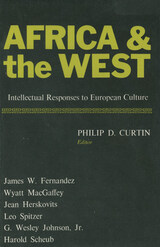
“This book offers some exciting examples of the insights to be gained from studies of the intellectual responses of Africans to the West. In six case studies, anthropologists, historians, and a literary critic study the impact of the West on African patterns of thought.”—Library Journal
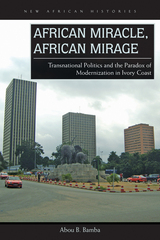
Throughout the 1960s and 1970s, Ivory Coast was touted as an African miracle, a poster child for modernization and the ways that Western aid and multinational corporations would develop the continent. At the same time, Marxist scholars—most notably Samir Amin—described the capitalist activity in Ivory Coast as empty, unsustainable, and incapable of bringing real change to the lives of ordinary people. To some extent, Amin’s criticisms were validated when, in the 1980s, the Ivorian economy collapsed.
In African Miracle, African Mirage, Abou B. Bamba incorporates economics, political science, and history to craft a bold, transnational study of the development practices and intersecting colonial cultures that continue to shape Ivory Coast today. He considers French, American, and Ivorian development discourses in examining the roles of hydroelectric projects and the sugar, coffee, and cocoa industries in the country’s boom and bust. In so doing, he brings the agency of Ivorians themselves to the fore in a way not often seen in histories of development. Ultimately, he concludes that the “maldevelopment” evident by the mid-1970s had less to do with the Ivory Coast’s “insufficiently modern” citizens than with the conflicting missions of French and American interests within the context of an ever-globalizing world.

For centuries, mental distress in West Africa has been subject to a mix of healing, harming, ritual, and regulation. In African Pharmakon, Nana Osei Quarshie questions conventional narratives about colonial psychiatry. Instead of displacing African therapeutic traditions, he argues, European psychiatric institutions in fact built upon them, adapting long-standing techniques of social control and healing.
With a focus on Ghana, Quarshie explores the shifting landscape of West African mental health practices, tracking their transformation from shrine-based rituals to colonial asylums and modern psychiatric institutions. Combining extensive archival research and ethnographic fieldwork, including the first scholarly examination of patient records from the Accra Psychiatric Hospital, Quarshie identifies five enduring techniques that have shaped the treatment of mental distress: spiritual pawning, logging, manhunting, mass expulsion, and pharmacotherapy.
Rejecting the simplistic opposition of Indigenous healing versus colonial oppression, African Pharmakon provides a nuanced account of how psychiatric care in Ghana became a tool of empowerment as well as exclusion. This pioneering study reframes our understanding of psychiatry and mental health governance in West Africa, past and present.
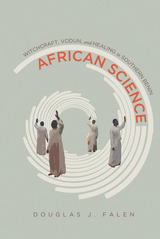
Although the Beninese understanding of àze reflects positive scientific properties in its use of specialized knowledge to harness nature's energy and realize economic success, its boundless power is inherently ambivalent because it can corrupt its users, who dispense death and destruction. Witches and healers are equivalent to supervillains and superheroes, locked in epic battles over malevolent and benevolent human desires. Beninese people's discourse about such mystical confrontations expresses a philosophy of moral duality and cosmic balance. Falen demonstrates how a deep engagement with another lived reality opens our minds and contributes to understanding across cultural difference.
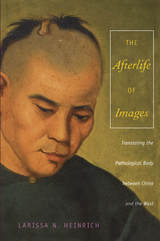
Combining literary studies, the history of science, and visual culture studies, Heinrich analyzes the rhetoric and iconography through which medical missionaries transmitted to the West an image of China as “sick” or “diseased.” He also examines the absorption of that image back into China through missionary activity, through the earliest translations of Western medical texts into Chinese, and even through the literature of Chinese nationalism. Heinrich argues that over time “scientific” Western representations of the Chinese body and culture accumulated a host of secondary meanings, taking on an afterlife with lasting consequences for conceptions of Chinese identity in China and beyond its borders.
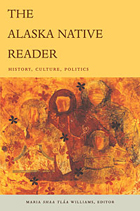
The Alaska Native Reader describes indigenous worldviews, languages, arts, and other cultural traditions as well as contemporary efforts to preserve them. Several pieces examine Alaska Natives’ experiences of and resistance to Russian and American colonialism; some of these address land claims, self-determination, and sovereignty. Some essays discuss contemporary Alaska Native literature, indigenous philosophical and spiritual tenets, and the ways that Native peoples are represented in the media. Others take up such diverse topics as the use of digital technologies to document Native cultures, planning systems that have enabled indigenous communities to survive in the Arctic for thousands of years, and a project to accurately represent Dena’ina heritage in and around Anchorage. Fourteen of the volume’s many illustrations appear in color, including work by the contemporary artists Subhankar Banerjee, Perry Eaton, Erica Lord, and Larry McNeil.
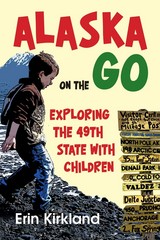
Journalist and Alaska resident Erin Kirkland knows every corner of the state, and she has crossed thousands of miles with her son. In Alaska on the Go, she offers a fresh take on exploring some of the most beautiful land in the world, with tips and tricks that only an insider knows. Serving as the perfect tour guide, Kirkland identifies the best and most kid-friendly destinations in cities across Alaska. She offers practical advice on everything from restaurants to rest stops and from weather surprises to wild animals. Photos, maps, and sample itineraries make it easy for parents to plan a trip that will delight and entertain everyone.
The only family travel guide to Alaska written by a current Alaskan, Alaska on the Go makes the state more accessible than ever. Whether traveling via car, cruise ship, or dogsled, this practical, portable guide will open up a new world of memorable adventures.
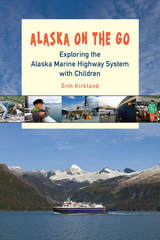
A staple of coastal transportation since the 1950s, the Alaska Marine Highway System is a vital link to cities that are often inaccessible except by air. Alaska on the Go offers fascinating accounts of both the small coastal towns and the larger population centers serviced by the highway along with easy-to-navigate route descriptions, helpful packing lists, and tips for inland and onboard adventures. Portable and personable, and covering all thirty routes that make up the Alaska Marine Highway System, Alaska on the Go is the perfect companion for the intrepid traveler.
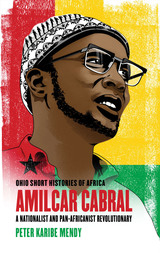
Amílcar Cabral was an agronomist who led an armed struggle that ended Portuguese colonialism in Guinea-Bissau and Cabo Verde. The uprising contributed significantly to the collapse of a fascist regime in Lisbon and the dismantlement of Portugal’s empire in Africa. Assassinated by a close associate with the deep complicity of the Portuguese colonial authorities, Cabral not only led one of Africa’s most successful liberation movements, but was the voice and face of the anticolonial wars against Portugal.
A brilliant military strategist and astute diplomat, Cabral was an original thinker who wrote innovative and inspirational essays that still resonate today. His charismatic and visionary leadership, his active pan-Africanist solidarity and internationalist commitment to “every just cause in the world,” remain relevant to contemporary struggles for emancipation and self-determination. Peter Karibe Mendy’s compact and accessible biography is an ideal introduction to his life and legacy.
"Full of matter for anyone interested in language, religion, and politics in the ancient world."—R. T. Ridley, Journal of Religious History
"In this accessible introduction to the ancient world, three leading French scholars explore the emergence of rationality and writing in the West, tracing its development and its survival in our own traditions. . . . Jean Bottero focuses on writing and religion in ancient Mesopotamia, Clarisse Herrenschmidt considers a broader history of ancient writing, and Jean-Pierre Vernant examines classical Greek civilization in the context of Near Eastern history."—Translation Review
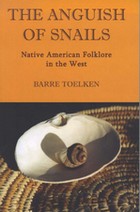
Winner of the 2004 Chicago Folklore Prize, The Anguish of Snails is an essential work for the collection of any serious reader in folklore or Native American studies.

Anti-Atlas uses the upheavals of Eastern Europe as a lens through which to rethink the politics of area studies. This collection unsettles traditional hierarchies, questioning how knowledge is produced, who controls it, and how we divide the world into “areas.”
Consisting of an eclectic mix of scholars from Europe, the UK, and North America, the book experiments with diverse genres—from academic essays and autobiographical reflections to travel guides and data visualizations. Through this innovative approach, the editors propose a manifesto for area studies to be more critical and reflexive; to be undisciplined and deeply engaged with local perspectives.
By dismantling the assumptions embedded in atlases and disciplinary boundaries, Anti-Atlas invites readers to think differently about how we construct and categorize the world. Of particular interest to scholars of area studies and critical theory, this work reassesses what it means to study places in an era of geopolitical rupture.
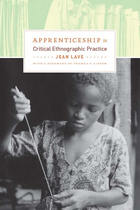
In this extended meditation, Jean Lave interweaves analysis of the process of apprenticeship among the Vai and Gola tailors of Liberia with reflections on the evolution of her research on those tailors in the late 1970s. In so doing, she provides both a detailed account of her apprenticeship in the art of sustained fieldwork and an insightful overview of thirty years of changes in the empirical and theoretical facets of ethnographic practice. Examining the issues she confronted in her own work, Lave shows how the critical questions raised by ethnographic research erode conventional assumptions, altering the direction of the work that follows.
As ethnography takes on increasing significance to an ever widening field of thinkers on topics from education to ecology, this erudite but accessible book will be essential to anyone tackling the question of what it means to undertake critical and conceptually challenging fieldwork. Apprenticeship in Critical Ethnographic Practice explains how to seriously explore what it means to be human in a complex world—and why it is so important.
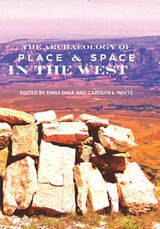
Contributors tackle questions of how historical archaeologists theoretically and methodologically define the West, conveying the historical, mythological, and physical manifestations of placemaking. They confront issues of community and how diverse ethnic, racial, gendered, labor-based, and other demographic populations expressed their identities on and in the Western landscape. Authors also address the continued creation and re-creation of the West today, exploring the impact of the past on people in the present and its influence on modern conceptions of the American West.

Southwest Books of the Year Pick
In Arizona Friend Trips, Lisa Schnebly Heidinger and Julie Morrison invite readers to explore the state’s most cherished places through a blend of poetry, prose, and photography. From the iconic landmarks to hidden gems, each chapter of this captivating travelogue provides a rich tapestry of historical insight, personal anecdotes, and emotional reflections, painting a vivid portrait of Arizona’s diverse landscapes and vibrant culture. Be part of this unique journey as Lisa and Julie embark on an unforgettable adventure, filled with laughter, nostalgia, and a deep appreciation for the beauty of the Grand Canyon State.
Arizona Friend Trips is a celebration of friendship, discovery, and the enduring spirit of exploration. As Lisa and Julie share their favorite trips and formative experiences, readers are treated to an intimate glimpse into their lives, making this book a joyous and uplifting read for travelers and armchair explorers alike. Whether you're planning your own Arizona adventure or simply yearning to wander from the comfort of home, Arizona Friend Trips promises to inspire, delight, and leave you longing for the open road.

For this first toponymic encyclopedia of Arizona, Barnes compiled information from published histories, federal and state government documents, and reminiscences of "old timers, Indians, Mexicans, cowboys, sheep-herders, historians, any and everybody who had a story to tell as to the origin and meaning of Arizona names." The result is a book chock full of oddments, humor, and now-forgotten lore, which belongs on the night table as well as in the glove compartment.
Barnes' original Arizona Place Names has become a booklover's favorite and is much in demand. The University of Arizona Press is pleased to reissue this classic of Arizoniana, which remains as useful and timeless as it was more than half a century ago.

Before Seattle, before Portland, there was Astoria.
The rest of the country is just beginning to discover Astoria, Oregon, that historic gem of a town at the mouth of the Columbia River west of Portland, and the oldest European-American settlement west of the Rockies.
The author provides a chronological look dating back to the 1500s, including European exploration, Native American life, logging, fishing, Chinese laborers in the salmon industry, a giant cheese in the Civil War, Oregon’s first female surgeon, Victorian architecture, and valiant Coast Guard rescues.
Published by Rivertide Publishing and distributed by Oregon State University Press

READERS
Browse our collection.
PUBLISHERS
See BiblioVault's publisher services.
STUDENT SERVICES
Files for college accessibility offices.
RECENTLY PUBLISHED


UChicago Accessibility Resources
home | accessibility | search | about | contact us
BiblioVault ® 2001 - 2026
The University of Chicago Press