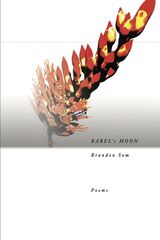
front cover of Babel's Moon
Babel's Moon
Brandon Som
Tupelo Press, 2011
Babel’s Moon eulogizes an immigrant grandfather, and in doing so explores boundaries that are at once geographic, historical, and cosmological. Brandon Som’s first book moves between vigorously detailed descriptive poems and austere, atmospheric lyrics as he finds new ways of reaching for (and even crossing) the horizons.
[more]

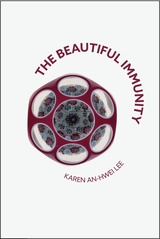
front cover of The Beautiful Immunity
The Beautiful Immunity
Karen An-hwei Lee
Tupelo Press, 2024
A collection of poems that blesses the reader with a spirit of hope, solace, and inspiration in their own seasons of adversity.

The Beautiful Immunity asks how we create good in an imperfect world of fallible souls. Spare and formally daring, these poems were refined through the catastrophes of wildfires, recession, and a major public health crisis through the hope of a beautiful immunity—an everlasting salve for the lost. This slender volume reads as the culmination of more than a decade’s worth of labor, documenting large-scale social, cultural, and political upheavals, as well as the moment when the word “anthropause” floated indelibly into the world’s vocabulary.

 
[more]

logo for Tupelo Press
Bed
Elizabeth Metzger
Tupelo Press, 2021
The poems in Bed, many written during prolonged bed rest, examine how life’s interruptions—illness or new motherhood, loss or lust—can lead us to intimate revelations with others and with our selves. We spend much of our lives in bed—it is a border, a boundary, a haven, and a trap—and the poems in Bed confront and question the very limits of body and mind. In dream and waking, in sickness and sex, in marriage and birth, in grief and death, the bed is a space that can either mark time or transcend it, a place of perpetual becoming and reinvention. Here is a body trying to remember pleasure amidst the material of suffering, a language trying to keep up with a love that begins before speech. The bed in Bed is often an absent center—a missing mind—around which intimacy must dance. Maybe it is the wanted child. Maybe it is the mourned self. Maybe it is your mind these poems must be tucked into to be kept or come alive.
[more]

logo for Tupelo Press
Bend
Natasha Sajé
Tupelo Press, 2004
“[D]ivulges the spirit of a sensualist and the habits of a contemplative; sometimes vice versa. Colors are separated with the veracity of paint. Shifts in temperature are registered and background noises distinguished, not only for texture’s sake but for their essential contribution to the poems’ substance. Fine foods are sung and individual words lit. For company Sajé summons a curious assortment of lettered forbears including Cotton Mather, Henry Vaughan, Nietzsche, Proust, Gertrude Stein, and Mary Shelley. A virtuous and subtly depraved book is Bend.”
—C.D. Wright
[more]

logo for Tupelo Press
Blood Feather
Karla Kelsey
Tupelo Press, 2020
An inspired and engaging perspective of feminist art-making in a fractured world, Blood Feather reimagines resistance. With the help of three fictive narrators, an actress, a thinker, and a filmmaker create boundless opportunities for relatability. Caught up in a hurricane of identities, the actress wonders where the performance of character stops, saying, “rain has/a way of showing costumes for/what they really are”. The thinker, a so-called muse for her architect husband, searches for her self in a lyric embodying the molting process of a bird. This kind of evolution is central to all narratives, inspiring the reader to reflect on their own passages of growth. Taking its title from a vulnerable new feather of a bird that contains a constant flow of blood, Blood Feather reminds us of the essential yet fragile position of art. Protest and resistance can take that vital place of the blood inside of the feather in order to assert the importance of artful poetry such as this.
[more]

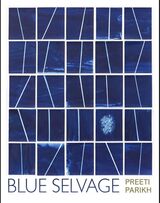
front cover of Blue Selvage
Blue Selvage
Preeti Parikh
Tupelo Press, 2026

Blue Selvage reminds us that a revolutionary message often requires new forms of discourse. 

The poems in Blue Selvage weave lyric, essay, documentary fragments, and historical reckoning into an exploration of skin, cloth, color, and form as living archives—where the gendered, racialized, and colonial histories inscribed on the body are continually exposed, resisted, and re-stitched through memory, touch, and language itself.

Preeti Parikh’s debut poetry collection is a mapping of boundaries, a (re)framing of fractured interiority, a text(ile) unfurling across shifting homelands. In this deeply embodied, formally daring meditation, the corpus is both archive and threshold, a site where “what’s felt becomes the body, what’s draped becomes form.” Here, passion for indigo, a medical-science informed perspective, fascination with the materiality of cloth and skin, and a journeying towards reclamation interlace with feminist inquiries and cultural examination to conceptualize the poems’ multivalent inhabitances. 

Expansive in its rhetorical modes and landscapes, Blue Selvage is unified by a remarkable singularity of voice and vision through which Parikh skillfully invokes form as metaphor, performance, dramatization, and content. Throughout the book, recurrent vocabularies and silences—integument, selvage, gaze—operate as warp and weft, binding personal experience to collective striving, devotion, and survival. Meanwhile, on the page, multilingual textures and typographic openness resist closure, offering apertures for looking within and without. What emerges is a capacious field of attention, where intimacy and history press against one another, and where writing itself becomes an act of unstitching and re-making—an ethical, sensuous practice of staying with what the body remembers and what culture would prefer to erase.
[more]

logo for Tupelo Press
Boat
Poems
Christopher Merrill
Tupelo Press, 2013
Like Neruda and Paz, Perse and Milosz, Christopher Merrill is both a writer and a cultural envoy, crisscrossing the globe as chronicler and courier. Boat records a series of passages over a decade, employing varied formal strategies: meditations and fantasias, prose poems and versets, lyric sequences and narratives, translations and ghazals. Composed in war zones and embassies, refugee camps and monasteries, Boat is a logbook tracking questions of memory, the body and body politic, faith, mortality, and the ways of knowledge moves through generations. Reflecting ten years of life on the wing and forty years of writing, including extensive translation from other languages, Boat bears witness to what Merrill has heard and seen in places most Americans will never visit.
[more]

logo for Tupelo Press
Body Thesaurus
Jennifer Militello
Tupelo Press, 2013
In her second book, Jennifer Militello uses symptoms, diagnostic tests, and antidotes to illuminate tensions of identity that are central to illness and health. An endangered psyche confronts maladies and faces gods in poems that embody the complexities of self. Selected by Marilyn Hacker as a finalist for the Poetry Society of America’s Alice Fay di Castagnola Award, Body Thesaurus examines the failing conduit of human physicality, offering beauty as a counter-stream to struggle.
[more]

logo for Tupelo Press
The Book of Life
Joseph Campana
Tupelo Press, 2019
The Book of LIFE finds inspiration in the pages of LIFE Magazine, from its origin in the Great Depression to its demise amid the Apollo missions, with many milestones between: the Korean War and Cuban missile crisis, the Vietnam War and immolation of Thich Quang Duc, and the Kennedy and King assassinations. LIFE’s compendium of the American century stretches from its initial cover, Margaret Bourke-White’s photo of the Fort Peck Dam in Montana, to its final, year-in-review issue covering the lunar mission, with an image of the Earth that awakened a planetary consciousness. Using the lens of poet, arts critic, and scholar of Renaissance literature, Joseph Campana locates an individual life in the churning wake of these great events; he is a poet who persists in the hope of reawakening the past, while simultaneously finding and providing a guide for this journey called life.
[more]

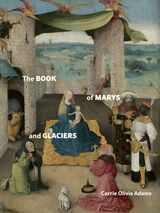
front cover of The Book of Marys and Glaciers
The Book of Marys and Glaciers
Carrie Olivia Adams
Tupelo Press, 2026
Three sequences of poems engaging with deserts, consumerism, Alaskan ice, religious icons, and more. 

The poems collected in The Book of Marys and Glaciers traverse both the psychological and physical landscape to explore the too-muchness and overwhelm that categorizes our demand-driven age. The longest series, “Dust Cover,” is a meditation on deserts of all kinds—geographic, urban, celestial, domestic, and linguistic. The poems themselves enact their own ideas of space and emptiness, building to a work that grain after grain becomes heavy as a whole. In contrast, the title sequence “The Book of Marys and Glaciers” is an expansive work of feminist ecopoetics that asks questions about the role of women as mothers, religious figures, friends, and lovers in a society that rarely makes room for quietude anymore. 

Altogether, the poems are controlled, precise investigations and interrogations of the ideas and images we take for granted.
 
[more]

logo for Tupelo Press
The Book of Stones and Angels
Harold Schweizer
Tupelo Press, 2015
Thematically exploring the contrasts and dynamic interplay between solidity and ephemerality, in his first book of poems Harold Schweizer creates great dramatic tension by poising complex, expansive sentences against the strictures of taut margins. While portraying angels as unfettered, Schweizer doesn’t accept the platonic notion that we ever transcend our physical world. Instead, he imagines angels as immanent, everywhere: “they / inhabit all things.” The Book of Stones and Angels attempts to disclose the angelic lightness of stones in the obstinate materiality of angels, amid the lightness and frailty of our existence.
[more]

logo for Tupelo Press
Boysgirls
Katie Farris
Tupelo Press, 2019
Farris warns us, “These are not stories one can hand to another and afterward ask: did your soul move like the peristalsis inside your gut?” Instead of capitalizing on the satisfying and familiar conventions of narrative, she uses the unclassifiable text, the monstrous text, and unruly prose to explore the ways language, as we know it, limits what is possible in our thinking about sexuality. For Farris, genre – with its established conventions, its repertoire of restrictions – and gender are inexorably linked. Indeed, she shows us that our most familiar categories of identity are embedded within the very texture of language itself. She reveals form, genre, and even grammar as the foundation of the social order, that alterity which speaks through us, and at the same time, defines us.
[more]

logo for Tupelo Press
Brownwood
Poems
Lawrence Bridges
Tupelo Press, 2016
Brownwood, like Berryman’s Henry, is a triad (I, He, You), an “other” character, con-structed within a real-life geography in an arsenal of time and place. Lawrence Bridges offers Polaroid graphics of his protagonist’s identity in the thick of our culture, amid the changing rules of fate and folly. As Elena Karina Byrne observes in her Foreword, “Brownwood is full of angst, wry humor, and sarcasm; he’s a lost twin, doppelganger, living in a melancholy place [and] this book’s poetic plot … arrives with cinematographic aplomb.” Bridges’s third volume of poems is like an autobiography of one stuck inside the vessel of who he is: “Feared as a monster, tame as a clown.”
[more]

logo for Tupelo Press
Butch Geography
Stacey Waite
Tupelo Press, 2013
In her Los Angeles Review of Books essay “Who Is Who: Pronouns, Gender, and Merging Selves,” Dana Levin describes Stacey Waite’s fusion of gender identities: “Pseudonyms, heteronyms, personae, all the ventriloquizing literary arts; point of view and tonal shifts: these are tools for speakers and speaking. But the sentence too has a voice: ‘i will not be the kind of boy who can not bear the memory of her body’ … This is [Waite’s] genius … to take innocuous syntactical phrasing and change the players mid-sentence — to get around English’s pronominal either/or by creating a syntactical both/and…”
[more]

logo for Tupelo Press
Butterfly sleep
Kim Kyung Ju
Tupelo Press, 2019
KIM KYUNG JU’s Butterfly Sleep is a historical drama based in the early period of the Joseon dynasty. He relies on a mixture of absurdism, magic realism, and dark humor in order to tell an existentialist allegory of Korea’s rapid development. In this sense, Butterfly Sleep is a story about the fractured soul of the nation. Even more so, it is a lesson in consolation. As Butterfly Sleep unfolds, we drift in and out of song, as music is made in order to comfort the characters in the play. With lyricism and grace, Kim suggests that the only way the ghosts of the nation can be consoled is through direct confrontation. Confront them first, then sing them a lullaby.
[more]


Send via email Share on Facebook Share on Twitter