
 A SCHOLARLY BOOK REPOSITORY
8 start with B start with B

Traces the little-known story of the bitter contest for the fate of the University of Alabama after the Civil War
In The Battle for the University of Alabama, William Warren Rogers Jr. gives a fascinating account of the fierce struggle over the nature of the University of Alabama after the Civil War. Union forces reduced the campus to ruins as the war ended, and the university did not reopen until 1869. In the interregnum, powerful forces shifted the trajectory of the school. Alabama Republicans authored an egalitarian state constitution that delivered oversight of the university to the Republican Party. That set the stage for turmoil and confrontation. This book tells the story of that conflict.
In the next few years, Democrats charged Republicans with turning the university into a “radical” institution. They alleged that a handful of unqualified individuals had gained faculty positions because of their political allegiance, which resulted in the university’s academic desecration. Professors were bitterly denounced in the state newspaper press and quite personally in Tuscaloosa. Administration of the university became part of the fratricidal political debate in the state. Political violence and questions concerning race, specifically the possible integration of the university, illuminated the controversies of the Reconstruction years. Many of these questions resonate even today.
This authoritative account sets events at the University of Alabama against the backdrop of what occurred at other state universities in the Reconstruction South. The University of North Carolina experienced controversy similar to Alabama’s. At the University of Georgia, however, calm prevailed. This story of the incendiary events at Alabama’s flagship university charts new ground and provides a revelatory look into the extraordinary partisanship that characterized the South after the Civil War.

Benjamin Franklin - American Writers 19 was first published in 1962. Minnesota Archive Editions uses digital technology to make long-unavailable books once again accessible, and are published unaltered from the original University of Minnesota Press editions.

This guide contains 1,400 reviews of the best children's literature published between 1966 and 1972.
This volume carries on the tradition established by Zena Sutherland's two earlier collections covering the periods from 1966 to 1972 and 1973 to 1978. Her 1973 edition of The Best in Children's Books was cited by the American School Board Journal as one of the outstanding books of the year in education.
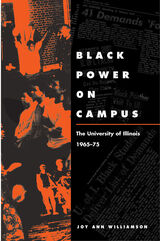
Drawing on student publications of the late 1960s and early 1970s, as well as interviews with student activists, former administrators, and faculty, Williamson discusses the emergence of Black Power ideology, what constituted "blackness," and notions of self-advancement versus racial solidarity. Promoting an understanding of the role of black youth in protest movements, Black Power on Campus is an important contribution to the literature on African American liberation movements and the reform of American higher education.
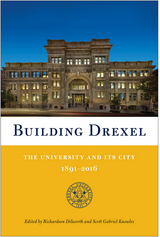
Published in conjunction with Drexel University’s 125th anniversary, Building Drexel chronicles the founding of the university by Anthony J. Drexel through to the present day. The editors and contributors create a prismatic discussion of the university and its evolution.
Richly illustrated chapters cover the architectural history of notable Drexel buildings; the role of Drexel in Philadelphia’s modern history; its Greek life; sports—particularly Drexel’s history in the Big 5; and each of the university’s schools and colleges. There is a history of the medical college and law school, plus the creation of new schools such as those of biomedical engineering, science and health systems.
Building Drexel also documents the civil rights history of Drexel and its urban planning history in relation to the racially diverse Powelton Village and Mantua neighborhoods it borders. This commemorative volume shows the development of the university both in the city and in the world.
Contributors include: Lloyd Ackert, Cordelia Frances Biddle, Paula Marantz Cohen, Donna Marie De Carolis, Roger Dennis, Gloria Donnelly, Kevin D. Egan, Alissa Falcone, David Fenske, John A. Fry, Stephen F. Gambescia, Marla J. Gold, Charles Haas, Kathy Harvatt, Daniel Johnson, Jeannine Keefer, Larry Keiser, Michael Kelley, Jason Ludwig, Jonson Miller, Julie Mostov, Danuta A. Nitecki, Anthony M. Noce, Steven J. Peitzman, David Raizman, Tiago Saraiva, Amy E. Slaton, Nathaniel Stanton, Virginia Theerman, Laura Valenti, James Wolfinger, Eric A. Zillmer, and the editors.
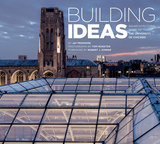
Building Ideas: An Architectural Guide to the University of Chicago explores the environment that has supported more than a century of exceptional thinkers. This photographic guide traces the evolution of campus architecture from the university’s founding in 1890 to its plans for the twenty-first century.
When William Rainey Harper, the university’s first president, and the trustees decided to build a set of Gothic quadrangles, they created a visual link to European precursors and made a bold statement about the future of higher education in the United States. Since then the university has regularly commissioned forward-thinking architects to design buildings that expand—or explode—traditional ideals while redefining the contemporary campus.
Full of panoramic photographs and exquisite details, Building Ideas features the work of architects such as Frank Lloyd Wright, Henry Ives Cobb, Holabird & Roche, Eero Saarinen, Ludwig Mies van der Rohe, Walter Netsch, Ricardo Legorreta, Rafael Viñoly, César Pelli, Helmut Jahn, and Tod Williams Billie Tsien Architects. The guide also includes guest commentaries by prominent architects and other notable public figures. It is the perfect collection for Chicago alumni and students, Hyde Park residents and visitors, and anyone inspired by the institutional ideas and aspirations of architecture.
READERS
Browse our collection.
PUBLISHERS
See BiblioVault's publisher services.
STUDENT SERVICES
Files for college accessibility offices.
RECENTLY PUBLISHED




UChicago Accessibility Resources
home | accessibility | search | about | contact us
BiblioVault ® 2001 - 2025
The University of Chicago Press