
 A SCHOLARLY BOOK REPOSITORY
4 start with B start with B
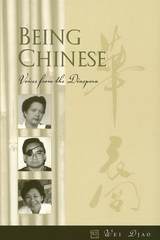
In these pages we meet a surgeon raised in Singapore but westernized in London who still believes in the value of Chinese medicine, which "revitalizes you in ways that Western medicine cannot understand." A member of the Chinese Canadian community who bridles at the insistence that you can't be Chinese unless you speak a Chinese dialect, because "Even though I do not have the Chinese language, I think my ability to manifest many things in Chinese culture to others in English is still very important." Individuals all loyal to their countries of citizenship who continue to observe the customs of their ancestral home to varying degrees, whether performing rites in memory of ancestors, practicing fengshui, wearing jade for good luck, or giving out red packets of lucky money for New Year.
What emerges from many of these accounts is a selective adherence to Chinese values. One person cites a high regard for elders, for high achievement, and for the sense of togetherness fostered by his culture. Another, the bride in an arranged marriage to a transplanted Chinese man, speaks highly of her relationship: "It's the Chinese way to put in the effort and persevere." Several of the stories consider the difference between how Chinese women overseas actually live and the stereotypes of how they ought to live. One writes: "Coming from a traditional Chinese family, which placed value on sons and not on daughters, it was necessary for me to assert my own direction in life rather than to follow in the traditional paths of obedience." Bracketing the testimonies are an overview of the history of emigration from China and an assessment of the extent to which the Chinese overseas retain elements of Chinese culture in their lives.
In compiling these personal accounts, Wei Djao, who was born in China and now lives near Seattle, undertook a quest that took her not only to many countries but also to the inner landscapes of the heart. Being Chinese is a highly personal book that bares the aspirations, despairs, and triumphs of real people as it makes an insightful and lasting contribution to Chinese diasporic studies.

In Beyond a Western Bioethics, physicians Angeles Tan Alora and Josephine M. Lumitao join eight other contributors to provide a comprehensive exploration of bioethical issues outside of the dominant American and western European model. Using the Philippines as a case study, they address how a developing country's economy, religion, and culture affect the bioethical landscape for doctors, patients, families, and the society as a whole.
American principles of medical ethics assume the primacy of individual autonomy, the importance of truth-telling, and secular standards of justice and morality. In the Philippines, these standards are often at odds with a culture in which family relationships take precedence over individualism, and ideas of community, friendship, and religion can deeply influence personal behavior. Pervasive poverty further complicates the equation. Contributors move from a general discussion of the moral vision informing health care decisions in the Philippines to an exploration of a wide range of specific cases: family planning, care of the elderly, organ transplants, death and dying, medical research, AIDS care, doctor-patient relationships, informed consent, and the allocation of scarce health-care resources.
Written for both students and professionals, the book provides a much-needed perspective on how medical ethics are practiced in a developing nation, and it successfully challenges the wisdom of global bioethical standards that do not account for local cultural and economic differences.
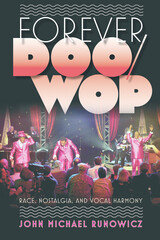
"New England was founded consciously, and in no fit of absence of mind," observed historian Samuel Eliot Morison on the establishment of the Bay Colony in 1630 on the narrow, mountainous Shawmut peninsula of what became Massachusetts. That self-conscious presence of mind has endured for four centuries. Boston has been shaped and sustained by observation, imagination, and interpretation. As a result, the evolving vision of Boston has yielded a compelling literary record.
In this wide-ranging anthology, Shaun O'Connell includes a generous sampling of those who have recorded, revised, and redefined the vision of Boston. Anne Bradstreet, Nathaniel Hawthorne, Henry James, W. E. B. Du Bois, Mary Antin, Edwin O'Connor, John Updike, and many others eloquently evoke and explain Boston in these pages.
From John Winthrop's "city upon a hill" sermon, delivered aboard the Arbella before his followers landed in 1630 in the place they would call Boston, to Robert Lowell's "For the Union Dead," a poem delivered in Boston's Public Garden in 1960, writers have continued to invoke the high purposes for which the city was founded, sometimes in praise of the city, but often in what Robert Frost named a "lover's quarrel," in works that called attention to the city's failures to fulfill its promises. In the twenty-first century some writers continue to celebrate or to castigate the city, while others look back to Boston's origins to reassess its founders and renew its covenant of high purpose.
This is an interpretive anthology—one that includes commentary as well as writings. Section introductions provide historical and biographical context, offer analysis that stresses the thematic relevance of each selection, and explore the pattern of their relations. Rather than present a random array of writers who happen to have been Greater Bostonians, O'Connell focuses on those authors who possessed a commitment to the sense of place, those who addressed Boston not only as a geographical, social, and political entity but as an image, idea, and site of symbolic values.
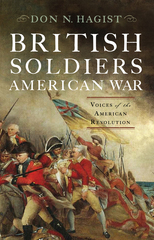
Nine Rare and Fascinating First-Person Profiles of Soldiers Who Fought for the British Crown
Much has been written about the colonists who took up arms during the American Revolution and the army they created. Far less literature, however, has been devoted to their adversaries. The professional soldiers that composed the British army are seldom considered on a personal level, instead being either overlooked or inaccurately characterized as conscripts and criminals. Most of the British Redcoats sent to America in defense of their government’s policies were career soldiers who enlisted voluntarily in their late teens or early twenties. They came from all walks of British life, including those with nowhere else to turn, those aspiring to improve their social standing, and all others in between. Statistics show that most were simply hardworking men with various amounts of education who had chosen
the military in preference to other occupations. Very few of these soldiers left writings from which we can learn their private motives and experiences.
British Soldiers, American War: Voices of the American Revolution is the first collection of personal narratives by British common soldiers ever assembled and published. Author Don N. Hagist has located first-hand accounts of nine soldiers who served in America in the 1770s and 1780s. In their own words we learn of the diverse population—among them a former weaver, a boy who quarelled with his family, and a man with wanderlust—who joined the army and served tirelessly and dutifully, sometimes faithfully and sometimes irresolutely, in the uniform of their nation. To accompany each narrative, the author provides a contextualizing essay based on archival research giving background on the soldier and his military service. Taken as a whole these true stories reveal much about the individuals who composed what was, at the time, the most formidable fighting force in the world.
READERS
Browse our collection.
PUBLISHERS
See BiblioVault's publisher services.
STUDENT SERVICES
Files for college accessibility offices.
RECENTLY PUBLISHED





UChicago Accessibility Resources
home | accessibility | search | about | contact us
BiblioVault ® 2001 - 2025
The University of Chicago Press