
 A SCHOLARLY BOOK REPOSITORY
117 start with C start with C


In 1984 Fredric Jameson wrote that “everything in our social life—from economic value and state power to practices and to the very structure of the psyche itself—can be said to have become ‘cultural’ in some original and yet untheorized sense.” The essays in this special issue track the status of this claim some thirty years later, inquiring into the relationship of art, aesthetics, and cultural production to political economy today. At a moment when interpretation (including “ideology critique” and “symptomatic reading”) has been variously supplanted by descriptivism, empiricism, and the return of metaphysics, contributors here pursue the possibilities for an engaged cultural criticism that is attentive to form while rejecting a depoliticized formalism. Spanning a wide range of cultural sites—from recent Hollywood cinema to post-broadcast television, manufactured landscape photography, contemporary West African art, and “new materialism” in philosophy—they ask what the “formal tendencies” of contemporary cultural production (including theory itself) can tell us about the cultural logic of contemporary capitalism. The collection includes a new interview with Jameson conducted by the editors.
Contributors: Jennifer Bajorek, Nico Baumbach, Jonathan Beller, Alexander R. Galloway, Fredric Jameson, Sulgi Lie, Alberto Toscano, Amy Villarejo, Damon R. Young, Genevieve Yue
Addressing the increasing significance of digital platforms, this work examines the transformative roles of over-the-top streaming services—Netflix, Viki, and V Live—video-sharing platforms such as YouTube, and social media platforms such as TikTok and Instagram, and the power relations between content producers, information technology sectors, the government, creative laborers, and audiences in the globalization of Korean culture and media. By developing critical cultural industries studies as a new theoretical framework, Cultural Production of Hallyu in the Digital Platform Era explores the ever-growing Korean Wave phenomenon with the advent of global digital platforms.
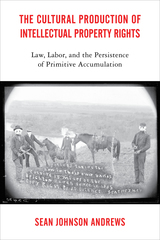
The protection and accumulation of intellectual property rights—like property rights in general—is one of the most important contemporary American values. In his cogent book, The Cultural Production of Intellectual Property Rights, Sean Johnson Andrews shows that the meaning, power, and value of intellectual properties are the consequence of an extended process of cultural production.
Johnson Andrews argues that it is deeper ideological and historical roots which demand that, in the contemporary global, digital economy, all property rights be held sacrosanct and all value must flow back to the legal owner.
Johnson Andrews explains that if we want to rebalance the protection of copyrights and trademarks, we should focus on undermining the reified culture of property that underpins capitalism as a whole. He outlines a framework for analyzing culture; situates intellectual property rights in the history of capitalist property relations; synthesizes key theories of media, politics, and law; and ultimately provides scholars and activists a path to imagining a different future where we prioritize our collective production of value in the commons.
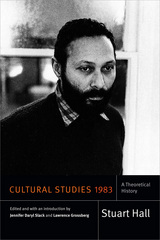
Covering queer and feminist studies, critical disability studies, and critical race and ethnic studies, the essays in Cultural Studies in the Interregnum reflect on our shared political pasts and futures. Using examples ranging from media and literature to sex work, policing, and university systems, this exciting volume probes what cultural studies means in moments of social transformation.
Contributors include: Sean Johnson Andrews, C.M. Kaliko Baker, Mary Tuti Baker, James Bliss, Jorge E. Cuéllar, John R. Decker, Brian Dolber, Candace Fujikane, Evyn Lê Espiritu Gandhi, Chris Hall, Rachel Lim, Alexis Pauline Gumbs, Anna Karthika, Manu Karuka, Najwa Mayer, Kyle Mays, Andrew Ó Baoill, Yumi Pak, Therí A. Pickens, Sami Schalk, Leanne Betasamosake Simpson, Tia Trafford, and the editors
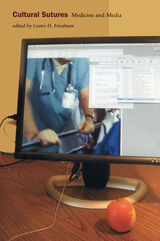
In this volume, scholars of cinema studies, philosophy, English, sociology, health-care education, women’s studies, bioethics, and other fields demonstrate how the world of medicine engages and permeates the media that surround us. Whether examining the press coverage of the Jack Kevorkian–euthanasia controversy; pondering questions about accessibility, accountability, and professionalism raised by such films as Awakenings, The Doctor, and Lorenzo’s Oil; analyzing the depiction of doctors, patients, and medicine on E.R. and Chicago Hope; or considering the ways in which digital technologies have redefined the medical body, these essays are consistently illuminating and provocative.
Contributors. Arthur Caplan, Tod Chambers, Stephanie Clark-Brown, Marc R. Cohen, Kelly A. Cole, Lucy Fischer, Lester D. Friedman, Joy V. Fuqua, Sander L. Gilman, Norbert Goldfield, Joel Howell, Therese Jones, Timothy Lenoir, Gregory Makoul, Marilyn Chandler McEntyre, Faith McLellan, Jonathan M. Metzl, Christie Milliken, Martin F. Norden, Kirsten Ostherr, Limor Peer, Audrey Shafer, Joseph Turow, Greg VandeKieft, Otto F. Wahl
Recent pieces by NPR, the BBC, and Forbes have called attention to the power of voice—positing that “your voice is the secret to getting hired” and that “voice can accelerate or hold back a career.” While it has become clearer that such things as pitch and intonation can be tied to assumptions about one’s gender, race/ethnicity, and class, studying voice as a socially constructed artifact carries with it unique challenges. In response, Culturally Speaking: The Rhetoric of Voice and Identity in a Mediated Culture presents an innovative approach to studying the spoken voice in media, showing how racial and gendered oppression bubble beneath the surface of American culture’s most recognized speaking voices, spreading invisible messages about which kinds of vocal identities are privileged and which kinds should be silenced.
Through her analysis of prominent voices in American culture—including Morgan Freeman, Tina Fey, Barack Obama, Adele, Dave Chappelle, Richard Pryor, and George Lopez—Amanda Nell Edgar argues that voices carry a residue of the particular cultural environments in which they are formed, and that these environments can be traced and analyzed to add a sonic dimension to our understanding of race and gender as rhetorically situated identities—pushing back against the often-unnoticed systems of sound-based discrimination.
Employing a detailed and critically reflective argument covering social media, television, political campaigns, advertising, and “artivism,” Camilla Møhring Reestorff refuses the traditional distinction between the world of visual culture and the political domain, and she provides multiple tools for understanding the dynamics of contemporary affective cultural politics in a highly mediatized environment.
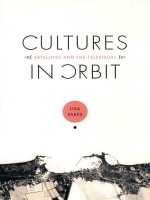
Roaming across the disciplines of media studies, geography, and science and technology studies, Parks examines uses of satellites by broadcasters, military officials, archaeologists, and astronomers. She looks at Our World, a live intercontinental television program that reached five hundred million viewers in 1967, and Imparja tv, an Aboriginal satellite tv network in Australia. Turning to satellites’ remote-sensing capabilities, she explores the U.S. military’s production of satellite images of the war in Bosnia as well as archaeologists’ use of satellites in the excavation of Cleopatra’s palace in Alexandria, Egypt. Parks’s reflections on how Western fantasies of control are implicated in the Hubble telescope’s views of outer space point to a broader concern: that while satellite uses promise a “global village,” they also cut and divide the planet in ways that extend the hegemony of the post-industrial West. In focusing on such contradictions, Parks highlights how satellites cross paths with cultural politics and social struggles.
David D. Hall examines the interchange between popular and learned cultures and the practices of reading and writing. His writings deal with change and continuity, exploring the possibility of a reading revolution and arguing for the long duration of a Protestant vernacular tradition. A newly written essay on book culture in the early Chesapeake describes a system of scribal publication. The pieces reflect Hall's belief that the better we understand the production and consumption of books, the closer we come to a social history of culture.
Cultures of War in Graphic Novels examines the representation of small-scale and often less acknowledged conflicts from around the world and throughout history. The contributors look at an array of graphic novels about conflicts such as the Boxer Rebellion (1899-1901), the Irish struggle for national independence (1916-1998), the Falkland War (1982), the Bosnian War (1992-1995), the Rwandan genocide (1994), the Israel-Lebanon War (2006), and the War on Terror (2001-). The book explores the multi-layered relation between the graphic novel as a popular medium and war as a pivotal recurring experience in human history. The focus on largely overlooked small-scale conflicts contributes not only to advance our understanding of graphic novels about war and the cultural aspects of war as reflected in graphic novels, but also our sense of the early twenty-first century, in which popular media and limited conflicts have become closely interrelated.
Elana Levine brings together writings from feminist critics that chart the current terrain of feminized pop cultural production. Analyzing everything from Fifty Shades of Grey to Pinterest to pregnancy apps, contributors examine the economic, technological, representational, and experiential dimensions of products and phenomena that speak to, and about, the feminine. As these essays show, the imperative of productivity currently permeating feminized pop culture has created a generation of texts that speak as much to women's roles as public and private workers as to an impulse for fantasy or escape.
Incisive and compelling, Cupcakes, Pinterest, and Ladyporn sheds new light on contemporary women's engagement with an array of media forms in the context of postfeminist culture and neoliberalism.
A new ethics for the global practice of curating
Today, everyone is a curator. What was once considered a hallowed expertise is now a commonplace and global activity. Can this new worldwide activity be ethical and, if yes, how? This book argues that curating can be more than just selecting, organizing, and presenting information in galleries or online. Curating can also constitute an ethics, one of acquiring, arranging, and distributing an always conjectural knowledge about the world.
Curating as Ethics is primarily philosophical in scope, evading normative approaches to ethics in favor of an intuitive ethics that operates at the threshold of thought and action. It explores the work of authors as diverse as Heidegger, Spinoza, Meillassoux, Mudimbe, Chalier, and Kofman. Jean-Paul Martinon begins with the fabric of these ethics: how it stems from matter, how it addresses death, how it apprehends interhuman relationships. In the second part he establishes the ground on which the ethics is based, the things that make up the curatorial—for example, the textual and visual evidence or the digital medium. The final part focuses on the activity of curating as such—sharing, caring, preparing, dispensing, and so on.
With its invigorating new approach to curatorial studies, Curating as Ethics moves beyond the field of museum and exhibition studies to provide an ethics for anyone engaged in this highly visible activity, including those using social media as a curatorial endeavor, and shows how philosophy and curating can work together to articulate the world today.
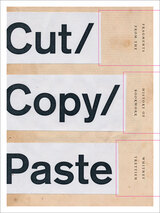
How do early modern media underlie today’s digital creativity?
In Cut/Copy/Paste, Whitney Trettien journeys to the fringes of the London print trade to uncover makerspaces and collaboratories where paper media were cut up and reassembled into radical, bespoke publications. Bringing these long-forgotten objects back to life through hand-curated digital resources, Trettien shows how early experimental book hacks speak to the contemporary conditions of digital scholarship and publishing. As a mixed-media artifact itself, Cut/Copy/Paste enacts for readers what Trettien argues: that digital forms have the potential to decenter patriarchal histories of print.
From the religious household of Little Gidding—whose biblical concordances and manuscripts exemplify protofeminist media innovation—to the queer poetic assemblages of Edward Benlowes and the fragment albums of former shoemaker John Bagford, Cut/Copy/Paste demonstrates history’s relevance to our understanding of current media. Tracing the lives and afterlives of amateur “bookwork,” Trettien creates a method for identifying and comprehending hybrid objects that resist familiar bibliographic and literary categories. In the process, she bears witness to the deep history of radical publishing with fragments and found materials.
With many of Cut/Copy/Paste’s digital resources left thrillingly open for additions and revisions, this book reimagines our ideas of publication while fostering a spirit of generosity and inclusivity. An open invitation to cut, copy, and paste different histories, it is an inspiration for students of publishing or the digital humanities, as well as anyone interested in the past, present, and future of creativity.
READERS
Browse our collection.
PUBLISHERS
See BiblioVault's publisher services.
STUDENT SERVICES
Files for college accessibility offices.
RECENTLY PUBLISHED


UChicago Accessibility Resources
home | accessibility | search | about | contact us
BiblioVault ® 2001 - 2026
The University of Chicago Press