
 A SCHOLARLY BOOK REPOSITORY
825 books about Research and 109
825 books about Research
109 start with C start with C
109 start with C start with C
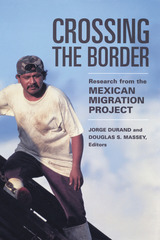
Crossing the Border
Research from the Mexican Migration Project
Jorge Durand
Russell Sage Foundation, 2004
Discussion of Mexican migration to the United States is often infused with ideological rhetoric, untested theories, and few facts. In Crossing the Border, editors Jorge Durand and Douglas Massey bring the clarity of scientific analysis to this hotly contested but under-researched topic. Leading immigration scholars use data from the Mexican Migration Project—the largest, most comprehensive, and reliable source of data on Mexican immigrants currently available—to answer such important questions as: Who are the people that migrate to the United States from Mexico? Why do they come? How effective is U.S. migration policy in meeting its objectives? Crossing the Border dispels two primary myths about Mexican migration: First, that those who come to the United States are predominantly impoverished and intend to settle here permanently, and second, that the only way to keep them out is with stricter border enforcement. Nadia Flores, Rubén Hernández-León, and Douglas Massey show that Mexican migrants are generally not destitute but in fact cross the border because the higher comparative wages in the United States help them to finance homes back in Mexico, where limited credit opportunities makes it difficult for them to purchase housing. William Kandel's chapter on immigrant agricultural workers debunks the myth that these laborers are part of a shadowy, underground population that sponges off of social services. In contrast, he finds that most Mexican agricultural workers in the United States are paid by check and not under the table. These workers pay their fair share in U.S. taxes and—despite high rates of eligibility—they rarely utilize welfare programs. Research from the project also indicates that heightened border surveillance is an ineffective strategy to reduce the immigrant population. Pia Orrenius demonstrates that strict barriers at popular border crossings have not kept migrants from entering the United States, but rather have prompted them to seek out other crossing points. Belinda Reyes uses statistical models and qualitative interviews to show that the militarization of the Mexican border has actually kept immigrants who want to return to Mexico from doing so by making them fear that if they leave they will not be able to get back into the United States. By replacing anecdotal and speculative evidence with concrete data, Crossing the Border paints a picture of Mexican immigration to the United States that defies the common knowledge. It portrays a group of committed workers, doing what they can to realize the dream of home ownership in the absence of financing opportunities, and a broken immigration system that tries to keep migrants out of this country, but instead has kept them from leaving.
[more]
The CSE Manual, Ninth Edition
Scientific Style and Format for Authors, Editors, and Publishers
Council of Science Editors
University of Chicago Press, 2024
Comprehensive and authoritative scientific style and format rules from the leading professional association in science publishing.
The CSE Manual: Scientific Style and Format for Authors, Editors, and Publishers delivers complete coverage of rules and best practices in scientific publishing. Since 1960, the esteemed Council of Science Editors has offered authoritative guidance on presenting scientific writing more clearly and effectively. In the ninth edition of The CSE Manual, this leading international association offers its most comprehensive recommendations yet, continuing to guide writers and editors through the ever-evolving world of scientific publishing. Available in print and by subscription online.
The CSE Manual: Scientific Style and Format for Authors, Editors, and Publishers delivers complete coverage of rules and best practices in scientific publishing. Since 1960, the esteemed Council of Science Editors has offered authoritative guidance on presenting scientific writing more clearly and effectively. In the ninth edition of The CSE Manual, this leading international association offers its most comprehensive recommendations yet, continuing to guide writers and editors through the ever-evolving world of scientific publishing. Available in print and by subscription online.
[more]
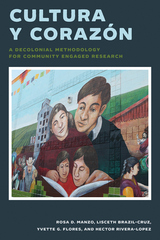
Cultura y Corazón
A Decolonial Methodology for Community Engaged Research
Rosa D. Manzo, Lisceth Brazil-Cruz, Yvette G. Flores, and Hector Rivera-Lopez
University of Arizona Press, 2020
Cultura y Corazón is a research approach and practice that is rooted in the work of Latinx and Chicanx scholars and intellectuals. The book documents best practices for Community Based and Participatory Action Research (CBPAR), which is both culturally attuned and scientifically demonstrated. This methodology takes a decolonial approach to engaging community members in the research process and integrates critical feminist and indigenous epistemologies.
Cultura y Corazón presents case studies from the authors’ work within the fields of education and health. It offers key strategies to working in partnership with marginalized Latinx communities that are grounded in deep respect for the communities’ cultures and lived experiences. This book is intended for students, researchers, and practitioners who want to work with vulnerable populations through a community-based approach that truly respects and integrates culture, values, and funds of knowledge.
Cultura y Corazón presents case studies from the authors’ work within the fields of education and health. It offers key strategies to working in partnership with marginalized Latinx communities that are grounded in deep respect for the communities’ cultures and lived experiences. This book is intended for students, researchers, and practitioners who want to work with vulnerable populations through a community-based approach that truly respects and integrates culture, values, and funds of knowledge.
[more]
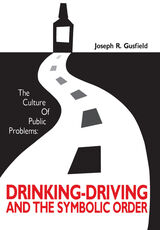
The Culture of Public Problems
Drinking-Driving and the Symbolic Order
Joseph R. Gusfield
University of Chicago Press, 1980
"Everyone knows 'drunk driving' is a 'serious' offense. And yet, everyone knows lots of 'drunk drivers' who don't get involved in accidents, don't get caught by the police, and manage to compensate adequately for their 'drunken disability.' Everyone also knows of 'drunk drivers' who have been arrested and gotten off easy. Gusfield's book dissects the conventional wisdom about 'drinking-driving' and examines the paradox of a 'serious' offense that is usually treated lightly by the judiciary and rarely carries social stigma."—Mac Marshall, Social Science and Medicine
"A sophisticated and thoughtful critic. . . . Gusfield argues that the 'myth of the killer drunk' is a creation of the 'public culture of law.' . . . Through its dramatic development and condemnation of the anti-social character of the drinking-driver, the public law strengthens the illusion of moral consensus in American society and celebrates the virtues of a sober and orderly world."—James D. Orcutt, Sociology and Social Research
"Joseph Gusfield denies neither the role of alcohol in highway accidents nor the need to do something about it. His point is that the research we conduct on drinking-driving and the laws we make to inhibit it tells us more about our moral order than about the effects of drinking-driving itself. Many will object to this conclusion, but none can ignore it. Indeed, the book will put many scientific and legal experts on the defensive as they face Gusfield's massive erudition, pointed analysis and criticism, and powerful argumentation. In The Culture of Public Problems, Gusfield presents the experts, and us, with a masterpiece of sociological reasoning."—Barry Schwartz, American Journal of Sociology
This book is truly an outstanding achievement. . . . It is sociology of science, sociology of law, sociology of deviance, and sociology of knowledge. Sociologists generally should find the book of great theoretical interest, and it should stimulate personal reflection on their assumptions about science and the kind of consciousness it creates. They will also find that the book is a delight to read."—William B. Bankston, Social Forces
"A sophisticated and thoughtful critic. . . . Gusfield argues that the 'myth of the killer drunk' is a creation of the 'public culture of law.' . . . Through its dramatic development and condemnation of the anti-social character of the drinking-driver, the public law strengthens the illusion of moral consensus in American society and celebrates the virtues of a sober and orderly world."—James D. Orcutt, Sociology and Social Research
"Joseph Gusfield denies neither the role of alcohol in highway accidents nor the need to do something about it. His point is that the research we conduct on drinking-driving and the laws we make to inhibit it tells us more about our moral order than about the effects of drinking-driving itself. Many will object to this conclusion, but none can ignore it. Indeed, the book will put many scientific and legal experts on the defensive as they face Gusfield's massive erudition, pointed analysis and criticism, and powerful argumentation. In The Culture of Public Problems, Gusfield presents the experts, and us, with a masterpiece of sociological reasoning."—Barry Schwartz, American Journal of Sociology
This book is truly an outstanding achievement. . . . It is sociology of science, sociology of law, sociology of deviance, and sociology of knowledge. Sociologists generally should find the book of great theoretical interest, and it should stimulate personal reflection on their assumptions about science and the kind of consciousness it creates. They will also find that the book is a delight to read."—William B. Bankston, Social Forces
[more]

Curating Research Data Volume One
Practical Strategies for Your Digital Repository
Lisa R. Johnston
Assoc of College & Research Libraries, 2017
Curating Research Data Volume Two
A Handbook of Current Practice
Lisa R. Johnston
Assoc of College & Research Libraries, 2017
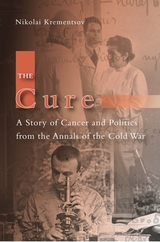
The Cure
A Story of Cancer and Politics from the Annals of the Cold War
Nikolai Krementsov
University of Chicago Press, 2002
Did America try to steal Soviet "cancer secrets"? And how could a cancer cure turn into a "biological atomic bomb"? Nikolai Krementsov's compelling tale of cancer and politics is the story of a husband-and-wife team who developed a promising anticancer treatment in Stalin's Russia, only to see their discovery entangled in Cold War rivalries, ideological conflict, and scientific turf wars.
In 1946, Nina Kliueva and Grigorii Roskin announced the discovery of a preparation able to "dissolve" tumors in mice. Preliminary clinical trials suggested that KR, named after its developers, might work in humans as well. Media hype surrounding KR prompted the U.S. ambassador to the Soviet Union to seek U.S.-Soviet cooperation in perfecting the possible cure. But the escalating Cold War gave this American interest a double edge. Though it helped Kliueva and Roskin solicit impressive research support from the Soviet leadership, including Stalin, it also thrust the couple into the center of an ideological confrontation between the superpowers. Accused of divulging "state secrets" to America, the couple were put on a show trial, and their "antipatriotic sins" were condemned in Soviet stage and film productions.
Parlaying their notoriety into increased funding, Kliueva and Roskin continued their research, but envious colleagues discredited their work and took over their institute. For years, work on KR languished and ceased entirely with the deaths of Kliueva and Roskin. But recently, the Russian press reported that work on KR has begun again, reopening this illuminating story of the intersection among Cold War politics, personal ideals, and biomedical research.
In 1946, Nina Kliueva and Grigorii Roskin announced the discovery of a preparation able to "dissolve" tumors in mice. Preliminary clinical trials suggested that KR, named after its developers, might work in humans as well. Media hype surrounding KR prompted the U.S. ambassador to the Soviet Union to seek U.S.-Soviet cooperation in perfecting the possible cure. But the escalating Cold War gave this American interest a double edge. Though it helped Kliueva and Roskin solicit impressive research support from the Soviet leadership, including Stalin, it also thrust the couple into the center of an ideological confrontation between the superpowers. Accused of divulging "state secrets" to America, the couple were put on a show trial, and their "antipatriotic sins" were condemned in Soviet stage and film productions.
Parlaying their notoriety into increased funding, Kliueva and Roskin continued their research, but envious colleagues discredited their work and took over their institute. For years, work on KR languished and ceased entirely with the deaths of Kliueva and Roskin. But recently, the Russian press reported that work on KR has begun again, reopening this illuminating story of the intersection among Cold War politics, personal ideals, and biomedical research.
[more]
The Cure of Childhood Leukemia
Into the Age of Miracles
Laszlo, John
Rutgers University Press, 1995
.
[more]
Cycle of Segregation
Social Processes and Residential Stratification
Maria Krysan
Russell Sage Foundation, 2017
The Fair Housing Act of 1968 outlawed housing discrimination by race and provided an important tool for dismantling legal segregation. But almost fifty years later, residential segregation remains virtually unchanged in many metropolitan areas, particularly where large groups of racial and ethnic minorities live. Why does segregation persist at such high rates and what makes it so difficult to combat? In Cycle of Segregation, sociologists Maria Krysan and Kyle Crowder examine how everyday social processes shape residential stratification. Past neighborhood experiences, social networks, and daily activities all affect the mobility patterns of different racial groups in ways that have cemented segregation as a self-perpetuating cycle in the twenty-first century.
Through original analyses of national-level surveys and in-depth interviews with residents of Chicago, Krysan and Crowder find that residential stratification is reinforced through the biases and blind spots that individuals exhibit in their searches for housing. People rely heavily on information from friends, family, and coworkers when choosing where to live. Because these social networks tend to be racially homogenous, people are likely to receive information primarily from members of their own racial group and move to neighborhoods that are also dominated by their group. Similarly, home-seekers who report wanting to stay close to family members can end up in segregated destinations because their relatives live in those neighborhoods. The authors suggest that even absent of family ties, people gravitate toward neighborhoods that are familiar to them through their past experiences, including where they have previously lived, and where they work, shop, and spend time. Because historical segregation has shaped so many of these experiences, even these seemingly race-neutral decisions help reinforce the cycle of residential stratification. As a result, segregation has declined much more slowly than many social scientists have expected.
To overcome this cycle, Krysan and Crowder advocate multi-level policy solutions that pair inclusionary zoning and affordable housing with education and public relations campaigns that emphasize neighborhood diversity and high-opportunity areas. They argue that together, such programs can expand the number of destinations available to low-income residents and help offset the negative images many people hold about certain neighborhoods or help introduce them to places they had never considered. Cycle of Segregation demonstrates why a nuanced understanding of everyday social processes is critical for interrupting entrenched patterns of residential segregation.
Through original analyses of national-level surveys and in-depth interviews with residents of Chicago, Krysan and Crowder find that residential stratification is reinforced through the biases and blind spots that individuals exhibit in their searches for housing. People rely heavily on information from friends, family, and coworkers when choosing where to live. Because these social networks tend to be racially homogenous, people are likely to receive information primarily from members of their own racial group and move to neighborhoods that are also dominated by their group. Similarly, home-seekers who report wanting to stay close to family members can end up in segregated destinations because their relatives live in those neighborhoods. The authors suggest that even absent of family ties, people gravitate toward neighborhoods that are familiar to them through their past experiences, including where they have previously lived, and where they work, shop, and spend time. Because historical segregation has shaped so many of these experiences, even these seemingly race-neutral decisions help reinforce the cycle of residential stratification. As a result, segregation has declined much more slowly than many social scientists have expected.
To overcome this cycle, Krysan and Crowder advocate multi-level policy solutions that pair inclusionary zoning and affordable housing with education and public relations campaigns that emphasize neighborhood diversity and high-opportunity areas. They argue that together, such programs can expand the number of destinations available to low-income residents and help offset the negative images many people hold about certain neighborhoods or help introduce them to places they had never considered. Cycle of Segregation demonstrates why a nuanced understanding of everyday social processes is critical for interrupting entrenched patterns of residential segregation.
[more]
READERS
Browse our collection.
PUBLISHERS
See BiblioVault's publisher services.
STUDENT SERVICES
Files for college accessibility offices.
RECENTLY PUBLISHED



UChicago Accessibility Resources
home | accessibility | search | about | contact us
BiblioVault ® 2001 - 2026
The University of Chicago Press