
 A SCHOLARLY BOOK REPOSITORY
225 start with C start with C
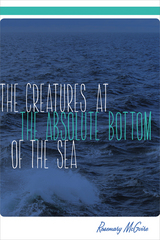
These are fishing stories, told as such stories are meant to be: simple, often coarse, and tinged with the elemental beauty of the sea. They reflect rugged lives lived on the edge of the ocean’s borders, where grief and grace ride the same waves. Rosemary McGuire, a fisherman herself, captures the essential humanity at the heart of each tale. No one comes through unscathed, but all retain a sense of hope and belief in earthly miracles, however humble.
A dazzling debut, The Creatures at the Absolute Bottom of the Sea will leave readers with a sense of the fragility and beauty inherent in eroded lives spent in proximity to danger.

In Creekside, dedicated archaeologist Meg Harrington guides her students in a race against time to protect the legacy of the past before bulldozers rip it to shreds.
The setting is a Kentucky pasture slated for development—the construction of the new Creekside subdivision. Once, that same beautiful stretch of land was home to three generations who experienced love, loss, and tragedy in their log cabin beside the creek. It was here during the late 18th century that Estelle Mullins struggled to build her home on the dangerous frontier.
In Meg’s 21st-century world of archaeology we read about excavation techniques, daily experiences at a dig, tight construction deadlines, the use of heavy equipment, report writing, artifact analysis, damage from looters and collectors, and the reality of site destruction in the path of modern development. The depiction of Estelle’s frontier life includes Kentucky’s early Euro-American settlement of the Cumberland Gap, encounters with Shawnee defending their land, Protestant fragmentation, the rise of religious fundamentalism, the immigrant stampede down the Ohio River, and the persistent issue of class-based land ownership.
The two partially interwoven story lines link artifact and place, ancestors and descendants, the present and the past, and inspire us to explore the personal connections between them all in fresh and vital ways.
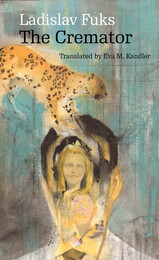
It is a maxim that both rings true in our contemporary world and pervades this tragicomic novel of anxiety and evil set amid the horrors of World War II. As a gay man living in a totalitarian, patriarchal society, noted Czech writer Ladislav Fuks identified with the tragic fate of his Jewish countrymen during the Holocaust. The Cremator arises from that shared experience. Fuks presents a grotesque, dystopian world in which a dutiful father, following the strict logic of his time, liberates the souls of his loved ones by destroying their bodies—first the dead, then the living. As we watch this very human character—a character who never ceases to believe that he is doing good—become possessed by an inhuman ideology, the evil that initially permeates the novel’s atmosphere concretizes in this familiar family man. A study of the totalitarian mindset with stunning resonance for today, The Cremator is a disturbing, powerful work of literary horror.
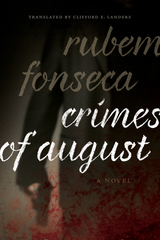
Rubem Fonseca's Crimes of August offers the first serious literary treatment of the cataclysmic events of August 1954, arguably the most turbulent month in Brazilian history. A rich novel, both culturally and historically, Crimes of August tells two stories simultaneously. The first is private, involving the well-delineated character of Alberto Mattos, a police officer. The other is public, focusing on events that begin with the attempted assassination of Carlos Lacerda, a demagogic journalist and political enemy of President Getúlio Vargas, and culminate in Vargas's suicide on August 24,1954. Throughout this suspenseful novel, deceptively couched as a thriller, Fonseca interweaves fact and fiction in a complex, provocative plot. At the same time, he re-creates the atmosphere of the 1950s, when Rio de Janeiro was Brazil's capital and the nexus of political intrigue and corruption. Mattos is assigned to solve the brutal murder of a wealthy entrepreneur in the aftermath of what appears to be a homosexual liaison. An educated and introspective man, and one of the few in his precinct not on the take from the bankers of the illegal lottery, Mattos suffers from alienation and a bleeding ulcer. His investigation puts him on a dangerous collision course with the conspiracy to depose Vargas, the novel's other narrative thread. The two overlap at several points, coming to their tragic end with the aged politician's suicide and Mattos's downfall.
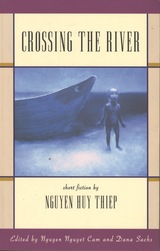
Crossing the River presents a wide range of Nguyen Huy Thiep's short fiction, both realistic stories in contemporary settings and retellings of folk myths that serve as contemporary parables. When Thiep's stories first appeared in the 1980s, they set off a chain of debate, not only within intellectual and political circles, but also within the society at large. Typically, the struggles of his characters were about survival, not survival in the context of war or revolution, but survival in the context of the emotional and psychological strength it takes to live within the harsh confines of post-war Vietnamese society. Thiep captured the emotional quality of Vietnamese life in a way no other author had done, and his importance can be recognized today by his enormous influence on younger writers.
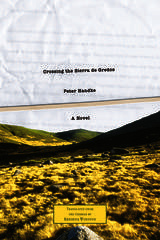
On the outskirts of a European riverport city lives a powerful woman banker, a public figure admired and hated in equal measure, who has decided to turn from the worlds of high finance and modern life to embark on a quest. Having commissioned a famous writer to undertake her "authentic" biography, she journeys through the Spanish Sierra de Gredos and the region of La Mancha to meet him. As she travels by all-terrain vehicle, bus, and finally on foot, the nameless protagonist encounters five way stations that become the stuff of her biography and the biography of the modern world, a world in which genuine images and unmediated experiences have been exploited and falsified by commercialization and the voracious mass media.
In this visionary novel, Peter Handke offers descriptions of objects, relationships, and events that teach readers a renewed way of seeing; he creates a wealth of images to replace those lost to convention and conformity. Crossing the Sierra de Gredos is, as well, a very human book of yearning and the ancient search for love, peopled with memorable characters (from multiple historical periods) and imbued with Handke’s inimitable ability to portray universal, innerworldly adventures that blend past, future, present, and dreamtime.
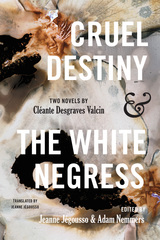
Cruel Destiny (1929) tells the tragic love story of Armand and Adeline, drawn together by a magnetic attraction, yet kept apart by a dark family secret. Depicting the heavy expectations placed upon women in Haiti’s elite society, it also explores the troubled and twisted relationships between the Haitians and their former colonial masters, the French.
In The White Negress (1934), a Frenchwoman moves to Haiti and is torn between two very different men, a Black Haitian lawyer, and a white American carpetbagger. Putting a fresh spin on the tired tragic mulatta trope, Valcin reveals the racial prejudices, class tensions, and anti-colonial resentments of an island under American occupation.
Together, these two novels expand our understanding of Caribbean literature, as well as the political struggles and artistic triumphs of Black women in the Americas.

Dana Seitler’s introduction provides historical context, revealing The Crux as an allegory for social and political anxieties—including the rampant insecurities over contagion and disease—in the United States at the beginning of the twentieth century. Seitler highlights the importance of The Crux to understandings of Gilman’s body of work specifically and early feminism more generally. She shows how the novel complicates critical history by illustrating the biological argument undergirding Gilman’s feminism. Indeed, The Crux demonstrates how popular conceptions of eugenic science were attractive to feminist authors and intellectuals because they suggested that ideologies of national progress and U.S. expansionism depended as much on women and motherhood as on masculine contest.

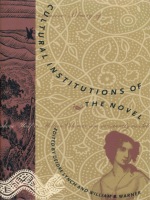
The essays in Cultural Institutions of the Novel find new ways to analyze how a genre notorious for its aesthetic unruliness has become institutionalized—defined, legitimated, and equipped with a canon. With a particular focus on the status of novels as commodities, their mediation of national cultures, and their role in transnational exchange, these pieces range from the seventeenth century to the present and examine the forms and histories of the novel in England, Nigeria, Japan, France, New Zealand, Canada, and the United States. Works by Jane Austen, Natsume Sôseki, Gabriel García Márquez, Buchi Emecheta, and Toni Morrison are among those explored as Cultural Institutions of the Novel investigates how theories of “the” novel and disputes about which narratives count as novels shape social struggles and are implicated in contests over cultural identity and authority.
Contributors. Susan Z. Andrade, Lauren Berlant, Homer Brown, Michelle Burnham, James A. Fujii, Nancy Glazener, Dane Johnson, Lisa Lowe, Deidre Lynch, Jann Matlock, Dorothea von Mücke, Bridget Orr, Clifford Siskin, Katie Trumpener, William B. Warner
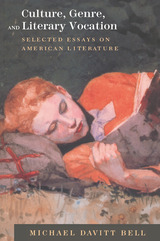
Throughout, Bell revisits issues of genre with an eye toward the unexpected details of authors' lives, and invites us to reconsider the hidden functions that terms such as "romanticism" and "realism" served for authors and their critics. Whether tracing the demands of the market or the expectations of readers, Bell examines the intimate relationship between literary production and culture; each essay closely links the milieu in which American writers worked with the trajectory of their storied careers.
This richly orchestrated novel, which won a national literary prize in the author's native land, Venezuela, also earned international recognition when the William Faulkner Foundation gave it an award as the most notable novel published in Ibero America between 1945 and 1962.
Cumboto's disturbing story unfolds during the early decades of the twentieth century on a Venezuelan coconut plantation, in a turbulent Faulknerian double world of black and white. It records the lives of Don Federico, the effete survivor of a once vigorous family of landowners, and his Black servant Natividad, who since the days of their mutual childhood has been his only friend.
Young Federico, psychologically impotent and lost to human contact, lives on as a lonely recluse in the century-old main house of "Cumboto," surrounded by descendants of African slaves who still manage, despite his apathy, to keep the plantation on its feet. Natividad's heroic and selfless struggle to redeem his friend by awakening him to the stirrings of the earth and life about him sets in motion a series of events that are to shatter Federico's childlike world: a headlong love affair with a voluptuous black girl, her terrified flight in the face of the bitter condemnation of her own people, and the unexpected appearance, twenty years later, of their extraordinary son.
Throughout the novel runs a recurring theme: neither race can survive without the other. Black and white, Díaz Sánchez suggests, embody contrasting aspects of human nature, which are not inimical but complementary: the languid intellectualism of European culture must be tempered with the indestructible vitality and intuition of the African soul if humanity is ever fully to comprehend the living essence of the world.
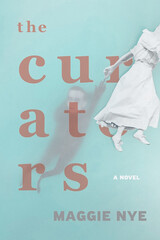
A dark, lyrical blend of historical fiction and magical realism, The Curators examines a critically underexplored event in American history through unlikely eyes. All of Atlanta is obsessed with the two-year-long trial and subsequent lynching of Jewish factory superintendent Leo Frank in 1915. None more so than thirteen-year-old Ana Wulff and her friends, who take history into their own hands—quite literally—when they use dirt from Ana’s garden to build and animate a golem in Frank’s image. They’ll do anything to keep his story alive, but when their scheme gets out of hand, they must decide what responsibility requires of them. The Curators tells the story of five zealous girls and the cyclonic power of their friendship as they come of age in a country riven by white supremacy.
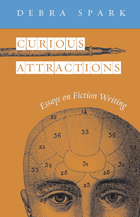
While the book will have immediate appeal for students of writing, it will also be of interest to general readers for its in-depth reading of contemporary fiction and for its take on important issues of the day: Should writers try to be more uplifting? How is emotion best conveyed in fiction? Why are serious writers in North America wedded to the realist tradition?
When she was only twenty-three, Debra Spark's best-selling anthology 20 Under 30 introduced readers to some of today's best writers, including David Leavitt, Susan Minot, Lorrie Moore, Ann Patchett, and Mona Simpson. Almost twenty years later, Spark brings this same keen critical eye to Curious Attractions, discussing a broad range of authors from multiple genres and generations.
A collection of essays in the belles-lettres tradition, Curious Attractions offers lively and instructive discussions of craft flavored with autobiographical reflections and commentary on world events. Throughout, Spark's voice is warm, articulate, and engaging as it provides valuable insights to readers and writers alike.
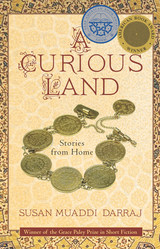
Susan Muaddi Darraj's short story collection about the inhabitants of a Palestinian West Bank village, Tel al-Hilou, spans generations and continents to explore ideas of memory, belonging, connection, and, ultimately, the deepest and richest meaning of home. A Curious Land gives voice to the experiences of Palestinians in the last century.
An excerpt from A Curious Land:
When Rabab lowered the magad and clapped-clapped to the well in her mother's too-big slippers, the stone jar digging into her shoulder, she didn't, at first, see the body. The morning sun glazed everything around her—the cement homes, the iron rails along one wall, the bars on the windows, the stones around the well—and made her squint her itchy eyes.
She was hungry. That was all.
They'd arrived here only last night, stopping as soon as Awwad and the men were sure the army had moved south. It must have been the third time in just a few weeks—collapse the tents, load the mules, disappear into the sands. She hoped this war would end soon, and she didn't really care who won, as long as it ended because they hadn't eaten well in two years. In the past few months, her mother had sold all her gold, except for her bracelet made of liras. It was the only thing left, and she was holding onto it, and Rabab realized, so were they all; she imagined that, the day it was sold, when her mother's wrist was bare, would signal that they were at the end.

In Cyborg Fever, acclaimed writer Laurie Sheck brings us a probing and lyrical philosophical fiction in the spirit of Umberto Eco, Italo Calvino, and Donna Haraway’s Cyborg Manifesto that enacts an incisive and moving exploration into what it means to be human in the age of AI and increasing transhumanism.
Throughout Cyborg Fever, many strange, surprising facts appear: an artist clones a flower from his DNA and the DNA of a petunia, an astronaut plays golf on the moon, a mathematician on a rest cure rethinks the life of Shakespeare, and particles and antiparticles collide at lightning speed beneath the green hills of Switzerland and France. Threaded throughout, one question lingers: in this age of AI and genetic engineering, how can we come to know more fully what it means to love and be human among the wonders and destructions we have wrought on Earth?
At the center of the book is the narrator, Erwin, left as an hours-old infant on the steps of an orphanage where he is named after the renowned physicist Erwin Schrodinger (of the famous Schrodinger’s cat experiment). After a traumatic fall into a year-long fever dream, he experiences many visions that take him into many areas of inquiry including the nature of the universe, bioengineering, medical experimentation, cyborgs, AI, and space and time, and ultimately teaches him the nature of love. Along the way, he develops a friendship with a gentle cyborg who has escaped from a Lab involved in covert medical intervention. Guided by the cyborg and a vision of Funes (of Borges’s iconic story “Funes the Memorious”), Erwin experiences the Information Age and the promises of AI in all its beauty and, ultimately, its terror, as he watches the cyborg he has come to love devolve into an unfeeling information machine.
Throughout, issues of personhood, human attachment, and the dignity of all living beings pervade Erwin’s thinking and leave him with a larger understanding and appreciation of what it means to love.
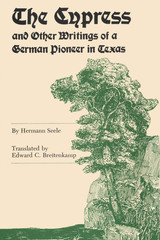
When Hermann Seele anived in New Braunfels in 1845, the raw colony was plagued by poverty, disease, lack of food, and hostile Indians. This personal record of the Germans in Texas shows their evolution from struggling colonists to prosperous citizens.
From his viewpoint of a hardworking yet imaginative pioneer, Seele presents first a history of German immigration and settlement in Texas during the nineteenth century. Next, his autobiographical writings range from a "sentimental recollection" of his first Christmas Eve in Texas to his first day of teaching in New Braunfels, from accounts of the popular singing society to murder and justice along the Comal River. In addition, Seele's romantic novel, The Cypress, is a delightful though improbable tale of a traveling botanist, a chieftain's daughter, and a savage Indian cult.
Hermann Seele—farmer, lawyer, teacher, lay preacher, mayor, state representative, Civil War major, and editor—epitomizes the best of the German immigrants who established their communities as models of respectability and prosperity.
A royal education.
Xenophon (ca. 430 to ca. 354 BC) was a wealthy Athenian and friend of Socrates. He left Athens in 401 and joined an expedition including ten thousand Greeks led by the Persian governor Cyrus against the Persian king. After the defeat of Cyrus, it fell to Xenophon to lead the Greeks from the gates of Babylon back to the coast through inhospitable lands. Later he wrote the famous vivid account of this “March Up-Country” (Anabasis); but meanwhile he entered service under the Spartans against the Persian king, married happily, and joined the staff of the Spartan king, Agesilaus. But Athens was at war with Sparta in 394 and so exiled Xenophon. The Spartans gave him an estate near Elis where he lived for years writing and hunting and educating his sons. Reconciled to Sparta, Athens restored Xenophon to honor, but he preferred to retire to Corinth.
Xenophon’s Anabasis is a true story of remarkable adventures. Hellenica, a history of Greek affairs from 411 to 362, begins as a continuation of Thucydides’ account. There are four works on Socrates (collected in LCL 168). In Memorabilia Xenophon adds to Plato’s picture of Socrates from a different viewpoint. The Apology is an interesting complement to Plato’s account of Socrates’ defense at his trial. Xenophon’s Symposium portrays a dinner party at which Socrates speaks of love; and Oeconomicus has him giving advice on household management and married life. Cyropaedia, a historical romance on the education of Cyrus (the Elder), reflects Xenophon’s ideas about rulers and government; the Loeb edition is in two volumes.
We also have his Hiero, a dialogue on government; Agesilaus, in praise of that king; Constitution of Lacedaemon (on the Spartan system); Ways and Means (on the finances of Athens); Manual for a Cavalry Commander; a good manual of Horsemanship; and a lively Hunting with Hounds. The Constitution of the Athenians, though clearly not by Xenophon, is an interesting document on politics at Athens. These eight books are collected in the last of the seven volumes of the Loeb Classical Library edition of Xenophon.
A royal education.
Xenophon (ca. 430 to ca. 354 BC) was a wealthy Athenian and friend of Socrates. He left Athens in 401 and joined an expedition including ten thousand Greeks led by the Persian governor Cyrus against the Persian king. After the defeat of Cyrus, it fell to Xenophon to lead the Greeks from the gates of Babylon back to the coast through inhospitable lands. Later he wrote the famous vivid account of this “March Up-Country” (Anabasis); but meanwhile he entered service under the Spartans against the Persian king, married happily, and joined the staff of the Spartan king, Agesilaus. But Athens was at war with Sparta in 394 and so exiled Xenophon. The Spartans gave him an estate near Elis where he lived for years writing and hunting and educating his sons. Reconciled to Sparta, Athens restored Xenophon to honor, but he preferred to retire to Corinth.
Xenophon’s Anabasis is a true story of remarkable adventures. Hellenica, a history of Greek affairs from 411 to 362, begins as a continuation of Thucydides’ account. There are four works on Socrates (collected in LCL 168). In Memorabilia Xenophon adds to Plato’s picture of Socrates from a different viewpoint. The Apology is an interesting complement to Plato’s account of Socrates’ defense at his trial. Xenophon’s Symposium portrays a dinner party at which Socrates speaks of love; and Oeconomicus has him giving advice on household management and married life. Cyropaedia, a historical romance on the education of Cyrus (the Elder), reflects Xenophon’s ideas about rulers and government; the Loeb edition is in two volumes.
We also have his Hiero, a dialogue on government; Agesilaus, in praise of that king; Constitution of Lacedaemon (on the Spartan system); Ways and Means (on the finances of Athens); Manual for a Cavalry Commander; a good manual of Horsemanship; and a lively Hunting with Hounds. The Constitution of the Athenians, though clearly not by Xenophon, is an interesting document on politics at Athens. These eight books are collected in the last of the seven volumes of the Loeb Classical Library edition of Xenophon.

Fifty-four weeks later, what Vaculík turns out to have written is a unique mixture of diary, dream journal, and outright fiction—an inverted roman à clef in which the author, his family, his mistresses, and the real leaders of the Czech underground play major roles. Undisputedly the most debated novel among the Prague dissident community of the 1980s, it is a work that Vaculík himself described as an amalgam of “hard-boiled documentary” and “magic fiction,” while Václav Havel called it “a truly profound and perceptive account. . . . A great novel about modern life and the crisis of contemporary humanity.”
A Czech Dreambook has been hailed as the most important work of Czech literature in the past forty years. And yet it has never before been available in English. Flawlessly translated by Gerald Turner, Vaculík’s masterpiece is a brilliant exercise in style, dry humor, and irony—an important portrait of the lives and longings of the dissidents and post-Communist elites.

La colección se compone de los relatos favoritos de Daniel A. Olivas, previamente publicados, junto con dos nuevos relatos, uno distópico y otro mítico, que desafían la retórica y las políticas anti-inmigración de la administración Trump. Los lectores se encontrarán con un mundo lleno tanto de lo mágico como de lo cotidiano: un hombre con doce dedos que se encuentra a sí mismo en una cita mística con una mujer; Dios, que se aparece en forma de gallina raquítica; una mujer que lucha con valentía contra su maltratador; y dioses aztecas en busca de relevancia tras la conquista española—solo por nombrar algunos de los singulares personajes que pueblan estas páginas. El libro reúne algunos de los cuentos más extraños e inolvidables de Olivas, permitiendo a los lectores experimentar su muy distintiva, y muy Chicana, ficción.
READERS
Browse our collection.
PUBLISHERS
See BiblioVault's publisher services.
STUDENT SERVICES
Files for college accessibility offices.
RECENTLY PUBLISHED




UChicago Accessibility Resources
home | accessibility | search | about | contact us
BiblioVault ® 2001 - 2025
The University of Chicago Press