
 A SCHOLARLY BOOK REPOSITORY
41 start with C start with C

Caldwell and Company was founded in Nashville in 1917 by Rogers Caldwell, the son of a leading local banker and businessman. Beginning as a small underwriter and distributor of Southern municipal bonds, the firm soon branched out into real estate bonds and industrial securities as well. Control of important banks in Tennessee and Arkansas was acquired; newspapers, and even Nashville's professional baseball team, came under the firm’s ownership. Caldwell and Company was, truly, a pioneer conglomerate.
Caldwell and Company also ventured into the realm of politics, supporting certain politicians (notably Colonel Luke Lea) with questionable benefits accruing to the firm, including substantial state deposits in Caldwells Bank of Tennessee.
In November 1930 the firm went into receivership. Unethical practices, including overextension in the acquisition of banks, insurance companies, and other business, had already strain Caldwell and Company’s assets. With the 1929 collapse of stock prices. Rogers Caldwell could not meet the company’s obligations, and he began to squeeze all available cash from the various controlled firms. He also negotiated a merger between Caldwell and Company and Banco-Kentucky Company of Louisville—a transaction which must stand as one of the strangest deals in the annals of American business. Even the aforementioned State of Tennessee deposits, which helped float his empire for a while, could not prevent its collapse—a collapse which resulted in a multi-million dollar loss to Tennessee’s Treasury, public hysteria, and clamor for the impeachment of the Governor of Tennessee.
Originally Published in 1939, this edition includes a new introduction in which the author comments on the long-run implications of the Caldwell episode and reports the outcome of legal actions, both civil and criminal, still pending at the time the book was first published.

Camille’s Lakou tells the story of Camille, a young Caribbean girl living with her single‑parent mother in a 1960s urbanized zone at the edge of Pointe‑à‑Pitre, Guadeloupe, following her through her adult life as a Caribbean migrant in Florida. Author Marie Léticée explores neocolonial culture clash and identity conflict themes that will be familiar to readers of the Francophone Caribbean coming‑of‑age novel and its revisions by women writers such as Capécia, Lacrosil, Manicom, Schwarz‑Bart, Condé, Pineau, and others. Léticée makes it her own by fleshing out a time and place not well‑represented in Guadeloupean literature. While previous bildungsromane from the writers mentioned here typically focus on rural peasant or urban bourgeois settings, Camille’s Lakou shifts location to an impoverished urban environment. “Lakou” is translated as “courtyard” or, more colloquially, “yard.” The author explores the culture and politics of lakou society while raising the issue of how this social dynamic is transformed through the impact of globalization and dispersal into a diasporic experience outside the island milieu of Camille’s childhood.
In a collaborative translation effort between the author and Kevin Meehan, Camille’s Lakou will bring the realities and joys of Léticée’s Guadeloupe to an English audience for the first time.

The advent of the testimonio--loosely, a political autobiography of a Latin American activist who hopes, through the telling of her life story, to bring about change--was met with a great deal of excitement by scholars who posited it as a radical new form of literature. Those accolades were almost immediately followed by a series of critical problems. In what sense were testimonios "true"? What right did privileged scholars in the U.S. have to engage accounts of suffering with traditional modes of criticism? Were questions of veracity or aesthetics more important? Were these texts autobiography or political screeds? It seemed critics didn't know quite what to make of the testimonio and so, after a brief bout of engagement, disregarded it.
Nance, however, argues that any form as prolific as the testimonio is well worth examining and that these questions, rather than being insurmountable, are exactly the questions with which scholars ought to be wrestling. If, as critics claim, that the testimonio is one of the most pervasive contemporary Latin American cultural genres, then it is high time for a comprehensive study of the genre such as Nance's.

Caring for Red is Mindy Fried's moving and colorful account of caring for her ninety-seven-year-old father, Manny--an actor, writer, and labor organizer--in the final year of his life. This memoir chronicles the actions of two sisters as they discover concentric circles of support for their father and attempt to provide him with an experience of "engaged aging" in an assisted living facility.
The story is also that of a daughter of a powerful and outspoken man who took risks throughout his life and whose political beliefs had an enduring impact on his family. (After Manny was called before the House Un-American Activities Committee, he was blacklisted and his family was shunned.)
As an actor, Manny was affiliated with Elia Kazan's Group Theatre and the Federal Theatre Project. He did Shakespeare, Chekhov, and Ibsen, and played everything from the tormented father in Arthur Miller's All My Sons to an infant in a baby carriage in Thornton Wilder's Infancy, from the Rabbi in Fiddler on the Roof to--poignantly for this book--the role of Morrie in Tuesdays with Morrie.
As she devotes herself to caring for her dying father, Mindy grapples anew with the complexity of their relationship. She questions whether she can be there for him and how to assert her own voice as her father's caregiver in his last days.

Van Delden's thorough command of the subject matter, his innovative and sometimes iconoclastic conclusions, and his clear and engaging writing style make this study more than just an interpretation of Fuentes's work. Carlos Fuentes, Mexico, and Modernity offers nothing less than a comprehensive analysis of Fuentes's intellectual development in the context of modern Mexican political and cultural life.

Scholars, investigative journalists, political activists, and a filmmaker combine to document the vast array of Madrid's grassroots movements.

In Castings, Guy Rotella examines the work of five important poets who have engaged in that effort: Elizabeth Bishop, Robert Lowell, James Merrill, Derek Walcott, and Seamus Heaney. Considering their wider careers as well as particular poems--including Bishop's "The Monument," Lowell's "For the Union Dead," Merrill's "Bronze," Walcott's "The Sea Is History," and Heaney's "In Memoriam Francis Ledwidge"--Rotella argues that these writers are less concerned with defending or condemning monuments than with pursuing ancient and current debates about the political, aesthetic, and broadly cultural issues that monuments condense. Among these concerns are the competing claims of life and art, persistence and change, meaning and meaninglessness, the self and society, and the governing and the governed.
Original and provocative, Rotella's readings will make us ponder how the human impulse to build to last, to reify our culturally derived and ideologically driven faiths, might coexist with those other creeds of our place and time: relativism, multiculuralism, and diversity.

Arielismo takes its name from José Enrique Rodó’s foundational essay Ariel (1900), a wide‑ranging gospel dedicated to Latin American youth that incited a cultural awakening under the banner of the spirit throughout the Americas at an ominous juncture—when the US co-opted the Cuban War of Independence in 1898, effectively rebranding it as the Spanish‑American War. Rodó’s optimistic message of transcendence as an antidote to the encroaching empire quickly became one of the most pervasive and malleable paradigms of regional empowerment, reverberating throughout a range of Latin Americanist projects in the twentieth and twenty‑first centuries.
Centenary Subjects recovers a series of important but understudied essays penned by arielista writers, radicals, pedagogues, prophets, and politicians of diverse stripes in the early twentieth century, and analyzes how, under the auspices of the arielista platform, young people emerged as historical subjects invested with unprecedented cultural capital, increasing political power, and an urgent mandate to break with the past and transform the sociopolitical and cultural landscape of their countries. But their respective designs harbor racial, epistemological, aesthetic, and anarchistic strains that bring into sharper relief the conflicting signals that the centenary subject had to parse with respect to race, reason, and rupture.

No work has documented in such vivid and illuminating detail the socio-political world of sixteenth-century Algiers, Cervantes's life in the prison-house, his four escape attempts, and the conditions of his final ransom. Garces's portrait of a sophisticated multi-ethnic culture in Algiers, moreover, is likely to open up new discussions about early modern encounters between Christians and Muslims. By bringing together evidence from many different sources, historical and literary, Garces reconstructs the relations between Christians, Muslims, and renegades in a number of Cervantes's writings.
The idea that survivors of captivity need to repeat their story in order to survive (an insight invoked from Coleridge to Primo Levi to Dori Laub) explains not only Cervantes's storytelling but also the book that theorizes it so compellingly. As a former captive herself (a hostage of Colombian guerrillas), the author reads and listens to Cervantes with another ear.
Cervantine Futures places the writings of Miguel de Cervantes into conversation with some of the most pressing issues in cultural studies, critical theory, and sociopolitical discourse of the last decade. Assembling a diverse range of prominent and emerging scholars in the field, this volume stakes a claim for Hispanism’s place in the growing scholarly movement to vindicate pre- and early modernity for its incisive and often singular perspective on race, gender, ability, the body, affect, materialism, and other axes of timely debate.
To date, the writings of Miguel de Cervantes have been oddly sidelined from larger, ongoing scholarly projects to link premodern literature with the most recent analytics of critical theory and cultural studies. Cervantine Futures addresses this conspicuous gap by highlighting creative, forward-looking, and rigorous approaches that situate Cervantes in recent theoretical developments in critical cultural studies. Conceived under the rubric of “futures”—collective and capacious, yet also subjunctive and transtemporal—this book tasks the fields of early modern Iberian and Cervantine studies with adopting a more global approach to the early modern period that surveys the current and historical landscapes while charting new horizons. Crucially, Cervantine Futures reflects upon how early modern texts, cultural modes of expression, and visual ideations from Cervantes’s life and legacy resonate with contemporary debates on gender, race, ability, and other issues. The volume thus includes scholarly provocations that deploy feminist, queer, critical race, disability studies, and new materialist approaches to Cervantes’s oeuvre—tendentiously positioned as “canonical”—with the purpose not only of scrutinizing its sociopolitical meanings, but also of creating new archives that productively reframe and rethink early modernity.

In the mid-twentieth century colleges' concerns about finances and enrollments, as well as ideological pressures to integrate formerly separate social groups, led men's colleges, and some women's colleges, to become coeducational. The admission of women to practically all men's colleges created a serious challenge for women's colleges. Most people no longer believed women's colleges were necessary since women had virtually unlimited access to higher education. Even though research spawned by the women's movement indicated the benefits to women of a "room of their own," few young women remained interested in applying to women's colleges.
Challenged by Coeducation details the responses of women's colleges to this latest wave of coeducation. Case studies written expressly for this volume include many types of women's colleges-Catholic and secular; Seven Sisters and less prestigious; private and state; liberal arts and more applied; northern, southern, and western; urban and rural; independent and coordinated with a coeducational institution. They demonstrate the principal ways women's colleges have adapted to the new coeducational era: some have been taken over or closed, but most have changed by admitting men and thereby becoming coeducational, or by offering new programs to different populations. Some women's colleges, mostly those that are in cities, connected to other colleges, and prestigious with a high endowment, still enjoy success.
Despite their dramatic drop in numbers, from 250 to fewer than 60 today, women's colleges are still important, editors Miller-Bernal and Poulson argue. With their commitment to enhancing women's lives, women's colleges and formerly women's colleges can serve as models of egalitarian coeducation.

He was one of two Confederates ever executed by the Union Army, if, indeed, he was actually executed.

Ranging from the immediate aftermath of the Spanish‑American Wars of Independence (1810–1826) to the early twentieth century (1925), the volume’s essays cover a wide variety of genres and forms of cultural production, from José Hernández’s epic poem Martín Fierro to prose fiction, painting and photography, and the personal albums compiled by Spanish-American women. Individually and collectively, the essays engage with scientific writing as both a discourse of power and a source of potentially significant, even revelatory information about human and nonhuman nature. Changes in the Landscape enables readers to more fully understand the transition from colonial regimes to the ecocidal extractivism of the export boom (1870–1930) by drawing out and analyzing some of the cognitive resources and rhetorical strategies that were available to imagine, protest, or enact new norms and expectations regarding the relations between human and nonhuman life, be it the life of wildflowers, waterfalls, or Cuba’s Ciénaga de Zapata.

Peru's Intercultural Birthing Policy of 2005 was intended to solve these longstanding issues by recognizing indigenous cultural values and making biomedical care more accessible and desirable for indigenous women. Yet many difficulties remain.
Guerra-Reyes also gives ethnographic attention to health care workers. She explains the class and educational backgrounds of traditional birth attendants and midwives, interviews doctors and health care administrators, and describes their interactions with local families. Interviews with national policy makers put the program in context.

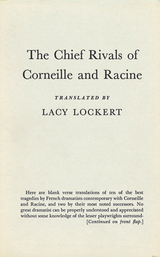
No play by any of these dramatists, except Voltaire, has ever before been translated into English. The faithfulness and literary qualities of Dr. Lockert's translations are avouched by his two previous volumes in this field, The Chief Plays of Corneille and The Best Plays of Racine.

Books like Johnny Tremain, The Witch of Blackbird Pond, Island of the Blue Dolphins, and Roll of Thunder, Hear My Cry stimulate children's imagination, transporting them into the American past and projecting them into an American future. As works of historical interpretation, however, many are startlingly out of step with current historiography and social sensibilities, especially with regard to race. Unlike textbooks, which are replaced on regular cycles and subjected to public tugs-of-war between the left and right, historical novels have simply--and quietly--endured. Taken individually, many present troubling interpretations of the American past. But embraced collectively, this classroom canon provides a rare pedagogical opportunity: it captures a range of interpretive voices across time and place, a kind of "people's history" far removed from today's state-sanctioned textbooks.
Teachers who employ historical novels in the classroom can help students recognize and interpret historical narrative as the product of research, analytical perspective, and the politics of the time. In doing so, they sensitize students to the ways in which the past is put to moral and ideological uses in the present.
Featuring separate chapters on American Indians, war, and slavery, Child-Sized History tracks the changes in how young readers are taught to conceptualize history and the American nation.

Sixteen thousand staff were involved in running the project, which encountered massive bureaucratic obstacles as well as cultural differences, politicking for study designs and funding, the crisis of Tiananmen Square, and testy debates over research ethics. Nevertheless, the researchers persevered in a collaboration that lasted more than three decades and led to landmark findings on the role of folic acid in preventing spina bifida. Fortifying cereal grain products with folic acid became routine in the United States and a growing number of nations around the world: that intervention was named one of the ten great public health achievements of the last decade.
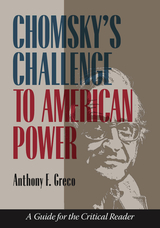
Chomsky is as controversial as he is influential. Admirers see him as a courageous teller of unpleasant truths about political power and those who wield it in the United States. Critics view him as a propagandist and ideologue who sees only black and white where there are multiple shades of gray. While Chomsky's fans tend to view him uncritically, his critics often don't take him seriously. Unlike any previous work, this book takes Chomsky seriously while treating him critically. The author gives Chomsky credit for valuable contributions to our understanding of the contemporary political world, but spares no criticism of the serious deficiencies he sees in Chomsky's political analyses.

This book assesses the primary determinants of well-being in cities, including the social and physical environments, diet, and health care and social services. The book includes chapters on the history of public health in cities, the impact of urban sprawl and urban renewal on health, and the challenges facing cities in the developing world. It also examines conditions such as infectious diseases, violence and disasters, and mental illness.

In Cities Beyond Crisis, Catalina Iannone studies the rapid evolution of Iberian urban centers in the years following the 2008 financial crisis, identifying how this event catalyzed a protracted period of unraveling and reorganization in the region. Arguing that the affects and effects of the crisis are best understood when embedded within local environments, Cities Beyond Crisis focuses on how textual, visual, and spatial interventions both drove and contested change in two racially diverse, historically marginalized neighborhoods in the capital cities of Spain and Portugal—Madrid’s Lavapiés and Lisbon’s Mouraria. Through a critical examination of the narratives shaping public perception of these spaces, whether promoting their development and consumption or challenging market-oriented trends, Iannone demonstrates how the stories that stakeholders across the ideological spectrum told about these districts illuminate enduring attachments and aspirations in each nation’s relationship to race. By approaching the study of space as a contested and contingent social product, this book takes an interdisciplinary approach, drawing from both humanistic and social science theories and practices to show how cultural production shapes and is shaped by the built environment.

Nashville has been many things: frontier town, Civil War battleground, New South mecca, and Music City, U.S.A. It is headquarters for several religious denominations, and also the home of some of the largest insurance, healthcare, and publishing concerns in the country. Located culturally as well as geographically between North and South, East and West, Nashville is centered in a web of often-competing contradictions.
One binding image of civic identity, however, has been consistent through all of Nashville's history: the classical Greek and Roman ideals of education, art, and community participation that early on led to the city's sobriquet, "Athens of the West," and eventually, with the settling of the territory beyond the Mississippi River, the "Athens of the South."
Illustrated with nearly a hundred archival and contemporary photographs, Classical Nashville shows how Nashville earned that appellation through its adoption of classical metaphors in several areas: its educational and literary history, from the first academies through the establishment of the Fugitive movement at Vanderbilt; the classicism of the city's public architecture, including its Capitol and legislative buildings; the evolution of neoclassicism in homes and private buildings; and the history and current state of the Parthenon, the ultimate symbol of classical Nashville, replete with the awe-inspiring 42-foot statue of Athena by sculptor Alan LeQuire.
Perhaps Nashville author John Egerton best captures the essence of this modern city with its solid roots in the past. He places Nashville "somewhere between the 'Athens of the West' and 'Music City, U.S.A.,' between the grime of a railroad town and the glitz of Opryland, between Robert Penn Warren and Robert Altman." Nashville's classical identifications have always been forward-looking, rather than antiquarian: ambitious, democratic, entrepreneurial, and culturally substantive. Classical Nashville celebrates the continuation of classical ideals in present-day Nashville, ideals that serve not as monuments to a lost past, but as sources of energy, creativity, and imagination for the future of a city.
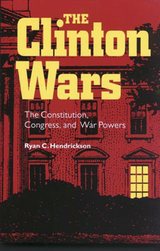
Ryan Hendrickson examines the behavior of the Clinton administration and Congress in dealing with the range of American military operations that occurred during the Clinton presidency. He uses a case-study approach, laying out the foreign background and domestic political controversies in separate chapters on Somalia, Haiti, Bosnia, Kosovo, and Iraq. Of special interest after the World Trade Center attacks is the chapter "Terrorism: Usama Bin Laden."
The author analyzes a number of factors that influence the domestic decision-making process. We see the president relying on congressional consultation and approval during periods of political or personal weakness, and, conversely, in better times we see a president with a freer hand. Also influential is the ability of the public to comprehend and support the reasons for a particular action, with troops in Bosnia requiring more explanation than cruise missiles over Baghdad. Consideration is given to the relevance and effectiveness of the War Powers Resolution of 1973, a Watergate-era attempt by Congress to restore what it perceived to be its legitimate constitutional role in the decision to use force abroad.
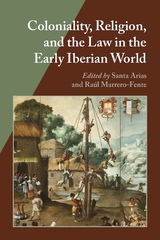
Hispanic Issues Series
Nicholas Spadaccini, Editor-in-Chief
Hispanic Issues Online
hispanicissues.umn.edu/online_main.html

From 3,200 hours of participant-observation and 500 hours of follow-up interviews with twenty-one doctors, thirty registered nurses, twenty-one respiratory therapists, twenty medical social workers, and eighteen occupational, physical, and speech therapists, the authors create a complex picture of the workplace conflicts that different types of health care practitioners face. Though all these groups espouse caring ideals, professional interests and a curative orientation dominate in patient care and interoccupational relations. Because emotive caring is not supported by the organization of health care in the hospital, it becomes an individual virtue that overworked staff find hard to perform, and it takes on an ideological form that obscures the status hierarchy among practitioners. Conflicts between practitioners rest upon the ranking of each group's knowledge base. They manifest in efforts to work as a team or set limits on practitioner responsibilities and in differing views on unionization.
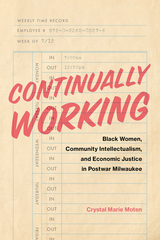
Moten emphasizes the ways in which Black women transformed the urban landscape by simultaneously occupying spaces from which they had been historically excluded and creating their own spaces. Black women refused to be marginalized within the historically white and middle‑class Milwaukee Young Women's Christian Association (MYWCA), an association whose mission centered on supporting women in urban areas. Black women forged interracial relationships within this organization and made it, not without much conflict and struggle, one of the most socially progressive organizations in the city. When Black women could not integrate historically white institutions, they created their own. They established financial and educational institutions, such as Pressley School of Beauty Culture, which beautician Mattie Pressley DeWese opened in 1946 as a result of segregation in the beauty training industry. This school served economic, educational, and community development purposes as well as created economic opportunities for Black women. Historically and contemporarily, Milwaukee has been and is still known as one of the most segregated cities in the nation. Black women have always contested urban inequality, by making space for themselves and others on the margins. In so doing, they have transformed both the urban landscape and urban history.
We are still in the early stages of understanding the thought of C. S. Peirce (1839-1914). Although much good work has been done in isolated areas, relatively little considers the Peircean system as a whole. Peirce made it his life's work to construct a scientifically sophisticated and logically rigorous philosophical system, culminating in a realist epistemology and a metaphysical theory ("synechism") that postulates the connectedness of all things in a universal evolutionary process.
In The Continuity of Peirce's Thought, Kelly Parker shows how the principle of continuity functions in phenomenology and semeiotics, the two most novel and important of Peirce's philosophical sciences, which mediate between mathematics and metaphysics. Parker argues that Peirce's concept of continuity is the central organizing theme of the entire Peircean philosophical corpus. He explains how Peirce's unique conception of the mathematical continuum shapes the broad sweep of his thought, extending from mathematics to metaphysics and in religion. He thus provides a convenient and useful overview of Peirce's philosophical system, situating it within the history of ideas and mapping interconnections among the diverse areas of Peirce's work.
This challenging yet helpful book adopts an innovative approach to achieve the ambitious goal of more fully understanding the interrelationship of all the elements in the entire corpus of Peirce's writings. Given Peirce's importance in fields ranging from philosophy to mathematics to literary and cultural studies, this new book should appeal to all who seek a fuller, unified understanding of the career and overarching contributions of Peirce, one of the key figures in the American philosophical tradition.


On January 17, 1979, driven by new information that some of the worst criminals in the state's penitentiaries were about to be released (and fears that James Earl Ray might be one of them), a small bipartisan group chose to take charge. Senior Democratic leaders, friends of the sitting governor, together with the Republican governor-elect Lamar Alexander (now US Senator from Tennessee), agreed to oust Blanton from office before another night fell. It was a maneuver unique in American political history.
Expanded edition, with a newly discovered account of the events by Senator Lamar Alexander:
"In December 2015 something unexpected happened. Keel [Hunt] delivered to my Nashville office a brown three-ring binder. He had only recently discovered it in a box that had been in storage for thirty years." —Senator Lamar Alexander
This binder contained the forgotten typescript, written in 1985, of Alexander's recollections of the events leading up to his early inauguration on January 17, 1979. In this expanded edition of Coup, the Senator's 22,000-word text has been added as a lost footnote to Hunt's definitive account.
From the foreword by John L. Seigenthaler:
"The individual stories of those government officials involved in the coup—each account unique, but all of them intersecting—were scattered like disconnected pieces of a jigsaw puzzle on the table of history until the author conceived this book. Perhaps because it happened so quickly, and without major disagreement, protest, or dissent, this truly historic moment has been buried in the public mind. In unearthing the drama in gripping detail, Keel Hunt assures that the 'dark day' will be remembered as a bright one in which conflicted politicians came together in the public interest."

Marie found herself fighting to bring justice to the legal process and to bring humanity not only to prisoners on death row but to the guards and wardens as well. During Marie's time as a death penalty opponent in South Carolina and Virginia, she experienced the highs of helping exonerate the innocent and the lows of standing death watch in the death house with thirty-four condemned men.

This final performance in many ways exemplified the power of Carmen Miranda. The actress, singer, and dancer pursued a relentless mission to demonstrate the provocative theatrical force of her cultural roots in Brazil. Armed with bare-midriff dresses, platform shoes, and her iconic fruit-basket headdresses, Miranda stole the show in films like That Night in Rio and The Gang's All Here. For American film audiences, her life was an example of the exoticism of a mysterious, sensual South America. For Brazilian and Latin American audiences, she was an icon. For the gay community, she became a work of art personified and a symbol of courage and charisma.
In Creating Carmen Miranda, Kathryn Bishop-Sanchez takes the reader through the myriad methods Miranda consciously used to shape her performance of race, gender, and camp culture, all to further her journey down the road to becoming a legend.
This book is intended to help college faculty create conditions in which students learn to construct knowledge in their disciplines and achieve self-authorship. A significant, and often overlooked, dimension mediating learning and self-authorship centers on learners' ways of knowing, or their assumptions about the nature, limits, and certainty of knowledge. A learner who assumes that all knowledge is certain expects to hear answers from an authority figure; in contrast, a learner who views knowledge as relative expects to explore multiple viewpoints. By taking a constructive-developmental approach, Baxter Magolda demonstrates how students' ability to construct knowledge is intertwined with the development of their assumptions about knowledge itself and their role in creating it. She shows how the structure of constructive-developmental teaching hinges on three principles: validating students' ability to know, situating learning in students' experience, and defining learning as teachers and students mutually constructing meaning.
Unlike most of the literature on the subject, this book takes abstract pedagogical principles and translates them into practical methods. By observing four semester-length college courses in mathematics, zoology, human development, and education and intensively interviewing students and their instructors, Baxter Magolda provides much-needed, concrete principles that will lead to valuable improvements in the classroom environment. With an enhanced level of understanding of the teaching-learning relationship, professors will be able to teach better, and students will be able to learn better, thus preparing them to meet the demands inherent in adulthood and preparing them to take an active role in creating a better society.
Those actively involved in higher education, whether college faculty or students in graduate programs, as well as anyone focused on education in general will find much of interest in this book.
Whether exploring the connections between apparently related disciplines, such as English and women's studies, or such seemingly disparate fields as economics and theology, Lattuca moves away from previous definitions based on the degrees of integration across disciplines and instead focuses on the nature of the inquiry behind the work. She organizes her findings around the processes through which faculty pursue interdisciplinarity, the contexts (institutional, departmental, and disciplinary) in which faculty are working, and the ways in which those contexts relate to and affect the interdisciplinary work. Her findings result in useful suggestions for individuals concerned with the meaning of faculty work, the role and impact of disciplines in academe today, and the kinds of issues that should guide the evaluation of faculty scholarship.

Extractivism has increasingly become the ground on which activists and scholars in Latin America frame the dynamics of ecological devastation, accumulation of wealth, and erosion of rights. These maladies are the direct consequences of long-standing extraction-oriented economies, and more recently from the expansion of the extractive frontier and the implementation of new technologies in the extraction of fossil fuels, mining, and agriculture. But the fields of sociology, political ecology, anthropology, and geography have largely ignored the role of art and cultural practices in studies of extractivism and post-extractivism.
The field of art theory, on the other hand, has offered a number of texts that put forward insightful analyses of artwork addressing extraction, environmental devastation, and the climate crisis. However, an art theory perspective that does not engage firsthand and in depth with collective action remains limited and fails to provide an account of the role, processes, and politics of art in anti- and post-extractivist movements.
Creating Worlds Otherwise examines the narratives that subaltern groups generate around extractivism, and how they develop, communicate, and mobilize these narratives through art and cultural practices. It reports on a six-year project on creative resistance to extractivism in Argentina and builds on long-term engagement working on environmental justice projects and campaigns in Argentina and the UK.
It is an innovative contribution to the fields of Latin American studies, political ecology, cultural studies, and art theory, and addresses pressing questions regarding what post-extractivist worlds might look like as well as how such visions are put into practice.
Montez and Nereson bring together scholars with a diverse range of career experiences and embodied positions inside of higher learning in order to deepen the field’s theoretical inquiry using an ethnic studies framework. By participating in the interdisciplinary discourse of critical university studies, the volume aims to explore how to conduct ethical research that critiques the university while remaining mindful of our always contingent place within it. The contributors examine the ways that the university commodifies minoritarian knowledge, tokenizes the arts, and reproduces inequality. This book offers strategic ways to build liberatory communities and revolutionary networks among students and faculty alike in order to envision futures within and beyond the academy.

The Tennessee story, as the Pulitzer Prize–winning author Jon Meacham observes in his foreword to this book, offers striking examples of bipartisan cooperation on many policy fronts—and a mode of governing that provides lessons for America in this frustrating era of partisan stalemate.
For more on Crossing the Aisle and author Keel Hunt, visit KeelHunt.com.

The Tennessee story, as the Pulitzer Prize–winning author Jon Meacham observes in his foreword to this book, offers striking examples of bipartisan cooperation on many policy fronts—and a mode of governing that provides lessons for America in this frustrating era of partisan stalemate.
For more on Crossing the Aisle and author Keel Hunt, visit KeelHunt.com.

Heather Jacobson examines these adoptions by focusing on a relatively new social phenomenon, the practice by international adoptive parents, mothers in particular, of incorporating aspects of their children's cultures of origin into their families' lives. "Culture keeping" is now standard in the adoption world, though few adoptive parents, the majority of whom are white and native-born, have experience with the ethnic practices of their children's homelands prior to adopting.
Jacobson follows white adoptive mothers as they navigate culture keeping: from their motivations, to the pressures and constraints they face, to the content of their actual practices concerning names, food, toys, travel, cultural events, and communities of belonging. Through her interviews, she explores how women think about their children, their families, and themselves as mothers as they labor to construct or resist ethnic identities for their children, who may be perceived as birth children (because they are white) or who may be perceived as adopted (because of racial difference).
The choices these women make about culture, Jacobson argues, offer a window into dominant ideas of race and the "American Family," and into how social differences are conceived and negotiated in the United States.

In Cyborgs, Sexuality, and the Undead, M. Elizabeth Ginway examines all these issues from a number of theoretical perspectives, most importantly through the lens of Bolívar Echeverría’s “baroque ethos,” which emphasizes the strategies that subaltern populations may adopt in order to survive and prosper in the face of massive historical and structural disadvantages. Foucault’s concept of biopolitics is developed in discussion with Roberto Esposito’s concept of immunity and Giorgio Agamben’s distinction between “political life” and “bare life.”
This book will be of interest to scholars of speculative fiction, as well as Mexicanists and Brazilianists in history, literary studies, and critical theory.
READERS
Browse our collection.
PUBLISHERS
See BiblioVault's publisher services.
STUDENT SERVICES
Files for college accessibility offices.
RECENTLY PUBLISHED




UChicago Accessibility Resources
home | accessibility | search | about | contact us
BiblioVault ® 2001 - 2026
The University of Chicago Press