
 A SCHOLARLY BOOK REPOSITORY
20 start with D start with D
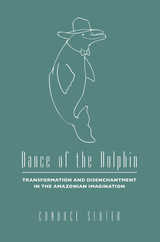
Candace Slater examines these stories in Dance of the Dolphin, both as folk narratives and as representations of culture and conflict in Amazonia. Her engaging study discusses the tales from the viewpoints of genre, performance, and gender, but centers on them as responses to the great changes sweeping the Amazon today. According to Slater, these surprisingly widespread tales reflect Amazonians' own mixed reactions to the ongoing destruction of the rainforest and the resulting transformations in the social as well as physical landscape. Offering an informed view of Brazilian culture, this book crosses the boundaries of folklore, literature, anthropology, and Latin American studies. It is one of the very few studies to offer an overview of the changes taking place in Amazonia through the eyes of ordinary people.
"This book is a rich collection of stories about the transformation of dolphins in the city of enchantment. . . . The joy in this book is not just its vibrant analysis and careful relating of tradition and lore, but also its uncanny accurateness in capturing the very essence of Amazonia."-Darrell Posey, Journal of Latin American Studies
"Slater's fluid prose reads like a novel for those interested in Amazonian culture and folklore, while her integrated approach makes this a must read for those interested in innovative methodology."-Lisa Gabbert, Western Folklore

Combining her background in dance and anthropology to parallel the participant/scholar dichotomy inherent to dancing's "embodied knowledge," Daniel examines these misunderstood and oppressed performative dances in terms of physiology, psychology, philosophy, mathematics, ethics, and aesthetics.
"Dancing Wisdom offers the rare opportunity to see into the world of mystical spiritual belief as articulated and manifested in ritual by dance. Whether it is a Cuban Yoruba dance ritual, slave Ring Shout or contemporary Pentecostal Holy Ghost possession dancing shout, we are able to understand the relationship with spirit through dancing with the Divine. Yvonne Daniel's work synthesizes the cognitive empirical objectivity of an anthropologist with the passionate storytelling of a poetic artist in articulating how dance becomes prayer in ritual for Africans of the Diaspora."
--Leon T. Burrows, Protestant Chaplain, Smith College’
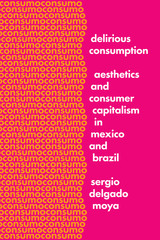
In the decades following World War II, the creation and expansion of massive domestic markets and relatively stable economies allowed for mass consumption on an unprecedented scale, giving rise to the consumer society that exists today. Many avant-garde artists explored the nexus between consumption and aesthetics, questioning how consumerism affects how we perceive the world, place ourselves in it, and make sense of it via perception and emotion.
Delirious Consumption focuses on the two largest cultural economies in Latin America, Mexico and Brazil, and analyzes how their artists and writers both embraced and resisted the spirit of development and progress that defines the consumer moment in late capitalism. Sergio Delgado Moya looks specifically at the work of David Alfaro Siqueiros, the Brazilian concrete poets, Octavio Paz, and Lygia Clark to determine how each of them arrived at forms of aesthetic production balanced between high modernism and consumer culture. He finds in their works a provocative positioning vis-à-vis urban commodity capitalism, an ambivalent position that takes an assured but flexible stance against commodification, alienation, and the politics of domination and inequality that defines market economies. In Delgado Moya’s view, these poets and artists appeal to uselessness, nonutility, and noncommunication—all markers of the aesthetic—while drawing on the terms proper to a world of consumption and consumer culture.
Moving next to de facto independence, Yadav and Mukherjee bring together data from 103 democracies in the developing world, complemented by case studies of Brazil, India, and Indonesia. Honing in on the effects of electoral institutions, the authors find that, when faced with short time horizons, governments that operate in personal vote electoral systems are likely to increase de facto judicial independence whereas governments in party-centered systems are likely to reduce it.
Rising housing costs put secure and decent housing in central urban neighborhoods in peril. How do civil society organizations (CSOs) effectively demand accountability from the state to address the needs of low-income residents? In her groundbreaking book, Democratizing Urban Development, Maureen Donaghy charts the constraints and potential opportunities facing these community organizations. She assesses the various strategies CSOs engage to influence officials and ensure access to affordable housing through policies, programs, and institutions.
Democratizing Urban Development presents efforts by CSOs in four cities across the hemispheric divide: Rio de Janeiro, São Paulo, Washington, DC, and Atlanta. Donaghy studies the impact and outcomes that ensue from these efforts, noting that CSOs must sometimes shift their own ideology or adapt to the political environment in which they operate to ensure access to housing and support the goals of an inclusive city.

An incisive new look at the black diaspora, examining the true roots of antiblackness and its destructive effects on all of society
Thanks to movements like Black Lives Matter, Western society’s chronic discrimination against black individuals has become front-page news. Yet, there is little awareness of the systemic factors that make such a distinct form of dehumanization possible. In both the United States and Brazil—two leading nations of the black diaspora—a very necessary acknowledgment of black suffering is nonetheless undercut by denial of the pervasive antiblackness that still exists throughout these societies.
In The Denial of Antiblackness, João H. Costa Vargas examines how antiblackness affects society as a whole through analyses of recent protests against police killings of black individuals in both the United States and Brazil, as well as the everyday dynamics of incarceration, residential segregation, and poverty. With multisite ethnography ranging from a juvenile prison in Austin, Texas, to grassroots organizing in Los Angeles and Black social movements in Brazil, Vargas finds the common factors that have perpetuated antiblackness, regardless of context. Ultimately, he asks why the denial of antiblackness persists, whom this narrative serves, and what political realities it makes possible.
Recipient of 2019 John Brinckerhoff Jackson Book Prize, Foundation for Landscape Studies
2021 On the Brinck Book Award Winner
“Burle Marx created a new and modern grammar for international landscape design.”
—Lauro Cavalcanti, quoted in the New York Times
“The real creator of the modern garden.”
—American Institute of Architects
Presenting the first English translation of Burle Marx’s “depositions,” this volume highlights the environmental advocacy of a preeminent Brazilian landscape architect who advised and challenged the country’s military dictatorship.
Roberto Burle Marx (1909–1994) is internationally known as one of the preeminent modernist landscape architects. He designed renowned public landscapes in Brazil, beginning with small plazas in Recife in the 1930s and culminating with large public parks in the early 1960s, most significantly the Parque do Flamengo in Rio de Janeiro. Depositions explores a pivotal moment in Burle Marx’s career—the years in which he served as a member of the Federal Cultural Council created by the military dictatorship in the mid-1960s. Despite the inherent conflict and risk in working with the military regime, Burle Marx boldly used his position to advocate for the protection of the unique Brazilian landscape, becoming a prophetic voice of caution against the regime’s policies of rapid development and resource exploitation.
Depositions presents the first English translation of eighteen environmental position pieces that Burle Marx wrote for the journal Cultura , a publication of the Brazilian Ministry of Education and Culture, from 1967 through 1973. Catherine Seavitt Nordenson introduces and contextualizes the depositions by analyzing their historical and political contexts, as well as by presenting pertinent examples of Burle Marx’s earlier public projects, which enables a comprehensive reading of the texts. Addressing deforestation, the establishment of national parks, the place of commemorative sculpture, and the unique history of the Brazilian cultural landscape, Depositions offers new insight into Burle Marx’s outstanding landscape oeuvre and elucidates his transition from prolific designer to prescient counselor.
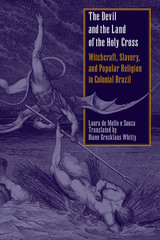
Originally published in Brazil as O Diabo e a Terra de Santa Cruz, this translation from the Portuguese analyzes the nature of popular religion and the ways it was transferred to the New World in the sixteenth and seventeenth centuries. Using richly detailed transcripts from Inquisition trials, Mello e Souza reconstructs how Iberian, indigenous, and African beliefs fused to create a syncretic and magical religious culture in Brazil.
Focusing on sorcery, the author argues that European traditions of witchcraft combined with practices of Indians and African slaves to form a uniquely Brazilian set of beliefs that became central to the lives of the people in the colony. Her work shows how the Inquisition reinforced the view held in Europe (particularly Portugal) that the colony was a purgatory where those who had sinned were exiled, a place where the Devil had a wide range of opportunities. Her focus on the three centuries of the colonial period, the multiple regions in Brazil, and the Indian, African, and Portuguese traditions of magic, witchcraft, and healing, make the book comprehensive in scope.
Stuart Schwartz of Yale University says, "It is arguably the best book of this genre about Latin America...all in all, a wonderful book." Alida Metcalf of Trinity University, San Antonio, says, "This book is a major contribution to the field of Brazilian history...the first serious study of popular religion in colonial Brazil...Mello e Souza is a wonderful writer."

The modem Brazilian short story begins with the mature work of Joaquim Maria Machado de Assis (1839-1908), acclaimed almost unanimously as Brazil's greatest writer. Collectively, these nineteen stories are representative of Machado's unique style and world view, and this translation doubles the number of his stories previously available in English.
The stories in this volume reflect Machado's post-1880 emphasis on social satire and experimentation in psychological realism. If he had continued to produce the moralistic love stories and parlor intrigues of his earlier fiction, Machado's legacy would have been an entertaining but inconsequent body of work. However, by 1880 he had begun a devastating satirical assault on society through his fiction. In spite of his ruthlessness, Machado does at times reveal an ironic sympathy for his characters. He is not indifferent to human conflict but uses humor and irony to stress the absurdity of these conflicts, acted out against the backdrop of an indifferent universe. Such a spectacle creates a sense of helplessness that can only inspire wistful amusement.
In his technical mastery of the short story. Machado was decades ahead of his contemporaries and can still be considered more modern than most of the modernists themselves. That his stories elicit such strong and diverse reactions today is a tribute to their richness, complexity, and significance.

Signed into law in 2014, the Marco Civil da Internet (Brazilian Civil Rights Framework for the Internet) appeared to offer pioneering legislation for a digital bill of rights that addressed issues like network neutrality and privacy. Guy T. Hoskins chronicles the Marco Civil’s development and its failure to confront the greatest concentration of power in the digital age: informational capitalism. Combining interviews with discourse and political-economic analysis, Hoskins reveals why the legislation fell short while examining the implications of its emergence in Brazil, which remains on the margins of the global system of informational capitalism. Hoskins places collectivist and public service principles at the core of any framework’s effectiveness. He also shows why we must create systems sensitive to the sociocultural and political-economic contexts that will shape digital rights and their usefulness.
Compelling and contrarian, Digital Rights at the Periphery looks at communications policy and internet governance in the Global South and the lessons they provide for the rest of the world.
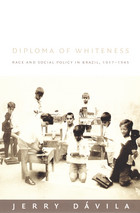
Providing a unique historical perspective on how racial attitudes move from elite discourse into people’s lives, Diploma of Whiteness shows how public schools promoted the idea that whites were inherently fit and those of African or mixed ancestry were necessarily in need of remedial attention. Analyzing primary material—including school system records, teacher journals, photographs, private letters, and unpublished documents—Dávila traces the emergence of racially coded hiring practices and student-tracking policies as well as the development of a social and scientific philosophy of eugenics. He contends that the implementation of the various policies intended to “improve” nonwhites institutionalized subtle barriers to their equitable integration into Brazilian society.
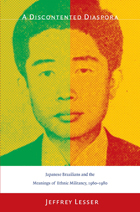
Lesser draws on a wide range of sources, including films, oral histories, wanted posters, advertisements, newspapers, photographs, police reports, government records, and diplomatic correspondence. He focuses on two particular cultural arenas—erotic cinema and political militancy—which highlight the ways that Japanese Brazilians imagined themselves to be Brazilian. As he explains, young Nikkei were sure that their participation in these two realms would be recognized for its Brazilianness. They were mistaken. Whether joining banned political movements, training as guerrilla fighters, or acting in erotic films, the subjects of A Discontented Diaspora militantly asserted their Brazilianness only to find that doing so reinforced their minority status.

How the memory of military dictatorship shapes Brazil's political divides and the far-right's rise.
Brazil’s military dictatorship ended in 1985, but its history still looms large over the country. Since the restoration of democracy, national politics have been shaped by heated contestation over the dictatorship’s legacy. Cristina Buarque de Hollanda and José Szwako examine how the state, the military, and civil society have variously mourned, celebrated, and suppressed memories of Brazil’s violent past—and to what ends.
As the dictatorship faltered under pressure from the opposition in the streets and in Congress, popular opinion favored democracy, which often meant forgetting. Today, the Brazilian left contends that the past has been silenced, paving the way for Jair Bolsonaro and the far right. Yet the past has been intensely contested: media outlets, social movements, and official commissions have long documented the dictatorship and spurred reparations. Disputed Pasts argues that the conservative ascendency is a reaction to these efforts of remembrance. The right seeks to rehabilitate the violent past by discrediting victims and elevating the dictatorship’s anti-communist ideology. Far from forgetting the past, Bolsonaro and Bolsonarismo actively remember and celebrate it.
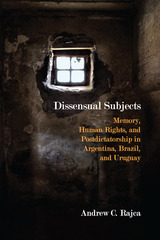
Through an engaging exploration of the concept of “never again” (nunca más/nunca mais) and close analysis of photography exhibits, audiovisual installations, and other art forms in spaces of cultural memory, the book explores how aesthetic interventions can suggest alternative ways of framing human rights subjectivity beyond the rhetoric of liberal humanitarianism. The book visits sites of memory, two of which functioned as detention and torture centers during dictatorships, to highlight the tensions between the testimonial tenor of permanent exhibits and the aesthetic interventions of temporary installations there. Rajca thus introduces perspectives that both undo common understandings of authoritarian violence and its effects as well as reconfigure who or what are made visible as subjects of memory and human rights in postdictatorship countries.
Dissensual Subjects offers much to those concerned with numerous interlocking fields: memory, human rights, political subjectivity, aesthetics, cultural studies, visual culture, Southern Cone studies, postdictatorship studies, and sites of memory.

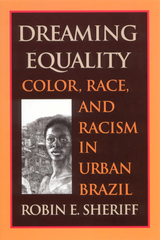
This myth contrasts starkly with the realities of a pernicious racial inequality that permeates every aspect of Brazilian life. To study the grip of this myth on African Brazilians’ views of themselves and their nation, Robin E. Sheriff spent twenty months in a primarily black shantytown in Rio de Janeiro, studying the inhabitants’s views of race and racism. How, she asks, do poor African Brazilians experience and interpret racism in a country where its very existence tends to be publicly denied? How is racism talked about privately in the family and publicly in the community—or is it talked about at all?
Sheriff’s analysis is particularly important because most Brazilians live in urban settings, and her examination of their views of race and racism sheds light on common but underarticulated racial attitudes. This book is the first to demonstrate that urban African Brazilians do not subscribe to the racial democracy myth and recognize racism as a central factor shaping their lives.
READERS
Browse our collection.
PUBLISHERS
See BiblioVault's publisher services.
STUDENT SERVICES
Files for college accessibility offices.
RECENTLY PUBLISHED




UChicago Accessibility Resources
home | accessibility | search | about | contact us
BiblioVault ® 2001 - 2026
The University of Chicago Press