
 A SCHOLARLY BOOK REPOSITORY
7 start with D start with D
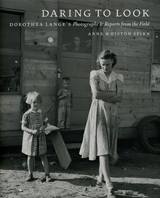
Daring to Look presents never-before-published photos and captions from Dorothea Lange’s fieldwork in California, the Pacific Northwest, and North Carolina during 1939. Lange’s images of squatter camps, benighted farmers, and stark landscapes are stunning, and her captions—which range from simple explanations of settings to historical notes and biographical sketches—add unexpected depth, bringing her subjects and their struggles unforgettably to life, often in their own words.
When Lange was dismissed from the Farm Security Administration at the end of 1939, these photos and field notes were consigned to archives, where they languished, rarely seen. With Daring to Look, Anne Whiston Spirn not only returns them to the public eye, but sets them in the context of Lange’s pioneering life, work, and struggle for critical recognition—firmly placing Lange in her rightful position at the forefront of American photography.
“A thoughtful and meticulously researched account of Lange’s career. . . . Spirn, a photographer herself, traces Lange’s path, visiting her locations and subjects in a fascinating series of ‘then and now’ shots.”—Publishers Weekly
“Dorothea Lange has long been regarded as one of the most brilliant photographic witnesses we have ever had to the peoples and landscapes of America, but until now no one has fully appreciated the richness with which she wove images together with words to convey her insights about this nation. We are lucky indeed that Anne Whiston Spirn, herself a gifted photographer and writer, has now recovered Lange’s field notes and woven them into a rich tapestry of texts and images to help us reflect anew on Lange’s extraordinary body of work.”—William Cronon, author of Nature’s Metropolis
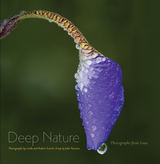
The Scarths’ close-up images of showy orchis and northern monkshood, great spangled fritillary and painted lady, red-breasted nuthatch and eastern wood-pewee, ornate box turtle and gray treefrog, big bluestem and cotton-grass, and many other natural wonders look more like paintings than photographs. Beginning with an iridescent fly hovering over a neon-purple fringed gentian and ending with their iconic image of coneflowers refracted in dewdrops, they have created a sparkling jewelbox of images that will make us look at the small world around us with renewed appreciation.
Attending to the small things in the fabric of nature is the Scarths’ source of artistic inspiration. Taking Walt Whitman’s “every leaf is a miracle” as their beginning, they celebrate not only each leaf but each feather, insect, dewdrop, flower, lichen, and intricate organism in the evolving web of life.
In July 1977, Welling began photographing a two-volume travel diary kept by his great-grandmother Elizabeth C. Dixon, as well as landscapes in southern Connecticut. In one closely cropped image, lines of tight cursive share the page with a single ivy leaf preserved in the diary. In another snowy image, a stand of leafless trees occludes the gleaming Long Island sound. In subject and form, Welling emulated the great American modernists Alfred Stieglitz, Paul Strand, and Walker Evans—a bold move for an artist associated with radical postmodernism. At the same time, Welling’s close-ups of handwriting push to the fore the postmodernist themes of copying and reproduction.
A beautiful and moving meditation on family, history, memory, and place, Diary/Landscape reintroduced history and private emotion as subjects in high art, while also helping to usher in the centrality of photography and theoretical questions about originality that mark the epochal Pictures Generation. The book is published to accompany the first-ever complete exhibition of this series of pivotal photographs, now owned by the Art Institute of Chicago.
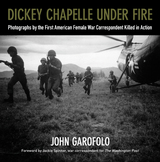
Striking photographs and stories from more than two decades on the frontlines by a groundbreaking photojournalist—and the first female American war correspondent to be killed in action.
In 1941, twenty-two-year-old Georgette "Dickey" Chapelle sold her first photo essay to Look magazine. A year later, with World War II underway, she was photographing American soldiers in combat training in Panama. By the end of the war, she had captured the devastation at Iwo Jima and Okinawa, and in the ensuing decades, Dickey and her camera were on the scene at many of the world’s hotspots—from Cuba and the Dominican Republic to Algeria and Lebanon to Vietnam and Laos. Dickey Chapelle Under Fire exposes her remarkable story and shares over 150 stunning images from her extraordinary career as a photojournalist.
In the male-dominated world of war journalism, Chapelle fought to be taken seriously. She eventually earned the respect of many of her male colleagues and broke down barriers for future generations of female journalists. She embedded herself with military units on frontlines around the globe, capturing not only the horrors of war but also the camaraderie and everyday routines of service men and women.
Always one to follow the action, Chapelle traveled with Algerian rebels across the North African desert and with Fidel Castro through the jungles of Cuba. She spent two months in a Hungarian prison after being caught smuggling aid to refugees fleeing a Soviet invasion. Beginning in 1961, Chapelle set her lens and viewfinder on Southeast Asia, capturing the growing conflict there, until she was killed while on patrol with marines in Vietnam in April 1965—making her the first female American war correspondent to be killed in action.
For twenty-five years, Chapelle's photographs graced the pages of National Geographic, the National Observer, Life, and other major publications. Despite her tragic end, Chapelle’s tenacity, courage, and compassion shine throughout her work, highlighting the human impact of war while revealing the larger stories beyond the battlefield. Her legacy lives on through this powerful collection.
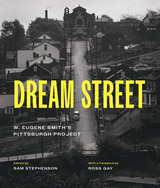
In 1955, having just resigned from his high-profile but stormy career with Life Magazine, W. Eugene Smith was commissioned to spend three weeks in Pittsburgh and produce one hundred photographs for noted journalist and author Stefan Lorant’s book commemorating the city’s bicentennial. Smith ended up staying a year, compiling twenty thousand images for what would be the most ambitious photographic essay of his life. But only a fragment of this work was ever seen, despite Smith's lifelong conviction that it was his greatest collection of photographs.
In 2001, Sam Stephenson published for the first time an assemblage of the core images from this project, selections that Smith asserted were the “synthesis of the whole,” presenting not only a portrayal of Pittsburgh but of postwar America. This new edition, updated with a foreword by the poet Ross Gay, offers a fresh vision of Smith's masterpiece.

Phipps presents the 104 color photographs in Driving a Table Down—selected from more than 2,000 photographs taken over the twelve-day trip—in sequential order to show, in his words, “what does and does not change as one travels through shifting cultural and geographic regions.” By capturing the present moment while referencing the past with faded signs, almost obliterated murals, closed businesses in quiet towns, forgotten tourist attractions, and many other layers of historical accumulations, the photographs illustrate the stark fact that the present is never entirely present tense. Phipps’s attention to the real-time details of rural regions of the Midwest and the South, juxtaposed with personal photographs of his family, gives us a momentary definition of America in a state of flux, an America that looks to the past in a time of an uncertain future.
READERS
Browse our collection.
PUBLISHERS
See BiblioVault's publisher services.
STUDENT SERVICES
Files for college accessibility offices.
RECENTLY PUBLISHED





UChicago Accessibility Resources
home | accessibility | search | about | contact us
BiblioVault ® 2001 - 2026
The University of Chicago Press