
 A SCHOLARLY BOOK REPOSITORY
4 start with D start with D

Uniquely weaving together psychoanalytic, feminist, queer, and literary theory as well as memoir to examine the value and meaning of relationships between women, Juhasz explores the writings of adult daughters, mothers, and lovers to consider how language both traces and shapes the contours of experience. She emphasizes the initial bond between mother and infant as the bedrock of identity formation, a process involving love, recognition, desire, and language, and shows how that relationship serves as source and model for all future loves.
Juhasz's lucid prose unravels the meaningful yet overlooked intricacies of the relationships that inflect much of women's writing in the twentieth century.

A Telegraph Book of the Year
A Washington Post Notable Work
A Times Book of the Year
A Hughes Award Finalist
“An indisputable masterpiece…comprehensive, fascinating, and persuasive.”
—Wall Street Journal
“Brimming with wisdom and brio, this masterful work spans the history of psychiatry. Exceedingly well-researched, wide-ranging, provocative in its conclusions, and magically compact, it is riveting from start to finish. Mark my words, Desperate Remedies will soon be a classic.”
—Susannah Cahalan, author of Brain on Fire
“Compulsively readable…Scull has joined his wide-ranging reporting and research with a humane perspective on matters that many of us continue to look away from.”
—Daphne Merkin, The Atlantic
"Scull's fascinating and enraging book is the story of the quacks and opportunists who have claimed to offer cures for mental illness...Madness remains the most fascinating—arguably the defining—aspect of Homo sapiens."
—Sebastian Faulks, Sunday Times
“I would recommend this fascinating, alarming, and alerting book to anybody. For anyone referred to a psychiatrist it is surely essential.”
—The Spectator
For more than two hundred years disturbances of the mind have been studied and treated by the medical profession. Mental illness, some insist, is a disease like any other, from which one can be cured. But is this true?
From the birth of the asylum to the latest drug trials, Desperate Remedies brings together a galaxy of mind doctors working in and out of institutional settings: psychologists and psychoanalysts, neuroscientists and cognitive behavioral therapists, as well as patients and their families desperate for relief. Surprising, disturbing, and compelling, this passionate account of America’s long battle with mental illness challenges us to revisit some of our deepest assumptions and to confront the epidemic of mental illness so visible all around us.
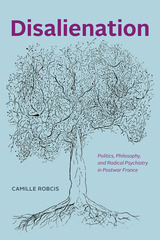
In Disalienation, Camille Robcis grapples with the historical, intellectual, and psychiatric meaning of the ethics articulated at Saint-Alban by exploring the movement’s key thinkers, including François Tosquelles, Frantz Fanon, Félix Guattari, and Michel Foucault. Anchored in the history of one hospital, Robcis's study draws on a wide geographic context—revolutionary Spain, occupied France, colonial Algeria, and beyond—and charts the movement's place within a broad political-economic landscape, from fascism to Stalinism to postwar capitalism.

Finding the talented, encouraging their advancement, making known their potentialities"--to these aims many of the twentieth century's most distinguished psychologists have turned their attention. In this book, Terman, Paterson, Burt, Strong, Guilford, Wolfie, Stalnaker, MacKinnon, Ghiselli, Mackworth, and Vernon, each with his own particular emphasis, discuss these issues as lecturers in a series set up by their colleague, Walter Van Dyke Bingham. In sum, they present a cross section of psychological thought at mid-century, each man writing about the set of problems on which his interest has centered.
Assuming that the concept of intelligence is essential to the study of talent, they give their attention to other variables--health, physical energy and work habits, maturation, education, parental advantage, and the like. Terman, for example, discusses the personality traits that make for success, while Strong describes his and others' efforts to measure vocational interests. Burt looks at the inheritance of emotional and temperamental qualities that affect the way one works and the amount one achieves. MacKinnon, Chiselli, and Mackworth concentrate on important kinds of ability that are not well measured by any of the available tests of "intelligence."
Today, these pioneering scholars stand high on the list of those who have advanced the discovery and development of talent. Many of these articles are already classics, and their publication in one volume will provide a ready reference and an important impetus to further work in their area of interest. These eleven lectures, provided for by the late Walter Van Dyke Bingham and presented at a different university each year, were delivered between 1956 and 1965.
READERS
Browse our collection.
PUBLISHERS
See BiblioVault's publisher services.
STUDENT SERVICES
Files for college accessibility offices.
RECENTLY PUBLISHED




UChicago Accessibility Resources
home | accessibility | search | about | contact us
BiblioVault ® 2001 - 2026
The University of Chicago Press