front cover of Early Jewish Cookbooks
Early Jewish Cookbooks
Essays on Hungarian Jewish Gastronomical History
András Koerner
Central European University Press, 2022

Winner of the Association of Jewish Libraries' 2022 Judaica Bibliography Award.

The seven essays in this volume focus such previously unexplored subjects as the world’s first cookbook printed in Hebrew letters, published in 1854, and a wonderful 19th-century Jewish cookbook, which in addition to its Hungarian edition was also published in Dutch in Rotterdam. The author entertainingly reconstructs the history of bólesz, a legendary yeast pastry that was the specialty of a famous, but long defunct Jewish coffeehouse in Pest, and includes the modernized recipe of this distant relative of cinnamon rolls. Koerner also tells the history of the first Jewish bookstore in Hungary (founded as early as in 1765!) and examines the influence of Jewish cuisine on non-Jewish food.

In this volume András Koerner explores key issues of Hungarian Jewish culinary culture in greater detail and more scholarly manner than what space restrictions permitted in his previous work Jewish Cuisine in Hungary: A Cultural History, also published by CEU Press, which received the prestigious National Jewish Book Award in 2020. The current essays confirm the extent to which Hungarian Jewry was part of the Jewish life and culture of the Central European region before their almost total language shift by the turn of the 20th century.

[more]

front cover of Early Modern Overseas Careers
Early Modern Overseas Careers
East-Central Europeans as Jesuit Missionaries and Dutch East India Employees
Igor Chabrowski
Central European University Press, 2026
In the early modern period, two European networks, the Society of Jesus and the Dutch East India Company (VOC) spanned the globe and contributed to its multifaceted globalization. This book focuses on the members of the former, Jesuit missionaries, and the employees of the VOC originating from Central and Eastern Europe. The well-chosen case studies examine the group characteristics, career influences, and narratives of these Central Eastern Europeans. They explore the question of why subjects of Polish kings, Transylvanian princes, or Habsburg emperors dreamed of venturing overseas with the colonial merchants or aspired to work as missionaries in China and Japan.

The book examines the complexities of this early modern globalization: its scope, limits, importance, social, ethnic, and political ramifications. It researches how these networks reached out to the region of Central and Eastern Europe. The authors argue that the region was hardly considered peripheral from the perspective of Rome (and the Jesuits) or the Netherlands (and the colonial traders). They do, however, explore whether there were "glass ceilings," or limits of reach within the two networks for individuals from the Polish-Lithuanian Commonwealth or the former Kingdom of Hungary.
[more]

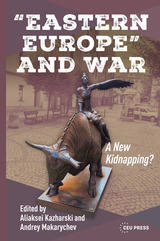
front cover of “Eastern Europe” and War
“Eastern Europe” and War
A New Kidnapping?
Aliaksei Kazharski
Central European University Press, 2026
This edited volume focuses on the effects that Russia’s 2022 full-scale invasion of Ukraine had on Central and Eastern Europe (CEE). It includes chapters covering fourteen countries situated in different corners of the broader region. Individual contributions shed light on how these CEE countries positioned themselves vis-à-vis the war and (re)defined their own regional identities and geopolitical belonging. The chapters offer a rich survey of the local discourses and perspectives, grasping the region in its persisting complexity and diversity.
[more]

front cover of The Edges of the Medieval World
The Edges of the Medieval World
Gerhard Jaritz
Central European University Press, 2009
In the Middles Ages, the edges of one's world could represent different meanings. On the one hand, they might have been situated in far-away regions, mainly in the east and north, that one most often only knew from hearsay and which were inhabited by strange beings: humans with their faces on their chest, without a mouth, or with dog heads. On the other hand, the edges of one's world could just mean the borders of the community where one lived and that one sometimes might not have had the possibility to cross during one's whole life.In this volume specialists from eight European countries offer their ideas about different edges of the medieval world and contribute to a discussion that has been increasing greatly in Medieval Studies in recent times.
[more]

front cover of Elections and Political Order in Russia
Elections and Political Order in Russia
Peter Lentini
Central European University Press, 1995
Russia held its first multiparty election in over 75 years in the hope that it would usher in a new democratic political order. However, the success of right-wing populist Vladimir Zhirinovsky's Liberal Democratic Party of Russia and other anti-reform forces shocked the world. This study analyzes the background, events and main players of the elections, and examines their significance for the Russian political system. Describing in detail the December 1993 voting, it provides historical, political, regional and sociocultural interpretations of the elections and their results. The work attempts to answer such questions as: what were the keys to Zhirinovsky's success?; who are the new players on Russia's political scene?; what role will the new institutions play in Russian politics; and who actually holds power in Russia?
[more]

logo for Central European University Press
The Elefánthy
The Hungarian Nobleman and His Kindred
Erik Fügedi
Central European University Press, 1998

In an exploration of the life and customs of the Hungarian nobility, this book compares historical reality and legal literature on the example of one noble family--the Elefánthy kindred from northern Hungary (present-day Slovakia). The author begins by outlining the customary law regarding noble status, inheritance and marriage, as summarized in the famous code of Stephen Werbőczy (1514). He then compares these norms with the documentary evidence and establishes the fact that the legal literature differs in regard to social mobility and kindred solidarity.

With this frame of reference in mind, the fate of the Elefánthy family is traced through several generations, enabling the author to make some general statistical statements on inheritance, the rise and fall of various branches, marriage strategies, and the "survival skills" of the kindred. In his summary, the author outlines some of the major avenues for further research, including the peculiar Hungarian form of retainership (familiaritas), and the relationships between noble families and between the nobility and local communities.
[more]

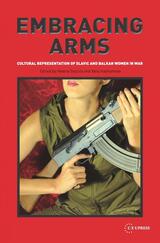
front cover of Embracing Arms
Embracing Arms
Cultural Representation of Slavic and Balkan Women in War
Yana Hashamova
Central European University Press, 2012
Discursive practices during war polarize and politicize gender: they normally require men to fulfill a single, overriding task—destroy the enemy—but impose a series of often contradictory expectations on women. The essays in the book establish links between political ideology, history, psychology, cultural studies, cinema, literature, and gender studies and addresses questions such as— what is the role of women in war or military conflicts beyond the well-studied victimization? Can the often contradictory expectations of women and their traditional roles be (re)thought and (re)constructed? How do cultural representations of women during war times reveal conflicting desires and poke holes in the ideological apparatus of the state and society?
[more]

front cover of Emotion and Devotion
Emotion and Devotion
The Meaning of Mary in Medieval Religious Cultures
Miri Rubin
Central European University Press, 2009
In Emotion and Devotion Miri Rubin explores the craft of the historian through a series of studies of medieval religious cultures. In three original chapters she approaches the medieval figure of the Virgin Mary with the aim of unravelling meaning and experience. Hymns and miracle tales, altarpieces and sermons – a wide range of sources from many European regions – are made to reveal the creativity and richness which they elicited in medieval people, women and men, clergy and laity, people of status and riches as well as those of modest means.
[more]

front cover of Emotions in History – Lost and Found
Emotions in History – Lost and Found
Ute Frevert
Central European University Press, 2011

Coming to terms with emotions and how they influence human behaviour, seems to be of the utmost importance to societies that are obsessed with everything "neuro." On the other hand, emotions have become an object of constant individual and social manipulation since "emotional intelligence" emerged as a buzzword of our times. Reflecting on this burgeoning interest in human emotions makes one think of how this interest developed and what fuelled it. From a historian's point of view, it can be traced back to classical antiquity. But it has undergone shifts and changes which can in turn shed light on social concepts of the self and its relation to other human beings (and nature). The volume focuses on the historicity of emotions and explores the processes that brought them to the fore of public interest and debate.
[more]

front cover of An Empire of Others
An Empire of Others
Creating Ethnographic Knowledge in Imperial Russia and the USSR
Alexis Hofmeister
Central European University Press, 2014
Ethnographers helped to perceive, to understand and also to shape imperial as well as Soviet Russia's cultural diversity. This volume focuses on the contexts in which ethnographic knowledge was created. Usually, ethnographic findings were superseded by imperial discourse: Defining regions, connecting them with ethnic origins and conceiving national entities necessarily implied the mapping of political and historical hierarchies. But beyond these spatial conceptualizations the essays particularly address the specific conditions in which ethnographic knowledge appeared and changed. On the one hand, they turn to the several fields into which ethnographic knowledge poured and materialized, i.e., history, historiography, anthropology or ideology. On the other, they equally consider the impact of the specific formats, i.e., pictures, maps, atlases, lectures, songs, museums, and exhibitions, on academic as well as non-academic manifestations.
[more]

front cover of Empire-Building and Nation-Building in Central Europe
Empire-Building and Nation-Building in Central Europe
Zoltán László (1881–1961) in the Turmoil of the 20th Century
Krisztián Csaplár-Degovics
Central European University Press, 2026
This book reconstructs the intellectual and political trajectory of Zoltán László (1881–1961), a representative figure of the East-Central European middle-class intelligentsia. His shifting positions—on nationalism, imperialism, colonialism, antisemitism, racism, and anticommunism—mirror the broader ideological and political transformations of the region from the nineteenth century to the aftermath of the Second World War.
Before 1914, László established himself as a journalist, writer, academic, and willing agent of Austro-Hungarian imperial policy. In the interwar period and during the Second World War, his expertise as a propagandist found expression in racist circles.
By examining László’s life as a case study, the book offers a microhistorical perspective on how members of the educated middle classes became implicated in, and often willing participants of, imperial, racist, and totalitarian projects. It demonstrates how the lived experience of one individual illuminates the complex entanglement of ideology, identity, and power in East-Central Europe’s modern history.
[more]

front cover of The End and the Beginning
The End and the Beginning
The Revolutions of 1989 and the Resurgence of History
Vladimir Tismaneanu
Central European University Press, 2012
A fresh interpretation of the contexts, meanings, and consequences of the revolutions of 1989, coupled with state of the art reassessment of the significance and consequences of the events associated with the demise of communist regimes. The book provides an analysis that takes into account the complexities of the Soviet bloc, the events' impact upon Europe, and their re-interpretation within a larger global context. Departs from static ways of analysis (events and their significance) bringing forth approaches that deal with both pre-1989 developments and the 1989 context itself, while extensively discussing the ways of resituating 1989 in the larger context of the 20th century and of its lessons for the 21st.Emphasizes the possibility for re-thinking and re-visiting the filters and means that scholars use to interpret such turning point. The editors perceive the present project as a challenge to existing readings on the complex set of issues and topics presupposed by a re-evaluation of 1989 as a symbol of the change and transition from authoritarianism to democracy.
[more]

front cover of The End of Czechoslovakia
The End of Czechoslovakia
Jirí Musil
Central European University Press, 1995

Scholars and practitioners from both sides of the divide, Czech and Slovak, as well as international experts, take an in-depth look at the causes of Czechoslovakia's break-up, and explain why a seemingly successful country should disintegrate so quickly after the collapse of the communist regime. Besides exploring the political processes leading to the split, the authors analyse the underlying social, economic and cultural differences between the two nations and examine the historical roots of the problems. Particular attention is paid to changing Czech and Slovak attitudes towards the common state and towards each other, from the heyday of the First Republic to the disillusionment of the post-1989 period.
[more]

front cover of Enemies for a Day
Enemies for a Day
Antisemitism and Anti-Jewish Violence in Lithuania under the Tsars
Darius Staliunas
Central European University Press, 2015

It begins by illustrating how widespread anti-Jewish feelings were among the Christian population in 19 th century, focusing on blood libel accusations as well as describing the role of modern antisemitism. Secondly, it tries to identify the structural preconditions as well as specific triggers that turned anti-Jewish feelings into collective violence and analyzes the nature of this violence. Lastly, pogroms in Lithuania are compared to anti-Jewish violence in other regions of the Russian Empire and East Galicia.

This research is inspired by the cultural turn in social sciences, an approach that assumes that violence is filled with meaning, which is “culturally constructed, discursively mediated, symbolically saturated, and ritually regulated.” The author argues that pogroms in Lithuania instead followed a communal pattern of ethnic violence and was very different from deadly pogroms in other parts of the Russian Empire.

[more]

front cover of Engagement, Enlargement, and Confrontation
Engagement, Enlargement, and Confrontation
A Political History of the European Union’s Eastern Policies after the Cold War
Graham Timmins
Central European University Press

Engagement, Enlargement, and Confrontation provides a holistic view of the European Union’s eastern relations explored in an historical context following the end of the Cold War. The author draws out the key achievements and failures of this strategic exercise.

The focus is on the institutional adaptation of the European Union as well as on the dynamics of its policies towards the East. Graham Timmins identifies four interconnected factors which have shaped the development of the EU’s policies towards its eastern neighbours; the projection of the EU’s identity as an agent of peace and stability, the maintenance of internal stability within the Union, the coordination of Member State foreign policies, and the EU’s relations with Russia.

The book explores the key challenges faced by the European Union in terms of the EU’s eastern policies. These include capacity building, the management of expectations in the eastern neighbourhood, the reconciliation of national perspectives and agendas with wider EU strategic thinking, and last but not least the handling of the relationship with Russia. The general conclusion of the study is that the EU’s internal development in respect to its relationship with its eastern members and neighbours is likely to remain complex and unpredictable.

[more]

front cover of Engineering European Unity
Engineering European Unity
The Quest for the Right Solution Across Centuries
Éva Bóka
Central European University Press, 2023

Which European and non-European ideas and practices facilitated the shaping of European unity? Or rather, which pursuits led to deadlocks in the cooperation between states?

The book seeks answers to these questions by surveying the historical attempts at realizing supranational patterns of governance in Europe since the Middle Ages. The main focus is on the nineteenth and twentieth century organizational models of European unification.

The analysis draws on an abundance of historical and legal source material. While the author encourages critical thinking about European integration, the exploration is admittedly based on specific values. Éva Bóka claims that the struggle for the humanization of power with its democratic creative force has been the major driver in the development of the system of liberties and the idea of European unity. The analysis of the historical process up to the Lisbon Treaty (2007) with the recognition of common, shared, and supported competences meets the author’s set of values to a great extent. The last part of the book examines whether the European Union can serve as a political and economic organizational model for other parts of the world.

[more]

front cover of Engineering the Lower Danube
Engineering the Lower Danube
Technology and Territoriality in an Imperial Borderland, Late Eighteenth and Nineteenth Centuries
Luminita Gatejel
Central European University Press, 2023

The Lower Danube—the stretch of Europe’s second longest river between the Romanian-Serbian border and the confluence to the Black Sea—was effectively transformed during the late eighteenth and nineteenth centuries. In describing this lengthy undertaking, Luminita Gatejel proposes that remaking two key stretches—the Iron Gates and the delta—not only physically altered the river but also redefined it in a legal and political sense. 

Since the late eighteenth century, military conflicts and peace treaties changed the nature of sovereignty over the area, as the expansionist tendencies of the Habsburg and British Empires encountered rival Ottoman and Russian imperial plans. The inconvenience that the river’s physical shape obstructed free navigation and the growth of commercial traffic, was an increasing concern to all parties. This book shows that alongside imperial aspirations, transnational actors like engineers, commissioners and entrepreneurs were the driving force behind the river regulation. In this highly original, deeply researched, and carefully crafted study, Gatejel explores the formation of international cooperation, the emergence of technical expertise and the emergence of engineering as a profession. This constellation turned the Lower Danube into a laboratory for experimenting with new forms of international cooperation, economic integration, and nature transformation.

[more]

front cover of Entangled Paths Toward Modernity
Entangled Paths Toward Modernity
Contextualizing Socialism and Nationalism in the Balkans
Augusta Dimou
Central European University Press, 2009
The book is a study in comparative intellectual history and discusses how socialist ideology emerged as an option of political modernity in the Balkans of the late nineteenth and early twentieth century.Focusing on how technologies of ideological transfer and adaptation work, the book examines the introduction and contextualization of international socialist paradigms in the Southeast European periphery. At its core is the presentation of three case studies (Serbia, Bulgaria and Greece), intertwined at times through similar, but also divergent paths. Each case aspires to tell a different and yet complementary story with respect to the issue of modernity and socialism. The book analyses the introduction of socialism against the background and in conjunction to other prominent options of political modernity such as nationalism, liberalism and agrarianism.
[more]

front cover of Enterprise Exit Processes in Transition Economies
Enterprise Exit Processes in Transition Economies
Downsizing, Workouts, and Liquidation
Leszek Balcerowicz
Central European University Press, 1998
The rebirth of competition and the extensive "exit" that has resulted are among the most important developments in Central Europe since the demise of Communism. This text examines why, how, and to what extent enterprises have reduced their size or left the market altogether during the first years of the transition from socialism to capitalism in the Czech Republic, Hungary and Poland.
[more]

front cover of Environmental Assessment in Countries in Transintion
Environmental Assessment in Countries in Transintion
Norman Lee
Central European University Press, 2000
The countries included in this study on the regulations and practices relating environmental assessment are Armenia, Belarus, Bulgaria, Croatia, the Czech Republic, Estonia, Hungary, Kazakhstan, Latvia, Lithuania, Moldova, Montenegro, Poland, Romania, Russia, Slovenia, Ukraine. Each country study has been prepared by specialists from within the country concerned. This study will be of interest to EA practitioners in public administration; development and consultant organizations; training and educational and research institutes; and international and bilateral aid agencies. Project level EIA (Environmental Impact Assessment) and, to a lesser extent, SEA (Strategic Environmental Assessment) for planning and other strategic-level actions have been, or are being, introduced in the great majority of countries in transition (CIT). As yet, however, most of the countries have only limited experience in formulating "state of the art" EIA regulations and applying them satisfactorily. Furthermore, such experiences in CITs that do exist are not yet sufficiently well documented and widely disseminated. This report should be of considerable value in helping strengthen EA regulation and practice in the region.
[more]

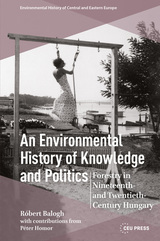
front cover of An Environmental History of Knowledge and Politics
An Environmental History of Knowledge and Politics
Forestry in Nineteenth- and Twentieth-Century Hungary
Robert Balogh
Central European University Press, 2026
In February 2024 the designated body of the geological sciences rejected the proposition that humans have entered the Anthropocene epoch. Historians are yet to tell history as the interaction with materials and living beings. The history of forestry is a particularly promising subject to study. Environmental concerns and the large-scale commodification of forests, often with state participation, have been walking hand-in-hand since at least the mid-eighteenth century. Moreover, the history of the development of forestry’s standardised methodology is a global history. This book describes the efforts and experiences of trained foresters driven by competing priorities, as well as their impact on the society, landscape and politics of Hungary between about 1860 and 1975.
[more]

front cover of Escaping Kakania
Escaping Kakania
Eastern European Travels in Colonial Southeast Asia
Jan Mrázek
Central European University Press, 2024

Escaping Kakania is about fascinating characters—soldiers, doctors, scientists, writers, painters—who traveled from their eastern European homelands to colonial Southeast Asia. Their stories are told by experts on different countries in the two regions, who bring diverse approaches into a conversation that crosses disciplinary and national borders.

The 14 chapters deal with the diverse encounters of eastern Europeans with the many faces of colonial southeast Asia. Some essays directly engage with post-colonial studies, contributing to an ongoing critical re-evaluation of eastern European “semi-peripheral” (non-)involvement in colonialism. Other chapters disclose a range of perspectives and narratives that illuminate the plurality of the travelers’ positions while reflecting on the specificity of the eastern European experience.

The travellers moved—as do the chapter authors—between two regions that are off-centre, in-between, shiftingly “Eastern,” and disorientingly heterogeneous, thus complicating colonial and postcolonial notions of “Europe,” “East,” and East-West distinctions. Both at home and overseas, they navigated among a multiplicity of peoples, “races,” and empires, Occidents and Orients, fantasies of the Self and the Other, adopting/adapting/mimicking/rejecting colonialist identities and ideologies. They saw both eastern Europe and southeast Asia in a distinctive light, as if through each other—and so will the readers of Escaping Kakania.

[more]

front cover of Estonian Life Stories
Estonian Life Stories
Tiina Kirss
Central European University Press, 2009

After a short period of independence, Estonia was occupied in World War II by the Red Army, then Nazi Germany, and again, for a lasting occupation, by the Soviets. No wonder that a greater part of the roughly one million Estonians had harshly eventful lives.

This anthology contains 25 selected life stories collected from Estonians who lived through the tribulations of the 20th century, and describe the travails of ordinary people under numerous regimes. The autobiographical accounts provide authentic perspectives on events of this period, where time is placed in the context of life-spans, and subjects grounded in personal experience. Most of the life stories reveal sufferings under foreign (Russian) oppression.

The volume is the product of a large-scale national project to record history by collecting autobiographical accounts, and a process of engaged selection for publication which followed. The variety of life-experiences recorded offers comparison across cultures, as well as an overview of the powerful neighbors as they relinquish and strengthen their hold on Estonia.
[more]

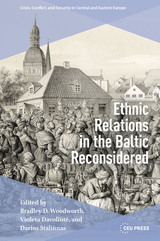
front cover of Ethnic Relations in the Baltic Reconsidered
Ethnic Relations in the Baltic Reconsidered
Bradley D. Woodworth
Central European University Press, 2026
This collected volume offers an original perspective on the Baltic region by examining the intricate relationships between its diverse ethnic groups from the mid-nineteenth century to the present. Rather than focusing solely on national narratives or comparisons of historical development, the book analyzes ethnic relations through the lenses of identity, governance, empire, and violence. The nearly constant redrawing of geographic borders and boundaries among communities during this period destabilized fixed identities, generating novel, hybrid ways of self-identification along with a hardening of oppositions. Innovative forms of coexistence came with violent, sometimes genocidal conflicts. The contributors explore topics such as evolving senses of belonging, the impact of imperial and Soviet rule, instances of cooperation and conflict, and the legacies of historical trauma. By incorporating new sources and interdisciplinary approaches, they update traditional understandings of nations and nationalism in the Baltic region and provide insights relevant to similar regions.
[more]

front cover of The Eugenic Fortress
The Eugenic Fortress
The Transylvanian Saxon Experiment in Interwar Romania
Tudor Georgescu
Central European University Press, 2016
The ever growing library on the history of eugenics and fascism focuses largely on nation states, while this monograph asks why an ethnic minority, the Transylvanian Saxons, turned to eugenics as a means of self-empowerment in interwar Romania. The Eugenic Fortress investigates and unpacks the eugenic movement that emerged in the early twentieth century, and focuses on its conceptual and methodological evolution during the interwar period. Further on, the book analyzes the gradual process of politicisation and radicalisation at the hands of a second generation of Saxon eugenicists in conjunction with the rise of an equally indigenous fascist movement. The Saxon case study offers valuable insights into why an ethnic minority would seek to re-entrench itself behind the race-hygienic walls of a 'eugenic fortress', as well as the influence host and home nations had upon its design. Georgescu's work is ground breaking in the sense that the history of this uprooted community is usually handled with sensitivity and serious (and critical) research into Transylvanian Saxon involvement with Nazism has been energetically resisted.
[more]

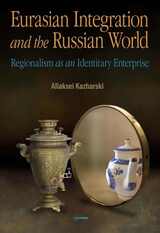
front cover of Eurasian Integration and the Russian World
Eurasian Integration and the Russian World
Regionalism as an Identitiary Enterprise
Aliaksei Kazharski
Central European University Press, 2019

This volume examines Russian discourses of regionalism as a source of identity construction practices for the country's political and intellectual establishment. The overall purpose of the monograph is to demonstrate that, contrary to some assumptions, the transition trajectory of post-Soviet Russia has not been towards a liberal democratic nation state that is set to emulate Western political and normative standards. Instead, its foreign policy discourses have been constructing Russia as a supranational community which transcends Russia's current legally established borders.

The study undertakes a systematic and comprehensive survey of Russian official (authorities) and semi-official (establishment affiliated think tanks) discourse for a period of seven years between 2007 and 2013. This exercise demonstrates how Russia is being constructed as a supranational entity through its discourses of cultural and economic regionalism. These discourses associate closely with the political project of Eurasian economic integration and the "Russian world" and "Russian civilization" doctrines. Both ideologies, the geoeconomic and culturalist, have gained prominence in the post-Crimean environment. The analysis tracks down how these identitary concepts crystallized in Russia's foreign policies discourses beginning from Vladimir Putin's second term in power.
[more]

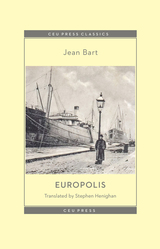
front cover of Europolis
Europolis
Jean Bart
Central European University Press, 2025
Set in the decaying, multicultural port town of Sulina at the edge of the Danube Delta, Europolis is a hauntingly atmospheric novel that captures a world on the brink of vanishing. In this isolated outpost, where Greek, Romanian, Ukrainian, Jewish, Turkish, and Armenian characters coexist amid steamships and faded empires, the return from America of Nikola Marulis—rumored to be a wealthy émigré—sparks a wave of gossip, ambition, and dreams.
But Nikola’s homecoming is not what it seems. As illusions unravel, passions flare, and destinies collide, Europolis transforms from a tapestry of port life into a poignant meditation on disillusionment, mortality, and the slow erosion of a once-vital community.
First published in 1933 and now available in English for the first time, Bart’s masterpiece is an elegy for a town, a time, and the lost promise of modernity.
[more]

front cover of Evaluating Science and Scientists
Evaluating Science and Scientists
Mark S. Frankel
Central European University Press, 1997
The shift to a market economy in post-communist Eastern Europe has had a profound impact on science and scientists across the region, leading to reforms in research management practices and to drastic cuts in funding levels everywhere. Many countries are moving to a system of competitive research grants awarded on the basis of peer review. The introduction of peer review is not simply a technical matter. It signifies a fundamental change in the social structure of science, enhancing profession-al autonomy and giving working scientists a voice in the allocation of resources. This book combines first-hand accounts of the reform process with analyses of the strengths and weaknesses of both peer review and quantitative indicators.
[more]

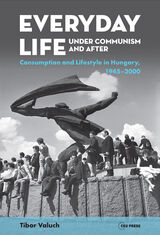
front cover of Everyday Life under Communism and After
Everyday Life under Communism and After
Lifestyle and Consumption in Hungary, 1945–2000
Tibor Valuch
Central European University Press, 2022

By providing a survey of consumption and lifestyle in Hungary during the second half of the twentieth century, this book shows how common people lived during and after tumultuous regime changes. After an introduction covering the late 1930s, the study centers on the communist era, and goes on to describe changes in the post-communist period with its legacy of state socialism.

Tibor Valuch poses a series of questions. Who could be called rich or poor and how did they live in the various periods? How did living, furnishings, clothing, income, and consumption mirror the structure of the society and its transformations? How could people accommodate their lifestyles to the political and social system? How specific to the regime was consumption after the communist takeover, and how did consumption habits change after the demise of state socialism? The answers, based on micro-histories, statistical data, population censuses and surveys help to understand the complexities of daily life, not only in Hungary, but also in other communist regimes in east-central Europe, with insights on their antecedents and afterlives.

[more]

front cover of Exhibiting Jewish Culinary Culture
Exhibiting Jewish Culinary Culture
András Koerner
Central European University Press, 2024

András Koerner is the author of a number of critically acclaimed, award-winning CEU Press titles on the cultural history of Hungarian Jews and Jewish cuisine. This volume continues that tradition by discussing the phenomenon of exhibits on Jewish culinary culture in museums and galleries around the world.
The first part of the book provides an overview of the cultural history of "foodism" and the proliferation of Jewish museums. In addition, it examines the role of cuisine in Jewish identity. It offers an analysis of the history and recent examples of exhibitions on Jewish culinary culture, a subject that has not received scholarly attention until now.
The second part complements this by offering a detailed case study of the book’s subject. It showcases a 2022 exhibition in Budapest on the History of Hungarian Jewish Culinary Culture. András Koerner was the co-curator of the show, thus he is able to offer an insider’s account of its implementation – concept, scope, goals, audience, and design. He also openly discusses the compromises made and mistakes committed in the exhibition’s preparatory work.
This subjective account, quite different from the dry objectivity of catalogues, offers an unusual, behind-the-scenes look at how a complex exhibition like this is prepared. At the same time, the book’s appendix includes images of the display boards and some of the exhibited objects – thus it can also stand for a valuable ex-post catalogue.

[more]

front cover of Expanding Intellectual Property
Expanding Intellectual Property
Copyrights and Patents in 20th Century Europe and beyond
Augusta Dimou
Central European University Press, 2017
The book deals with the expansion and institutionalization of intellectual property norms in the twentieth century, with a European focus. Its thirteen chapters revolve around the transfer, adaptation and the ambivalence of legal transplants in the interface between national and international projects, trends and contexts. The first part discusses the institutionalization of copyright and patent law in the frame- work of the bigger political and economic projects of the twentieth century. The second and third parts of the collection review relevant processes in the communist regimes and the post-communist societies, respectively. The essays point at processes of enculturation, trans-nationalization and universalization of norms, as well as practices of incorporation and resistance. The contributors lay a particular emphasis on the role and activity of social actors in the establishment and validation of intellectual property norms and regimes, from the function of experts and creation of expert cultures to the compelling power of popular street protests.
[more]

front cover of Explaining Economic Backwardness
Explaining Economic Backwardness
Post-1945 Polish Historians on Eastern Europe
Anna Sosnowska
Central European University Press, 2019
This monograph is about an exciting episode in the intellectual history of Europe: the vigorous debate among leading Polish historians on the sources of the economic development and non-development, including the origins of economic divisions within Europe. The work covers nearly fifty years of this debate between the publication of two pivotal works in 1947 and 1994. Anna Sosnowska provides an insightful interpretation of how local and generational experience shaped the notions of post-1945 Polish historians about Eastern European backwardness, and how their debate influenced Western historical sociology, social theories of development and dependency in peripheral areas, and the image of Eastern Europe in Western, Marxist-inspired social science. Although created under the adverse conditions of state socialism and censorship, this body of scholarship had an important repercussion in international social science of the post-war period, contributing an emphasis on international comparisons, as well as a stress on social theory and explanations. Sosnowska's analysis also helps to understand current differences that lead to conflicts between Europe’s richest and economically most developed core and its southern and eastern peripheries. The historians she studies also investigated analogies between paths in Eastern Europe and regions of West Africa, Latin America and East Asia.
[more]

front cover of Explaining Modern Social Reality
Explaining Modern Social Reality
The Basic Concepts in Norbert Elias’s Figurational Sociology
Kire Sharlamanov
Central European University Press, 2026
Few thinkers have shaped our understanding of modern civilization as profoundly as Norbert Elias. This book offers an accessible introduction to his major ideas, presenting his complex concepts in a clear and engaging way. Through a biographical account of Elias’s life (1897–1990), the book situates his thought within the historical and intellectual context that shaped it.
At the center of the discussion is Elias’s landmark work, The Civilizing Process, with particular attention to class structures, changing patterns of behavior, and the development of the modern state. The book also explores figurational sociology, one of Elias’s most influential contributions to social theory.
An innovative and original thinker, Elias challenged established concepts and introduced new analytical tools, including the influential notion of habitus. The chapters examine his theory of knowledge, his reflections on violence and de-civilization, his analyses of nations and nationalism, and his work on emotions and shame. The book further traces Elias’s dialogue with major thinkers such as Edmund Husserl, Karl Mannheim, Max Weber, Sigmund Freud, and Talcott Parsons, showing how he reinterpreted their ideas in distinctive ways. The book concludes with an overview of the most important critiques of Elias’s work and its continuing relevance today.
[more]

front cover of Exploring the World of Human Practice
Exploring the World of Human Practice
Readings in and about the Philosophy of Aurel Kolnai
Zoltán Balázs
Central European University Press, 2005
Aurel Kolnai was born in Budapest, in 1900 and died in London, in 1973. He was, according to Karl Popper and the late Bernard Williams, one of the most original, provocative, and sensitive philosophers of the twentieth century. Kolnai's moral philosophy is best described in his own words as intrinsicalist, non-naturalist, non-reductionist", which took its original impetus from Scheler's value ethics, and was developed by using a natural phenomenologist method. The unique combination of linguistic analysis and phenomenology yields highly original ideas on classical fields of moral theory, such as responsibility and free will, the meaning of right and wrong, the universalisability of ethical norms, the role of moral emotions, internalism vs externalism, to mention a few. The volume presents a selection of essays by Kolnai, including his main political theoretical work, "What is Politics About", available in English here for the first time. The second half of the book Kolnai's work is analyzed in a series of essays by eminent scholars
[more]

front cover of Exposed Memories
Exposed Memories
Family Pictures in Private and Collective Memory
Hedvig Turai
Central European University Press, 2010
Within the larger context of cultural memory, family pictures have become one of the most intriguing multi- and interdisciplinary fields of investigation in the past decade. This field brings together artists working in different media (e.g. documentary photography and film, photo-based painting and installations, digital art, collage, montage, comics, etc.) as well as academics, critics, theorists and writers working in a wide range of disciplines including literature, history, art history, sociology, anthropology, psychoanalysis, film and media studies, visual culture studies, gender studies, postcolonial studies, and word and image studies. This volume intends to offer a broad, panoramic view of the topic combining West and East European as well as American perspectives.
[more]

front cover of Extending the Borders of Russian History
Extending the Borders of Russian History
Essays in Honor of Alfred J. Rieber
Marsha Siefert
Central European University Press, 2003

The borders of Russian history, whether chronological, geographical, political or intellectual, have always been patrolled, have sometimes been evaded, but have never been invisible. This volume attempts to extend those borders in several ways. The articles stress continuity rather than ruptures and their organization emphasizes persistent factors over time, particularly across the 1917 divide. Geographical dimensions are explored not through conquest but through regional responses to the center: local variants of eighteenth- and nineteenth-century colonial policies in the Caucasus and Turkestan are complemented by Central Asian petitions for citizenship in the 1930s and Siberian healing in the 1990s. Ukrainian aspirations take a special focus, from Kyivan Rus’ to Ruthenian dreams.

Politically, of course, Marxist–Leninist ideology attempted to extend its own frontiers of Russian history. Several studies here attempt to assess the meaning of the Soviet period in terms of ideology, practices, processes and memory. It is fitting too that the now accepted boundaries of the Soviet era—the revolutionary decade and the first decade of transition—are subject to detailed attention and analysis. The intellectual borders of Russian and Soviet history, long policed from within and without, have been breached by the creative and wide-ranging use of newly accessible archival sources that form the basis for these articles. The sense of community exhibited by this collection, however, is not artificial nor is it wholly imagined. It derives from the honoree, whose scholarly life has exhibited the blurring of traditional boundaries, whether disciplinary, generational, or national, that is represented by the contributors to this volume. 

[more]


Send via email Share on Facebook Share on Twitter