
 A SCHOLARLY BOOK REPOSITORY
8 start with E start with E
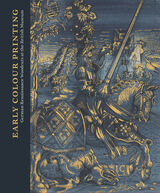
From artworks to missals and icons to wallpapers, this book breaks new ground by revealing the fascinating underlying technologies that enabled the production of these color-printed objects. Further, the volume offers significant new scholarship, pinpointing attributions to printers—not just to artists or designers. In doing so, it lays the groundwork for a new understanding of the history of print, one that encompasses all forms of printed material. Thoroughly researched and engagingly written, this collection guide will be a standard reference on German graphic art, early modern visual culture, and the history of printing itself.
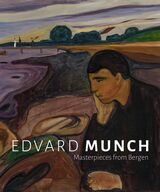
This important publication accompanies a major exhibition at the Courtauld Gallery, London, of paintings by Edvard Munch (1863–1944). The catalog and accompanying exhibition showcase eighteen major works from the collection of KODE Art Museums in Bergen, one of the most important collections of Munch paintings in the world. The works span the most significant part of Munch’s artistic development and have never before been shown as a group outside of Scandinavia.
This book explores this group of remarkable works in detail and considers the important role of its collector, Rasmus Meyer. The exhibition and publication include seminal paintings from Munch’s early “realist” phase of the 1880s, such as Morning and Summer Night, pivotal works that show the artist’s move towards the expressive and psychologically charged work for which he became famous. These paintings launched Munch’s career and set the stage for his renowned, highly expressive paintings of the 1890s. Such works are a major feature of the exhibition that includes remarkable canvases from Munch’s famous Frieze of Life series, which address profound themes of human existence, from love to death. Munch’s powerful use of color and form marked him as one of the most radical painters at the turn of the twentieth century.
This fully illustrated publication includes a catalog of the works, with contributions by leading experts in their field from KODE and the Courtauld.

From the earliest times the Egyptians used bold, bright colours to decorate their buildings, sculptures, papyri, coffins and funerary chests. The large tomb-paintings in the British Museum are the most brilliant examples of their artistry but their love of colour shows also in the small vignettes of painted papyri.
This book surveys the whole range of Egyptian painting, illustrated chiefly by the wealth of material in the British Museum. T. G. H. James examines the material used by the ancient painters and explains the conventions and methods which governed some great artists, whose work should be valued in its own right as well as for its incomparable record of Egyptian life 3,000 years ago.
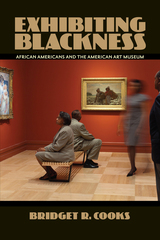
In Exhibiting Blackness, art historian Bridget R. Cooks analyzes the curatorial strategies, challenges, and critical receptions of the most significant museum exhibitions of African American art. Tracing two dominant methodologies used to exhibit art by African Americans—an ethnographic approach that focuses more on artists than their art, and a recovery narrative aimed at correcting past omissions—Cooks exposes the issues involved in exhibiting cultural difference that continue to challenge art history, historiography, and American museum exhibition practices. By further examining the unequal and often contested relationship between African American artists, curators, and visitors, she provides insight into the complex role of art museums and their accountability to the cultures they represent.

András Koerner is the author of a number of critically acclaimed, award-winning CEU Press titles on the cultural history of Hungarian Jews and Jewish cuisine. This volume continues that tradition by discussing the phenomenon of exhibits on Jewish culinary culture in museums and galleries around the world.
The first part of the book provides an overview of the cultural history of "foodism" and the proliferation of Jewish museums. In addition, it examines the role of cuisine in Jewish identity. It offers an analysis of the history and recent examples of exhibitions on Jewish culinary culture, a subject that has not received scholarly attention until now.
The second part complements this by offering a detailed case study of the book’s subject. It showcases a 2022 exhibition in Budapest on the History of Hungarian Jewish Culinary Culture. András Koerner was the co-curator of the show, thus he is able to offer an insider’s account of its implementation – concept, scope, goals, audience, and design. He also openly discusses the compromises made and mistakes committed in the exhibition’s preparatory work.
This subjective account, quite different from the dry objectivity of catalogues, offers an unusual, behind-the-scenes look at how a complex exhibition like this is prepared. At the same time, the book’s appendix includes images of the display boards and some of the exhibited objects – thus it can also stand for a valuable ex-post catalogue.
Over 80 contemporary artists and designers created “artworks as auctions” for #exstrange between January 15 and April 15, 2017, each using the elements of the auction listing—descriptive text, images, pricing, and categories—as tools of production.
Works include artist Lucy Pawlak’s collaboration with the Beat Officer to sell a series of clay objects as missing evidence from unexplained events in Mexico; IOCOSE’s sale of instant protests in the category “Specialty Services” where buyers chose the protest mantras, and outsourced performers demonstrated; and Susanne Cockrell & Ted Purves’ offering of a stick-gun with the memory of their son’s play in “Entertainment Memorabilia.”
Featured artists:
10.000 • Lanfranco Aceti • AILADI • Aysha Al Moayyed • Nasser Alzayani • Mary Ayling • Georgia Banks • Ann Bartges • Yogesh Barve • Kim Beck • Ajit Bhadoriya • Natalie Boterman • Sophia Brueckner • Carmel Buckley • Renee Carmichael • Alessio Chierico • Mia Cinelli • Susanne Cockrell • ConnX • Da Burn Gallery • Julia del Río • Tyler Denmead • César Escudero • Nihaal Faizal • FICTILIS • Eryn Foster • John D. Freyer • Elisa Giardina Papa • Angela Glanzmann • Maximilian Goldfarb • Archana Hande • Abhishek Hazra • Adam Hewins • Megan Hildebrandt • Joey Holder • Masimba Hwati • Regin Igloria • IOCOSE • JODI • Geraldine Juárez • KairUs Art+Research • Katerina Kamprani • Kamilia Kard • Tara Kelton • Matt Kenyon • Stephanie LaFreniere • Eno Laget • Nicolás Lamas • Martin Lang • Taekyeom Lee • LEXX Exhibitor Space • Lloyd Corporation • Silvio Lorusso • Breda Lynch • Garrett Lynch • Eva and Franco Mattes • Kembrew McLeod • Kathleen Meaney • Maria Miranda • Crisia Miroiu • Joana Moll • Martín Nadal • Norie Neumark • Xi Jie Ng • Maeve O'Neill • Chiara Passa • Lucy Pawlak • Sreshta Rit Premnath • Niko Princen • Ted Purves • Renuka Rajiv • Luis Romero • Armando Rosales • Robert Sakrowski • Alessandro Sambini • Sarah Ancelle Schönfeld • Anke Schüttler • Guido Segni • Chinar Shah • Jenine Sharabi • Yastika Prakash Shetty • Anupam Singh • Gagan Singh • Ishan Srivstava • Isabella Streffen • Surabhi Vaya • Wang Yue • Wu Jiaru • Yashaswini • Laura Yuile • Carlo Zanni • Huaqian Zhang
Guest curators:
Latifa Al Khalifa • Bani Brusadin • Peter Dykhuis • Fred Feinberg & Lu Zhang • Harrell Fletcher • Tamara Ibarra • João Laia • Nora O Murchú • Domenico Quaranta • Gaia Tedone • TSAO Yidi
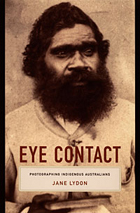
Lydon shows how the photographic portrayals of the Aboriginal residents of Coranderrk changed over time, reflecting various ideas of the colonial mission—from humanitarianism to control to assimilation. In the early twentieth century, the images were used on stereotypical postcards circulated among the white population, showing what appeared to be compliant, transformed Aboriginal subjects. The station closed in 1924 and disappeared from public view until it was rediscovered by scholars years later. Aboriginal Australians purchased the station in 1998, and, as Lydon describes, today they are using the Coranderrk photographic archive in new ways, to identify family members and tell stories of their own.
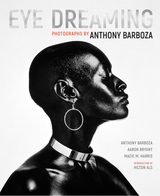
Anthony Barboza (b. 1944) is a celebrated artist and writer who has made thousands of photographs in the studio and on the street since 1963. A member of the Kamoinge collective of photographers in New York, Barboza is largely self-taught and has an inimitable, highly intuitive vision that he refers to as “eye dreaming,” or “a state of mind that’s almost like meditation.” Throughout the years he has made countless commercial images, including celebrity portraits, advertisements, and album covers. His personal photographic projects illuminate his deep investment in the art and concerns of Black communities, not only in the United States but also around the globe.
This lavishly illustrated volume follows Barboza’s prolific career from his youth in New Bedford, Massachusetts, to his formative years in New York in the 1960s, to the present day. An introduction by renowned author and critic Hilton Als underscores Barboza’s importance and impact. An essay by curator Aaron Bryant contextualizes Barboza’s life and career as they map against major civil rights events in the United States. In an intimate interview between the artist and curator Mazie M. Harris, Barboza offers astute, humorous, and intimate musings on his long career, foundational influences, and artistic legacy. This monograph, the first on the artist, will appeal to aficionados of photography and Black art and culture.
READERS
Browse our collection.
PUBLISHERS
See BiblioVault's publisher services.
STUDENT SERVICES
Files for college accessibility offices.
RECENTLY PUBLISHED



UChicago Accessibility Resources
home | accessibility | search | about | contact us
BiblioVault ® 2001 - 2026
The University of Chicago Press