
 A SCHOLARLY BOOK REPOSITORY
6 start with E start with E

La narradora Paty Corcoran es originaria de la Ciudad de México y ha trabajado como traductora, intérprete y locutora durante casi diez años. Vive en el sur de California con su esposo y sus tres hijos, donde también trabaja como guía turística bilingüe. Paty se graduó con honores de la Universidad Autónoma Metropolitana de la Ciudad de México con una licenciatura en Ciencias de la Comunicación.
For over 30 years, The Silent Garden has offered parents of deaf children the support and unbiased information needed to fully realize their children’s potential. This new Spanish edition, which contains the first five chapters of the completely updated 3rd English edition, will help parents navigate the complex and unique challenges they face. Accessible, practical, and, above all, open-minded, El Jardín Silencioso educates parents quickly and thoroughly about the many conflicting points of view on what is best for their deaf children. Authors Paul W. Ogden and David H. Smith, who are both deaf, present examples and research that guide parents through often unfamiliar territory. El Jardín Silencioso covers the topics of communication, coping mechanisms for parents, creating healthy family environments, fostering independence, and understanding the perspectives of siblings. Always encouraging, El Jardín Silencioso empowers parents to be the best advocates for their deaf children.
Audiobook narrator Paty Corcoran is a native of Mexico City and has worked as a translator, interpreter, and voice-talent for almost ten years. She lives in Southern California with her husband and three children, where she also works as a bilingual tour guide. Paty graduated with honors from Metropolitan Autonomous University in Mexico City with a degree in Communication Sciences.
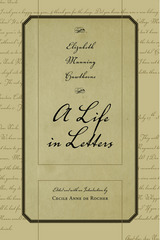
An annotated selection of unpublished letters by Nathaniel Hawthorne's sister.
Retrieved from seven different libraries, this corpus of letters was preserved by the Manning family chiefly for their value as records of Nathaniel Hawthorne's life and work; but they ironically also illuminate the life and mind of a fascinating correspondent and citizen of New England with incisive views and commentaries on her contemporaries, her role as a woman writer, Boston and Salem literary culture, and family life in mid-19th-century America.
This book illuminates Elizabeth's early life; the trauma caused for sister and brother by the death of their father; her and her brother's education; and the tensions the two children experienced when they moved in with their mother's family, the welthier Mannings, instead of the poorer though socially more venerable Hawthornes, following their father's death. The letters portray Elizabeth's constrained relationship with Nathaniel's wife Sofia Peabody and counter Sophia's portrayal of her sister-in-law as a recluse, oddity, and "queer scribbler."
These 118 letters also reveal Elizabeth Hawthorne's tremendous gifts as a thinker, correspondent, and essayist, her interest in astronomy, a lifelong drive toward self-edification in many fields, and her extraordinary relationship with Nathaniel. As a sibling and a fellow author, they were sometimes lovingly codependent and sometimes competitive. Finally, her writing reveals the larger worlds of politics, war, the literary landscape, class, family life, and the freedoms and constraints of a woman's role, all by a heretofore understudied figure.
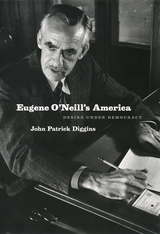
In the face of seemingly relentless American optimism, Eugene O’Neill's plays reveal an America many would like to ignore, a place of seething resentments, aching desires, and family tragedy, where failure and disappointment are the norm and the American dream a chimera. Though derided by critics during his lifetime, his works resonated with audiences, won him the Nobel Prize and four Pulitzer, and continue to grip theatergoers today. Now noted historian John Patrick Diggins offers a masterly biography that both traces O’Neill’s tumultuous life and explains the forceful ideas that form the heart of his unflinching works.
Diggins paints a richly detailed portrait of the playwright’s life, from his Irish roots and his early years at sea to his relationships with his troubled mother and brother. Here we see O’Neill as a young Greenwich Village radical, a ravenous autodidact who attempted to understand the disjunction between the sunny public face of American life and the rage that he knew was simmering beneath. According to Diggins, O’Neill mined this disjunction like no other American writer. His characters burn with longing for an idealized future composed of equal parts material success and individual freedom, but repeatedly they fall back to earth, pulled by the tendrils of family and the insatiability of desire. Drawing on thinkers from Emerson to Nietzsche, O’Neill viewed this endlessly frustrated desire as the problematic core of American democracy, simultaneously driving and undermining American ideals of progress, success, and individual freedom.
Melding a penetrating assessment of O’Neill’s works and thought with a sensitive re-creation of his life, Eugene O’Neill’s America offers a striking new view of America’s greatest playwright—and a new picture of American democracy itself.
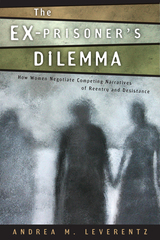
When a woman leaves prison, she enters a world of competing messages and conflicting advice. Staff from prison, friends, family members, workers at halfway houses and treatment programs all have something to say about who she is, who she should be, and what she should do. The Ex-Prisoner’s Dilemma offers an in-depth, firsthand look at how the former prisoner manages messages about returning to the community.
Over the course of a year, Andrea Leverentz conducted repeated interviews with forty-nine women as they adjusted to life outside of prison and worked to construct new ideas of themselves as former prisoners and as mothers, daughters, sisters, romantic partners, friends, students, and workers. Listening to these women, along with their family members, friends, and co-workers, Leverentz pieces together the narratives they have created to explain their past records and guide their future behavior. She traces where these narratives came from and how they were shaped by factors such as gender, race, maternal status, age, and experiences in prison, halfway houses, and twelve-step programs—factors that in turn shaped the women’s expectations for themselves, and others’ expectations of them. The women’s stories form a powerful picture of the complex, complicated human experience behind dry statistics and policy statements regarding prisoner reentry into society for women, how the experience is different for men and the influence society plays.
With its unique view of how society’s mixed messages play out in ex-prisoners’ lived realities, The Ex-Prisoner’s Dilemma shows the complexity of these women’s experiences within the broad context of the war on drugs and mass incarceration in America. It offers invaluable lessons for helping such women successfully rejoin society.
READERS
Browse our collection.
PUBLISHERS
See BiblioVault's publisher services.
STUDENT SERVICES
Files for college accessibility offices.
RECENTLY PUBLISHED




UChicago Accessibility Resources
home | accessibility | search | about | contact us
BiblioVault ® 2001 - 2026
The University of Chicago Press